Meris has released Ottobit X, a new full-stereo effects pedal that turns lo-fi degradation, 80s media artifacts, and real-time glitch control into a larger performance system. It builds on the company’s earlier Ottobit Jr. and Ottobit Sr. devices, then expands the concept with bitcrushing, filters, pitch processing, modulation, preamps, looping, VHS-style ambience, tape-stop control, and deeper preset management.
The short version is pretty clear: Ottobit X is built for producers, guitarists, synth players, and hardware-focused electronic musicians who want controlled damage without giving up stereo operation, MIDI, presets, or line-level integration. That last part matters because pedals like this often get treated as guitar-first boxes, while Ottobit X looks just as comfortable sitting beside a desktop synth, drum machine, sampler, or DAW send.
Ottobit X Expands Bitcrushing Into a Full Lo-Fi Processing System
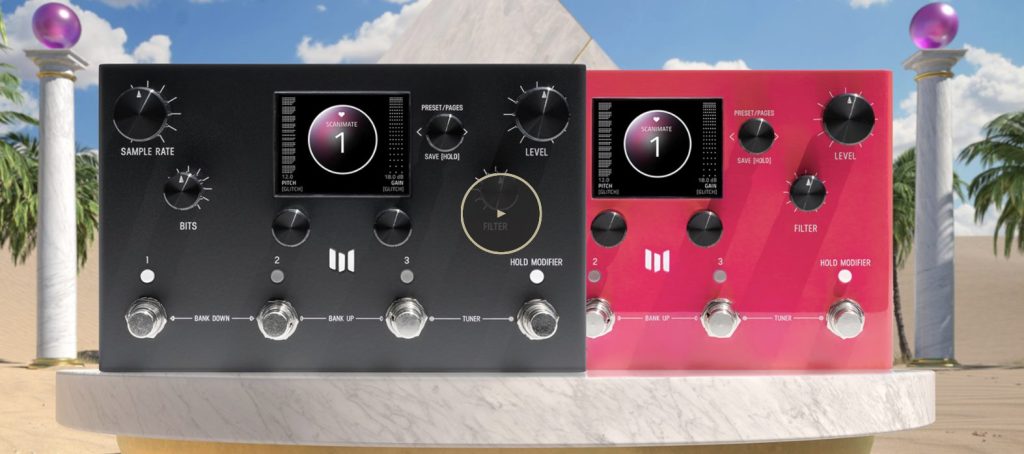
Ottobit X starts with advanced bitcrushing, then gives that core sound a much wider set of processing options. The Crush section includes sample-rate reduction and bitcrushing with volume scaling and dry blend control, which makes the damage easier to level-match and place inside a mix.
That is useful because bitcrushing can get out of hand quickly. A raw crush effect may sound exciting in isolation, then become harsh or difficult to balance once it sits beside drums, bass, vocals, and synths. Dry blend and level control make the effect easier to use as part of a larger production instead of a one-time special effect.
The pedal also includes six glitch types: Grain Freeze, Stutter, Push Loop, Wikki Wikki, Tape Stop, and Stutter Step. That gives Ottobit X a broader identity than a simple degradation pedal. It can crush the signal, freeze material, loop it from a single switch, imitate vinyl scratching behavior, or slow playback through tape-stop control.
I wrote about the Ottobit X’s move into a larger performance-system format in my earlier Meris Ottobit X coverage, and the deeper spec sheet makes that point clearer. This pedal is built around hands-on interruption as much as tone shaping.
VHS Delay, VHS Reverb, and Pitch Tools Push the Pedal Past Simple Damage
The ambiance section is one of the more useful additions. Ottobit X includes VHS Reverb and dual 2500 ms VHS Delay with playback-speed manipulation, which gives the pedal a time-based side beyond its crush and glitch tools.
That matters for producers who want degradation to interact with space. A crushed synth stab, vocal chop, or drum hit can feel separate from the room around it unless the ambiance shares the same degraded character. VHS delay and reverb give the effect chain a consistent identity, especially for parts that need to smear, decay, or wobble without sounding clean.
The pitch section also gives Ottobit X a wider production role.
Poly Chroma, Mono Chroma, Otto Tune, Micro Tune, and Lo-Fi modes allow pitch movement to sit beside the glitch and ambiance sections. That means the pedal can handle obvious pitch shifts, smaller detuning effects, and rougher character processing from the same unit.
Why Synth and Line-Level Support Matters for Electronic Producers
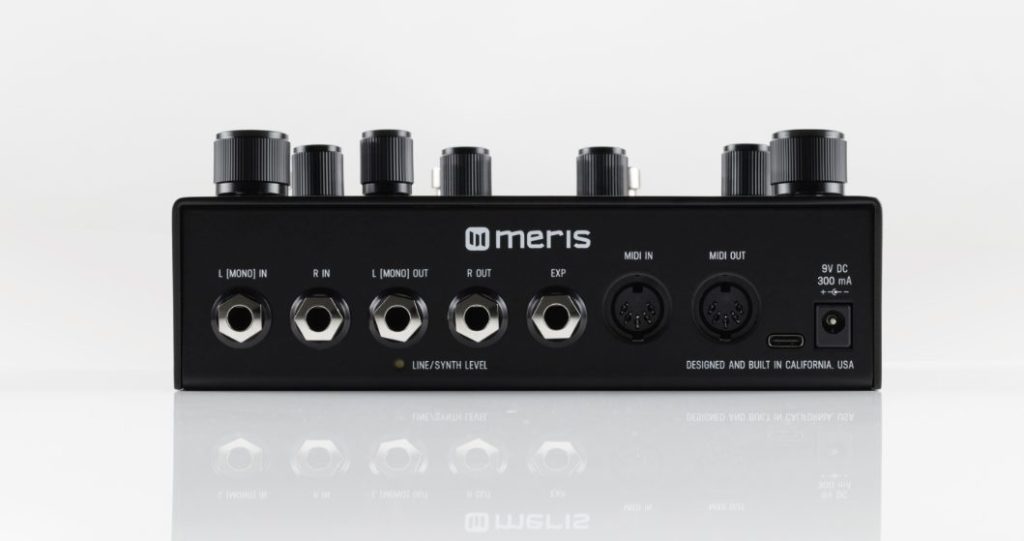
Ottobit X includes switchable input and output headroom for instrument or synth and line levels. That is a practical feature for electronic producers because synths and drum machines can hit pedals much harder than guitars.
With the right level support, Ottobit X can sit inside a hardware setup without requiring as much external gain staging. Stereo input and output also make it easier to use on pads, stereo synth patches, drum bus processing, and hardware returns where mono operation would limit the result.
This is also why pedals have become such a useful part of synth-based production. In my roundup of hardware effects for synth rigs in 2026, the main point was that outboard effects can change how producers perform automation, transitions, and movement in real time. Ottobit X fits that same studio role, especially because its hold switch, expression input, MIDI beat clock, and modifier section allow deeper performance control.
Ottobit X Pricing and Availability
Meris Ottobit X is priced at $599 and is ready to ship now in the standard smooth matte black finish. A Limited Edition Multidimensional Pink version is planned in a small run, with the final batch expected around late summer 2026. Meris notes that the limited version is final sale, with no returns or exchanges.
For international customers, limited stock will be available through distributors. Ottobit X is designed and built in California.

Will Vance is a professional music producer who has been involved in the industry for the better part of a decade and has been the managing editor at Magnetic Magazine since mid-2022. In that time period, he has published thousands of articles on music production, industry think pieces and educational articles about the music industry. Over the last decade as a professional music producer, Will Vance has also ran multiple successful and highly respected record labels in the industry, including Where The Heart Is Records as well as having launched a new label with a focus on community through Magnetic Magazine. When not running these labels or producing his own music, Vance is likely writing for other top industry sites like Waves or the Hyperbits Masterclass or working on his upcoming book on mindfulness in music production. On the rare chance he's not thinking about music production, he's probably running a game of Dungeons and Dragons with his friends which he has been the dungeon master for for many years.