Getting your music covered by a blog in 2026 is still possible, and I want to start there because I spend enough time on the receiving end of music submissions to know how quickly artists can convince themselves that editors no longer listen to unsolicited music.
We do… or maybe “we” should say that I, Will Vance, do, as I run the majority of the editorial these days at Magneticmag.com and field, receive, and parse through hundreds of pitches every single week.
The harder part is finding publications that are actively accepting submissions, cover music close enough to yours that someone on the editorial team can reasonably write about it, and have an established publication behind the submission page instead of a generic promotional service promising exposure without explaining where it comes from.
I have been the managing editor of Magnetic Magazine since 2022, and between running the editorial side of this site, working on my own music, managing record labels, and sending plenty of pitches myself, I have seen this process from nearly every side of the inbox. One thing I keep coming back to is that artists spend an enormous amount of time asking how many blogs they should contact, when I think the better question is which publications can actually add context to what they are doing.
A review gives somebody another searchable result connected to your artist name. An interview can explain your production process, background, label, or the decisions behind a record in much greater detail. A premiere can give people a reason to visit one publication around release day. Those pages can also become material for your EPK, future pitches, social posts, and later releases.
I discussed this in greater detail in my article on how to promote your music without posting every day, because I think artists sometimes treat press as a single release-week event when the real benefit is having credible information about the project available after release day.
With that in mind, these are some of the music blogs I would actually consider submitting to in 2026.
Music Blogs Currently Accepting Submissions
As of the time of writing this piece, the publications below have active submission routes or publicly state that they accept music submissions.
Magnetic Magazine

Yes, I am putting Magnetic first on a Magnetic Magazine article, so apply whatever editorial skepticism you think it deserves.
There is also a fairly straightforward reason for including what we do here.
Magnetic Magazine actively accepts music submissions from artists, labels, managers, publicists, and music companies, with opportunities that can include features, interviews, premieres, reviews, and other forms of coverage depending on the submission and campaign.
We have covered electronic music for well over a decade, with an editorial focus that now reaches electronic music, music production, DJ culture, music technology, labels, artist development, and the business surrounding independent music.
That wider editorial scope is important because I rarely think the most interesting article about an artist is simply, “Here is their new song.”
I would rather know why you made it.
I want to know why your production changed, why you started your own label, why you abandoned a previous writing process, what happened when you tested the record in a club, why you chose a particular synth, what you have learned after five years of touring, or what you are seeing inside your part of the music industry that somebody outside it would probably miss.
You can see that approach across our artist interview archive, where conversations range from artists discussing DJ culture and production to labels, technology, career development, and the business behind releases.
I have also written extensively about the promotion side from the perspective of someone sending and receiving music. My breakdown of music promotion services for independent artists in 2026 covers SubmitHub, Groover, PR firms, playlist services, and direct media outreach, while my article on building a fan base for your music goes further into how press can sit alongside the rest of a release campaign.
If you want Magnetic Magazine to consider your music, company, label, or project for coverage, you can submit it below.
You can also use our dedicated Magnetic Magazine music submission page.
Before submitting, please send something specific for us to discuss. I can work with a small independent artist with limited streaming numbers if the project has an interesting story, production idea, career decision, or perspective attached. A generic paragraph saying a new single is “set to make waves” tells me almost nothing.
EARMILK

EARMILK remains one of the better-known independent music publications accepting submissions in 2026, and its current submission page directs artists toward SubmitHub or Pillargram rather than unsolicited music emails.
That distinction is worth paying attention to because ignoring a publication’s preferred submission system is one of the easiest ways to lose the opportunity before anybody hears the record.
EARMILK covers music across electronic, hip-hop, indie, pop, R&B, and adjacent genres, so I would consider it when the release has crossover potential outside a tightly defined electronic niche.
Their submission page also mentions potential premieres, which gives artists another reason to contact them ahead of release rather than waiting until the song has already been available for several weeks.
When submitting, I would research the publication first and find several recent articles close to your music. If you can’t find anything they have published recently that relates to your release, I would probably put that submission credit or pitching time somewhere else.
That approach applies to almost every publication on this list. They only ask that you submit your music and potential premieres to their SubmitHub. You can also submit your music through Pillargram.
Stereofox
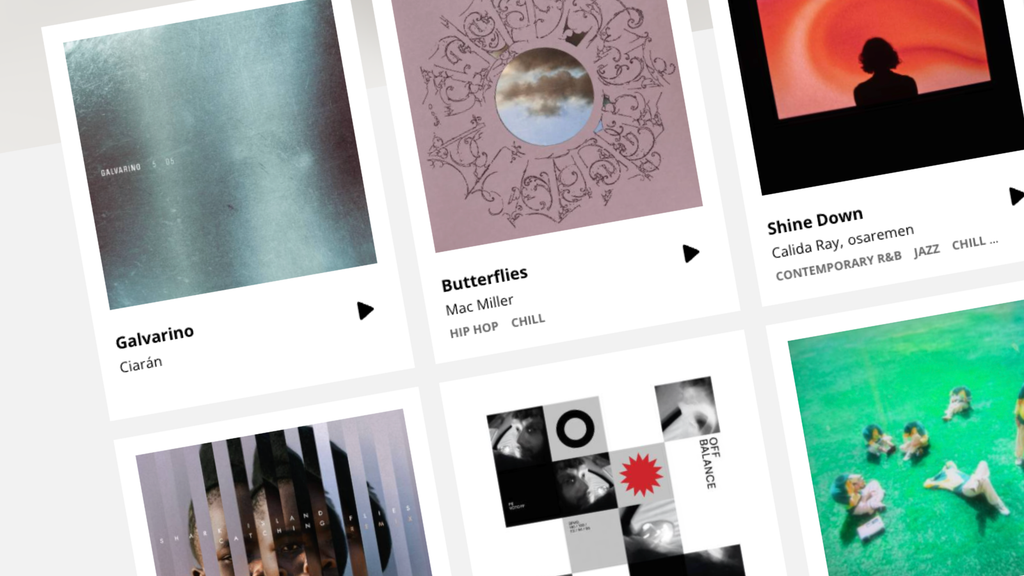
Stereofox currently accepts music using SubmitHub and Groover, and the publication explicitly says that it does not process music submissions sent by email or Discord. The site says it has received close to 100,000 SubmitHub submissions and approved roughly 4,300.
That acceptance ratio should tell you something.
Submitting music is easy. Getting somebody to stop on your record is considerably harder.
Stereofox covers electronic music alongside hip-hop, neo-soul, jazz-influenced music, indie releases, and downtempo material, and its site includes individual track coverage, longer editorial pieces, and interviews.
For producers working in melodic electronic music, downtempo, jazz-house, chill electronic music, instrumental hip-hop, or adjacent areas, I would spend some time here before pitching.
This is also where accurate genre positioning starts becoming very important. If you call your record “electronic” because you made it inside Ableton, that gives an editor almost nothing to work with. Tell them what listeners, labels, DJs, or scenes your music actually sits near.
One reason I still like SubmitHub for certain campaigns is that it forces artists to get fairly specific about those decisions. I discuss my own experience with it in my article on free music promotion options for independent artists.
Obscure Sound

Obscure Sound is another publication I would put fairly high on the list for independent artists because discovering underexposed music is central to what the site says it does.
Mike Mineo founded the publication in 2006, and it currently covers indie rock, dream pop, folk, electronic music, hip-hop, albums, tracks, interviews, and curated playlists. Its current site gives artists a direct route to submit music for editorial consideration.
This offers an important lesson for developing artists.
You do not necessarily need huge streaming numbers before approaching music media.
You need to find editors whose publication model actually leaves room for discovery.
If a site’s homepage contains almost exclusively internationally established artists, major festival announcements, and label news, sending them your first independent single may have a low chance of producing anything. If the publication regularly covers developing artists in your general area of music, the editorial fit is considerably better.
That sounds obvious on paper, yet I see mismatched pitches constantly.
Do the research before paying for a submission or sending an email. If you want to cut to the front of the line, check out their Musosoup profile.
Run The Trap

For bass music, trap, hip-hop, dubstep, future bass, and related electronic releases, Run The Trap still maintains a public music submission route.
Its current contact page asks artists to provide a short description of the music and says to supply private or live SoundCloud streams instead of MP3 attachments. It also tells artists that social-media submissions are not accepted.
I actually like these submission instructions specifically because they remove a lot of uncertainty.
Follow them exactly.
Do not decide that Dropbox is probably close enough when they asked for SoundCloud. Do not attach a 70 MB WAV because you think higher resolution will impress somebody. Do not DM the editor because your email did not receive a reply.
Every additional task you create for the recipient reduces the chance that somebody gets to the part of the submission you actually care about, which is listening to your music.
Run The Trap also states that it cannot reply to every submission and that artists should generally assume the publication is passing if they have not heard back within three days.
That kind of expectation is important because silence is normal in music pitching. It does not necessarily mean your record is bad. Editors have finite publishing space and receive far too much music to answer every email individually.
Acid Stag

Acid Stag remains active in 2026 and continues publishing new music coverage with a visible “Submit Music” route attached to its current articles. Recent 2026 posts span electronic releases from artists including nimino, Jungle, Tycho, Lane 8, Kasbo, Motez, and others.
That gives you a fairly direct indication of where the editorial taste sits.
Rather than asking whether Acid Stag is a “good blog,” ask whether the records it is publishing resemble the area you occupy.
That is the same exercise I would do for every site here.
Look at the last month of music coverage. Ignore the publication’s broad genre description for a minute and study what the editors are actually posting right now. Pay attention to labels, artists, release formats, and subgenres. Current publishing behavior usually tells you considerably more about what an editor wants than an About page written several years earlier.
Acid Stag does offer their Acid Club, which is a clever idea if you’re an artist running a label as well or if you are planning on dropping multiple singles out over the course of a month. You can get a lot of value there!
A&R Factory

A&R Factory is particularly relevant for independent artists because it currently offers free editorial submissions alongside paid submission options.
Its current submission system asks for one track, release information, website or social links, artwork or artist photography, and an EPK or artist biography. The site says its free route goes to the editorial team without a publication guarantee, while paid options include a standard blog feature or an expanded package with added promotion.
The publication accepts a broad range of genres, including electronic music, indie, hip-hop, jazz, R&B, folk, and others. It also maintains a dedicated electronic music submission section.
Whether you use a free or paid route, read what you are buying or requesting carefully.
Paid editorial opportunities can be legitimate when the publication explains what the payment covers, identifies the resulting content, and handles sponsorship disclosures correctly. I would avoid services that make vague promises about “massive exposure” without identifying the publication, deliverable, audience, or promotional method.
I spoke with Musosoup co-founder Chris Sharpe about this exact area in our interview on music PR, playlists, written reviews, and Musosoup. His perspective is worth reading because the economics of independent music journalism and independent artist promotion increasingly intersect.
How I Would Choose Which Music Blogs to Submit To
If I had $100 to spend on submissions for one of my own releases tomorrow, I would not divide it equally across every publication I could find.
I would start by finding publications where I can point to several recent records in a similar space.
Then I would look at the actual coverage format.
A 70-word track post serves a different purpose from a 1,500-word artist interview. One might be appropriate when I need additional release coverage, while the interview gives me a page that explains my music, production process, and background in detail.
I would also search the publication itself.
Has it existed for years? Are new articles appearing regularly? Can I identify actual writers? Do its articles appear in Google? Does it interview artists and industry figures I recognize? Does it cover labels or events connected to the part of music I work in?
Those questions tell me considerably more than a follower count presented on a submission page.
What Should You Send a Music Blog?
From my side of the editorial inbox, I want enough information to understand the release without opening twelve tabs and investigating the artist myself.
Give me the artist name, song or project title, release date, a listening link, a current biography, press photos, artwork, relevant credits, label information when applicable, and two or three sentences explaining why this particular release gives me something to discuss.
That final part gets overlooked constantly.
Your editorial angle is not:
“My new single is out Friday.”
That is an event.
The angle is what happened around the record that gives an editor material for an article.
Maybe you recorded field audio while traveling and built the production around those recordings. Maybe you changed your live setup and the resulting performance process altered how you write. Maybe you worked with a vocalist in another country and developed the record remotely. Maybe your label has changed how it approaches releases after several years of streaming data.
Give me the details.
The same principle comes up when I talk about sending demos to labels. My article on how to send a demo to record labels addresses a different recipient, although the central behavior is similar: research where you are sending the music, follow the requested submission format, and make it easy for somebody to understand why the record belongs there.
Do You Need an EPK Before Submitting Music?
I would have one ready.
Your EPK does not need to be an elaborate microsite containing every achievement since you started producing. It needs to let an editor find the basic information quickly.
Use a current artist biography, several high-resolution photos, artwork, streaming links, social links, important credits, selected previous coverage, and contact details.
Then update it.
If an interview gets published this month, add it. If you sign with a new label, update the biography. If your artist photos no longer resemble what appears across your current profiles, replace them.
This matters because editors research artists before committing coverage, especially when the article will involve an interview or a larger feature.
One credible article can also help the next editor understand your project. That is one reason I think written press continues to have a place alongside streaming promotion and social media.
Should You Pay for Music Blog Coverage?
Sometimes.
I would separate paying for clearly identified editorial work from paying somebody who vaguely promises attention.
Writers need to get paid. Editors need to get paid. Websites cost money to operate. Nothing is inherently suspicious about a publication offering sponsored editorial opportunities; we do it at Magnetic, and I know Rolling Stone does too, as long as the commercial relationship is disclosed and the artist understands exactly what they’re buying.
Payment should not buy a fabricated opinion.
If somebody has never heard your song and promises to call it the best release of the year once your credit card clears, I would have questions.
I am far more interested in paying for access to a real editorial process, a properly written feature, interview, review, or another clearly defined piece of media that I can inspect before spending money.
The same caution applies across the rest of music promotion. In my breakdown of the best music promotion platforms, I look at the roles that pitching platforms, PR, playlists, advertising, and direct outreach can play, because press works best when you know why you are buying or pursuing it in the first place.
How Many Music Blogs Should You Submit To?
I don’t have a number I would universally recommend but there certainly are diminishing returns on the amount of coverage needed for a release.
I would rather send ten researched pitches than one hundred generic ones.
Start with publications that regularly cover your area of music, then divide them according to what you actually want from the campaign. You may want interviews from several sites, shorter release coverage elsewhere, playlist consideration from another group, and DJ support from people who never publish articles.
That creates a far better campaign than treating every contact as interchangeable.
You can also track the result.
Which publications opened your emails? Which submission platforms produced feedback? Which article generated referral traffic? Which press links did people click inside your EPK? Which interviews produced quotes that worked well on social media?
I wrote about using listener and campaign information in my article on music analytics for Spotify and TikTok, and I would apply the same mentality to editorial outreach. Record what happened, then adjust the next campaign accordingly.
When Should You Submit Music to Blogs?
For an unreleased single, I would start contacting media several weeks before release.
Five or six weeks gives you room to pitch, follow up when appropriate, organize interviews, send additional assets, and coordinate publication dates without forcing everybody into the same three-day window.
Premieres need particular attention because publications may have their own scheduling rules and exclusivity expectations.
If the song is already released, you still have options.
I would simply change the pitch.
Instead of pretending the release date is still the primary story, find something else worth discussing. Production breakdowns, artist interviews, label conversations, studio features, post-release analysis, remix announcements, live recordings, and follow-up singles can keep the project moving after its original date.
Release day is a date on the calendar. Your entire campaign does not need to stop 24 hours later.
Are Music Blogs Still Worth It in 2026?
I think they are, although I would judge them differently from playlists or advertising.
If you expect one article to create tens of thousands of streams overnight, you may be measuring the wrong thing (but if you’re expecting tens of thousands of streams to single-handedly make a record a success, you’re measuring two wrong things and both in the wrong ways…)
Written coverage gives people information.
When somebody hears your name from a DJ, sees you on a lineup, receives your demo, finds you on Spotify, or considers booking you, they may search for you. Good editorial coverage gives that person something credible to read beyond your own biography and social accounts.
An interview can explain how you think.
A production feature can demonstrate how you work.
A review can document a release.
A label feature can establish what you are building beyond a single record.
We have conducted thousands of interviews and features at Magnetic over the years, and that archive is one reason I continue to believe in long-form artist coverage. The best interviews frequently remain relevant after the release attached to them has left the front page.
That longevity is difficult to replicate with a social post that disappears from attention within days.
Where Should I Submit Electronic Music?
If you make electronic music specifically, I would begin with Magnetic Magazine, then research Stereofox, Acid Stag, EARMILK, Run The Trap, and A&R Factory according to your particular subgenre.
Do not send the same pitch to all of them without changing anything.
A progressive house record, experimental bass single, lo-fi electronic EP, and commercial dance release may all fall underneath the huge electronic-music category, yet they belong in very different editorial conversations.
Read before submitting.
Find the writer.
Find the section.
Find several recent releases.
Then decide whether your record belongs there.
Submit Your Music to Magnetic Magazine
If you found this article because you are actively looking for music blogs accepting submissions, Magnetic Magazine is currently accepting music, artist, label, and music-industry submissions for editorial consideration.
I encourage you to send enough information for us to understand what you are working on, rather than trying to write the shortest pitch possible.
Tell us what the release is, tell us what is happening around it, include the music and current assets, and give us a reason to think there is an article worth writing.
You can also submit your music directly to Magnetic Magazine here.
I cannot promise that every artist belongs on every publication listed above, and I would be suspicious of anybody who did.
The goal is to find the publications where your music, your story, and the type of coverage they publish actually connect, then send enough information that an editor can see that connection without having to invent it for you.
That is how I would approach music blog submissions in 2026, whether I were pitching my own record tomorrow or opening the submission inbox here at Magnetic Magazine.

Will Vance is a professional music producer who has been involved in the industry for the better part of a decade and has been the managing editor at Magnetic Magazine since mid-2022. In that time period, he has published thousands of articles on music production, industry think pieces and educational articles about the music industry. Over the last decade as a professional music producer, Will Vance has also ran multiple successful and highly respected record labels in the industry, including Where The Heart Is Records as well as having launched a new label with a focus on community through Magnetic Magazine. When not running these labels or producing his own music, Vance is likely writing for other top industry sites like Waves or the Hyperbits Masterclass or working on his upcoming book on mindfulness in music production. On the rare chance he's not thinking about music production, he's probably running a game of Dungeons and Dragons with his friends which he has been the dungeon master for for many years.