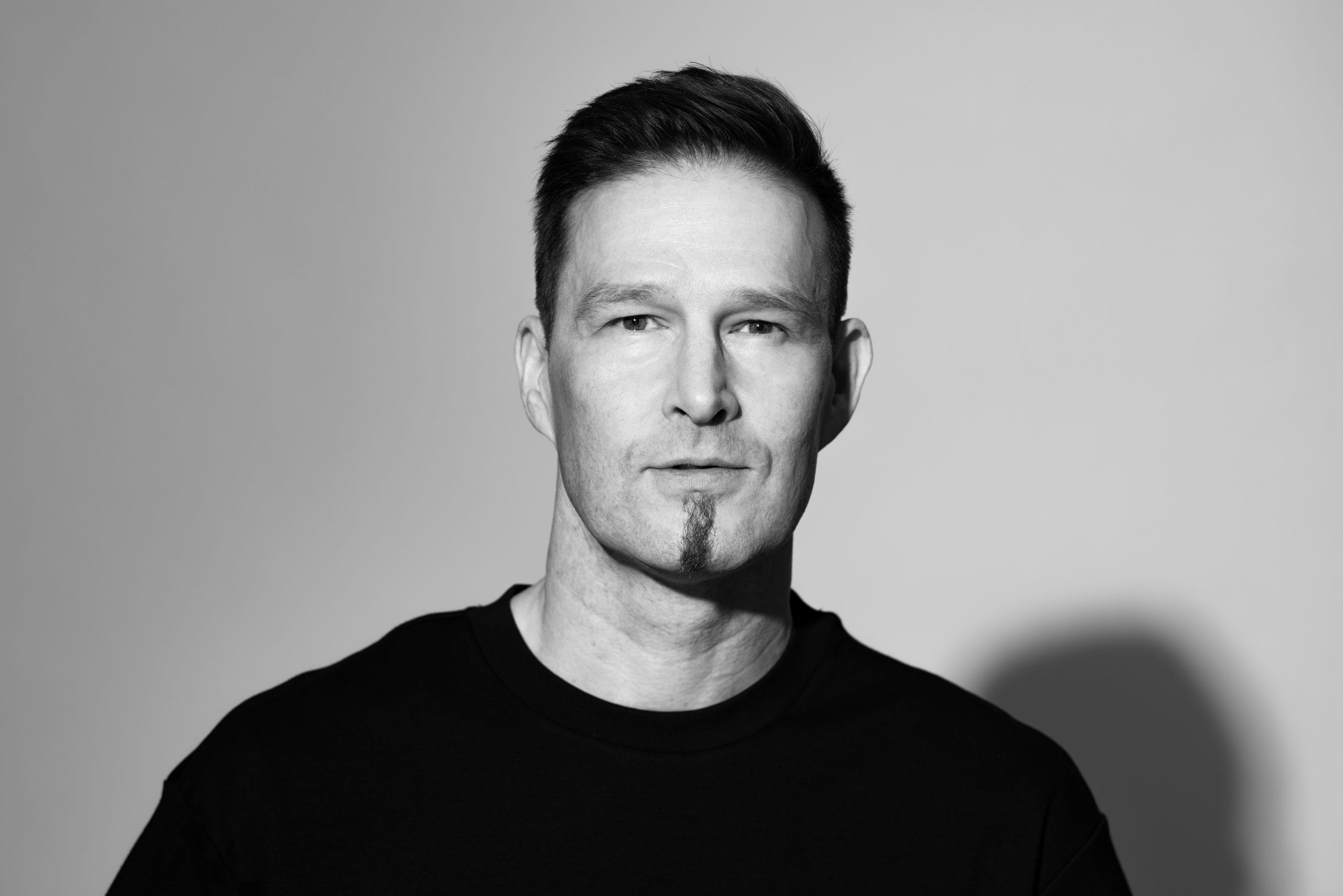
Few artists navigate the space between Afro-house, techno, and soulful electronic music as naturally as Floyd Lavine. With a career that has taken him from underground clubs to some of the world’s most iconic dance floors, the South African DJ and producer has built a reputation for crafting music that is as emotionally resonant as it is club-ready.
Fresh from his latest release on the legendary Cocoon label and in the midst of his biggest touring year to date, Lavine continues to push his sound forward while remaining deeply connected to the musical traditions that shaped him.
We caught up with him to discuss the evolution of his music, the significance of joining Cocoon’s storied catalogue, life on the road, and what’s next as he looks ahead to an exciting new wave of collaborations and releases.
Interview With Floyd Lavine
Your music sits at a fascinating intersection of Afro-rooted rhythms, techno energy, and disco emotion. How has your approach to blending those influences evolved over the last few years, and where do you see your sound heading next?
Wow, that’s such an intense question…
I think, to be honest, the first thing is always trying to make something that I love. Something that surprises me as well. Something that I would want to hear on the dance floor.
Coming from South Africa, living in London, and now being based in Berlin, all of those places have shaped my sound in a very big way. And then, of course, there is my heritage as an African, but also my experience as a clubber and as someone who is really interested in electronic music. I always want to hear something super fresh and super different.
That has always been my pursuit when I approach making music – trying to express myself on a personal level, but also on a musical level. When I’m on the dance floor, I love to be surprised, but I also want to feel something familiar at the same time.
So I think that’s where the sound keeps evolving for me. It’s about finding that balance between surprise and familiarity, between where I come from and where electronic music can still go.
You’ve described yourself as an electronic storyteller. What stories or emotions were you hoping to communicate through your new release on Cocoon, and how does it differ from some of your previous work?
Oh wow. I think with that record, it was actually a collaboration that I did with AWEN, and it was one of the very first few songs we collaborated on. I think that track is about seven years old.
Sometimes you make tracks and you don’t really know what to do with them, you know? So I had that track in my hard drive for a long time. Then when me and Denis Horvat wanted to collaborate, I finally dug into the hard drive and found it again.
With that record, I wanted something that resembled something from the past. I remember saying, “Listen, I want something that sounds like Donna Summer.” I wanted that feeling. But I guess sometimes you can’t recreate something from the past while thinking about the future, and maybe that’s why it was left on the shelf for a while.
When Denis came in, he added the futuristic touch to it. He has this approach that comes from a deeper electronic, melodic, synth-based space, and I think that’s what made the track feel fresh. It has this old-school approach, but with a new-school touch.
It feels like a disco record, but it’s not, you know? You can hear the borrowing back from an old disco record, because there was a lot of sampling in it, but then you also have AWEN’s touch. I think it’s from her earlier work, so you can hear her sounding a little bit different, but still with that AWEN touch.
So with this collaboration, for me, it felt fresh because it was something old that still feels current now. It has that feeling of the past, but it’s been brought into the future.
Cocoon has such a rich legacy in underground electronic music. What made the label the right home for this release, and what did it mean to become part of that catalog?
Yeah, I mean, Cocoon for me is a legendary label. A legendary event, run by a legendary artist.
Sven Väth has been one of the pioneers, and someone that I’ve looked up to for many, many years. So when Denis proposed the record and told me that Cocoon loved it, and that they really wanted the record, I was already blown away just by that.
It moved me in a deeper way because I know the history of Cocoon and what it represents, especially within electronic music. Being part of such an iconic label is special. I think, for lack of a better word, I’m overwhelmed and grateful to be part of it.
The artists who have released through Cocoon are some of my favorite artists in the world. So to be able to say I released on Cocoon, and also for it to be a physical release, that is every producer’s dream. As someone who has always been a student of electronic music, it means a lot.
You move comfortably between very different dance floors, from Black Coffee events and Hï Ibiza to festivals across Africa, Europe, and the Americas. How do those different audiences influence the way you test and develop new music?
Yeah, I mean, I always feel like my sound fits within the umbrella of house and techno in a broader sense, but also in a very specific way because of my heritage.
My heritage gives me the ability to explore music in a deeper way. It’s something that connects me to the African continent. Then living in Berlin has given me a different viewpoint – kind of a European touch, but within a deeper spectrum, especially when you live in Berlin.
So that allows me to move between different dance floors because it’s something that I’m also interested in. I love music, especially electronic music, that goes from one point and takes you on a journey into another space. I love for my music, and for my sets, to have that kind of approach.
Being able to play different dance floors gives me experience. It allows me to test out new music and also allows me to express myself differently.
I think that’s something very unique for me, because it has shaped my sound: having this perspective of African-born heritage, but also living in Berlin. That scope of influences allows me to play many different dance floors around the world, but it also gives me a unique sound because of that experience.
Your roots remain central to your artistic identity, even as your career becomes increasingly global. How do you stay connected to those influences while constantly touring and engaging with new scenes around the world?
Every year I actually go home for at least two months of the year…
I need to connect. I need to go back home. I need to see family. I need to see friends. I need to connect with where I’m from.
I think that’s always important for me. It’s always been important. It’s something that is humbling, but also something that is enriching. It gives me a sense of purpose, a sense of grounding, and it allows me to draw influence again and see what’s happening on the continent.
I try to connect with the continent as much as I can when I’m traveling. Of course, it’s super difficult, but I’m lucky that some of my friends, some colleagues, some DJs and producers that I’m inspired by, are still living on the continent, still living in Africa, still living in South Africa. That allows me to have a glimpse, or a window, into what’s happening there. But overall, I always try to keep an eye, or one foot, on the African continent and never lose that connection.
You’ve built strong relationships across several influential creative circles, from Black Coffee and Innervisions to Keinemusik and beyond. What have you learned from being around artists who each have such distinct approaches to building culture and community?
I think what’s important, and what I’ve learned from these groups, is that they are authentic to what they are doing. Number one, they have their own vision and their own approach into how they want to deliver their message.
But the one thing that I feel connects all of them together is that sense of community, that sense of culture, and that sense of building something that lasts.
What I’ve learned from seeing and being inspired by all these different camps is that they have a sense of purpose. They have shared values. And they have patience in what they want to accomplish.
Learning to have patience within this industry is something that inspires me to go further, because it allows you to build brick by brick. You make sure that you are authentic to yourself, but also that you are building a community.
I think the most important thing is shared values and building community. If you want to do something within this industry, you have to connect with like-minded people who share the same values and vision as you. Then you can build something bigger than yourself.
That’s creating culture, you know what I mean? When you create culture, that’s the most important thing, because then you’re building a home for people to come in and experience.
Looking back at tracks like Kusimama and Blackalicious and now arriving at your latest Cocoon release, what thread connects all of your work, regardless of genre or tempo?
I think I always have a unique take and a unique groove towards all my music. If you actually listen to it, there’s somehow always a ‘Floyd’ touch within it. Meaning that every time you listen to my songs, you’re not going to find another song that sounds exactly like that, which is something I pride myself on.
I think because of my influences, because of my approach to electronic music, and because of the way I see the world, or the way I want to express myself in the world, I always want to bring my uniqueness into a community, into a culture. Just a different viewpoint into what’s already existing.
I think that’s important – having my own unique viewpoint into music and into whatever I’m trying to express.
So if you listen to the groove, if you listen to the approach, if you listen to the song, it feels like something you know, but done in a different way. Do you know what I mean?
It’s something you can be familiar with, but in a unique way. That’s why it doesn’t sound like anything else you’ve ever heard.
2026 has been your most extensive touring year yet. Has there been a particular city, festival, or crowd this summer that surprised or inspired you in an unexpected way?
I’m trying to think where I was surprised this year, because I’ve traveled everywhere and I’ve really enjoyed most of the places that I’ve played. Cairo was super cool, I really liked that.
But what stood out for me this year was finally doing my own event in Berlin again. Personal Affairs, which is my party with my partner Joy.
That was super special for me because I haven’t done a party in years now. And doing something back in Berlin, where I’m living currently and where I’ve been for the past ten years, was so nice.
It was a way to celebrate with my friends, with new friends, and to create an intimate, special party of about 250 people. Having the dancers on the dance floor, in that setting, was really special.
That is still the highlight of my year so far.
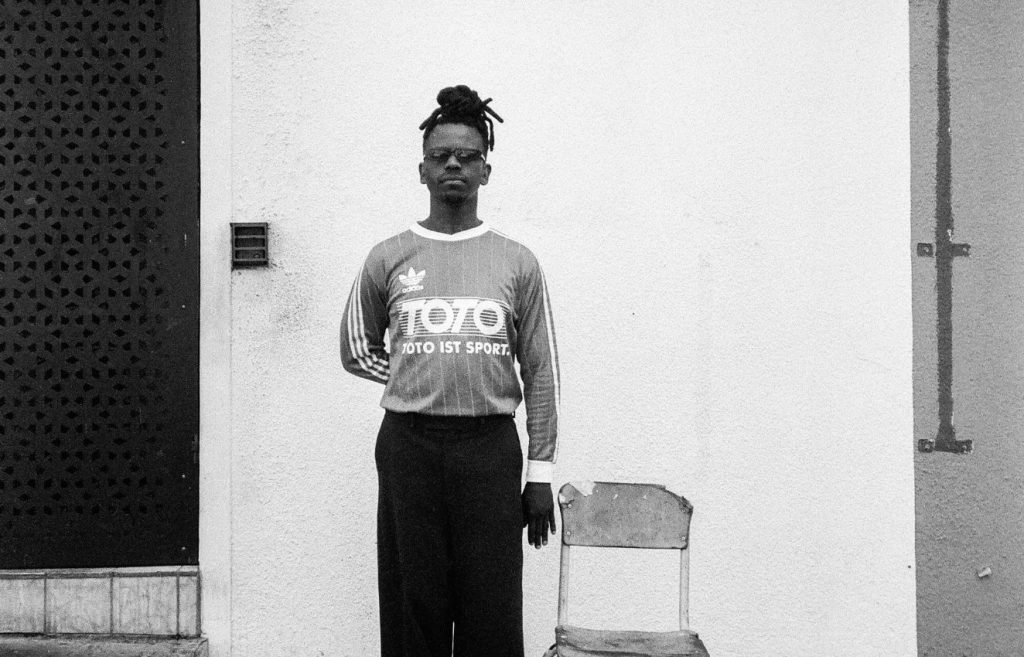
With dates spanning Ibiza, Bali, New York, Tulum, Mumbai, Zanzibar, and beyond, what are you most looking forward to for the remainder of the summer, both on and off the stage?
On stage, I’m looking forward to Egypt for the Pyramids with Starlight x EXIT Festival. That’s going to be super great.
I’m also looking forward to closing in Ibiza at Hï. And then, of course, I’m looking forward to going back to South Africa, maybe at the end of the year. That is always a highlight for me – seeing family, seeing friends, being home, and connecting again with my people. That’s always a beautiful, beautiful experience.
Off stage, I think I’m looking forward to starting my album. I’m looking forward to getting back into the studio and really working through the last quarter of the year, fine-tuning the album, writing new stuff, and working on new material.
I’ve been inspired by the year so far and by the summer, so that’s what I’m looking forward to. And also, just hanging out with my family and drinking some good, solid tea with my friends.
You have new collaborations, remixes, and original music lined up for 2026. Without giving away too much, what creative directions are exciting you most right now, and what should fans be listening for in the next chapter of Floyd Lavine?
I think what’s been exciting for me is, first of all, I’ve worked on a few remixes this year that are a little bit more on the housier side of things. I think they’ve been under the radar, but you guys must check those out. They’re really quite fun, and you can hear the housier side of me.
I’m also looking forward to a collaboration with Kiko Navarro coming out on his label Afroterrano, “Ina Dudu.” This one is a dance floor filler, peak-time Afro stomper, which is quite nice. It’s influenced by old-school tribal house mixed with modern influences, and I really like that.
Then I’m looking forward to a collaboration with AQUTIE coming out on KLUB. I’m also really looking forward to music with my musical partner, Liam Mockridge, who I’ve done music with for quite a long time. That’s coming out on Majestic Casual…
I’m really excited about that EP because it shows a different side of me. You will still hear the Floyd influences, but it’s a two-track EP and it’s quite musical. It’s different, but it’s still familiar, you know?
Again, you will be like, “I haven’t heard that before.”
Then later this year, we’re going to have something on HE.SHE.THEY., which is going to be beautiful. And then I’m going to finish off the year with something on my imprint, Afrikan Tales.

Magnetic byline note: This byline is used for staff produced updates and short announcements, often based on press materials and official release information. Editorial responsibility: David Ireland (Editor in Chief) and Will Vance (Managing Editor). About: https://magneticmag.com/about/ Masthead: https://magneticmag.com/masthead/ Contact: https://magneticmag.com/contact/