Table of Contents
The Fosi Audio ZH3 handles the main parts of a desktop listening setup from one compact box, and after spending time with it, I think that flexibility is the biggest X-factor that it brings to the table and the main reason newer and aspiring audiophiles should consider it. I can connect my computer through USB, run active speakers from the rear outputs, plug headphones into the front, and switch between listening modes without moving cables around my desk.
The Fosi Audio ZH3 currently sells for $199.99 in the US, making it a competitive segment of the desktop DAC and headphone amplifier market. Fosi has still managed to include a balanced headphone output, XLR line outputs, an RCA analog input, tone controls, a remote, and enough power for plenty of demanding headphones, so overall it’s a nice kit if you’re looking to break ground in the high-end audio space without breaking the bank completley (and believe you me, it can get pricey very quickly).
I found the sound clean and neutral during my listening, with no obvious push in the bass or upper frequencies, and I had ample output available with the headphones I tested. The digital filters had a smaller influence on my time with the unit, while the connection options and fast output switching affected how I used it every day.
That last part is where the ZH3 started to win me over, and it’s probably what I’ll spend the most time on throughout this review.
Plenty of affordable headphone amplifiers can provide clean playback, yet fewer can sit between a computer, active speakers, headphones, and another analog source while giving me simple control over the entire setup, and we’ll be diving into the nuts and bolts of this throughout the review, but here’s my hot takes at a glance.
| Category | My assessment |
|---|---|
| Sound quality | Clean, neutral, and low in obvious coloration |
| Headphone power | Up to 2,570mW per channel through the 4.4mm output |
| Inputs | USB-C, optical, coaxial, and stereo RCA |
| Rear outputs | Balanced XLR and single-ended RCA |
| Best suited to | Desktop headphone and active-speaker systems |
| Main limitation | Tone controls and filters have mode-dependent restrictions |
| Current US price | $199.99 |

What are the Fosi Audio ZH3 specs and features?
The Fosi Audio ZH3 combines an XMOS XU316 USB controller with an AKM AK4493SEQ DAC and four OPA1612 operational amplifiers. The headphone amplifier circuit is fully balanced, and the two operational amplifier chips can be replaced with compatible dual-channel DIP8 models, which helps it punch above its weight class – at least in terms of what you get for your buck.
The LME49720, NE5532, MUSES02, and Sparkos SS3602 are among the compatible replacements and I see that feature as an optional way to experiment with the unit rather than a required upgrade, because the standard configuration performed well in my testing, and replacing an operational amplifier offers no guaranteed increase in fidelity which is pretty damn cool.
USB playback reaches PCM 32-bit/768kHz and DSD512, while optical and coaxial playback reach PCM 24-bit/192kHz. Those upper limits look impressive on a specification sheet, although the source recording and mastering will have a clearer influence on what I hear than moving between extremely high sample rates.
| Specification | Fosi Audio ZH3 |
|---|---|
| USB controller | XMOS XU316 |
| DAC | AKM AK4493SEQ |
| Operational amplifiers | Four OPA1612 chips |
| Replaceable operational amplifiers | Two compatible dual-channel DIP8 chips |
| Digital inputs | USB-C, optical, and coaxial |
| Analog input | Stereo RCA |
| Headphone outputs | 4.4mm balanced and 6.35mm single-ended |
| Rear outputs | Balanced XLR and single-ended RCA |
| USB playback | PCM 32-bit/768kHz and DSD512 |
| Optical and coaxial playback | PCM 24-bit/192kHz |
| Recommended headphone impedance | 16 to 300 ohms |
| Gain settings | Low, medium, and high |
| Power requirement | 12V DC |
What comes with the Fosi Audio ZH3?
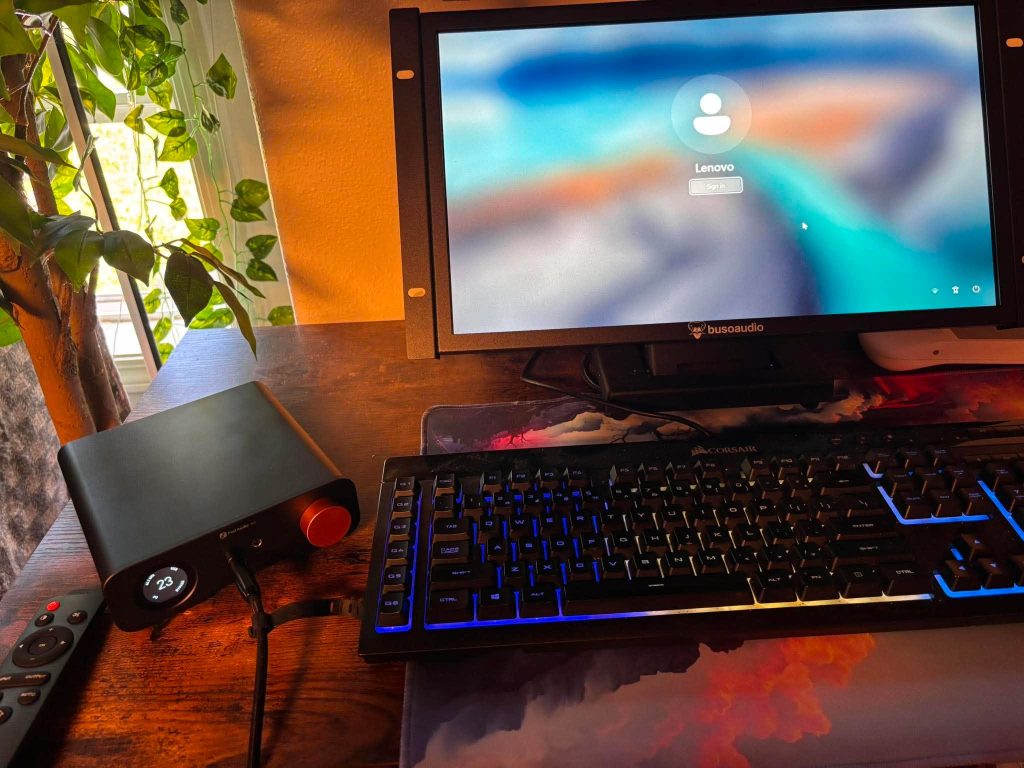
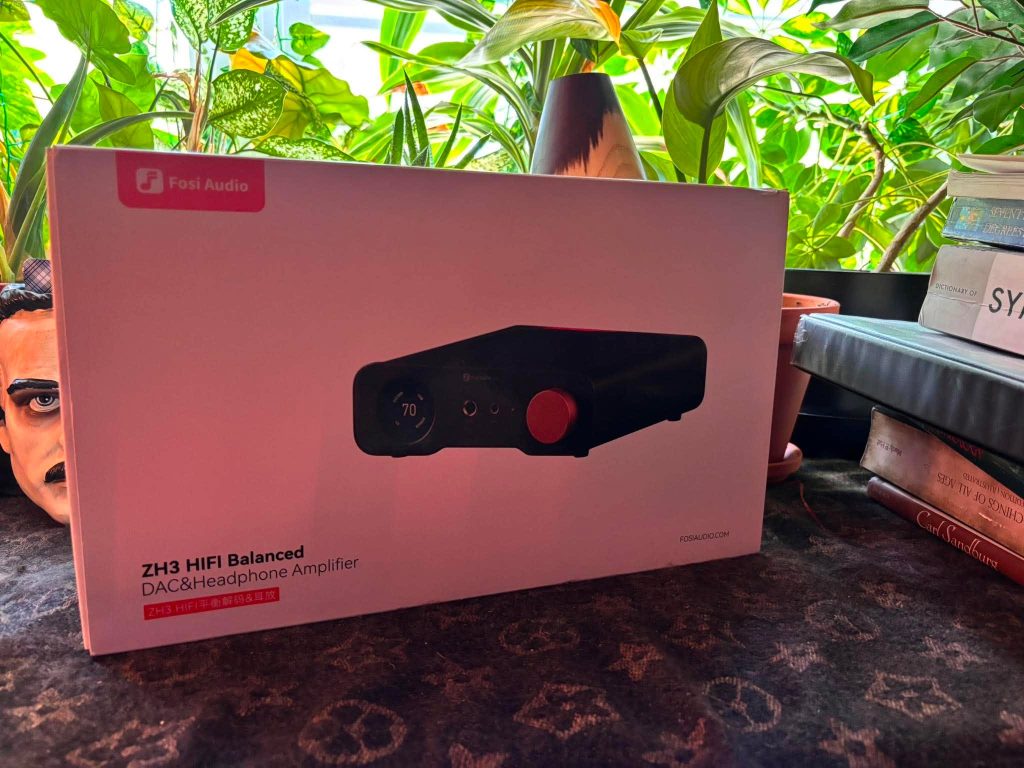
The package includes the ZH3, an infrared remote, a 12V DC power adapter, and a USB-A/USB-C-to-USB-C cable. Fosi also includes a 6.35mm headphone adapter, a 12V trigger cable, and the user manual.

The included 3.5mm cable is a trigger cable rather than a standard analog audio cable. You will need a suitable RCA cable if you plan to connect a turntable preamplifier, portable player, or another analog source.
I would continue using the supplied power adapter, as is the case with most of these types of products. I found no verified evidence that replacing it with an aftermarket or linear supply improves the sound, and any replacement would need the correct voltage, polarity, current capacity, and connector dimensions, which hopefully saves you some money knowing that there won’t be extra features that can push this thing further if only you spent just a LITTLE bit more dough.
How good is the Fosi Audio ZH3 build quality?
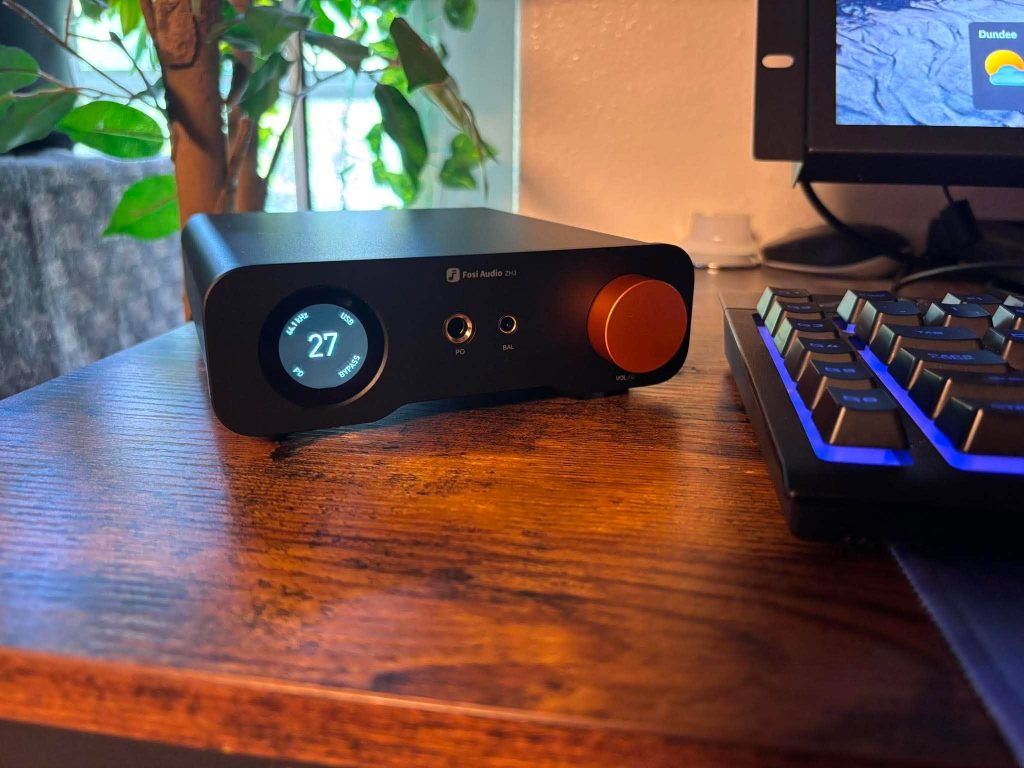
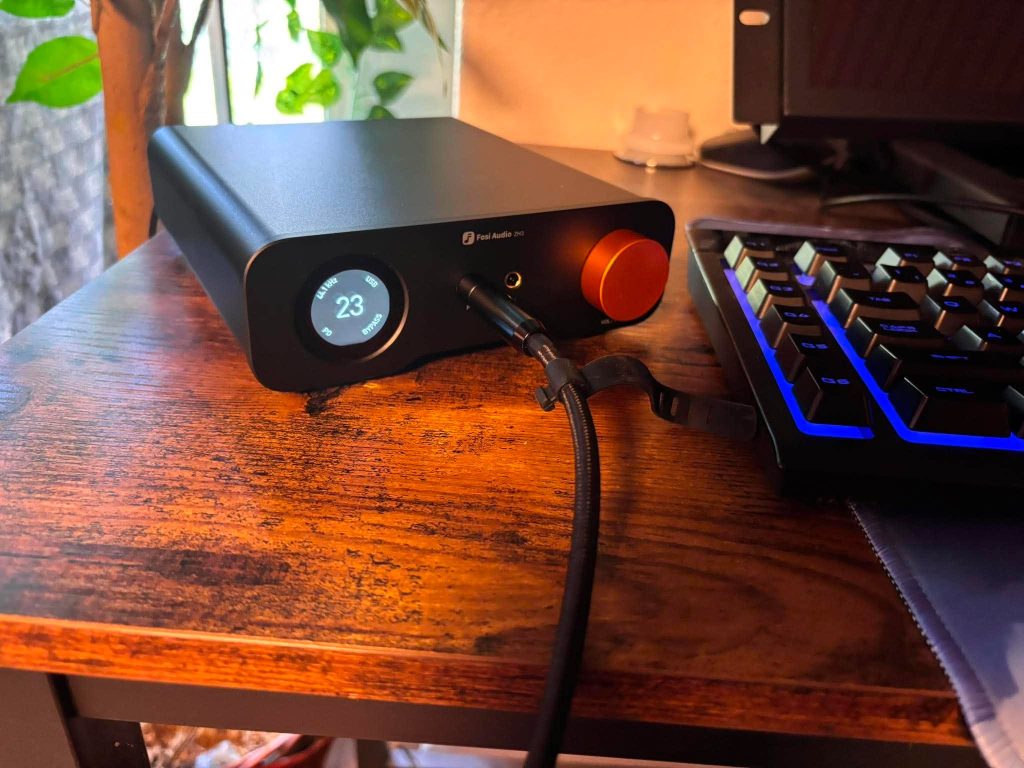
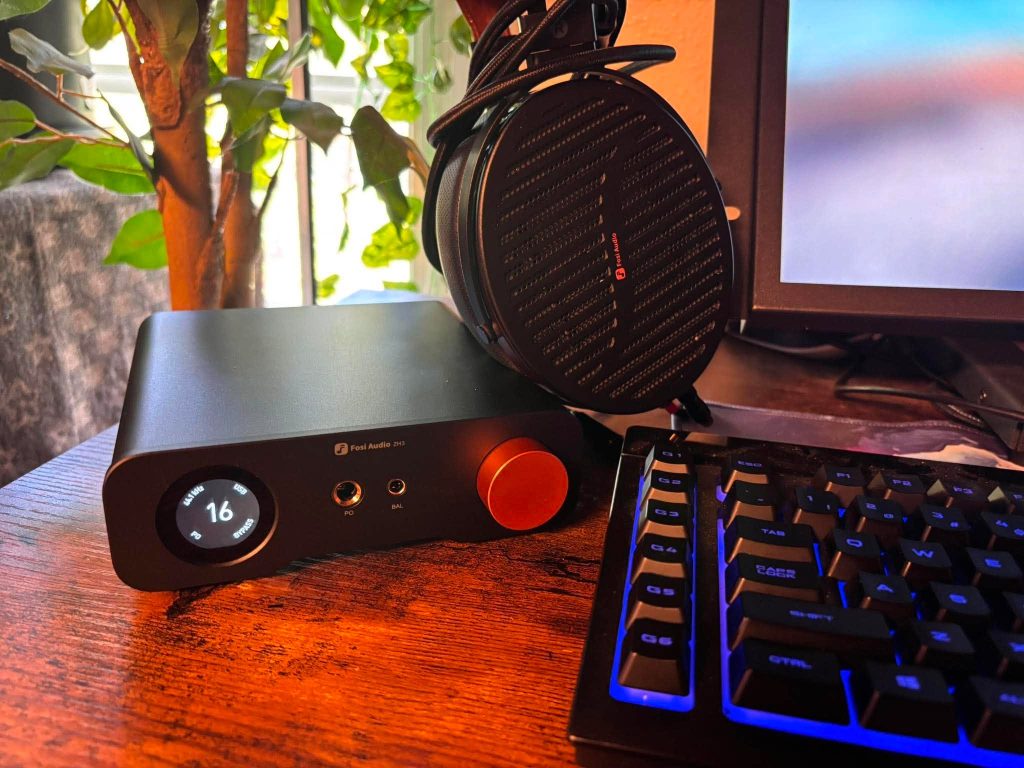
The aluminum-alloy enclosure feels suited to permanent desktop use, and the front panel keeps the layout fairly simple with a circular 1.5-inch LCD on the left and Fosi’s orange multifunction knob on the right. The headphone connections sit between them, so either connector remains easy to reach.
The knob handles volume and menu navigation, while a double press switches between headphone and rear-output operation. I can control the unit from the front panel, though the remote is faster for changing sources or accessing settings without navigating through each menu.
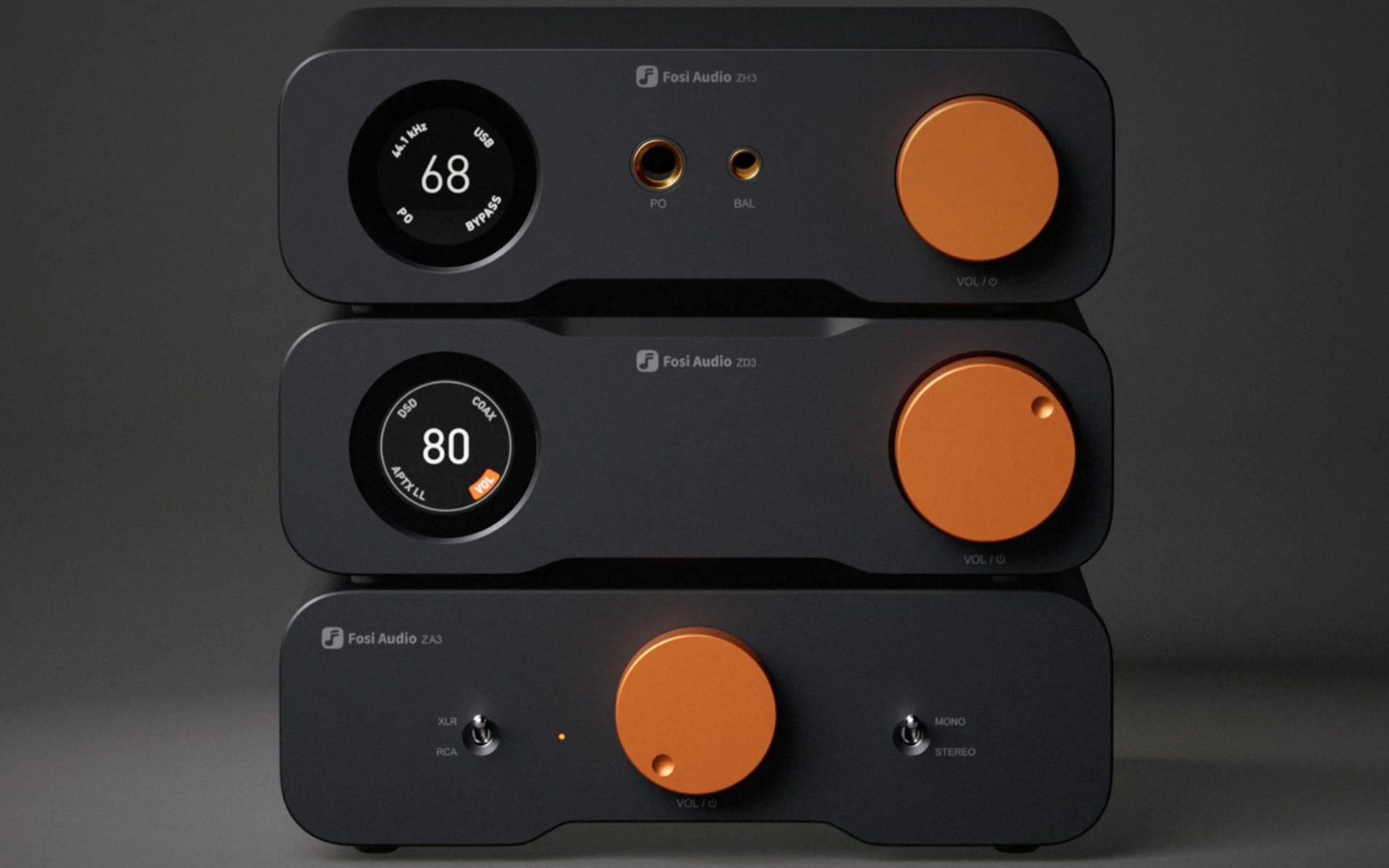
The visual layout also works well alongside Fosi’s other Z-Series products, and the 12V trigger connections allow compatible components to power on and off together. Fosi lists its ZD3 and ZA3 as examples of products that can form a linked system with the ZH3.
Do the Fosi Audio ZH3 digital filters change the sound?
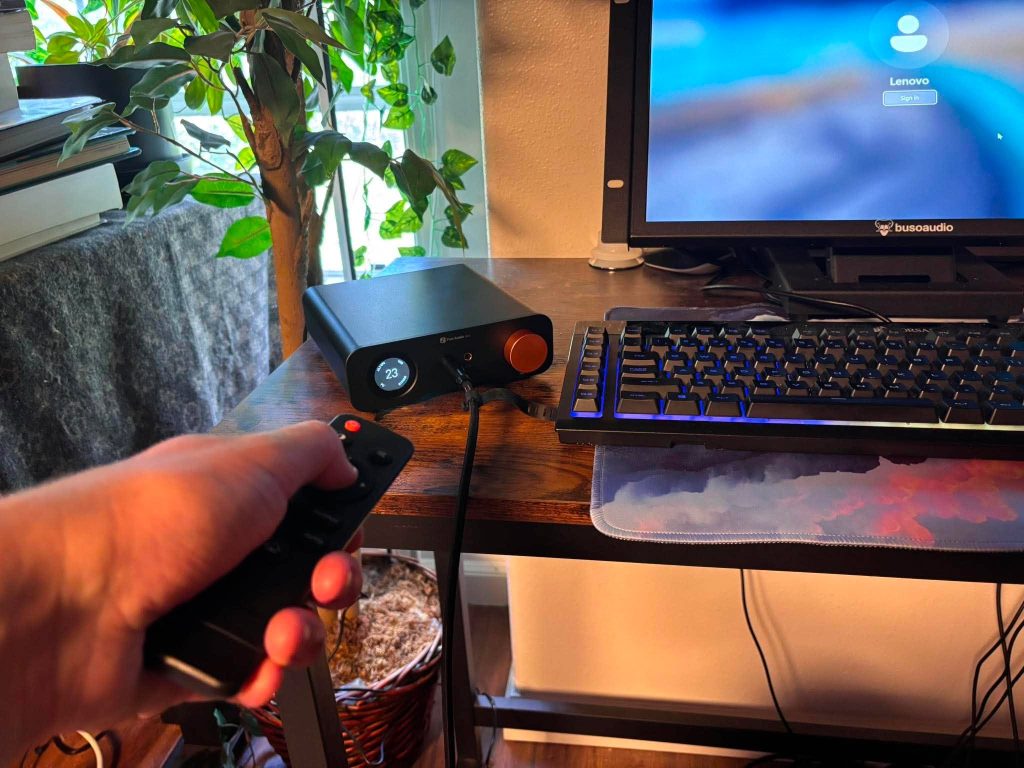
The ZH3 includes six selectable digital filters, although I found their influence much smaller than the effect of switching headphones. I could cycle through them from the menu or the remote, yet none of the filters altered the unit’s character during normal listening.
I would treat the filters as fine adjustments for someone comparing the response options built into the AKM DAC. The connection options and available amplifier power had a clearer effect on how the ZH3 fit into my desktop system.
Do the Fosi Audio ZH3 bass and treble controls affect sound quality?
The bass control provides ±12dB of adjustment, while the treble control reaches ±10dB. That gives me enough range to add a low-frequency level to a learner headphone or reduce the upper range of a brighter model without installing separate EQ software.
Bypass removes the tone-control circuit from the signal path. I kept it active for much of my testing, though the controls are welcome when I want a quick adjustment outside a computer-based EQ setup.
The controls are mode-dependent. Their availability depends on the selected input and output, and unavailable menu items appear gray on the display.
Can the Fosi Audio ZH3 drive high-impedance headphones and planar headphones?
The Fosi Audio ZH3 provides up to 2,570 mW per channel into 32 ohms through its 4.4mm balanced output, which gives it ample power for many planar and high-demand headphones. The 6.35mm single-ended output is rated at 640mW per channel into the same load.
Fosi recommends headphones with impedances from 16 to 300 ohms, although impedance tells only part of the compatibility story. Sensitivity and current demand also influence how much amplifier output a headphone requires.
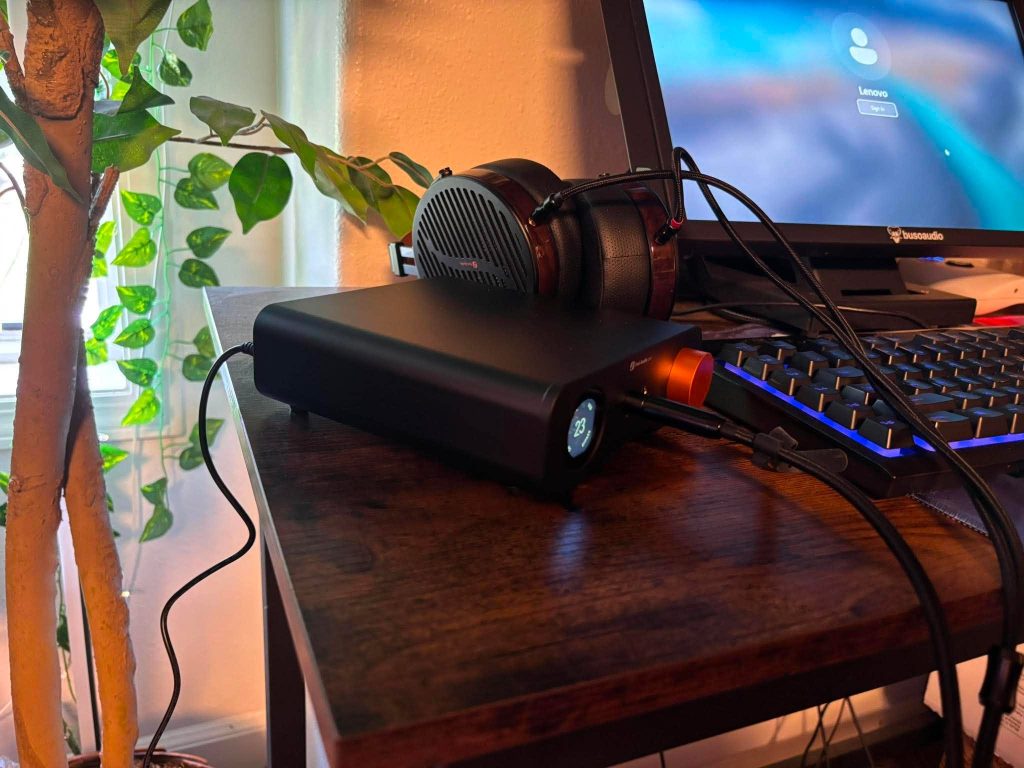
That distinction came up in my Fosi Audio i5 review, since the i5 has a fairly approachable 28-ohm impedance while Fosi still recommends 500mW or higher. The ZH3’s 4.4mm connection comfortably clears that recommendation and makes the two products a logical pairing.
The low, medium, and high gain settings make it easier to place the volume control within a comfortable range. I would begin on low gain, then move upward if a headphone requires added output.
Independent testing measured approximately 2.5 watts into 32 ohms without a conventional clipping point appearing within the tested range. Audio Science Review also used the ZH3 with the Dan Clark Audio E3 and reported ample available headroom.
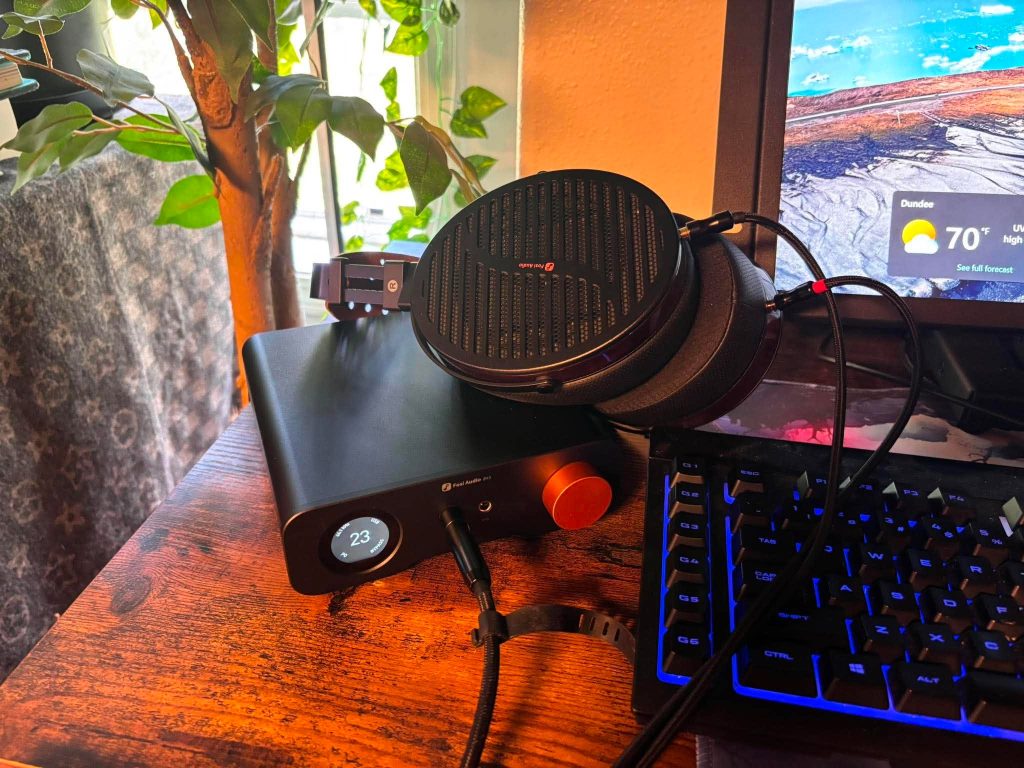
Those results support my impression that the ZH3 supplies plenty of headphone power for its price. They also support describing the output as low in distortion under the measured conditions, while any description of warmth or spatial character remains a listening opinion.
How loud does the Fosi Audio ZH3 get?
The ZH3 can reach very high levels with common desktop headphones, particularly from its balanced output. Available volume was never a concern during my listening, and I spent most of my time well below the upper end of its 99-step volume range.
Maximum loudness tells me little on its own, so I paid closer attention to whether the amplifier remained clean and controlled at normal levels. It did with the headphones I used, and I had enough headroom left for quieter recordings.
Is the Fosi Audio ZH3 a good DAC and preamp for powered speakers?
The Fosi Audio ZH3 works well as the control point for a desktop system that includes headphones and powered speakers. I can run balanced XLR cables to active speakers, connect my computer through USB, and switch listening modes without unplugging anything.
The rear outputs can operate at a fixed level for a separate amplifier or at an adjustable level for active speakers. Adjustable mode turns the ZH3 into the system’s main volume controller, while the included remote becomes especially relevant when the speakers are connected to a television.
That setup reminds me of the CEntrance DACport Pro, which I covered as a DAC, headphone amplifier, and monitor controller. The ZH3 follows a similar desktop concept while adding a remote, an optical input, a coaxial input, and a 12V trigger control.
A television can connect through optical, while a CD transport or network streamer can use coaxial. A compatible console can connect through USB Audio Class 1.0, with Fosi listing support for PlayStation 5 and Nintendo Switch.
Can the Fosi Audio ZH3 control headphones and speakers from one desk?
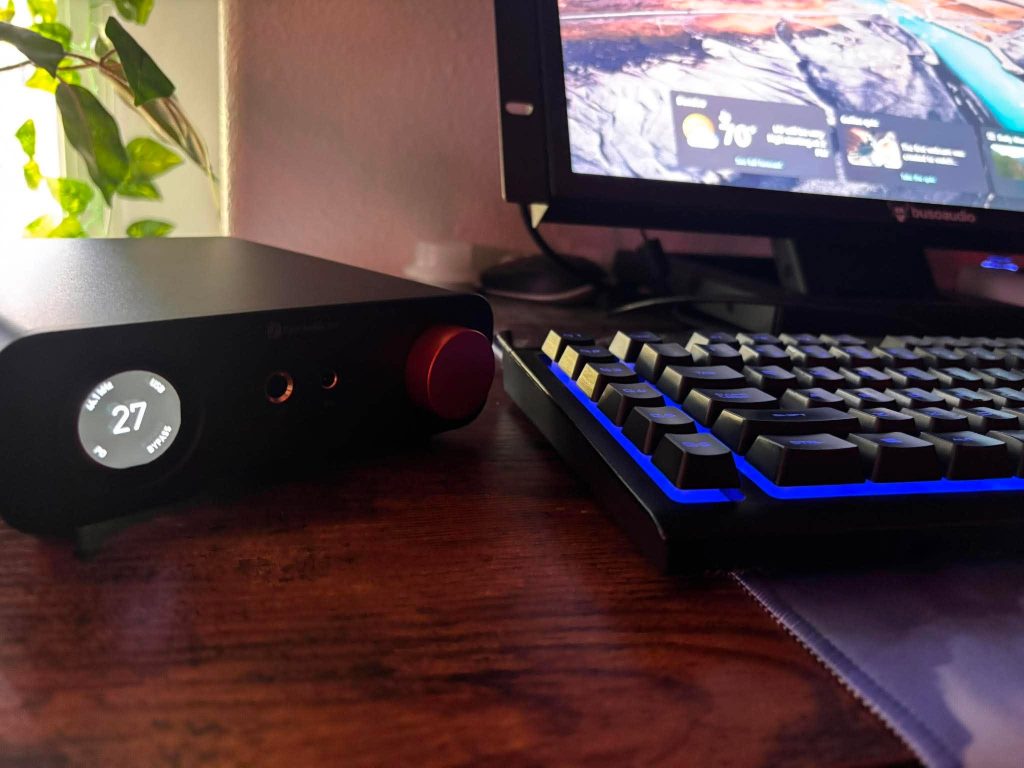
Yes. Double-pressing the front knob switches between headphone and rear-output operation, and the remote provides direct access to input and output selection.
Separate volume memory stores the previous level for the headphone and preamplifier outputs. When I return to either output, the ZH3 recalls its prior setting, which reduces the risk of sending the speakers the same level I used with a quieter headphone.
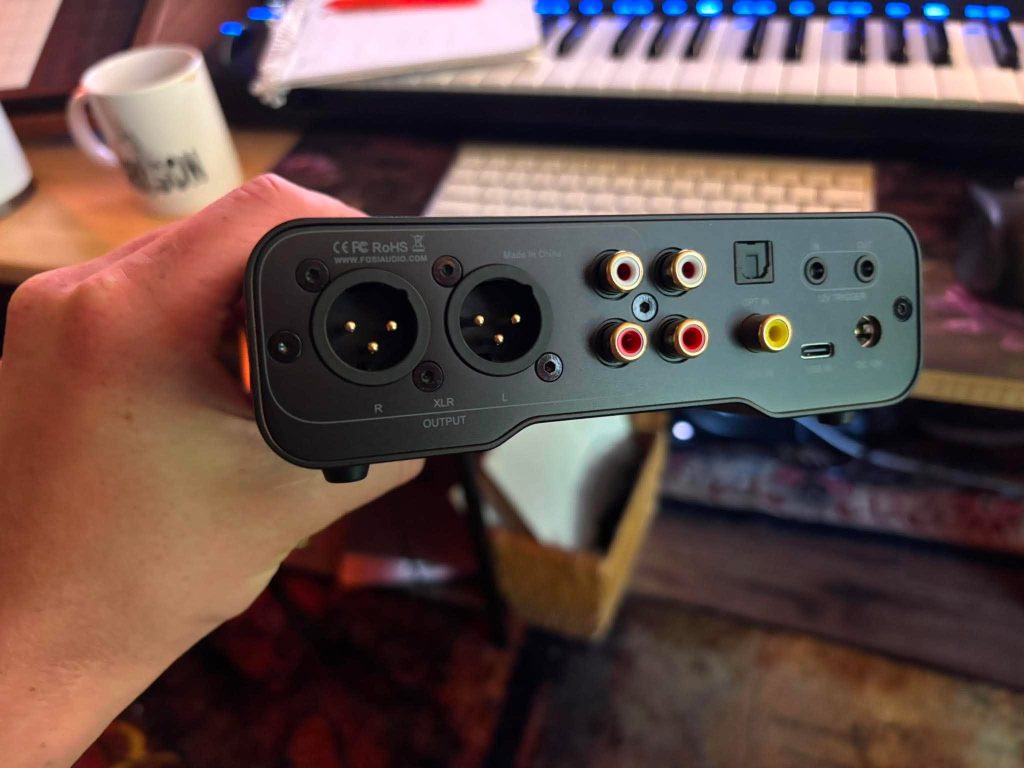
The rear 12V trigger input and output can coordinate power with compatible equipment. The ZH3 can also power down automatically after 30 minutes without an incoming signal.
The AIAIAI UNIT-4 Wireless+ monitors are a good example of active speakers that can move between a studio and a general desktop setup, and the ZH3 is most convincing when used with that kind of self-powered speaker system. A wired connection from the ZH3 provides a single control point for speaker level and source selection, while the headphone output remains available on the front panel.
There are operating restrictions worth understanding. With USB selected and the RCA/XLR preamplifier or fixed line output active, EQ, bypass, and gain adjustment are unavailable.
Optical or coaxial input removes UAC switching during headphone use. When either digital input feeds a rear output, EQ, bypass, gain adjustment, and UAC switching are unavailable.
With RCA input feeding headphones, UAC switching and digital filter selection are unavailable. When RCA feeds a rear output, the menu provides input and output selection.
Does the Fosi Audio ZH3 work for music production?
The ZH3 can handle playback and secondary mix checking, particularly when paired with active monitors through XLR, although it is a playback device rather than an audio interface. It has no microphone preamplifier, instrument input, or analog-to-digital recording conversion.
I could use it as a clean playback source in a production room, switch between headphones and speakers, and check how a mix translates through another monitoring path. Recording microphones or instruments would still require a separate audio interface.
If desk space is limited, my breakdown of the best portable studio monitors for small studios and travel rigs includes several active models that pair well with a compact desktop controller. The ZH3 fits that type of setup because it keeps headphone control and speaker playback inside one small enclosure.
Is the Fosi Audio ZH3 worth buying?
Yes, I think the Fosi Audio ZH3 earns its $199.99 asking price for someone who wants one compact unit to control headphones and active speakers. It sounds clean during normal listening, provides ample balanced output, and includes enough source connections to remain in place as a desktop system changes.
Its limitations are specific and easy to understand. There is no Bluetooth or balanced analog input, while the tone controls cannot be applied across every input and output combination. Extremely sensitive IEM owners may also prefer the quieter single-ended connection.
Those limits feel reasonable for the price, especially when I consider the balanced XLR outputs, included remote, and separate volume memory. The ZH3 handled the everyday parts of desktop listening well, and those were the features I continued using after I finished comparing filters and reading specification tables.
Magnetic Magazine Editor’s Choice
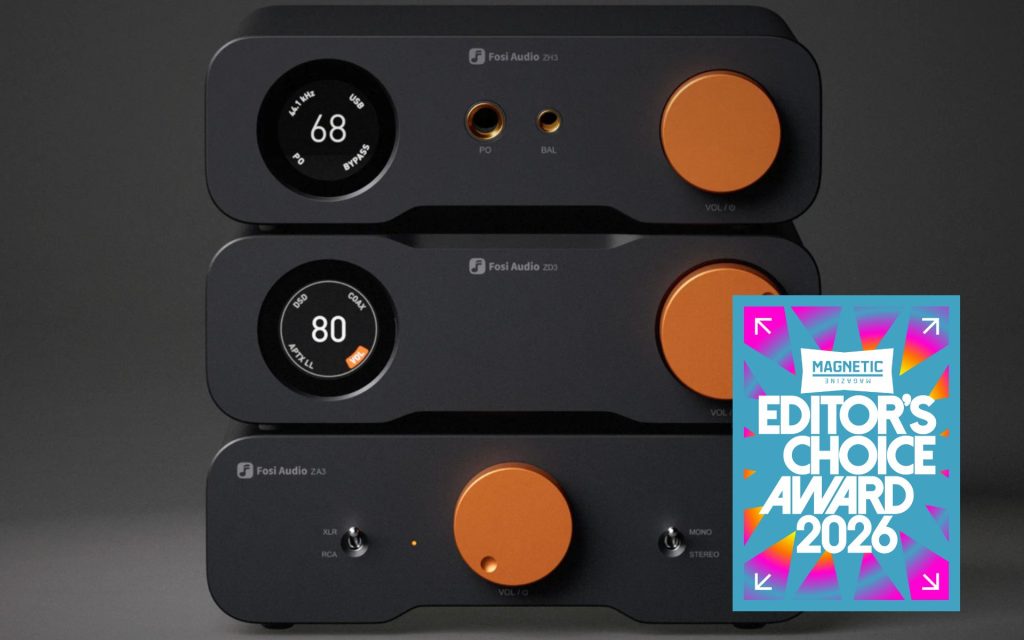
The Fosi Audio ZH3 earns our Editor’s Choice Award because it delivers an excellent entry-level headphone amplifier and DAC for $199.99. It has enough power for demanding headphones, clean playback, and the connections needed to control a complete desktop listening system.
I would never place it in a direct comparison with dedicated headphone amplifiers priced above $1,000 because those products serve a different buyer and budget. For someone buying a first desktop headphone amplifier or upgrading from a basic dongle, the ZH3 covers an impressive amount of ground for the money, and it genuinely rocks at this price.
Who should buy the Fosi Audio ZH3?
The ZH3 is a good choice for someone who uses demanding headphones alongside active speakers and wants to control the setup from one device. It also fits television systems that need optical input, remote volume control, and an accessible headphone connection.
Planar-headphone owners are another clear audience because the 4.4mm output supplies up to 2,570mW per channel into 32 ohms. The three gain settings also give owners room to move between efficient headphones and models with higher power requirements.
Who should skip the Fosi Audio ZH3?
I would skip it if Bluetooth playback is required or if recording microphones and instruments is part of the setup. A dedicated audio interface will cover recording needs, while an efficient pair of headphones may work perfectly well with a smaller DAC/amp or dongle DAC.
I would also look elsewhere if balanced analog input is required. The ZH3 provides balanced XLR output, though its only analog input is single-ended RCA.
In my setup, the ZH3’s clean playback and flexible routing did the heavy lifting. The 2,570mW balanced output gives me room for demanding headphones, while the rear XLR connections and fast output switching make it easy to keep active speakers connected at the same time.

Will Vance is a professional music producer who has been involved in the industry for the better part of a decade and has been the managing editor at Magnetic Magazine since mid-2022. In that time period, he has published thousands of articles on music production, industry think pieces and educational articles about the music industry. Over the last decade as a professional music producer, Will Vance has also ran multiple successful and highly respected record labels in the industry, including Where The Heart Is Records as well as having launched a new label with a focus on community through Magnetic Magazine. When not running these labels or producing his own music, Vance is likely writing for other top industry sites like Waves or the Hyperbits Masterclass or working on his upcoming book on mindfulness in music production. On the rare chance he's not thinking about music production, he's probably running a game of Dungeons and Dragons with his friends which he has been the dungeon master for for many years.