The easiest version of the Artist Growth announcement is that AI can now make itineraries faster.
That is true, and it is also the least interesting part.
The better story is that Artist Growth is trying to solve the problem the music industry should already be worried about: what happens when touring data gets fed into AI systems without the right permissions around it?
Artist itineraries are not ordinary admin. They can include travel plans, hotel details, venue schedules, ticketing needs, daily movement, crew responsibilities, and real-time location context. For a touring artist, that is sensitive information. For a large management company, agency, label, promoter, or venue network, this is the kind of information that cannot be treated like a random spreadsheet someone drops into a chatbot just to get a quick summary.
That is where Artist Growth’s new business-operations MCP, or Model Context Protocol, becomes more interesting than another “AI saves time” launch. The company is positioning it as a way for music teams to use their preferred AI service while maintaining Artist Growth’s existing access permissions.
The busywork is real, but the risk is bigger
Artist Growth says the MCP can help teams create artist itineraries, run-of-show docs, ticket requests, project status reports, and daily digests in seconds instead of hours. Those are exactly the tasks that eat into the working day without feeling creative or high-level enough to justify how much time they take.
Anyone who has worked around releases, shows, press schedules, guest lists, ticket buys, travel planning, or artist calendars knows how much of the music business runs on documents that someone has to build, update, chase, and resend.
That is why AI feels tempting here. A single prompt that turns messy operational data into a clean itinerary or status report sounds like the correct use case for large language models.
The problem is that convenience gets dangerous when the source data includes artist movement and private logistics. Artist Growth’s argument is that generic AI connections can expose too much, too quickly, to people who were never meant to see it. AI in music operations will not be judged solely by how quickly it writes a report. It will be judged by whether teams can trust it with the parts of the business they cannot afford to leak.
Permissions are the product

Artist Growth says its MCP builds on its existing role-based permissions, so the AI only surfaces information a given user is already cleared to see inside AG.
That means a random staffer or outside partner should not be able to ask an AI where an artist is and get back protected schedule data. The answer should depend on what that person is allowed to access in Artist Growth.
That sounds dry until you think about the type of clients AG serves. The company says its platform is used by major labels, large agencies, management companies, venues, and promoters, with clients including Universal Music Group, Warner Music Group, Sony Music, BMG, Concord, Roc Nation, WME, Vector Management, ACTIVIST, Red Light Management, and others.
At that scale, access control is not a side feature. It is the product.
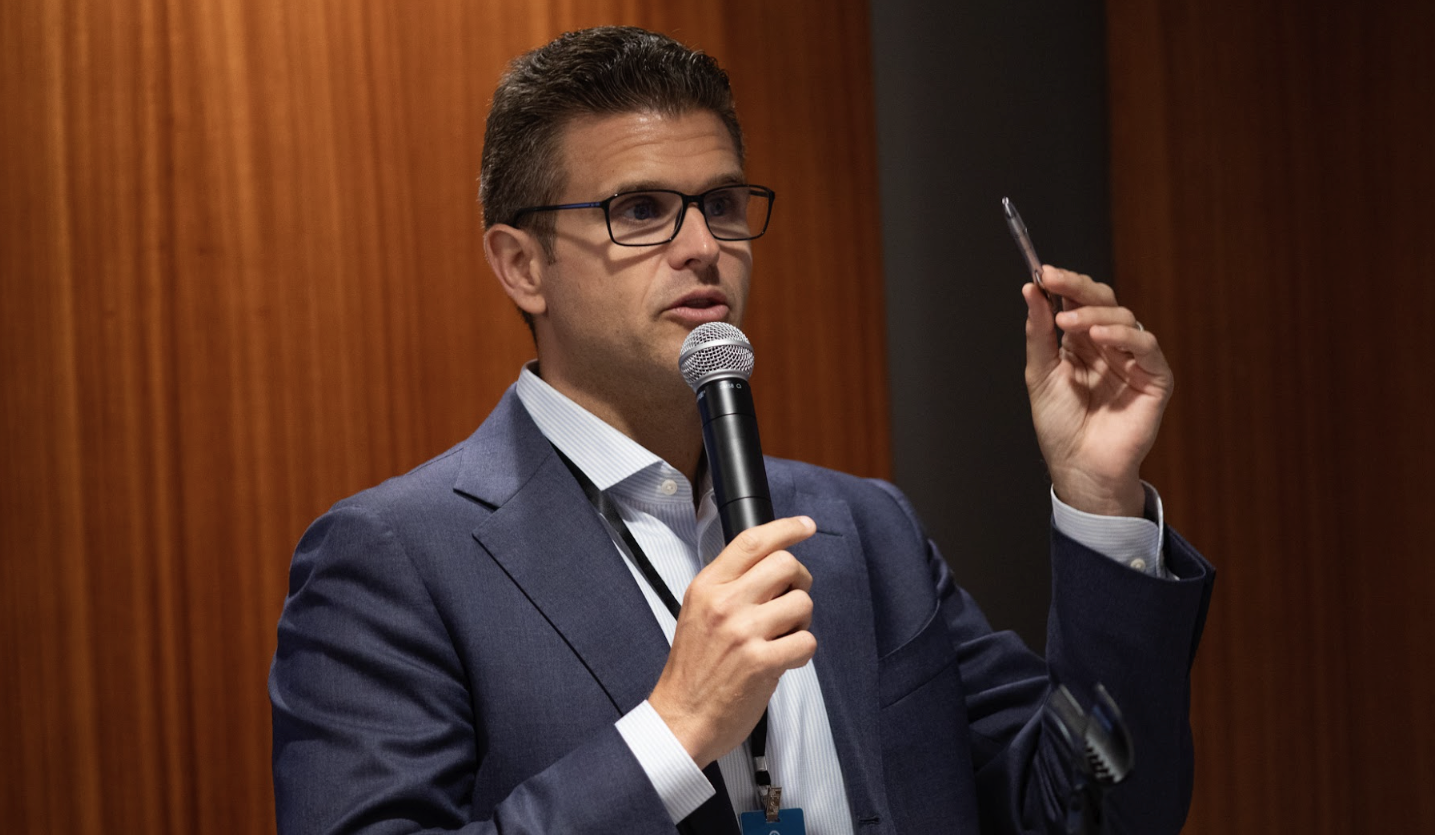
Matt Urmy, Artist Growth’s co-founder and CEO pictured at the very top of this article, puts it bluntly: “AI doesn’t fix poorly structured data; it amplifies it, and when it comes to sensitive artist data, security is everything.”
That quote gets to the center of the announcement. The industry has spent the last couple years getting excited about what AI can generate. Artist Growth is making the argument that generation means very little if the data underneath it is messy, overexposed, or poorly governed.
The MCP plugs into the AI people already use
Artist Growth says its MCP works with Claude, ChatGPT, Gemini, Antigravity, and Copilot. It is live in the ChatGPT app store now, with Claude, Gemini, Antigravity, and Copilot connectors available as custom connectors while marketplace reviews are pending.
That part is important because most teams do not want another isolated AI box. They already have staff experimenting with different models, and the real operational gain comes from letting people use the AI layer they prefer without detaching it from the company’s source of truth.
AG says customers can use the MCP to work with events, projects, tasks, artist itineraries, ticket requests, promotional campaigns, and run-of-show details. The company also shared example walk-throughs showing single-prompt actions for making a ticket request, creating an artist itinerary, and building a run-of-show document.
This connects with a broader industry question I have covered in my article on how AI might affect music production. The first wave of AI conversation centered on creative work: songs, vocals, stems, sound design, and writing. The next wave may be less glamorous, and probably more commercially important: operations, permissions, schedules, reporting, and admin that scales poorly when people are moving fast.
Touring is where AI shortcuts can get ugly
There is a reason this announcement hits harder in touring than it would in a normal office-software context.
Touring runs on changing details. Flights move. Hotels change. Stage times shift. VIP plans adjust. Guest lists change. Press adds a stop. A manager needs an update. A promoter needs a document. A label wants a digest. A crew member needs a call time. Multiply that across artists, cities, departments, and partners, and the admin becomes relentless.
AI can absolutely help with that. The risk is that music teams adopt AI in the same messy way they adopted every other communication shortcut: fast first, governance later.
That is where Artist Growth is trying to draw the line. Its claim is not simply that it can make the work faster. It is that the faster work still respects the same permission map the organization already uses.
That also makes this relevant beyond AI hype. In my earlier article on Beatport Ticketing, the broader idea was that dance music companies keep moving closer to full-stack infrastructure: discovery, ticketing, artist tools, venue data, and fan relationships all living closer together. Artist Growth’s MCP points to the back-office version of that same shift, where touring logistics and artist services become more connected, but also more sensitive.
Artist services are becoming an AI security category
The Artist Growth MCP is not interesting because it proves AI can write an itinerary. Everyone already knew that was coming.
It is interesting because it treats music operations as a security problem first and an automation problem second. That is the correct order.
The music industry has plenty of admin that should move faster. It also has artist data, travel details, event plans, and private logistics that should never be casually exposed because someone wanted a quicker summary.
If Artist Growth can keep permissions clean while speeding up the work, the company is pushing AI away from novelty and toward something the business actually needs: a safer way to get the boring work done.

Will Vance is a professional music producer who has been involved in the industry for the better part of a decade and has been the managing editor at Magnetic Magazine since mid-2022. In that time period, he has published thousands of articles on music production, industry think pieces and educational articles about the music industry. Over the last decade as a professional music producer, Will Vance has also ran multiple successful and highly respected record labels in the industry, including Where The Heart Is Records as well as having launched a new label with a focus on community through Magnetic Magazine. When not running these labels or producing his own music, Vance is likely writing for other top industry sites like Waves or the Hyperbits Masterclass or working on his upcoming book on mindfulness in music production. On the rare chance he's not thinking about music production, he's probably running a game of Dungeons and Dragons with his friends which he has been the dungeon master for for many years.