New Places is Dante‘s third studio album – and his most daring yet. It’s an album that breaks new ground and redefines Dante’s sound. It was created entirely in London – a city whose energy, diversity, and chaos can be heard in every track. Field recordings, urban textures, and pulsating rhythms combine to create a soundscape that not only captures the city, but breathes it. Despite all the new influences, Dante‘s signature style remains unmistakable. His music tells stories – of dreams and setbacks, of people and moments, of getting stuck and moving on. ‘New Places’ is not a straight path, but a journey with detours.
Sometimes you stop and think: I‘ve been here before, look back before moving on again. On this journey, you meet people – some stay, some go, some are simply the motivation to keep going. Dante‘s world is one in which eight months of winter depression are replaced by four months of spring euphoria, where a day consists of ten hours of twilight, ten hours of clubbing, and four hours of sunrise. Dark, but beautiful. Heavy, but alive. New Places is exactly that: a place between light and shadow, standstill and movement.
Ableton Live Analog
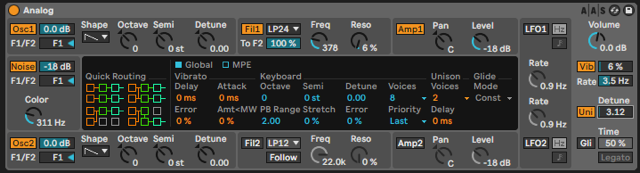
Analog from Ableton is kind of an all-purpose weapon for me. It’s based on classic subtractive synthesis with two oscillators offering simple waveforms like sine, square, saw, and noise. On top of that, you get straightforward controls for filter, resonance, tuning, and envelopes. Everything is super clean and easy to understand. That mix of simplicity and flexibility is what makes it so powerful for me.
I used Analog across a lot of tracks on the album, mostly as a layer for my main synths. In “Choices”, for example, it was the core layer of the bass, mainly using square waves with slight modulation. In tracks like “Flashbacks” or “Sudden Silence”, it became part of the main synth itself. I worked a lot with filter frequency, resonance, noise, shape, and slight detuning to create movement. Most of the automation was on filter cutoff, resonance, and sometimes vibrato to keep everything alive.
I’d definitely recommend using Analog as a layering tool. Especially in UK Garage, Breaks, or bass-heavy music, it can add a lot of depth to your sounds. You get results really fast just by experimenting. While other synths can feel overwhelming, Analog is super direct—and that’s exactly what makes it so creative. For me, it just makes every sound better without overcomplicating things.
Oxford Inflator
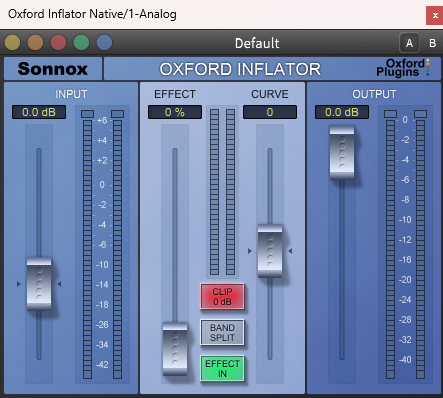
The Oxford Inflator from Sonnox is a plugin that increases the perceived loudness of a signal without damaging its dynamics or overall quality. It doesn’t work like a traditional limiter—instead, it adds harmonic content that makes sounds feel fuller and more present. It also allows a bit of soft clipping without harsh digital artifacts. That’s what gives it this unique warmth and density.
I mainly use the Inflator on vocals, main synths, and drum & bass elements. Most of the time, very subtly—I usually focus on the two middle knobs. The goal isn’t to push things too hard, but to bring elements slightly forward in the mix. Sometimes I push it a bit more when something feels too dynamic and needs control. Even then, it still sounds more musical to me compared to many other clippers.
My tip: don’t overdo it. The Inflator is a bit of a secret weapon when something isn’t quite sitting right yet. Especially in UK-inspired music, it can help make sounds feel clearer and warmer at the same time. Just experiment carefully, and you’ll quickly understand how powerful it is.
Tube-Tech CL 1B
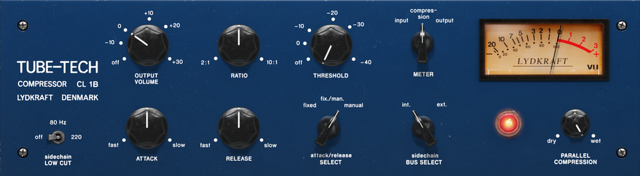
The Tube-Tech CL 1B from Softube is a digital version of a classic optical tube compressor. The original hardware is known for its warm, smooth compression, and the plugin captures that really well. It works in a very musical way and never feels too aggressive. Because of that, the character of the sound stays intact while still being controlled
I mainly use the CL 1B on vocals, but also on drums. What I really like is how it adds a sense of space to the sound. Even though it’s a tube-based compressor, the transients stay intact, which makes it very versatile. I also often use the dry/wet control for parallel compression to keep things subtle. Especially on vocals, it helps keep everything stable in the mix without flattening it.
For me, this is a go-to plugin whenever I want something to stay organic and alive. If you don’t have access to real hardware, this is one of the best alternatives. My advice is to keep it subtle and use the mix knob. That way, you get the warmth without losing the energy.
Schwabe Digital Gold Clip
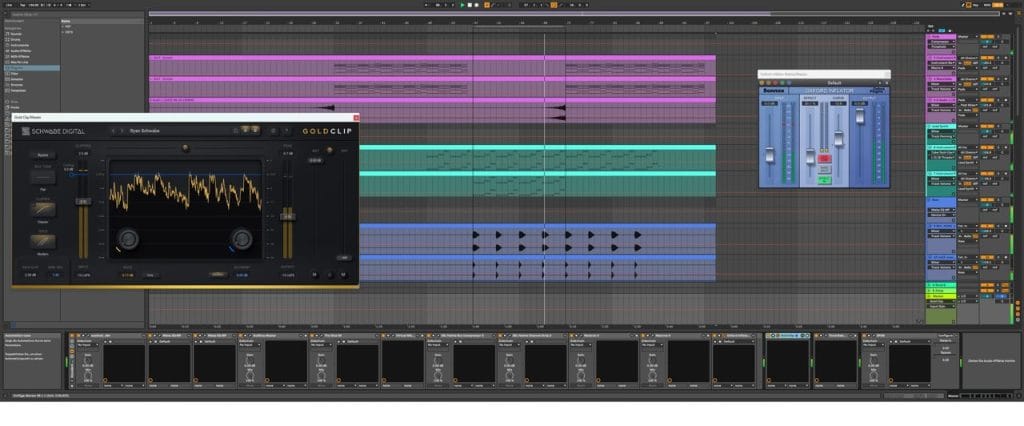
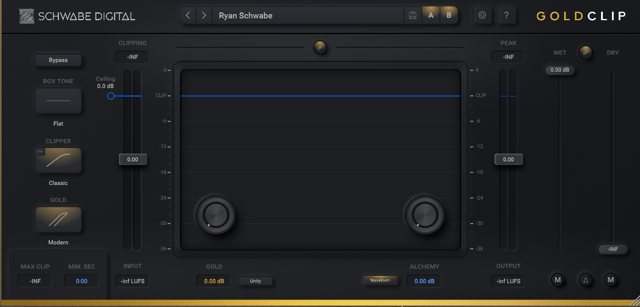
Gold Clip by Schwabe Digital is a modern clipping plugin designed to increase loudness without destroying the sound. It works very clean and transparent, but can also add character if you push it. Compared to many other clippers, it feels less harsh and more controlled. Especially in the low-end, everything stays stable, which is super important for me.
I mainly used Gold Clip on the drum bus and sometimes on individual elements. The goal was to control peaks while adding more punch. Often, I placed it before the final limiting stage to prepare the mix. I always used it carefully—not pushing it too hard, but just enough to tighten things up. Combined with tools like the Inflator, it helps create a dense but still clean sound.
My advice is to treat Gold Clip as a control tool rather than just a loudness tool. Especially in UK Garage or bass music, it helps shape transients and tighten the mix. If used correctly, you get more punch without obvious clipping artifacts. For me, it’s become essential when aiming for clean but powerful mixes.
Quick Fire Tips For Making This Genre
Use simple sounds, but give them movement through automation. Small changes can make a huge difference.
Layer your sounds—a clean synth combined with an analog-style layer can add a lot of depth. It’s rarely about one perfect sound, but about the combination.
Loudness doesn’t come from the limiter alone. Saturation and clipping before that stage define how “expensive” your mix sounds.
Leave space in your mix. Bass music especially needs room to breathe.
Trust your feeling. If something sounds right, it usually is—even if it’s not technically perfect.