Table of Contents
Kompose Audio’s Glowtone Keys is a small Soundbox instrument built around the Roland JX-8P Piano 1 preset. It comes with 4 preset variations, 8 velocity layers per note, and a file size of 575 MB. It runs inside Audiomodern’s Soundbox player, which supports Mac, Windows, Linux, and iPadOS, with VST3, AU, AAX, AUV3, and standalone options depending on the platform. It only just recently dropped last week so I wanted to take some time in the studio over the weekend to get used to what this little thing can do.
After spending a few hours with it over the weekend, the main thing I noticed was how quickly it gave me usable parts things to talk about with you. Glowtone Keys does not try to cover a huge range of sounds, and it doesn’t really try to (it’s only like $6 at the time of writing this). It is a focused, affordable key instrument built around a warm, 80s-leaning tone, and that narrow scope helps it get to the point fast.
I was using it with the free Soundbox player that Kompose Audio recommends, so the control set was fairly simple. I had basic amplitude envelope controls, a few built-in effects, and enough adjustment to shape the part without getting pulled into a long programming process. Within a few minutes, I understood what the instrument was built to do, and I could start writing with it right away. So let’s dive into the more knitty-gritty.
The Tone Has Its Specific Vibe
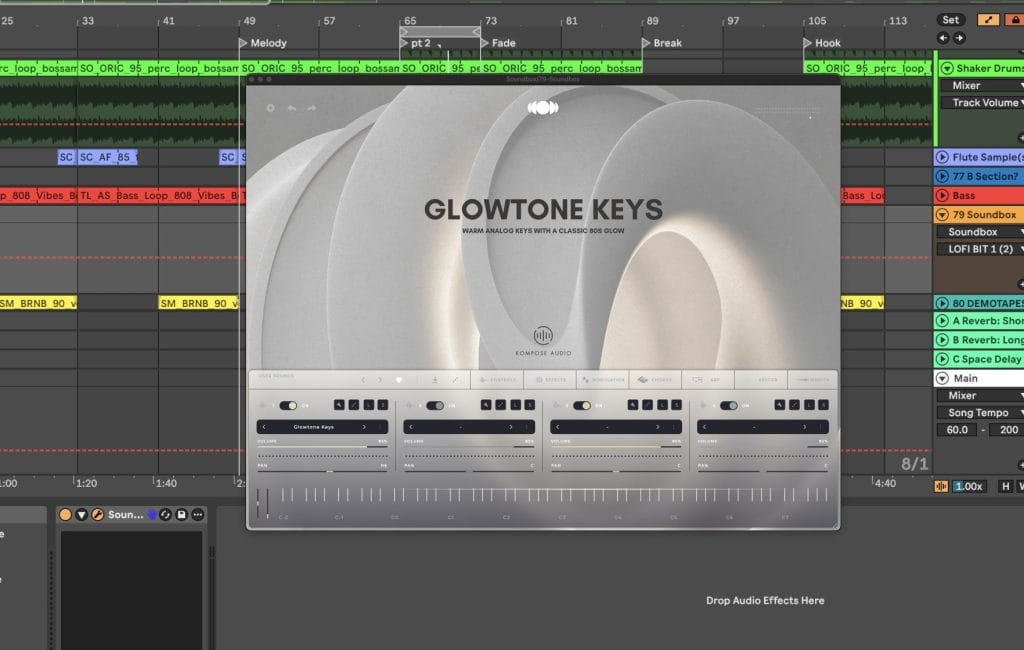
Glowtone Keys is a bit of a one-lane instrument, though I do not see that as a problem. It gives you a warm synthetic key sound that feels connected to 80s pop, softer lo-fi writing, synthwave-adjacent ideas, and mellow electronic music. There are only a handful of sounds and presets, so the range is limited, though the tone itself is easy to understand and quick to use.
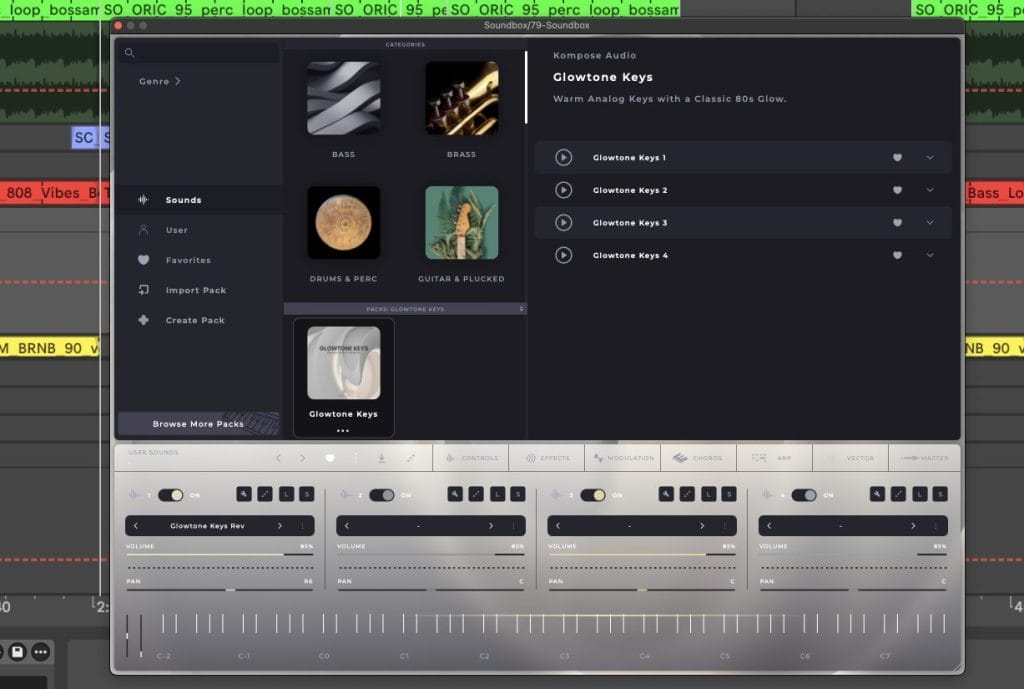
That is also where the price becomes part of the context, and it really is a low-cost instrument. For something that costs less than a beer in most cities, the value is fairly straightforward. You are getting a specific key tone that loads quickly and can be used without much setup.

The tone has a soft, slightly rounded character that sits somewhere between a synth key and a mellow electric piano. It can start a chord progression quickly, and it has enough identity to guide the early direction of a track. I would not treat it as a broad keyboard library, though I would treat it as a useful writing tool when I want this type of sound from the start.
The Velocity Layers Do Enough For The Role
The velocity response felt decent for the instrument’s size and purpose but far from anything to write home about.
Glowtone Keys includes 8 velocity layers per note, which help the sound respond with enough movement to avoid feeling flat. It worked well enough for chord progressions, small melodic runs, and simple upper-register details.
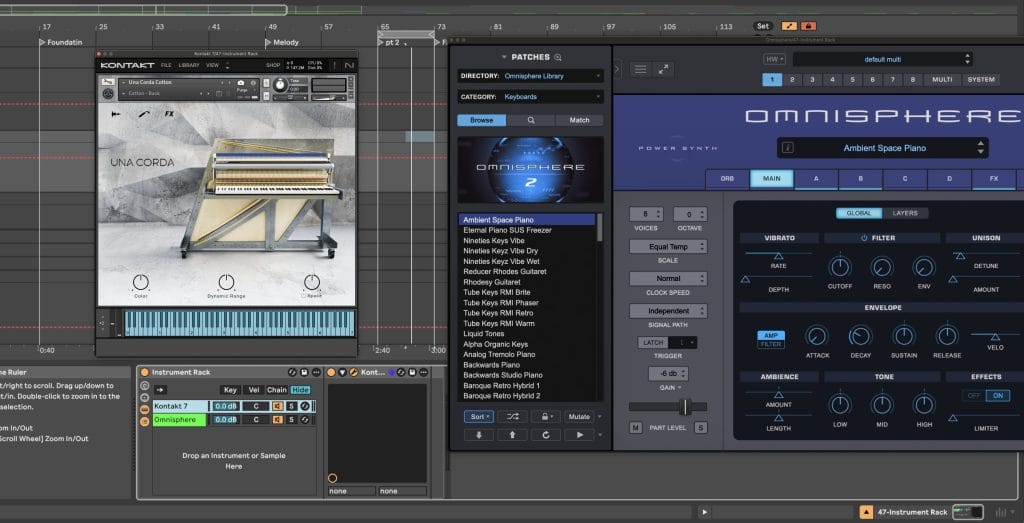
That said, it does not have the nuance of a larger Kontakt-based piano sampler or a more detailed keyboard library. I would not expect that from a lightweight Soundbox pack in this price range. The velocity layers do useful work, though the instrument still feels like a stylized key sound rather than a highly detailed performance instrument.
For the way I used it, that was fine. I was mainly testing it for writing, layering, and quick harmonic ideas, and in that context, the velocity response gave me enough control to make parts feel playable without making the instrument feel overbuilt.
Where It Worked In A Dense Mix
Glowtone Keys behaved fine in a dense mix, though I liked it more when it had space around it. The sound itself is fairly simple and direct, so it works best in minimal productions or in sparser arrangement sections where the ear can focus on its tone. Below is a noddle I did so you get the vibe.
When I put it inside a busier track, I did not find myself reaching for it as the main harmonic layer. It worked better as a supporting part. Layered with my warmer Kontakt-based pianos, it added a little midrange warmth and helped certain melodic details poke through the upper mids without taking over the arrangement. Below is the same loop above but when played alongside a track I’ve been noodling on.
The best use in that context was small riffs, passing notes, and ear-candy-style parts that happen in open spaces. Glowtone Keys can add a bit of sheen and warmth in those spots without dragging a lot of low-end content into the mix. That made it easier to place than many full piano sounds I use.
Easier To Place Than A Traditional Piano
One thing I appreciated about Glowtone Keys is how little corrective work it needed compared with many piano instruments. I have always found piano sounds difficult to fit into my mixes because they often bring a lot of low-end mass, low-mid buildup, and brittle top-end detail. That usually means I have to spend time shaping the sound before it sits correctly.
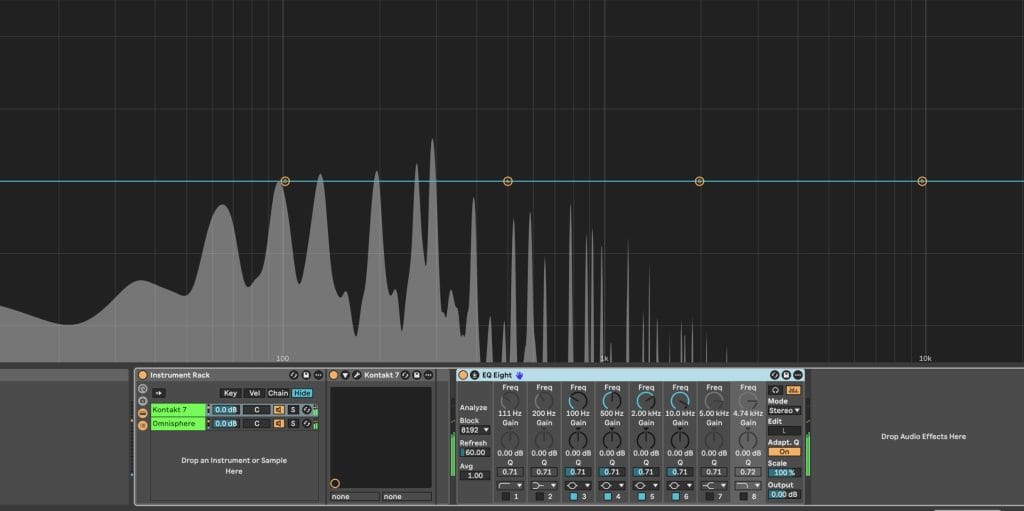
Glowtone Keys did not fight me in that same way. It has less low-end density, and the top end felt easier to manage. There is a bit of warmth and sheen already built into the tone, so it can sit in an arrangement faster than a heavier piano library.
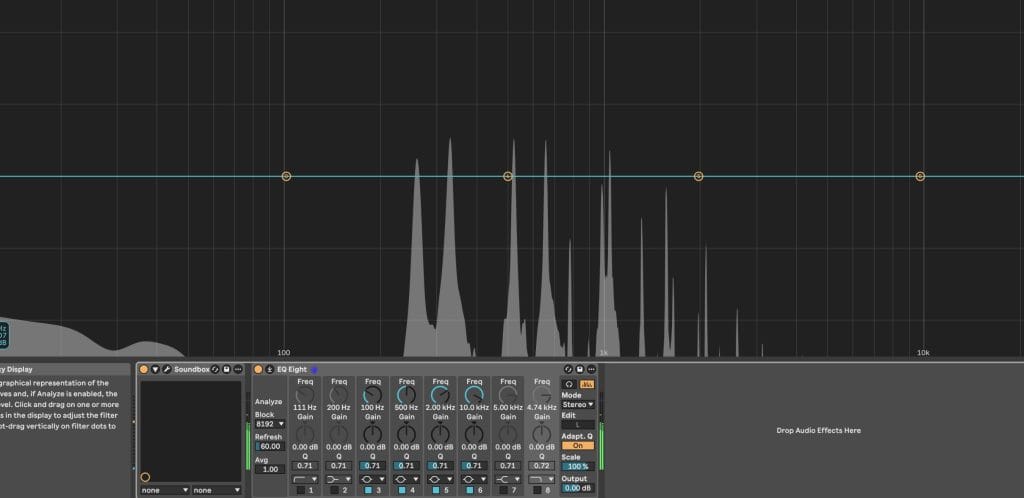
That made it useful as a writing instrument. I could load it, sketch a part, and keep moving without stopping to fix the sound immediately. For me, that is one of the bigger strengths here. It helps keep the writing process moving.
Soundbox Gives You Enough Control To Shape The Sound
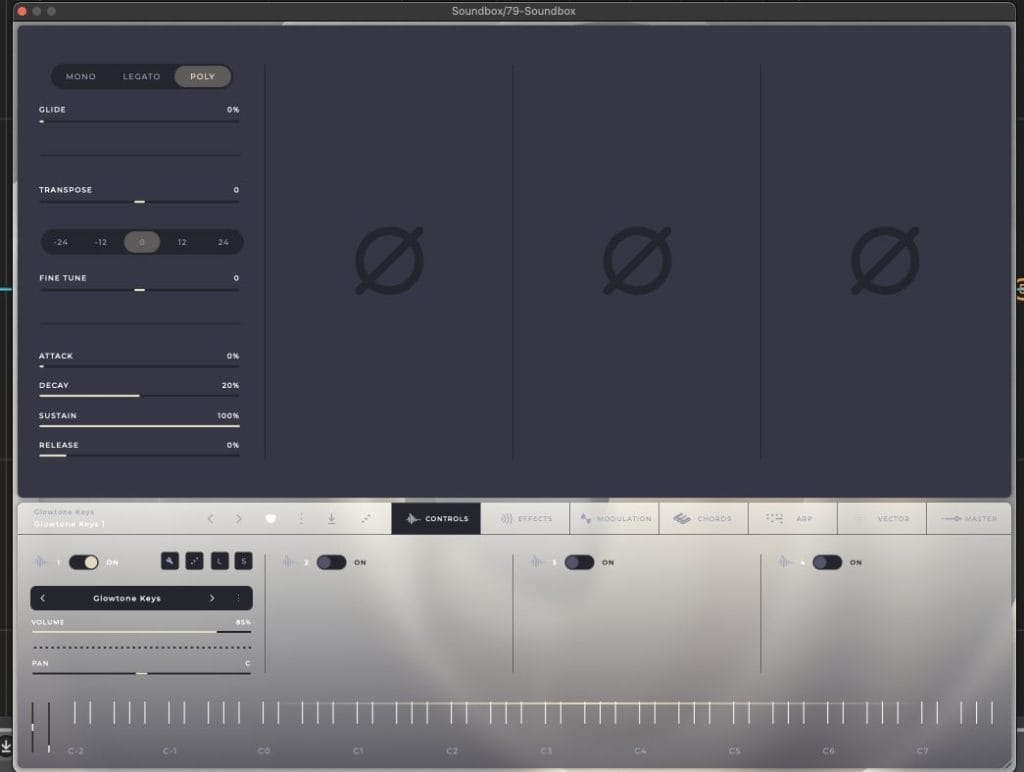
The free Soundbox player gives you some basic ways to push the sound. The ADSR controls are useful for adjusting the feel of the part, and the built-in effects can move the tone in a few helpful directions. The control set is not deep, though it gives enough to make small changes while you are writing.

I liked the delay inside Soundbox more than I expected. It fit the character of the instrument and helped pull out the softer 80s-leaning side of the sound. The lo-fi effect was also fun to use. It is a simple two-parameter effect, though it helped draw out the aged key character in a way that suited the instrument.
For final mix work, I would still reach for my usual plugins. Soundtoys, FabFilter, FSK, Bark24, and similar tools give me more control when I want to place a part with precision. Soundbox works well as the host platform and a quick sketching environment, then I would use my normal chain for detailed processing.
How It Fits Against My Usual Key Sounds
Most of my chilled key parts come from larger instruments. I often layer Una Corda from Kontakt with warmer, lower piano sounds from Omnisphere. That combination gives me a fuller harmonic bed, though it also creates more mixing work because those sounds can carry a lot of low-end and low-mid information.
Glowtone Keys sits outside that usual setup. It feels lighter, more stylized, and easier to commit to early. It does not replace my main piano sounds, though it does serve a purpose that those larger tools do not always handle as quickly.
I could see myself starting tracks with Glowtone Keys when I want an 80s-inspired, lo-fi hip-hop, or synthwave-leaning direction. I often start music with a piano so I can lock down the basic chord progression before building the arrangement around it. With this instrument, I would be more likely to keep the original sound in the final track because the tone already points the idea somewhere specific.
Who This Plugin Makes Sense For
Glowtone Keys makes the most sense for producers who want a fast, affordable, warm key sound that can start an idea quickly. It works well for chord sketches, soft melodic parts, supporting layers, and upper-mid details. It also fits producers who prefer having a few focused sounds instead of a large library full of options.
It is less ideal for anyone looking for a detailed piano replacement, a full synth engine, or a broad keyboard workstation. The preset count is small, the tone is specific, and the customization options are fairly limited. Those limits are clear from the start, and the plugin works better when you accept them instead of trying to force it into every role.
Final Verdict
Glowtone Keys is a focused writing tool with a clear sound. It gives you usable parts quickly, it is easier to place than many piano instruments, and it has enough velocity response to feel playable for chords, riffs, and small melodic runs.
I would not use it as my main harmonic layer in a dense arrangement, and I would not reach for it when I need the nuance of a larger piano library. I would use it when I want a soft, 80s-inspired key tone that can start a track quickly and sit in the mix without much cleanup.
For the price, it is easy to recommend if that sound is useful to you. Glowtone Keys has a narrow lane, though it handles that lane well.

Will Vance is a professional music producer who has been involved in the industry for the better part of a decade and has been the managing editor at Magnetic Magazine since mid-2022. In that time period, he has published thousands of articles on music production, industry think pieces and educational articles about the music industry. Over the last decade as a professional music producer, Will Vance has also ran multiple successful and highly respected record labels in the industry, including Where The Heart Is Records as well as having launched a new label with a focus on community through Magnetic Magazine. When not running these labels or producing his own music, Vance is likely writing for other top industry sites like Waves or the Hyperbits Masterclass or working on his upcoming book on mindfulness in music production. On the rare chance he's not thinking about music production, he's probably running a game of Dungeons and Dragons with his friends which he has been the dungeon master for for many years.