Audio Damage Traverse feels like one of those plugins that starts with a simple promise and then gets a lot weirder once you sit with the details. On paper, it is a cassette effect and a stereo delay in one plugin. In use, the appeal seems to be how quickly it can turn a clean part into something worn down, unstable, and a little less polite without turning the whole thing into a novelty effect.
That is the part I like about this kind of stuff.
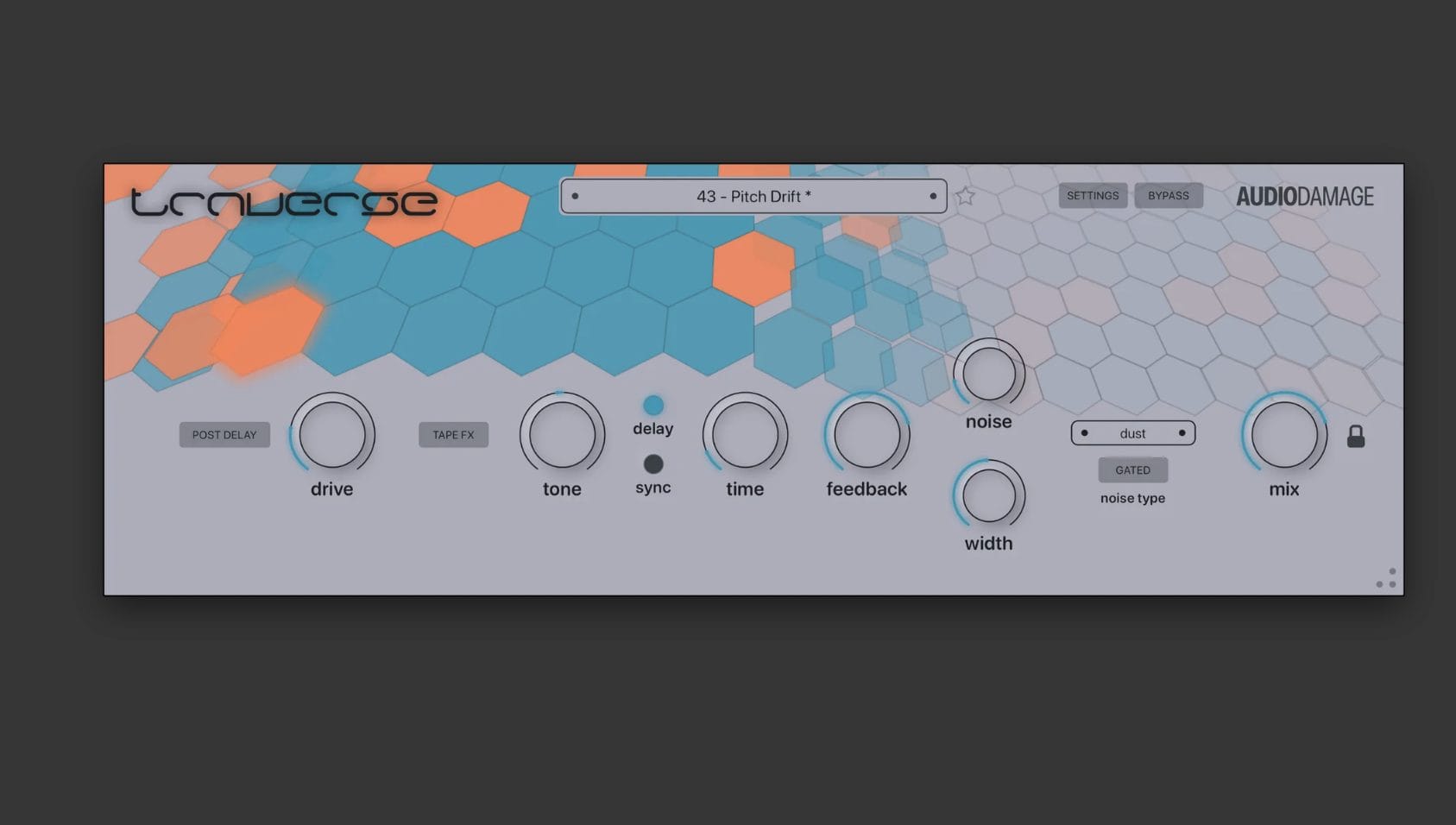
A clean synth pad, drum bus, vocal line, or guitar chord can sound technically fine yet still need something to make it feel less perfect. Traverse gives you the cassette side of that equation through Drive, Wow, Flutter, Tone, splice dropouts, and procedural noise, then pairs it with a stereo delay that can run up to 10 seconds, sync to host tempo, ping-pong across the stereo field, and feed back through the tape engine.
The main thing is that the tape behavior is not sitting off to the side as a little color box.
Audio Damage built the cassette section around a hysteresis-modeled tape engine, so Drive responds to signal history rather than following a flat saturation curve. That gives the plugin a little of the inconsistency you want from tape without asking you to bounce through an actual machine or fake the noise afterward.
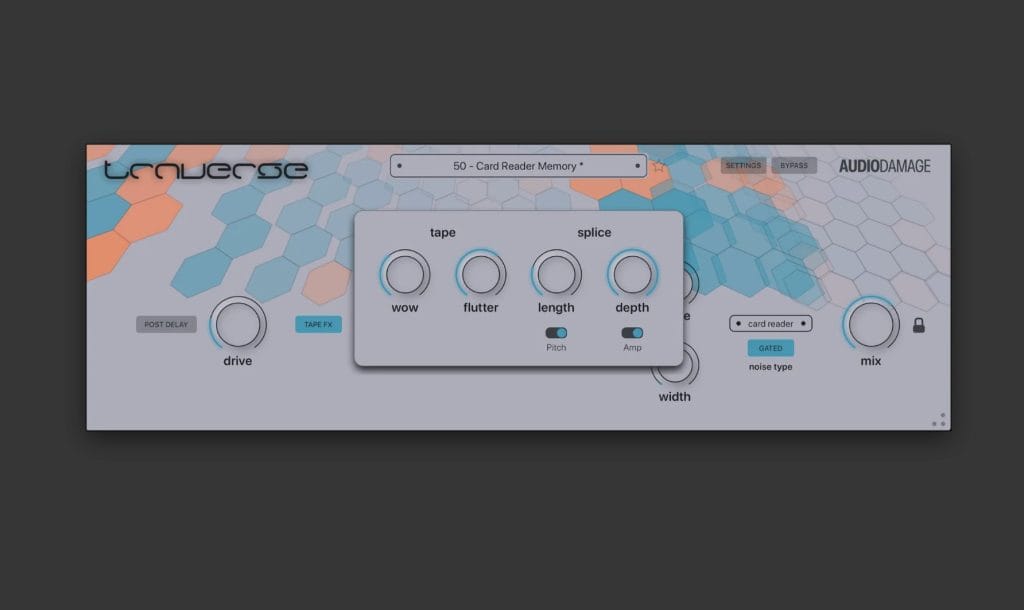
The Tape Side Is The Character
The cassette controls are the part most producers will probably touch first.
Drive takes the signal from cleaner tape color into heavier damage, while Wow and Flutter handle the slower pitch drift and faster jitter that make the stereo image feel less locked to the grid. Tone is a tilt EQ inside the cassette path, so you can darken or brighten the whole effect without reaching for another plugin right away.
The delay side is simple in a good way. Time, Feedback, Width, sync, and ping-pong get you where you need to go quickly, and the Post-Delay routing toggle changes the personality of the whole plugin. With it off, the signal hits the cassette section first and the feedback returns through that full chain, so the repeats keep picking up tape color as they go. With it on, the cassette processes the delay tail instead, which gives you a cleaner input and a more familiar tape-delay shape.
That routing choice is probably the feature that makes Traverse easier to keep in a session. You can use it as a damaged cassette processor, a tape-flavored delay, or something in between, and the plugin does not force one signal path on every source.
Noise, Splices, And Broken-Machine Movement
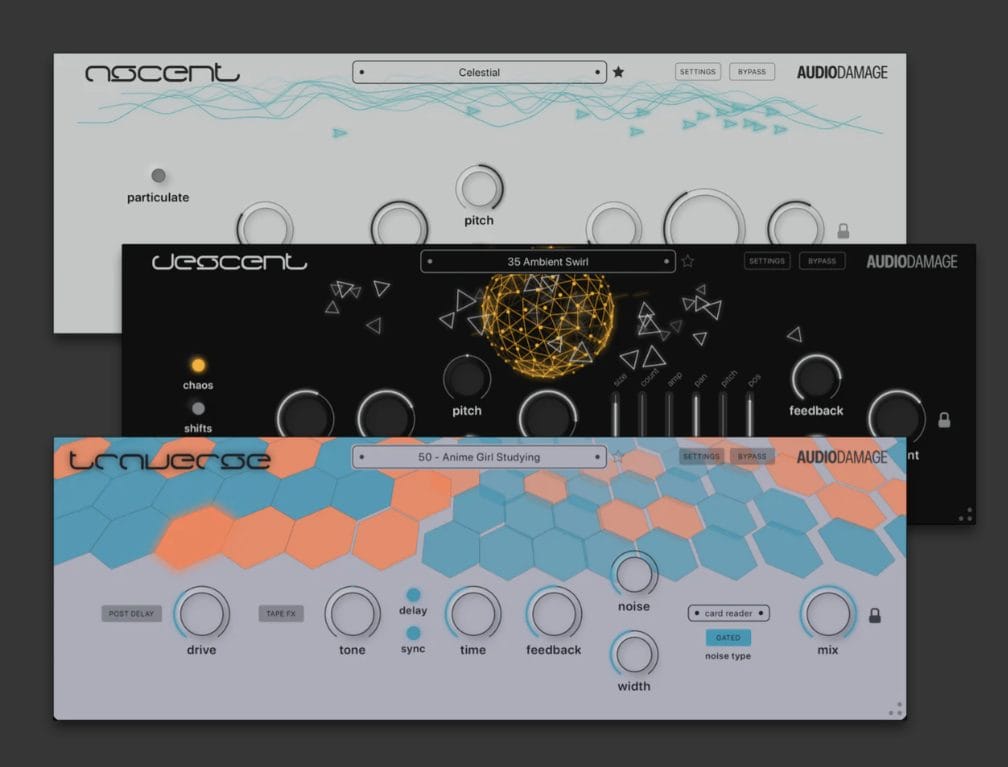
The noise section is where Traverse starts feeling like an Audio Damage plugin in the best way. You get nine procedural noise types: Hiss, Crackle, Dust, Fan Rumble, 60Hz Hum, 50Hz Hum, White, Pink, and Califone Card Reader. Those noise voices feed into the cassette path, which means Drive, Tone, Wow, Flutter, and feedback all shape the noise along with the source.
That is useful because noise can feel pasted on when it does not react to the rest of the chain. Here, it becomes part of the effect. The gated noise option helps too, dropping the noise floor when the input goes silent so the texture shows up with the part and backs off between phrases.
The splice system adds another layer of controlled failure. Time sets how often events happen, Depth controls how hard they hit, and Pitch and Amp decide if the dropout affects pitch, volume, or both. That can take the plugin from subtle tape wear into broken tape-deck behavior pretty quickly.
Traverse is $29 and runs on Mac, Windows, Linux, and iOS, with CLAP, VST3, AU, AAX, LV2, and AUv3 support depending on the platform. It follows Ascent and Descent in Audio Damage’s Motion Effects family, and it keeps the company’s usual stance: no DRM, no subscription, no dongle, and a perpetual license.
For producers who use delay as part of the writing process, Traverse feels useful because it is not only about echoes. It gives you delay, cassette color, noise, splice movement, and feedback damage in one place, which is exactly the kind of thing that can turn a plain part into something worth building around.

Will Vance is a professional music producer who has been involved in the industry for the better part of a decade and has been the managing editor at Magnetic Magazine since mid-2022. In that time period, he has published thousands of articles on music production, industry think pieces and educational articles about the music industry. Over the last decade as a professional music producer, Will Vance has also ran multiple successful and highly respected record labels in the industry, including Where The Heart Is Records as well as having launched a new label with a focus on community through Magnetic Magazine. When not running these labels or producing his own music, Vance is likely writing for other top industry sites like Waves or the Hyperbits Masterclass or working on his upcoming book on mindfulness in music production. On the rare chance he's not thinking about music production, he's probably running a game of Dungeons and Dragons with his friends which he has been the dungeon master for for many years.