
Many artists use nostalgia as a crutch for when they’re out of ideas. Chloé French uses it as an artistic device.
The 24-year-old Geneva native, now based in New York City, is reviving the shimmer and sophistication of 1960s French disco and chanson with a distinctly modern edge. Her latest release, a French-language cover of Lola Young’s “Messy,” transforms the original’s raw confessionals into something cinematic and intoxicating, with swirling strings, velvet basslines, and the kind of groove that feels like it belongs equally in a smoky Parisian club and a Brooklyn warehouse party.
It’s this balance that makes Chloé’s work so compelling. Instead of simply mimicking retro sounds, she’s reanimating their spirit. Drawing from her time in Geneva, Paris, Berlin, and now NYC, her music draws from the scenes of each location, making her a truly one-of-a-kind artist. With her debut EP “The NYC Tapes” arriving in January 2026, Chloé stands as part of a growing wave of artists reclaiming vintage textures for the algorithm age, proving that nostalgia isn’t about looking back, but rather about finding timelessness in the now.
We caught up with Chloé to learn how she’s able to make the past sound new again, and the following interview is chock-full of gold tips and insight. Take a listen to “Messy (but French)” below, and read on!
What originally drew you to 1960s French disco?
I was born and raised in Geneva, Switzerland, with French as my first language so I grew up on a lot of chanson française, as well as some classic disco hits my parents loved.. I was always drawn to cinema (my mom directs documentaries for Swiss TV), and French new wave visuals spoke to me more and more over the years. Having spent 5 years in the US already, pivoting back to French and that era felt like reaching back into some of what “home” is to me. It suddenly felt right and exciting to bring to life.
Building on that, what inspired you to reimagine Lola Young’s “Messy” through a French disco/chanson lens?
Beyond its obvious status as a global hit, it’s a song that touches me deeply. To me it’s particularly about the pressure of how others see us—on how we feel trying to do the right thing and be who we’d like to be. Reinventing the song with Alex Poeppel by infusing disco grooves and their touch of nostalgia made it more danceable, more liberating. It served in advocating to be oneself. And the French language brings in a natural nonchalance that suits that idea as well.
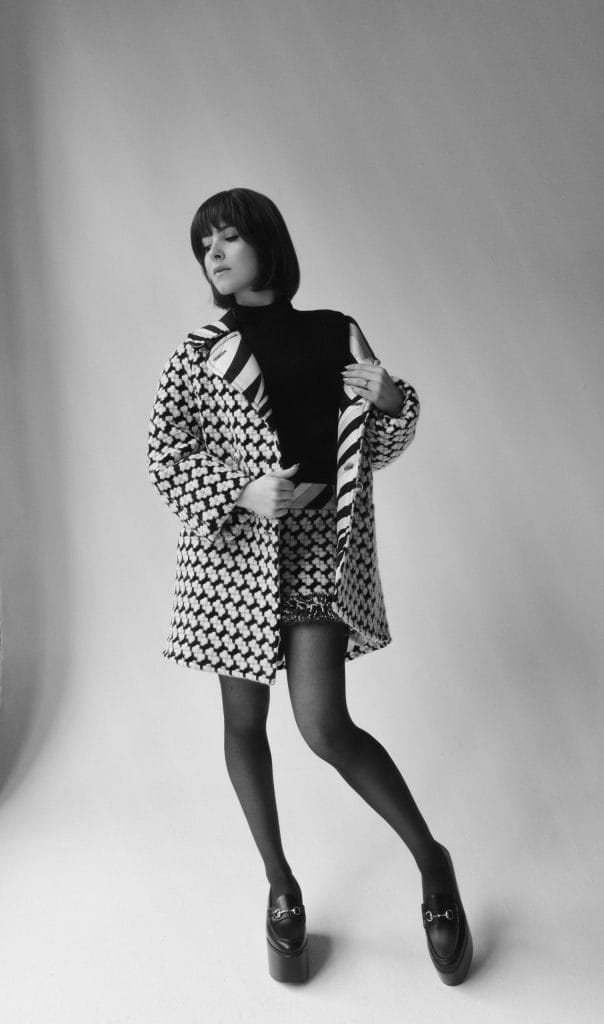
How do you balance paying homage to the past while making music that feels fresh and relevant today?
While I’m inevitably influenced by older music I grew up on, I’m also deeply inspired by a lot of modern day artists that span the likes of Charlotte Cardin, Fredagain, Purple Disco Machine, L’impératrice. Most pull from the past, themselves, we all do… So I think it’s all a natural and internal kind of push and pull.
Do you ever worry about leaning too far into nostalgia and losing originality?
I think achieving a feeling of nostalgia from something original is certainly my goal… I want my music to make people feel like they belong. Inherently, I believe that comes from a sense of relatability that itself is important and I don’t think it has to come at the cost originality.
Are there any modern production or songwriting tools that help you recreate vintage textures and vibes in a fresh way?
I love incorporating very concrete things, objects, references, places in my songwriting that allow for vivd imagery, and the ones that come out are often quite personal to me and so directly from my modern experience – that allows me to paint a world that is distant enough from the old fashioned romantic poetry of chanson francaise, yet still relatable. Accompanied by disco grooves and forward bass lines that are reminiscent of older disco tunes, I find that a specific energy comes together in a really vibrant way.
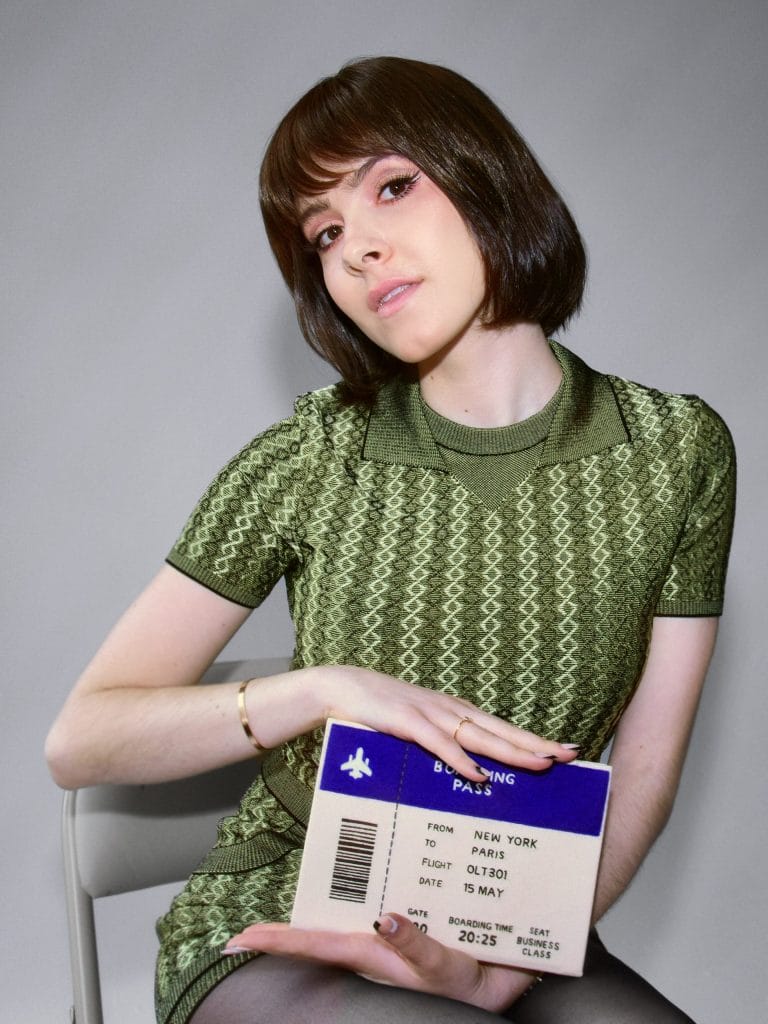
Why do you think retro revivalism – from disco to synthwave – feels so alive in today’s music scene?
Because in many ways we still long for that music. It brings in an ultimate feeling of nostalgia, of home, and in turn plays a part in allowing us to create our own versions of that feeling. All of what we know, love, hate and long for becomes a part of telling our own stories.
Lastly, what advice would you give other young artists looking to incorporate retro influences into their own work without feeling derivative?
Only use what you love, what makes sense to you and the idea you are relaying – what intrinsically feels right. I think the most important thing is to not add anything just for the sake of adding it because in theory it “makes sense”. It’s difficult to completely escape the idea that what we create is going to be somewhat derivative just by the nature of what it means to “create”… but as long as it’s of service to painting your own colorful and honest world, then I think each element will find its place.
Stream “Messy (but French)” here.

Magnetic byline note: This byline is used for staff produced updates and short announcements, often based on press materials and official release information. Editorial responsibility: David Ireland (Editor in Chief) and Will Vance (Managing Editor). About: https://magneticmag.com/about/ Masthead: https://magneticmag.com/masthead/ Contact: https://magneticmag.com/contact/






![How It Was Made: Low Steppa & Roel – Dreamliner [Low Trax]](https://magneticmag.com/wp-content/uploads/2026/09/DSC07195-1024x608.jpg)


