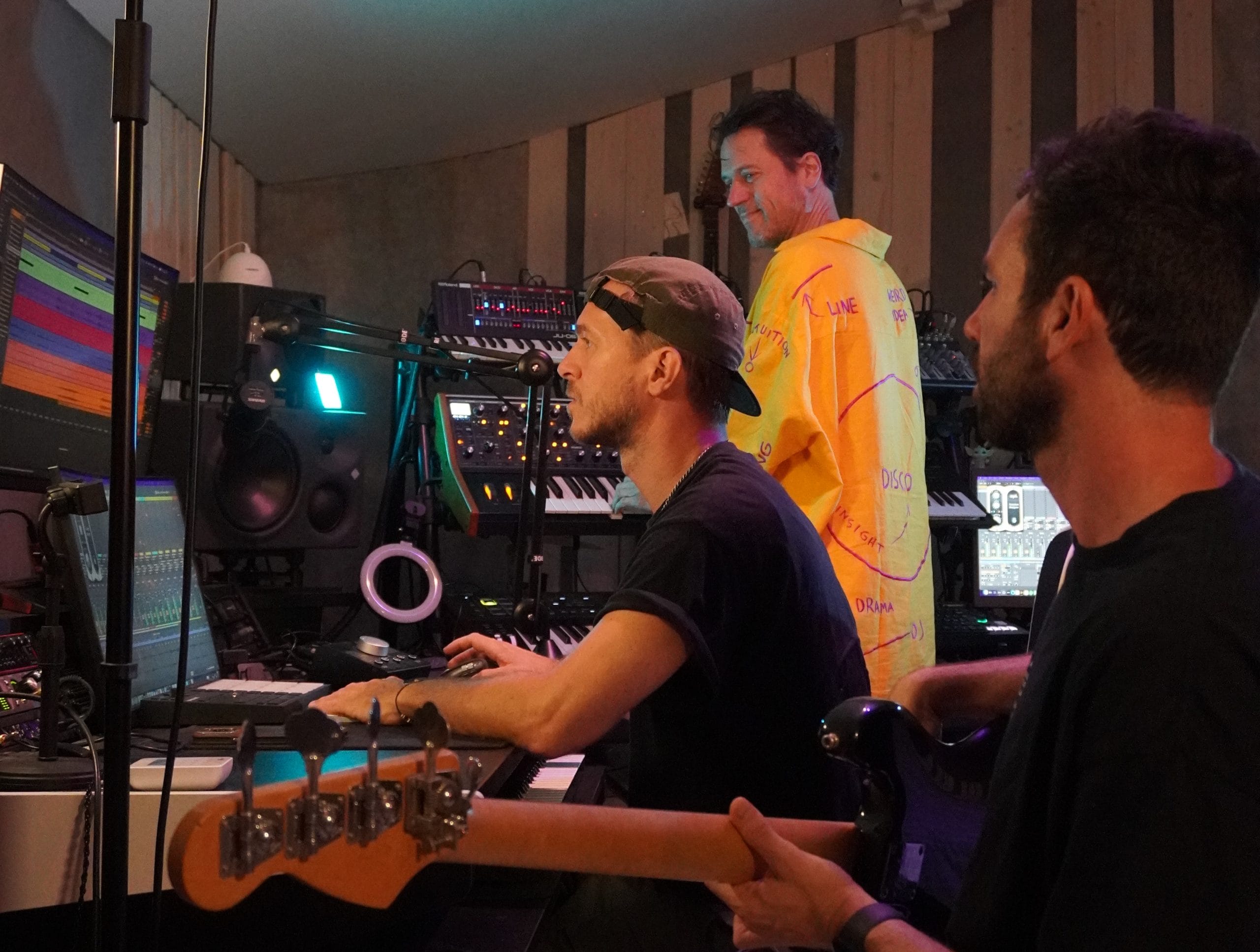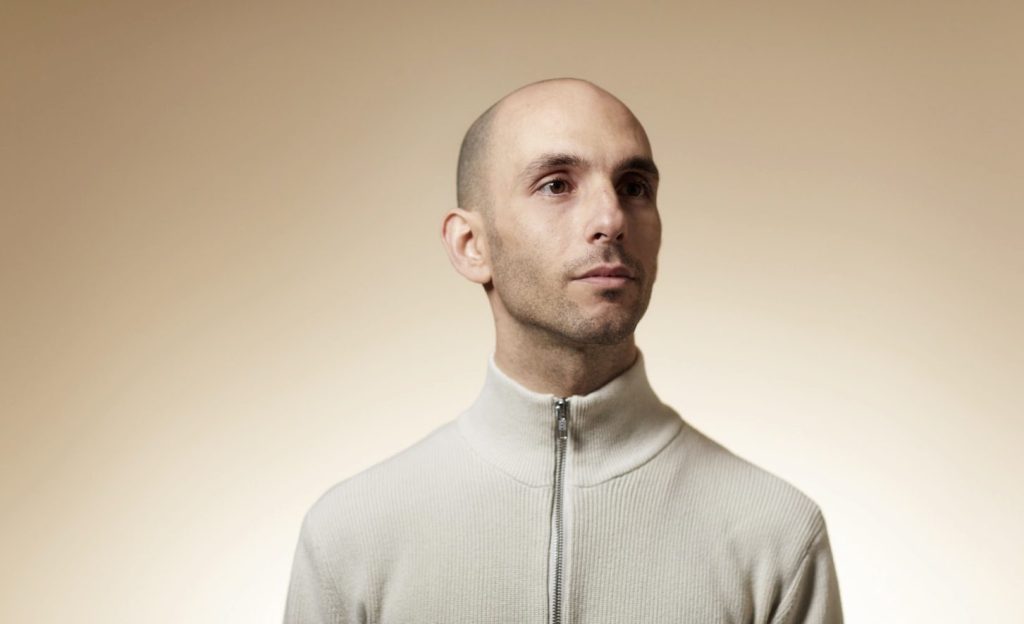
Bournemouth-born and London-based producer Vektah steps into the spotlight with “The Love We Share,” a drum and bass cut that’s equal parts emotion and engineering. The track orbits around a bespoke Serum-driven bass architecture, then swells into a widescreen chorus where carefully layered mids ride above a sine sub for weight and warmth. It’s a study in movement and restraint, built by iterating on personal patches, bouncing to audio, and letting modulation do the heavy lifting.
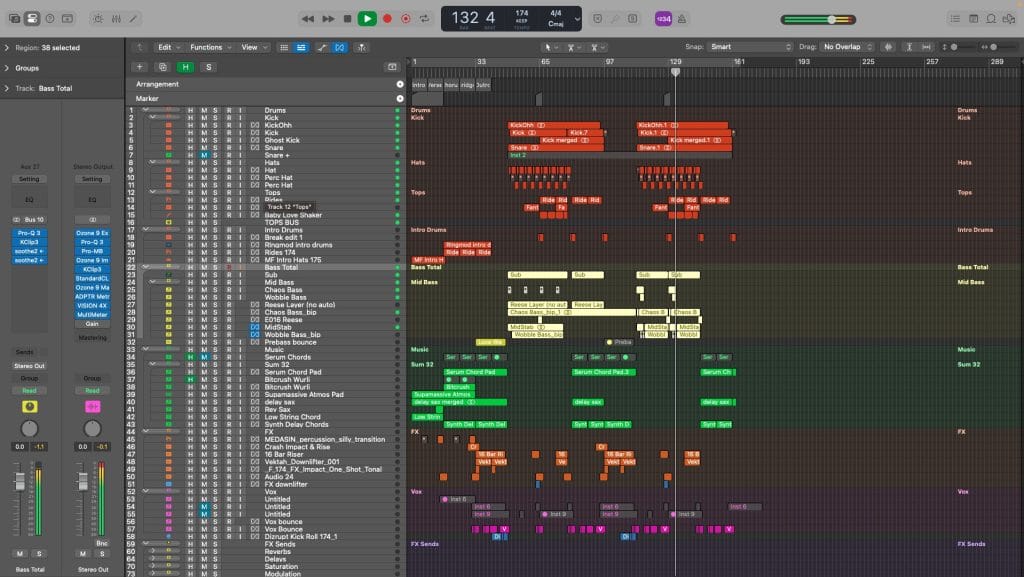
Under the hood, the production leans on Cableguys ShaperBox for both utility and flair, from tight multiband sidechaining to textural drive and noise that breathe life into the drum bus. Logic’s Overdrive adds tasteful grit to mid-bass layers, while Serato Sample reshapes vocal phrasing with extreme time-stretching that still feels musical, locking into the groove without breaking the mix. The result is a track that moves bar to bar, balancing clarity with character and landing with the kind of impact that translates from headphones to a packed room.
In this How It Was Made, Vektah breaks down that toolkit and the choices behind it, from why the original Serum still feels immediate, to drawing custom ShaperBox curves, to the vocal workflow that turns raw takes into a hook that anchors the drop. If you’re here for tangible techniques and repeatable chains, this one’s stacked with them.
Xfer Serum
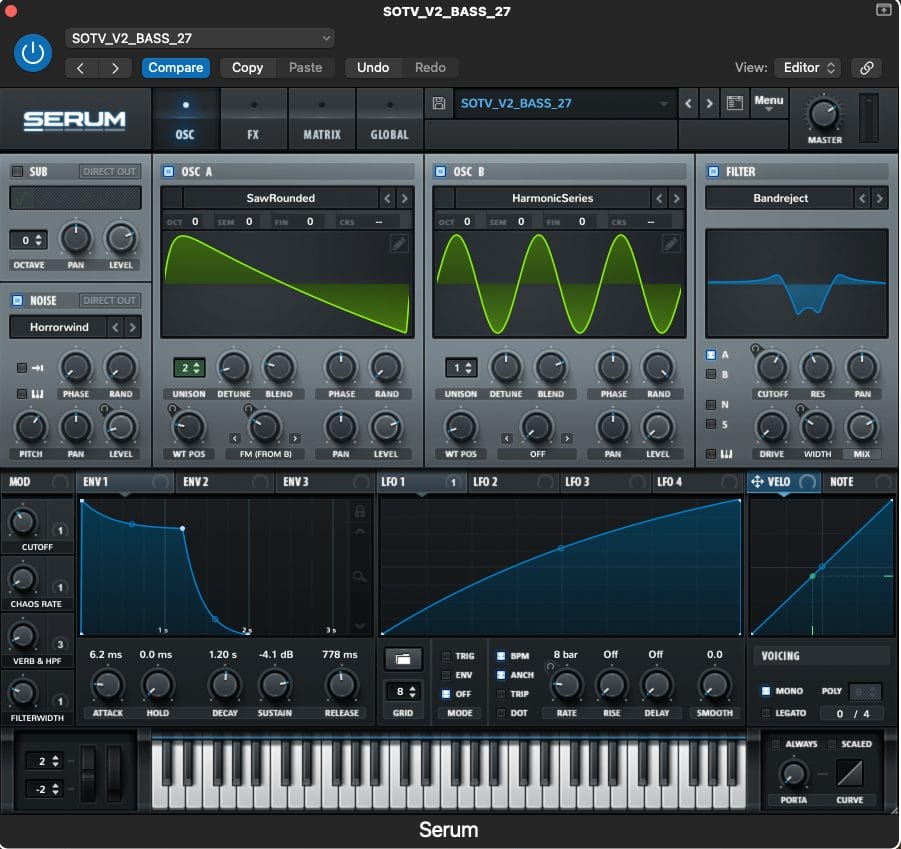
Serum is my go-to for bass design and always has been. For this track I started from scratch using the “Init” patch and built a Reese bass from the ground up. I duplicated this patch three times, creating slightly different versions so they layered together and created a really full sound. The sub was a pure sine wave in one instance, while the other two layers added grit and movement with detuned saws, some distortion, and subtle pitch modulation.
To keep things interesting, I bounced these layers to audio pretty early on and chopped them up to create variations. This allowed me to reverse certain sections, resample small parts, and even automate filters directly on the audio clips instead of inside Serum. It’s a workflow I’ve found helps me be more creative and less stuck in menus.
Cableguys ShaperBox 3
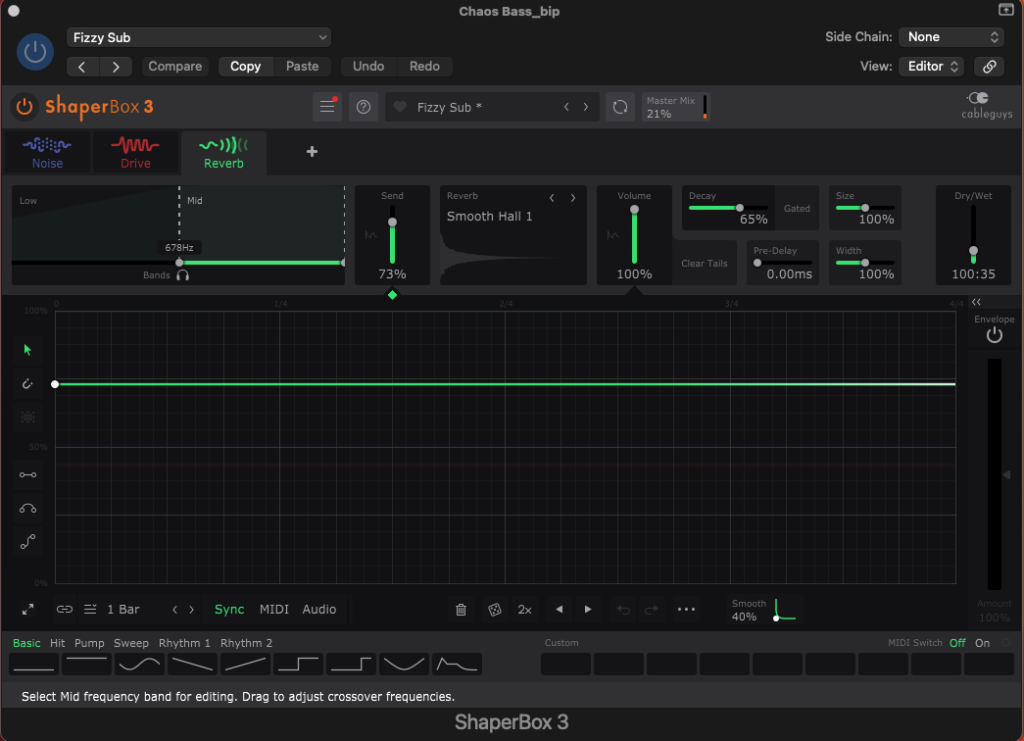
ShaperBox is probably my most-used plugin outside of Serum. For this track I had it running in several instances, mainly for sidechaining and movement. I used the VolumeShaper to draw in custom ducking curves, splitting the signal into multiple frequency bands so I could tighten the low end without crushing the mids. This meant the sub made way for the kick, but the rest of the bass kept its punch and character.
I also used NoiseShaper and DriveShaper on the drum bus. NoiseShaper added some subtle vinyl crackle texture, and DriveShaper gave the drums extra saturation that helped them sit up in the mix. What I love about ShaperBox is how visual it is — being able to draw shapes and instantly hear how it affects the groove makes it a tool I reach for constantly.
Logic Overdrive
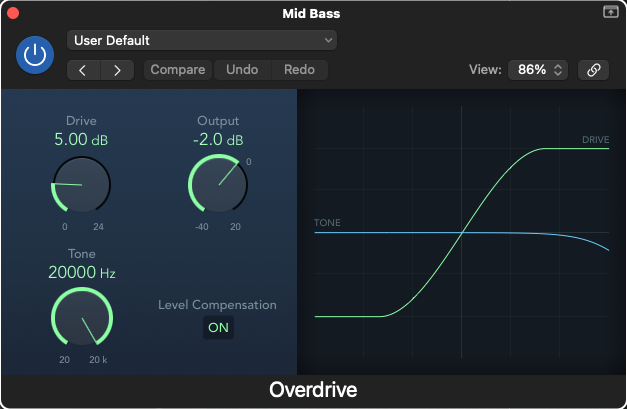
Logic’s stock Overdrive is one of those plugins I always come back to, even with a huge collection of third-party effects. It has a grit that just works on basses and mids. On “The Love We Share” I used it on the mid-bass layers that came out of Serum.
The settings were pretty straightforward: drive around 20%, tone at about 60%, and then I blended the effect back in parallel. This gave the bass a bite that cut through without overwhelming the low end. It’s not the fanciest plugin in the world, but it’s CPU-light and has exactly the character I was looking for.
Serato Sample
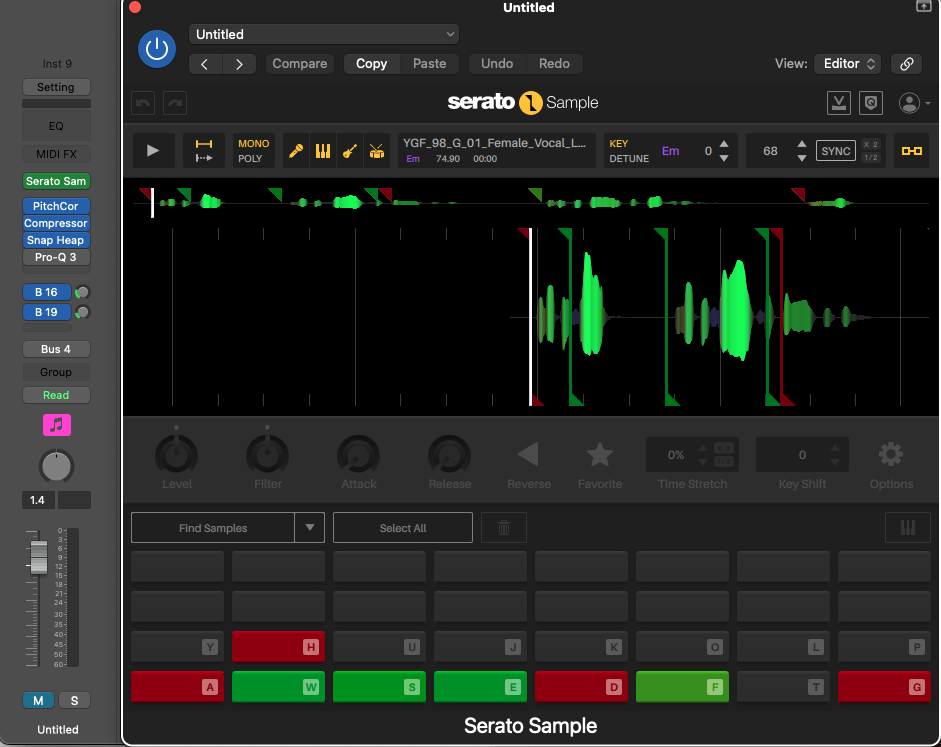
Serato Sample is the plugin I used to manipulate the vocal on this track. The original vocal line was chopped up into smaller pieces, and I used Serato’s time-stretching algorithms to push and pull the audio in extreme ways. I love how musical it still sounds even when you stretch it way past normal limits.
In “The Love We Share,” the vocal chops were pitched, reversed, and rearranged until they formed a new melody that complemented the bass. I automated pitch and formant shifts inside the plugin, which gave the vocal an evolving, otherworldly feel. This workflow lets me turn something familiar into something completely fresh.
Quick Fire Tips for Drum & Bass Production
Tip #1: Curate your own library
Spending time curating your own library of sounds works wonders for establishing your own style. Don’t be afraid of reusing the same samples or patches across tracks — it speeds up your workflow and helps solidify your identity.
Tip #2: Sidechain more than the bass
Everyone knows about sidechaining the kick and bass, but sidechaining the snare can be just as important. Since the sub and snare are usually the loudest elements in a DnB tune, keeping them from clashing is essential.
Tip #3: Write fast, refine later
Learn to write quickly and finish an arrangement in one session. Then come back with fresh ears to nail the technical details.
Tip #4: Use references wisely
Referencing is a great way to stay on track when mixing. Use analyzers, study how your favorite artists balance their tracks, and aim to match or even surpass them.
Tip #5: Filter advice carefully
Take every bit of advice with a pinch of salt. Music is subjective, and what works for one person might not work for you.


Magnetic byline note: This byline is used for staff produced updates and short announcements, often based on press materials and official release information. Editorial responsibility: David Ireland (Editor in Chief) and Will Vance (Managing Editor). About: https://magneticmag.com/about/ Masthead: https://magneticmag.com/masthead/ Contact: https://magneticmag.com/contact/