Table of Contents
Let’s get one thing out of the way: the Korg Minilogue XD is not perfect. For certain workflows, it can feel limited, awkward, and frustrating in small ways that add up over time.
Even with those flaws, I would still argue that it remains one of the easiest hardware synths to recommend for producers who want something hands-on, fast, compact, and capable of covering analog poly sounds, digital edge, built-in effects, motion sequencing, and quick idea creation without requiring a giant setup.
I was lucky enough to get my hands on a used one from Reverb to answer two questions: why this synth is still so popular, and whether buying one used is a smart move in 2026.
The answer to the second question is yes, with a caveat. Used prices need to be low enough to justify skipping a new unit, because the Minilogue XD is still available at retail. The answer to the first question takes longer, because the XD’s appeal is not one single spec. It is the way the whole thing feels when you need to make a sound quickly.
Quick answer: The Korg Minilogue XD is still worth buying in 2026 if you want a compact hybrid polysynth with analog oscillators, a digital Multi Engine, built-in effects, a 16-step sequencer, and an easy front-panel workflow. Skip it if you need more than four voices, aftertouch, deep modulation routing, or full-sized keys.
What Is The 2026 Verdict On The Korg Minilogue XD?
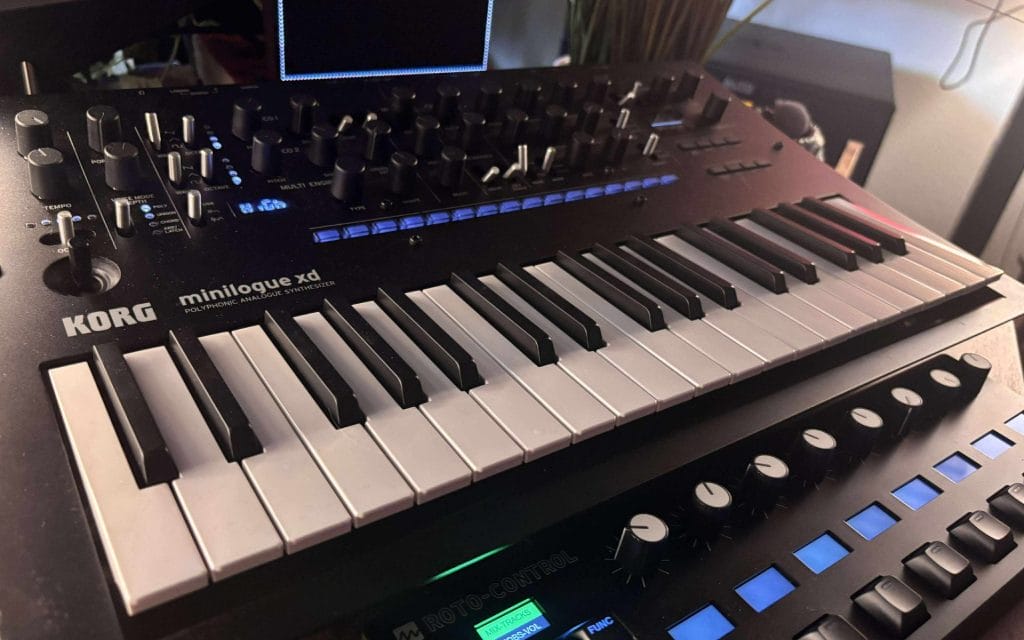
The Korg Minilogue XD still gets a positive verdict in 2026, but it needs a clearer buyer note than it did when it first became a modern entry-level synth favorite.
It remains a great first serious hardware synth for producers who want hands-on subtractive synthesis, immediate patch creation, built-in effects, and a hybrid analog-digital engine. It is also still a good desk synth for ambient, house, melodic techno, indie electronic, soundtrack sketches, live loops, and resampling workflows.
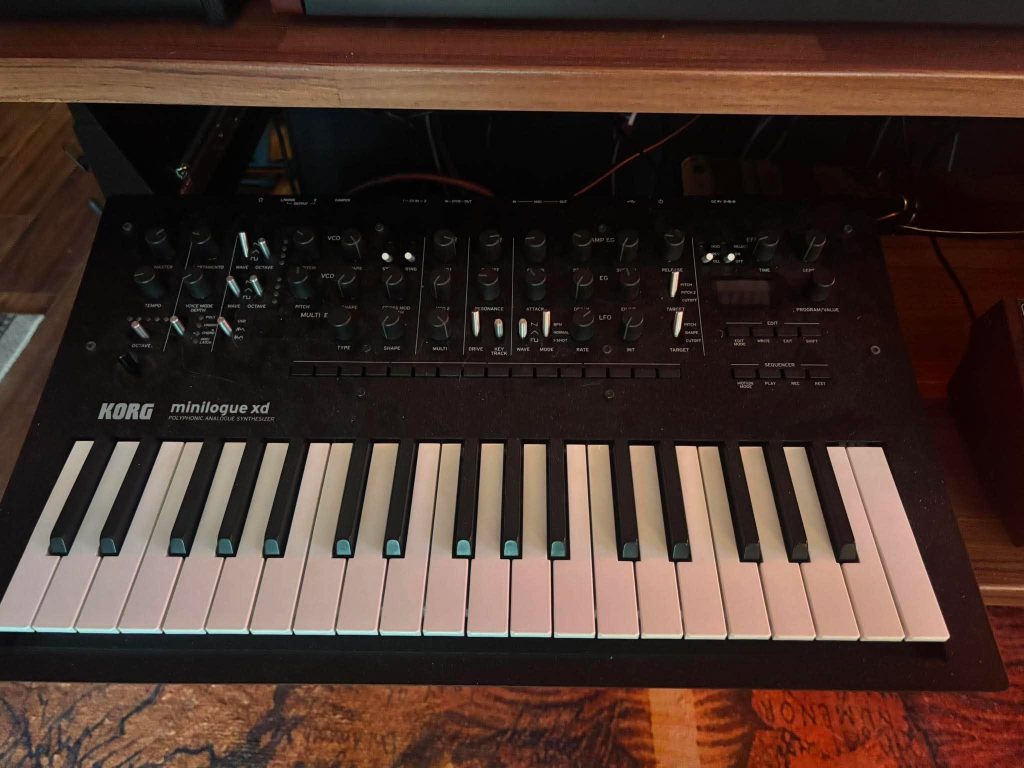
The downsides are just as clear. Four voices can feel cramped. The mini keys have no aftertouch. Patch naming and saving are clunky. The sequencer is quick but limited. The digital Multi Engine has huge potential, but Korg has never made the user oscillator and effect ecosystem as easy as it could be.
My updated verdict is this: buy the Minilogue XD if you want a tactile synth that gets you to usable parts fast. Compare alternatives if you need more modulation, more voices, aftertouch, or a newer performance feature set.
What Changed For 2026?
The biggest update is price and availability. Korg USA Shop lists the Minilogue XD at $699.99, down from a regular price of $799.99, though it was sold out during this check. Sweetwater also lists the keyboard version at $699.99, but with backordered status and more units expected. The Minilogue XD module is listed at $689.99 and was in stock during this check.
That means the XD is still current, but availability can shift by format and retailer. If you want the keyboard version, check stock before building a deadline around it. If you already have a MIDI keyboard or want a tighter desktop setup, the module may be the cleaner buy.
The second update is competition. The Arturia MiniFreak, ASM Hydrasynth Explorer, Korg microKORG2, Roland GAIA 2, Behringer Pro-800, and Korg opsix mk II all give producers reasons to look around before buying.
The third update is that the XD now sits less like a new release and more like a proven workhorse. That can be a good thing. It also means you should shop carefully, because used deals, module pricing, and newer synths can change the value equation fast.
How Much Does The Korg Minilogue XD Cost In 2026?
The Korg Minilogue XD keyboard is currently around $699.99 new. The Minilogue XD module is currently around $689.99 new. Used pricing varies by condition, accessories, and seller, but a used unit needs to be meaningfully cheaper than new to feel worth the tradeoff.
| Product | Current Price | Current Status | Best Fit |
|---|---|---|---|
| Korg Minilogue XD Keyboard | Around $699.99 | Current, stock varies | Producers who want keys, hands-on control, and a compact hybrid polysynth |
| Korg Minilogue XD Module | Around $689.99 | Current, stock varies | Producers with a MIDI keyboard or compact desktop setup |
| Used Minilogue XD | Varies | Depends on seller and condition | Buyers who find a clean unit far below new pricing |
Korg Minilogue XD’s Build and First Impressions
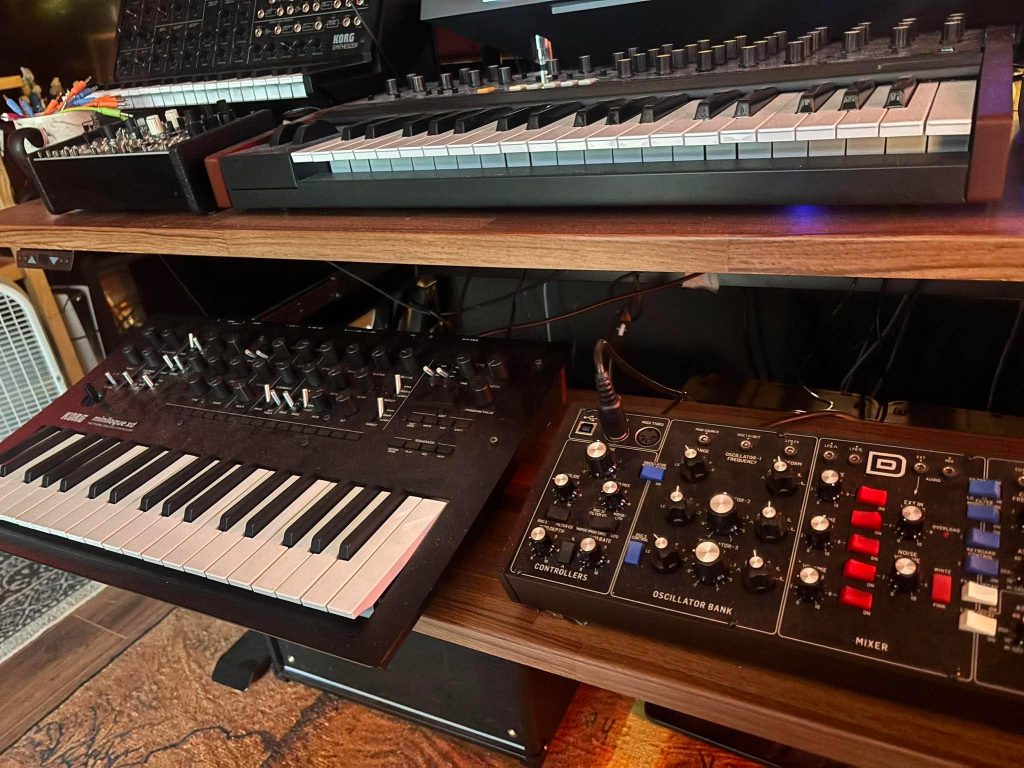
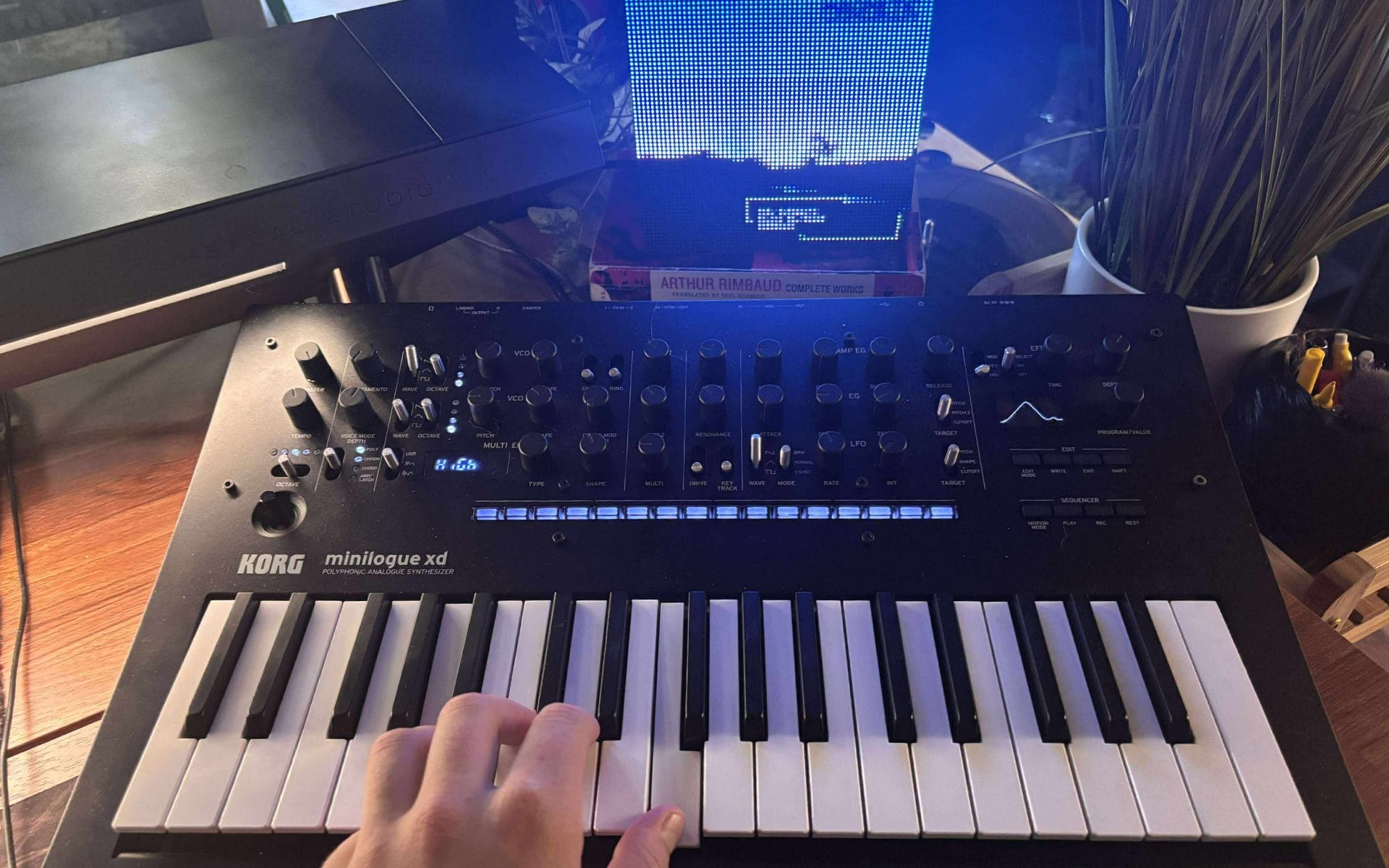
The XD is built well enough. It’s not luxury-tier, but it’s also not one of those plasticky toys you’d expect in this price range. The metal faceplate is solid, the knobs have a good feel, and the oscilloscope is a clever addition—not just a gimmick. You can see wave shapes respond to modulation in real time, which is an incredibly useful learning tool, especially for visual learners trying to understand synthesis.
The rear jacks aren’t reinforced, which makes me hesitant to yank cables during a live set or move it around too much in a mobile rig. If you’re using it in a studio rack and never touch the I/O, you’ll probably never notice. But if you’re someone who’s constantly re-patching gear or rearranging your setup, you’ll wish those jacks had some extra stability.
The mini-keys are velocity-sensitive and reasonably playable, but they don’t have aftertouch. That’s a big drawback for expressive playing or layered performance techniques. The lack of an extra octave also limits its range—especially when trying to play bass and melody simultaneously.
The buttons on the front panel use a hinge system that feels reversed, with the hinge facing toward the user. It’s a minor detail, but it makes pressing them feel less tactile and slightly awkward. It’s one of those design quirks that doesn’t ruin the synth, but definitely slows down the feel of a fast patching workflow.
The Interface and Workflow
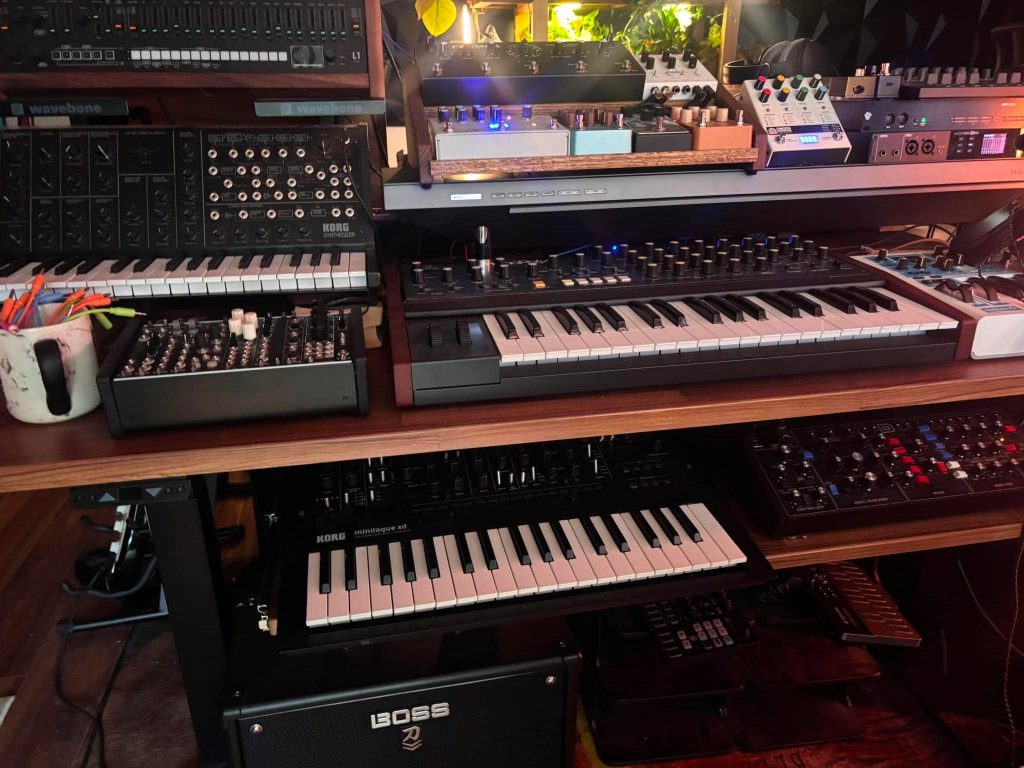
This is where the Minilogue XD earns its spot. The layout is clear, and nearly everything you need to shape a sound is accessible without menu diving. For beginners, that’s critical. You don’t need a deep manual read just to make something usable—everything is intuitive and encourages experimentation.
You can initialize a patch and start building immediately from analog VCOs and a digital engine. There’s no second-guessing or endless submenus. Each section has dedicated controls—oscillators, filter, envelopes, effects—and the visual feedback from the oscilloscope makes it even easier to learn.
Where it stumbles is anything text-based. Patch naming requires scrolling one character at a time using a dial. It’s tedious and outdated, and the lack of a proper keyboard interface in the librarian software makes this even more frustrating if you’re someone who likes organizing presets.
The patch management system has one glaring flaw: you can’t see what’s already saved in a given slot when trying to save a new patch. You only get slot numbers, not patch names. That means it’s easy to accidentally overwrite a favorite unless you’ve reserved a few backup slots and built your own manual system around it.
Sound Engine: Analog + Digital Hybrid
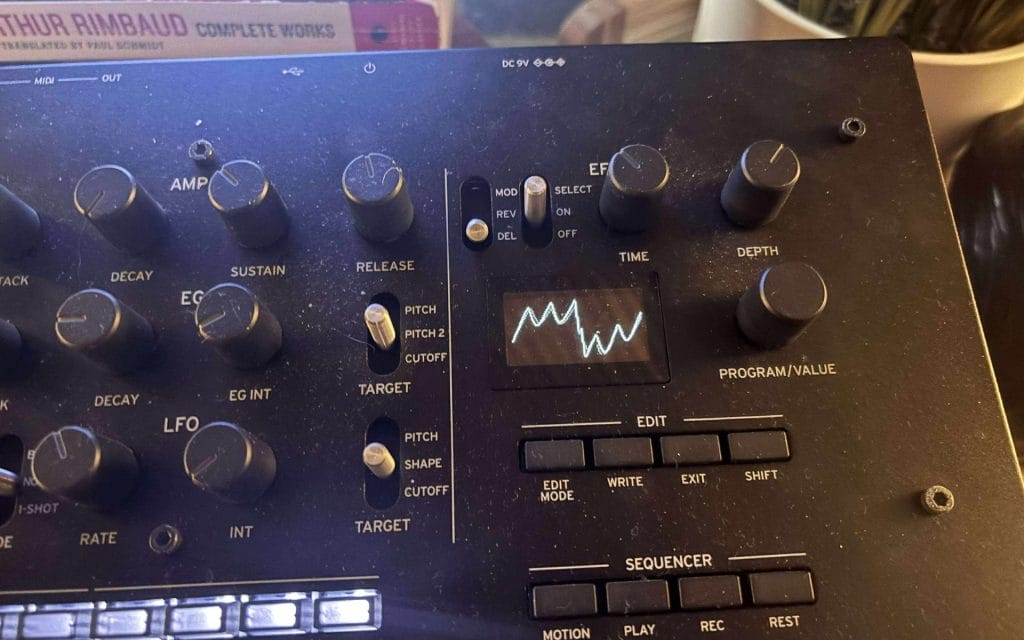
The core engine combines two analog oscillators with a third digital oscillator from Korg’s multi-engine. The analog side covers standard waveforms and includes features like sync and ring modulation. You can stack and detune oscillators, add cross-mod, and get into aggressive territory if you push it. But by default, the character leans smooth and controlled rather than bold or raw.
The multi-engine is what gives the XD longevity. You can load your own user oscillators, including FM-based models, wavetables, modal synths, and even drum modules. These unlock a completely different side of the instrument and make it more than just another analog poly. But using these features requires external software, USB connection, and some patience.
Despite the potential, the ecosystem for third-party content is underdeveloped. Korg never established an official marketplace or easy directory for custom oscillators and effects. So while power users and DIYers can get a ton out of the engine, most people never go beyond the stock waveforms and effects simply because it’s too much of a hassle.
It’s a shame because what’s there is legitimately useful. Oscillators like Sinevibes Groove or Mutable’s macro resonators (ported unofficially) can dramatically expand the sonic palette. But unless you actively seek those out and manually install them, the synth doesn’t help you discover that depth.
Effects Section: Underrated Strength
Korg nailed the onboard FX section. You get one modulation, one delay, and one reverb—all running simultaneously—and they sound far better than most built-in synth FX. The reverbs include spatial textures like “Submarine” and “Riser,” which go beyond standard room/plate options and give you actual creative effects.
Modulation FX include chorus, ensemble, flanger, and phaser, each with multiple variations accessible via shift functions. These aren’t watered-down toy effects—they’re usable for final output. They help sculpt textures and feel closer to what you’d expect from plugins, not hardware bundled extras.
The delay section has BPM sync and multiple modes, including tape-style and high-passed options. That flexibility makes it viable for rhythmic patterns or lo-fi wash. Combined with the sequencer and motion recording, you can design modulated delay lines that evolve in a track without external plugins.
You can also load custom user effects. Like with oscillators, this is underutilized due to friction in the process. But if you invest the time, the FX section becomes one of the most expansive available in a sub-$1000 synth.
Sequencer: Fun But Not Deep
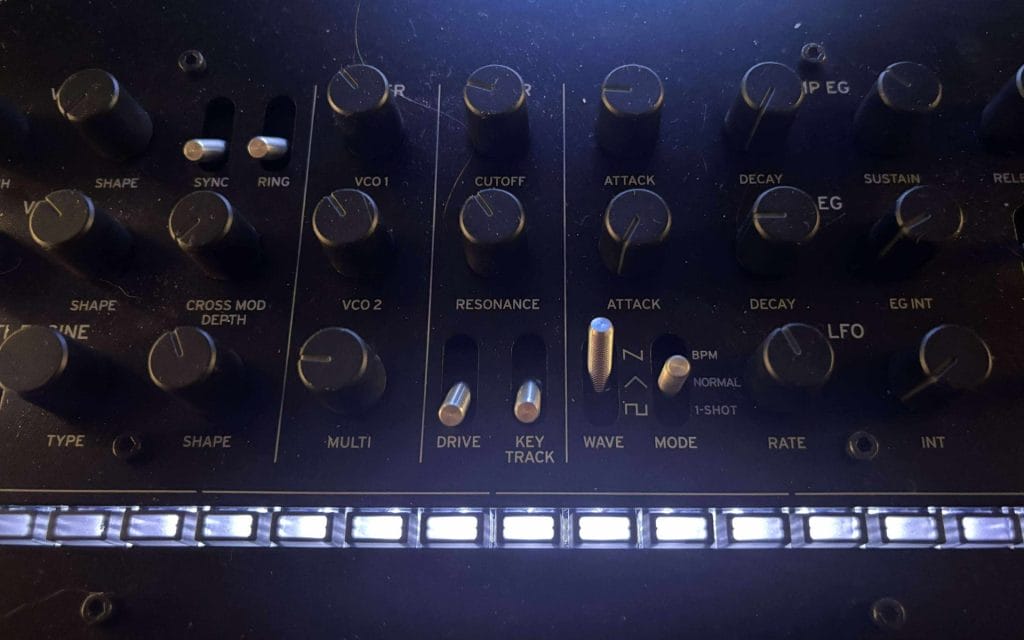
The 16-step sequencer feels basic at first glance, but it has more to offer than it seems. You get per-step note input, gate time, rests, and the ability to automate up to four parameters using motion sequencing. That alone lets you turn it into a mini modulation source.
Using the sequencer creatively means going beyond notes. Assign motion to filter cutoff, delay time, or wave shape, and you’re suddenly sculpting movement over time. This makes it useful even when you’re not using it to drive melodies or rhythms directly.
There’s no probability, no conditional triggers, and no polymetric options. Compared to Elektron gear or the Polyend Tracker, it’s primitive. But it’s faster and more tactile, and the tradeoff works in favor of immediacy.
You can fake longer sequences by halving tempo or combining arpeggiation, but it’s a hack. This is a sequencer for real-time performance or basic loops—not for full song structuring or experimental composition.
The Joystick and Modulation System
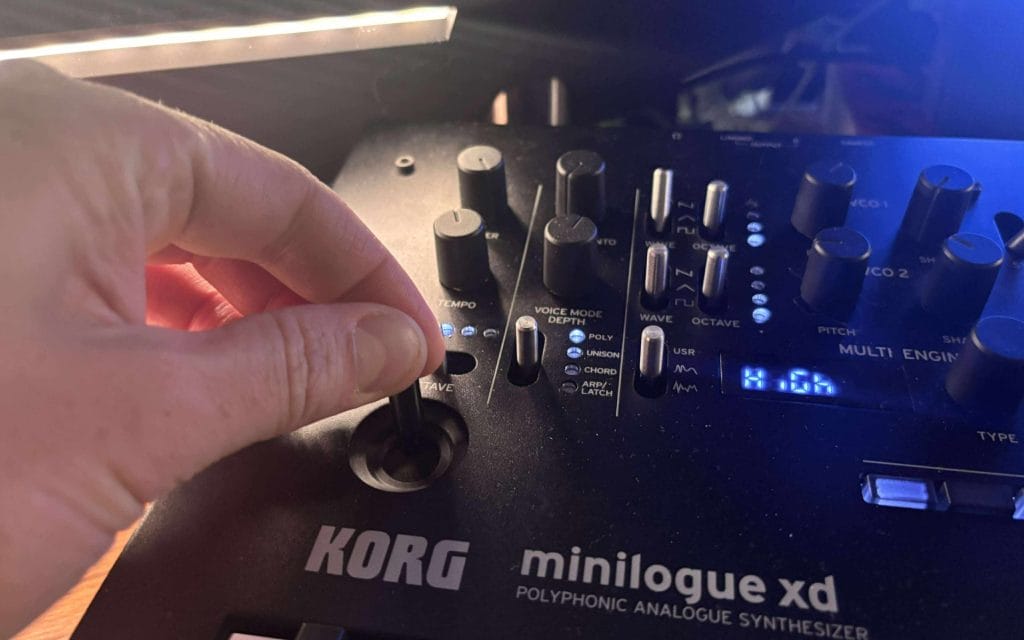
The joystick is one of the most immediate modulation tools on the synth. Pitch bend left/right is standard, but the up/down axis can be assigned to a wide range of parameters like filter cutoff, LFO rate, or reverb time. This is especially useful for live tweaking or creating expressive patches without going into menus.
The synth includes two envelopes, but only one is full ADSR. The second is an AD-only envelope, which is a serious limitation when it comes to shaping pitch or filter modulation. You can make it work, but it doesn’t provide the nuanced control that more advanced synths offer.
There’s no true modulation matrix. You get fixed routings, and you can’t patch sources to destinations freely like on the Novation Peak or ASM Hydrasynth. That limits how far you can push complex modulation ideas.
The LFO is serviceable, with tempo sync, waveform selection, and assignable destinations. But again, the routing is fixed. You can only do so much before hitting a wall.
Sound in Practice: Bread and Butter or Compromise?
The Minilogue XD shines with bread-and-butter sounds. Basses are punchy enough for most use cases, leads are easy to shape, and pads can get wide with enough FX and voicing tricks. But four voices of polyphony means you’re constantly running out of space for anything lush.
Layered chords get clipped unless you’re careful with voicing. You can polychain two XD units to get 8 voices, but that’s doubling your investment and desk space. It works, but it’s not the most efficient route.
The analog oscillators can feel slightly thin unless processed well. Running through saturation, EQ, and some stereo widening in your DAW can help, but out-of-the-box, the tone is more neutral than character-driven. It’s up to you to push it into the territory you want.
Still, the XD handles ambient, techno, and cinematic patches easily thanks to the effects, motion sequencing, and multi-engine options. If you’re making that kind of music, it punches above its weight.
Ideal Use Case: Who This Synth Actually Works For
If you’re just getting into hardware synthesis and want something intuitive and powerful, the XD is a great starting point. You’ll learn the basics of synthesis without staring at menus all day. And when you outgrow the basics, the digital engine keeps it interesting.
Live performers benefit from the immediate controls, compact size, and built-in FX. It fits into tight setups and doesn’t require additional gear to sound polished. For hybrid setups, it also pairs well with MIDI controllers or grooveboxes.
Sound designers might find the routing system limiting. If you’re chasing complex modulation chains, you’ll run out of options quickly. But for foundational layers, resampling, or hybrid patches, it’s still useful.
Producers focused on ambient, house, or melodic techno tend to get the most out of it. It fits naturally into that workflow: quick ideas, rich timbres, and easy layering.
Common Critiques and Community Sentiment I’ve Read And Heard
I’ve been hearing how much people love this synth for ages but they also love to point out the flaws which definitely need to be addressed in a review like this. The envelope system is one of the most common complaints—especially from users who expected two full ADSRs. Others hate the patch saving workflow or the lack of polyphony. The digital oscillator engine is praised for its potential, but criticized for how little Korg did to support it post-launch. There’s a sense that the synth could have been even better with just a few more thoughtful software updates.
That said, community feedback is overwhelmingly positive when it comes to immediacy and workflow. It’s fast, fun, and rewarding. And that alone is enough to keep it relevant years after release. There’s also a split between people who use it live and those who rely on it in studio recordings. It tends to shine more on stage or in sketch workflows than as a final-polish instrument.
How Does The Korg Minilogue XD Compare To The Best Alternatives?
| Synth | Price | Voices | Main Appeal | Main Tradeoff |
| Korg Minilogue XD | Around $699.99 | 4 | Analog VCOs, digital Multi Engine, effects, fast workflow | Four voices, no aftertouch, limited modulation |
| Korg Minilogue XD Module | Around $689.99 | 4 | Same sound engine in a smaller module | No keyboard |
| Arturia MiniFreak | $649 | 6 | Dual digital engines, analog filters, aftertouch, deeper modulation | Less direct analog VCO character |
| ASM Hydrasynth Explorer | $649 | 8 | Polyphonic aftertouch and deep digital sound design | More digital, more menu-based |
| Korg microKORG2 | $599.99 sale, $699.99 regular | 8 single, 4 dual | Vocoder, looper, battery option, USB-C | Virtual analog rather than true analog VCOs |
| Roland GAIA 2 | Around $783.74 sale, $824.99 list at Sweetwater | Up to 22 | Wavetable and virtual analog with full-size keys | Costs more and has a different digital identity |
| Behringer Pro-800 | $379 | 8 | Low-cost analog poly module | No keyboard and backordered status can vary |
| Korg opsix mk II | Price varies by format | 64 keyboard, 80 module | FM and altered FM with high polyphony | Different lane from analog poly synthesis |
| Sequential Take 5 | Around $1,682.99 | 5 | Higher-end analog polysynth with Fatar keybed and aftertouch | Much more expensive |
Final Thoughts: Why It Still Makes Sense on Some Desks
No, it’s not replacing your peak analog gear or modular rig. But that’s not the point. It’s the synth you keep around because it works. Because it powers on quick, lets you shape something interesting in under 30 seconds, and doesn’t clutter your desk.
It’s not over-designed, it’s not over-hyped—it’s functional, fast, and flexible enough. For anyone building a home setup, hybrid rig, or live performance board, the Minilogue XD still checks a lot of boxes without draining your wallet or your patience.
Even with all its flaws, I’d rather have a synth that gets out of the way than one that makes me read a manual every time I want to try something weird. And that’s why the XD sticks around.
It’s not about how advanced a synth is on paper. It’s about how often you reach for it when you’re actually trying to make music. And in that sense, the Minilogue XD is still worth the space it takes up.
Is The Korg Minilogue XD Good For Beginners?
Yes. The Minilogue XD is one of the better beginner hardware synths because the panel shows you how subtractive synthesis works. Oscillators, mixer, filter, envelopes, LFO, effects, and sequencer are all laid out clearly.
The digital Multi Engine also gives beginners a path to deeper work later. You can start with simple analog patches, then bring in user oscillators and effects once the basics feel natural.
The only beginner warning is that patch saving and naming can be clunky. Learn that process early so you do not overwrite a patch you like.
Is The Korg Minilogue XD Good For Live Performance?
Yes, with limits.
It is compact, fast to program, easy to tweak, and has built-in effects. The joystick, sequencer, arpeggiator, and motion sequencing all help in a live setup. It also fits well with grooveboxes, drum machines, Volcas, and DAW-based rigs.
The limitations are the four voices, no aftertouch, mini keys, and rear jacks. If you play big chord parts, expressive leads, or rough live sets with constant repatching, plan around those issues.

Will Vance is a professional music producer who has been involved in the industry for the better part of a decade and has been the managing editor at Magnetic Magazine since mid-2022. In that time period, he has published thousands of articles on music production, industry think pieces and educational articles about the music industry. Over the last decade as a professional music producer, Will Vance has also ran multiple successful and highly respected record labels in the industry, including Where The Heart Is Records as well as having launched a new label with a focus on community through Magnetic Magazine. When not running these labels or producing his own music, Vance is likely writing for other top industry sites like Waves or the Hyperbits Masterclass or working on his upcoming book on mindfulness in music production. On the rare chance he's not thinking about music production, he's probably running a game of Dungeons and Dragons with his friends which he has been the dungeon master for for many years.