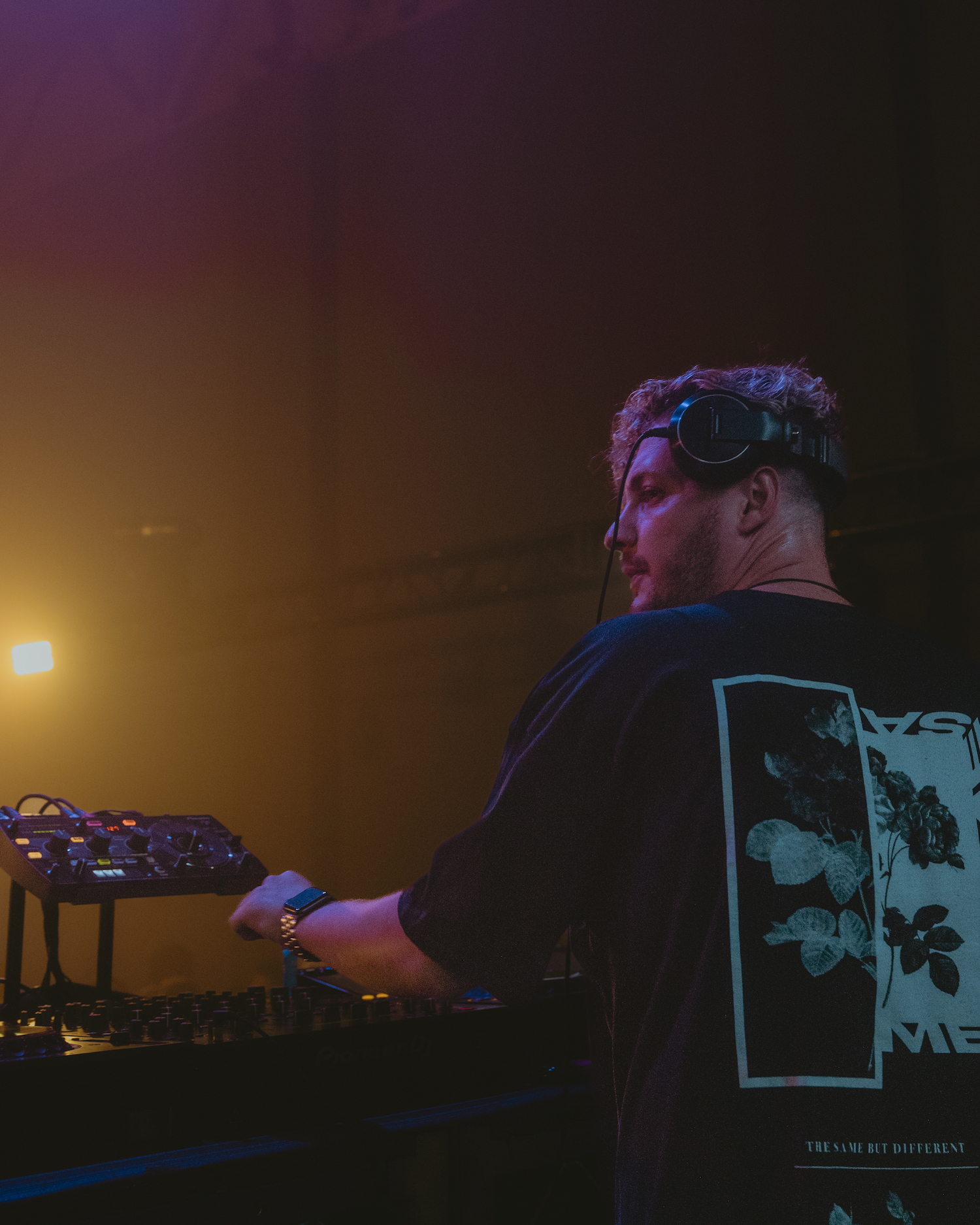
Alex Kislov’s debut album introduces itself with the release of “Daydream” featuring Ron Carroll, an emotionally driving progressive melodic house track that sets the stage for the upcoming LP. Chicago-based producer and DJ Alex Kislov has rapidly established himself in the city’s electronic music scene and is known for his blend of deep house, techno, and more experimental genres.
It’s tough to blend so many different genres into one cohesive sound, so with this release, we wanted to invite him on and figure out what tools he uses to make such genre-bending, club-heavy tracks. So listen to the track below so you can get an idea of what these concepts sound like live in action, and then let’s dive into the plugin breakdown.
Nexus 4
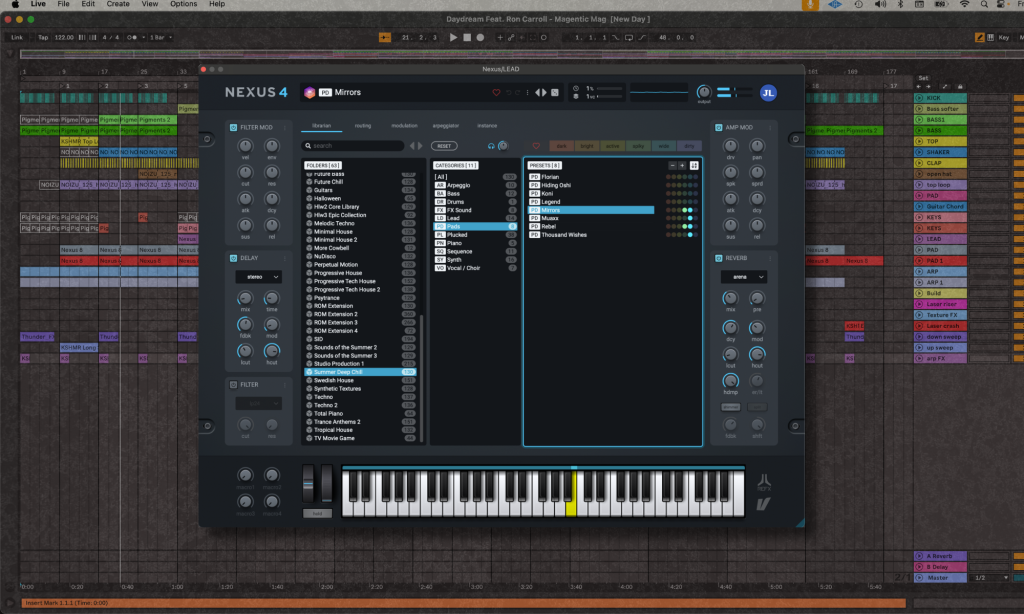
ReFX Nexus 4 has been a go-to virtual instrument for me lately. With over 800 sounds, it covers a wide range of music styles, making it super versatile. The internal librarian is a breeze to use, so finding the right sounds doesn’t take ages.
I’m really digging it for leads, arps, and those catchy “ear-candy” sounds. They’ve got a powerful drive that just works so well in my projects. Plus, you can harmonize and layer sounds within the instrument itself, which saves a lot of time and effort.
In my experience, ReFX Nexus 4 has been particularly awesome for progressive and deep house genres, but I’ve found it to be really useful for other styles too. Overall, it’s a solid choice for anyone looking for a versatile and user-friendly virtual instrument.
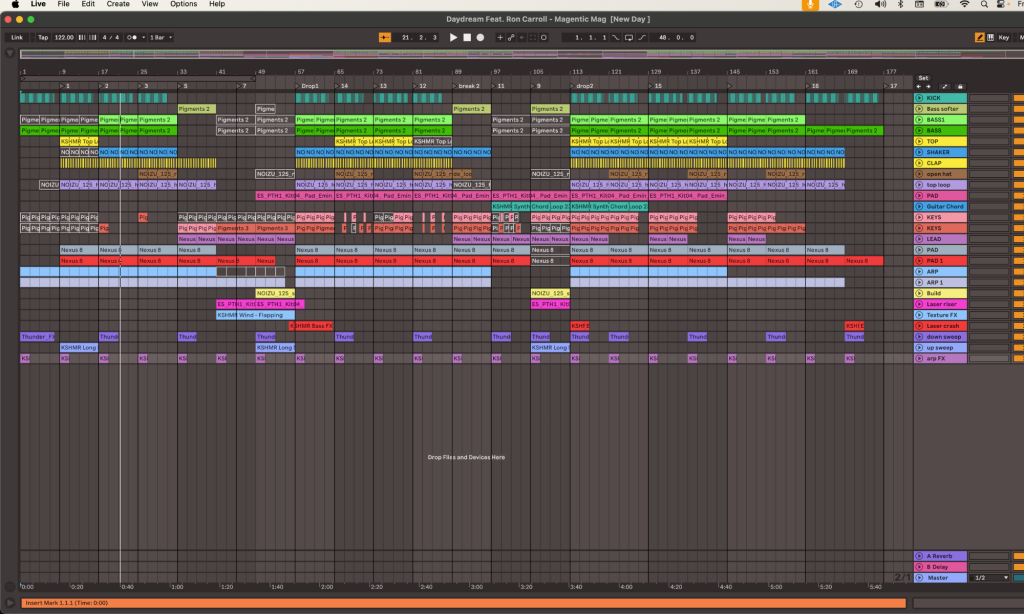
For Daydream, I really leaned into the Summer Deep Chill pack, specifically using the Mirrors preset under Pads. I had all my modules activated and set the reverb to arena with delay on stereo. The progression I used was B, A, B, E with an Ableton Delay module synced to 4 beats at 50% feedback, 1.62 width, and 1.04 Khz filter. Additionally, I used Fabfilter Pro-Q3 with natural latency on the low cut preset. This layer became the driving force of the track, giving it that signature progressive energy without overpowering the other melodies. It really provided a subtle, complementary backdrop for Ron Carroll’s vocals.
When creating within this genre, my biggest advice is to keep your bassline simple. I initially had trouble fitting a complex bassline into the track, but I found that simplifying it down to just two notes gave me the space to focus on other elements. This approach made room for Ron Carroll’s vocals and allowed me to explore other creative options within the track.
To give you an idea, the bassline is almost like a techno bassline paired with a deep house melody. This combination gave the track its unique character and created an interesting contrast between the bass and the melody.
Finding the right “hook” was a major turning point in the creative process. In my case, using Nexus in the Summer Deep Chill pack was key to setting the direction for the track and creating that call-and-response effect with the different elements.
Diva
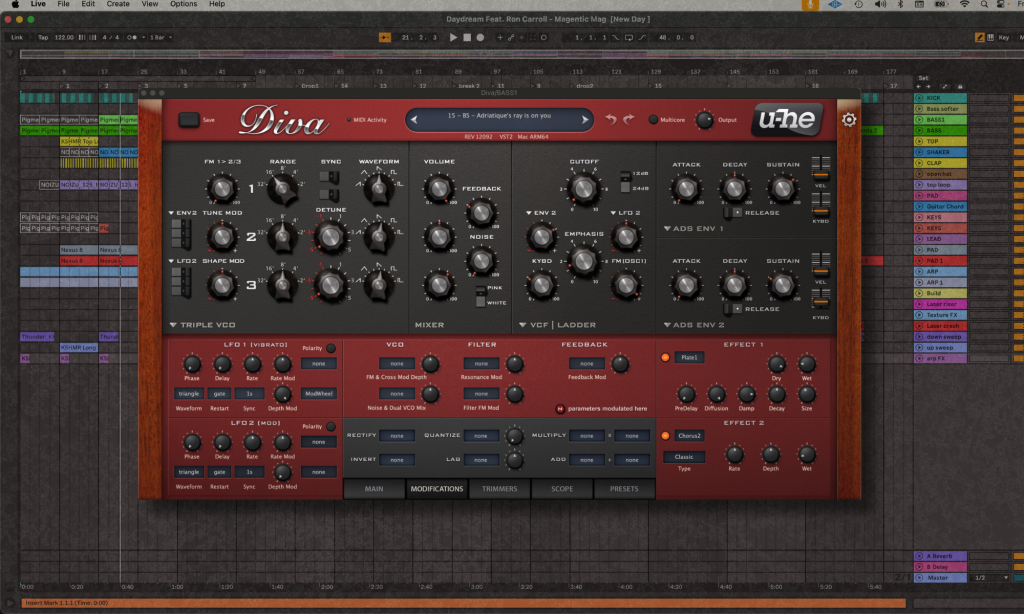
Diva is like a treasure trove of vintage synth goodness, combining the essence of five decades’ worth of classic analogue synths. You’ve got oscillators, filters, and envelopes from legendary monophonic and polyphonic synths right at your fingertips. I’m a huge fan of Diva, thanks to its rich, crispy sound that adds depth and character to my layers, especially basslines. It’s no surprise that many of my producer friends have been relying on Diva for years—it’s a testament to the quality and versatility of this awesome virtual instrument.
For Daydream, I employed Diva to create two bass layers. The first layer was based on Adriatique’s Ray Is On You preset from the Mercurial Tones pack. I made some tweaks to the OSC SHape1 in Diva, adjusting the tuning and cutoff to achieve the desired sound. On the channel, I added Kickstart 2 for sidechain compression and Wider for stereo widening. And, as a rule of thumb, I always use EQ8 on every track for precise frequency control.
There’s no denying that Diva is a game-changer for dance music production. The sheer range and quality of sounds you can get out of this plugin is truly remarkable. And when you finally hear those sounds come to life outside of your studio, that fullness and richness make it all worth the investment. Diva is not just a tool; it’s a way to breathe life into your music and make it resonate with listeners on a deeper level.
Izotope Ozone
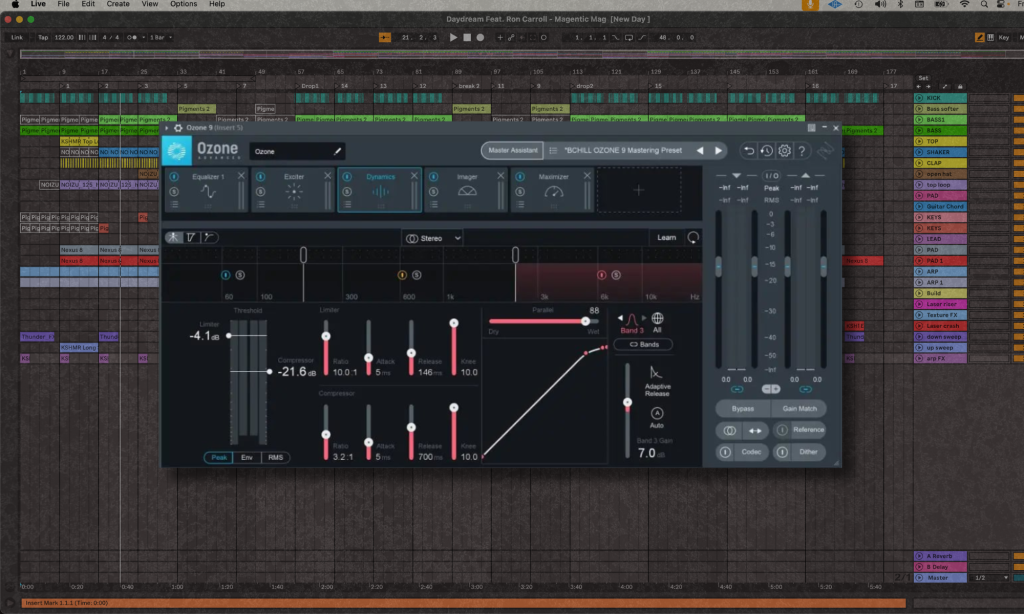
iZotope’s Ozone 9 Elements is an absolute gem for those just starting out in music production. With only three modules—EQ, Imager, and Maximizer—it’s super easy to get the hang of, and it does wonders for your tracks. You can think of it like a Swiss Army knife for mastering, helping you make your music sound polished and professional without needing a bunch of fancy gear. If you’re new to the game and looking for a solid mastering plugin, Ozone 9 Elements is definitely worth checking out!

Will Vance is a professional music producer who has been involved in the industry for the better part of a decade and has been the managing editor at Magnetic Magazine since mid-2022. In that time period, he has published thousands of articles on music production, industry think pieces and educational articles about the music industry. Over the last decade as a professional music producer, Will Vance has also ran multiple successful and highly respected record labels in the industry, including Where The Heart Is Records as well as having launched a new label with a focus on community through Magnetic Magazine. When not running these labels or producing his own music, Vance is likely writing for other top industry sites like Waves or the Hyperbits Masterclass or working on his upcoming book on mindfulness in music production. On the rare chance he's not thinking about music production, he's probably running a game of Dungeons and Dragons with his friends which he has been the dungeon master for for many years.