2026 update: I rewrote this article to answer the sample question at the top, explain the difference between sampled audio and a newly recorded interpolation, add a six-step listening exercise, and cover the rights checks a producer should complete before releasing music based on an existing recording.
The sample in “Mo Money Mo Problems” is easy to recognize because the Diana Ross source remains central to the record. The production does not hide its disco and funk origin. It uses that source as the musical bed for new rap performances, new drum programming, added transitions, and a chorus connected to the original composition.
Quick answer: The “Mo Money Mo Problems” sample comes from Diana Ross’s 1980 recording “I’m Coming Out,” written and produced by Nile Rodgers and Bernard Edwards. The 1997 record uses audio from the Ross master and a newly recorded interpolation sung by Kelly Price. Producers should study those as two separate uses of earlier music.
WHAT SAMPLE IS IN “Mo’ Money Mo’ Problems”?
What is the “Mo Money Mo Problems” sample?
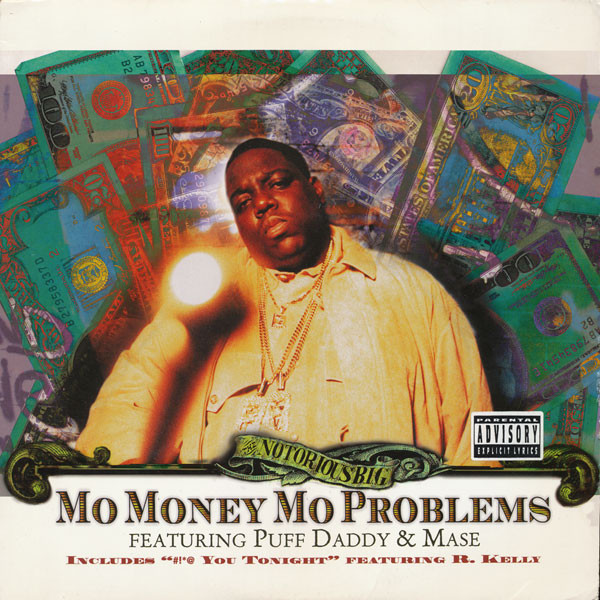
“Mo Money Mo Problems” uses Diana Ross’s “I’m Coming Out,” released in 1980 on the album Diana. Nile Rodgers and Bernard Edwards wrote and produced the source record. The Notorious B.I.G. single was released on July 15, 1997 as the second single from Life After Death, with Mase and Puff Daddy credited as featured rappers. Sean Combs and Stevie J produced it.
The source recording supplies the recognizable instrumental foundation. The Biggie record then places new rap vocals and added production around it. PBS described the choice as a connection between 1990s hip-hop and earlier Black dance music, which explains why the source feels central instead of appearing as a short decorative detail.
The writing credits include Christopher Wallace, Sean Combs, Mason Betha, Steven Jordan, Kelly Price, Nile Rodgers, and Bernard Edwards. Rodgers and Edwards are present because the new record uses their earlier composition.
Although “Mo’ Money Mo’ Problems” is an up-tempo party song it’s also a statement about the misconceptions of having lots of wealth.
Biggie’s storytelling shows the more heartfelt side of rap showing that in spite of getting more money it didn’t solve all his problems.
The song comes from a quote from Notorious B.I.G. stating in an interview:
You can watch the full interview here.
Is the chorus sampled or interpolated?
The record uses two related methods.
| Part of the record | Method | What that means | Rights area |
|---|---|---|---|
| Instrumental foundation | Sample | Audio from the Diana Ross master is placed inside the new recording | Master and composition |
| Chorus | Interpolation | Kelly Price records a new performance connected to the earlier composition | Composition |
| Rap verses | New recording | The credited rappers add newly recorded vocals | New recording |
| Added production | New production | Sean Combs and Stevie J arrange the source with new programmed material | New recording and composition |
Fun Facts About Biggie’s “Mo’ Money Mo’ Problems”?
We all love the single, but how much behind-the-scenes information do you know? Let’s dive into some unknown facts and trivia surrounding Biggie’s hit record.
How does this compare with “Hypnotize”?
“Hypnotize” and “Mo Money Mo Problems” came from the same album period, though the source choices lead to different results. “Hypnotize” uses Herb Alpert’s “Rise,” while “Mo Money Mo Problems” uses Diana Ross’s “I’m Coming Out.”
My article on The Hypnotize Sample explains that source in detail. Reading the articles together shows how the same rapper can sit over one source built around a slower instrumental groove and another built around a bright disco record.
What common mistakes do producers make when studying this song?
Treating the chorus as part of the sampled master
Kelly Price recorded the chorus for the Biggie record. The track contains an interpolation in addition to copied master audio.
Assuming a replay removes every rights issue
A replay can avoid copying the original sound recording. The earlier composition may still need permission.
Copying too much of the source arrangement
A study should identify the idea that carries the source. Rebuilding every part can leave little room for a new song.
Adding too many new parts
A recognizable sample already supplies a large amount of musical information. Extra layers can compete with the source and the lead vocal.
Ignoring the full credit chain
The performer on the source recording, the composition writers, the new performers, and the new producers can hold separate interests.
Releasing the study before clearance
A private DAW exercise and a distributed release are different uses. Replace or clear protected audio before publication.
Who is this article for?
This article is for listeners trying to identify the source, producers learning the difference between sampling and interpolation, DJs comparing source records with later hip-hop releases, and writers checking the credit chain.
Use the step-by-step section when you are studying an existing record. Use the rights section before sending a sample-based song to a label, distributor, client, or publisher.
What song does “Mo Money Mo Problems” sample?
It samples “I’m Coming Out” by Diana Ross, released in 1980 and written and produced by Nile Rodgers and Bernard Edwards.
Who sings the “Mo Money Mo Problems” chorus?
Kelly Price performs the chorus in an uncredited appearance. The chorus is connected to “I’m Coming Out” as an interpolation.
Who produced “Mo Money Mo Problems”?
Sean Combs and Stevie J produced the recording.
Was “Mo Money Mo Problems” released after Biggie died?
Yes. The single was released posthumously on July 15, 1997 and reached number one on the Billboard Hot 100.
Can you sample the same Diana Ross song?
You can study the source privately. A public or commercial release using the original master may need permission for the sound recording and composition. A newly recorded interpolation may still need composition permission.
What is the final production lesson?
The success of the sample comes from choosing source material with a complete identity, preserving the parts listeners recognize, giving the lead enough room, and writing a new song around them.
For producers working in 2026, the action step is simple. Compare the source with the later record, label the sample and interpolation separately, then make an original study using audio you own or have permission to release.