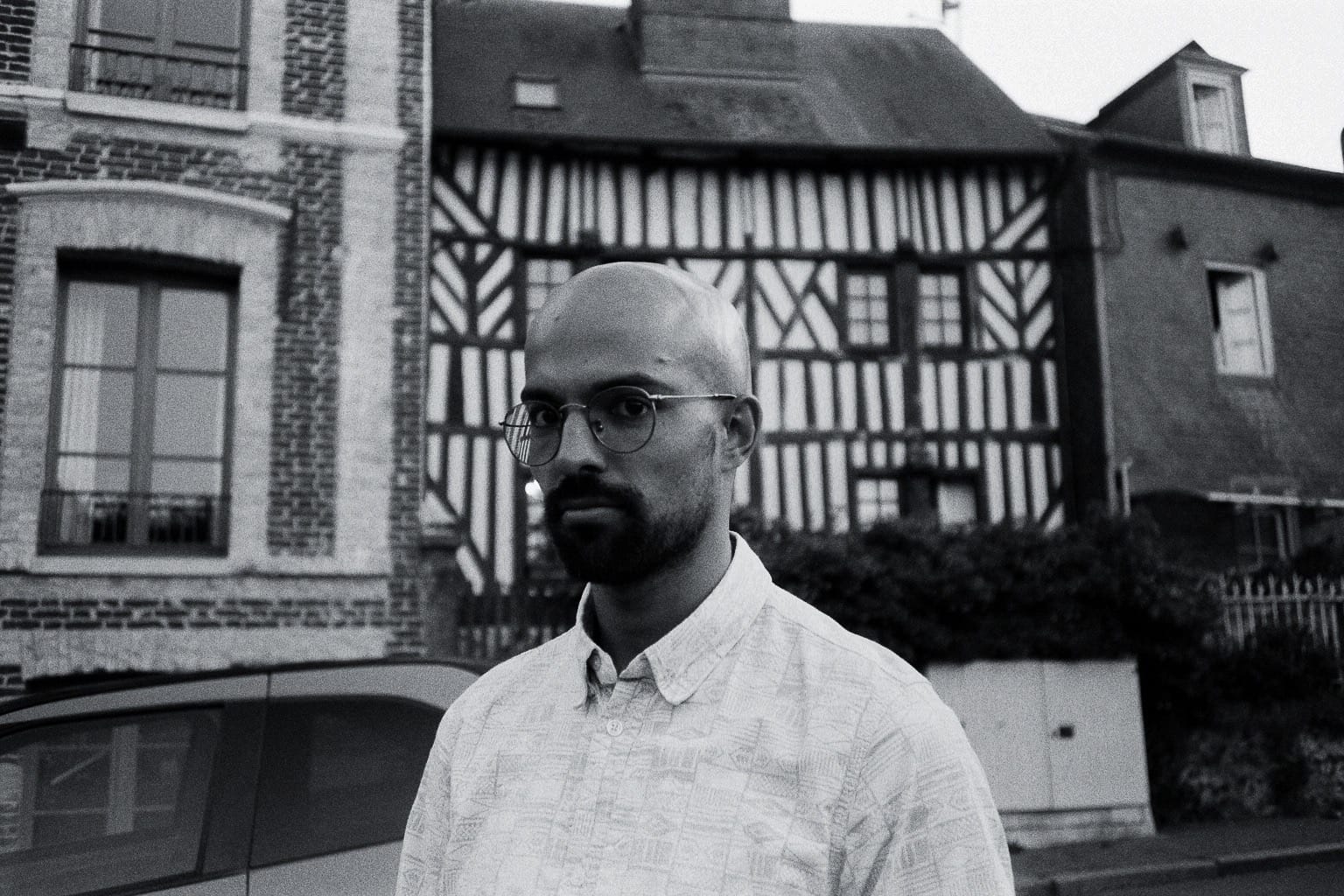
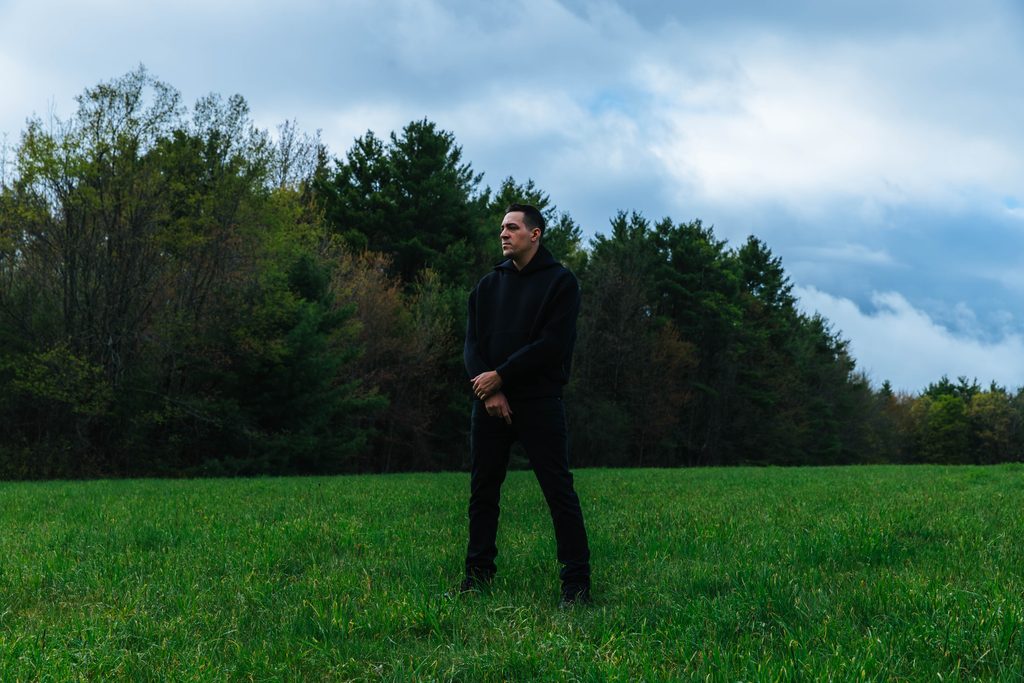
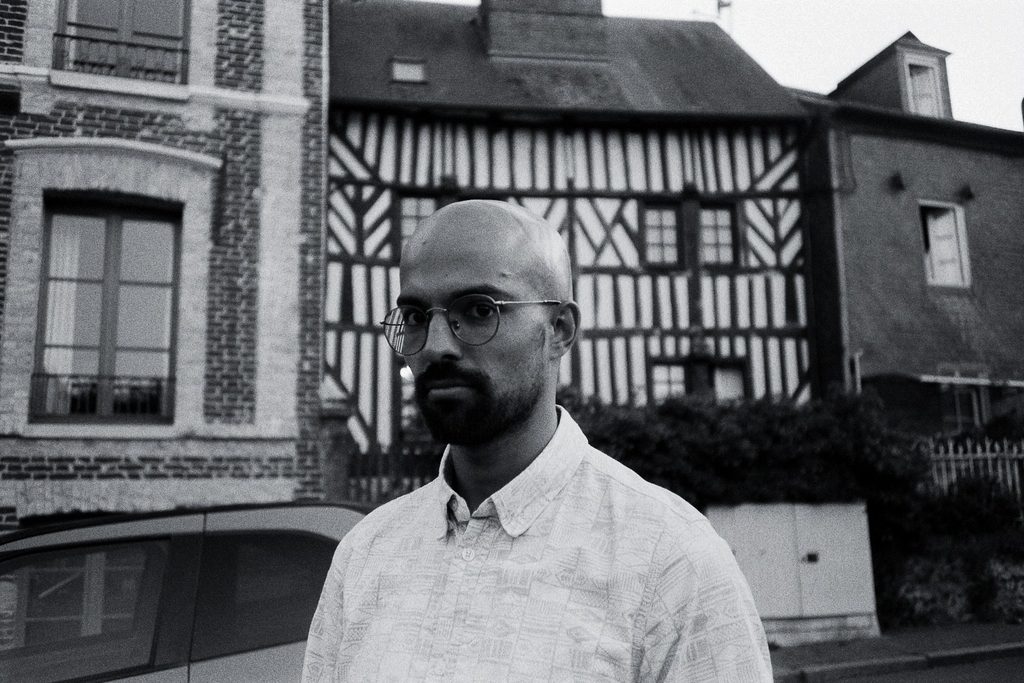
Mikhail Ilyin could have turned What is real? into a record about ideas, which is usually where projects with titles like that start getting heavy fast. But the more interesting part is that it began somewhere much less formal: at a Nowruz gathering, in a room with friends, when someone started playing and the night briefly took on the feeling of a ritual. The recording came later, almost as an attempt to get back to that state without pretending it could be neatly recreated.
That gives the music its strange pull.
Acoustic instruments were recorded live, run into effects, caught with a few microphones, and left with a lot of the room still inside them. The electronics are there, but not as the main event; Ilyin describes them more like a chisel, something used to connect the pieces rather than overpower the moment.
The result feels less like a polished studio object and more like a document of people trying to listen their way into something before it disappears.
The short film with Sacha K. pushes that same question into images, turning the three-track EP into a single fifteen-minute audiovisual piece. Even then, What is real? never tries to land on a clean answer. It stays with the search: sound as memory, instruments as companions, collaboration as attention, and AI as a question about what happens when music loses body, history, and place.
In the interview below, Ilyin talks about leaving MIR behind, the ritual origin of the project, the tzouras, generative AI, and why the only honest answer to the title may be another question.
Interview With Mikhail Ilyin
What happened that made “What is real?” feel like a question you needed to explore in a recording? Was the starting point a conversation, a musical experience, or something you had been considering for years?
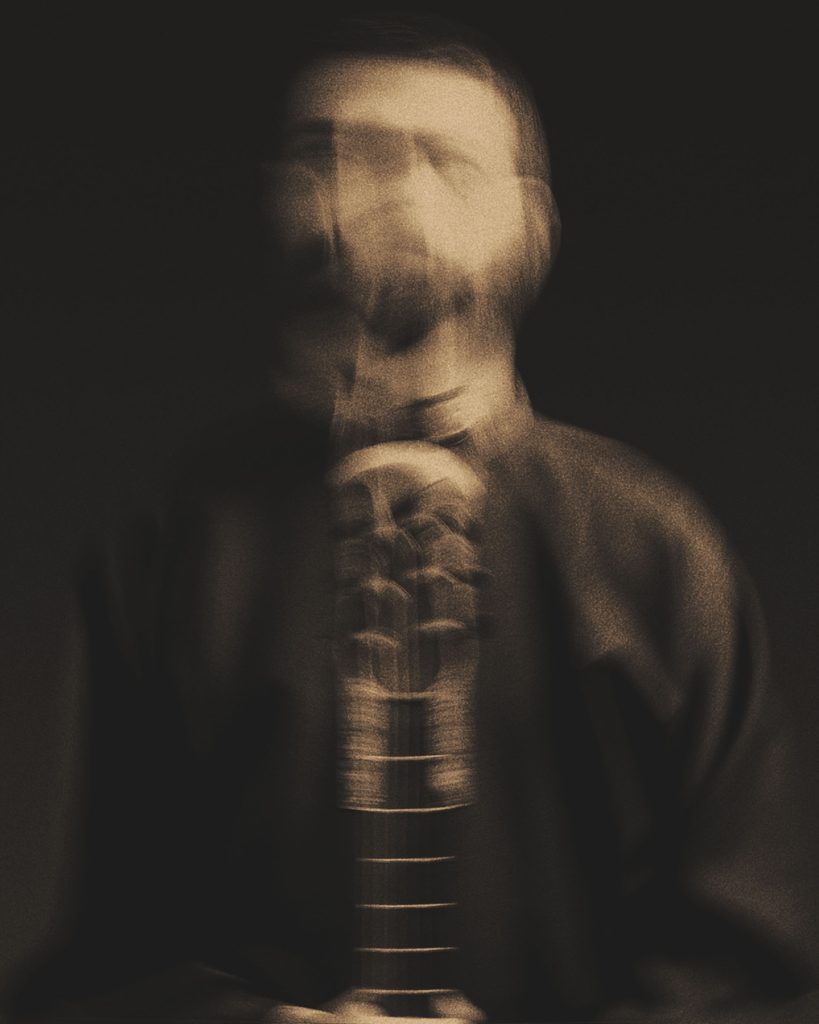
What is real? is what remains of a process that only at the very end took a musical form. The idea from which the whole project sprang was born during Nowruz, the Persian New Year. Armin, a friend of mine, had invited me to his house for the celebration. Then someone started to play, and Armin took the percussion. The atmosphere took on a ritual character. Something happened that night that is difficult to explain. Only later, thinking back, did I understand that something had been born, something worth pursuing. That is where What is real? began. The recordings came weeks later, when we decided to try to recreate that disposition of mind.
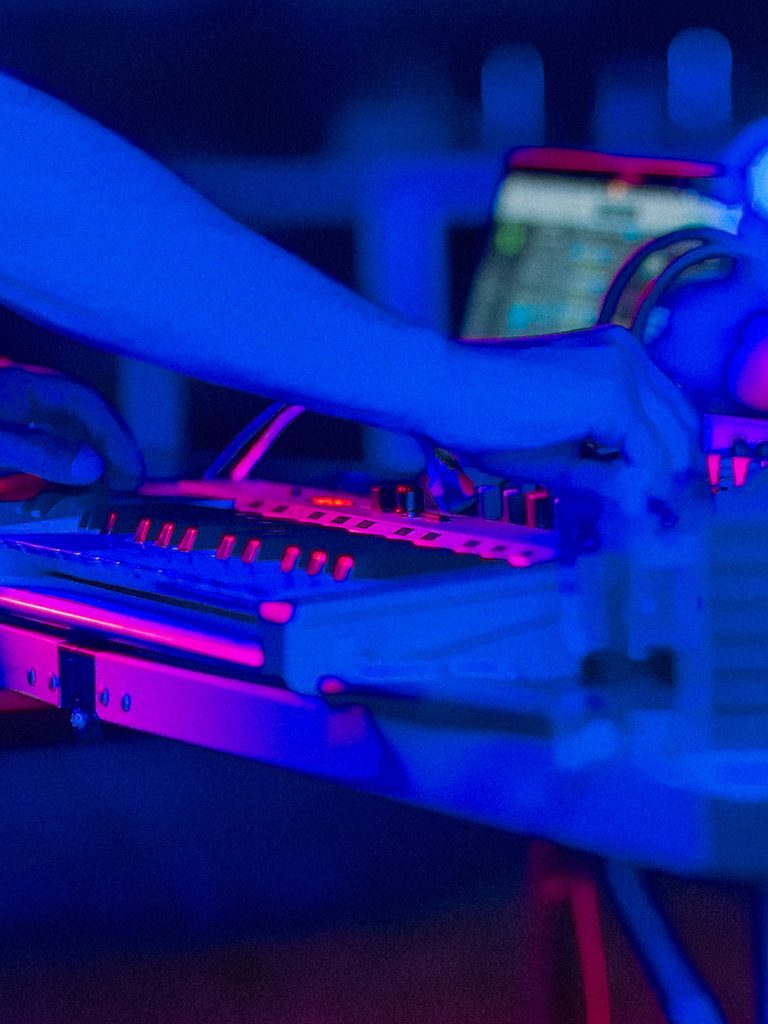
It is with this inner atmosphere that we began to play together. The sessions were recorded live with acoustic instruments connected to effects, a few microphones and a lot of natural reverb. Everything decidedly analog and unrepeatable. Electronics were used as a chisel, only to connect the parts.
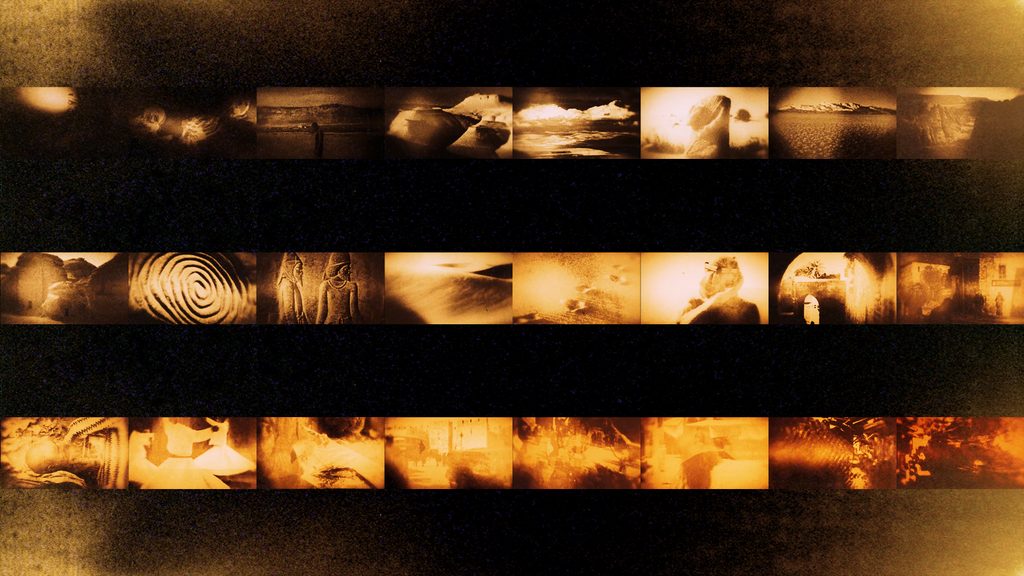
The short film, which completes the project, carries that atmosphere into images. The three tracks of the EP become a single fifteen-minute piece, where the sound flows as a single gesture.
After over twenty years working with MIR, what did you want to approach differently in this project?
The difference between MIR and Mikhail Ilyin is not a matter of style. It is a question of ontological position. The experience with MIR belonged to a time when music still believed that formal experimentation was enough. A time when the underground could afford the luxury of being pure, of not explaining itself, of living in the urgency of the moment. That world is gone. Or rather, it has been absorbed. Today making music means accepting to be everywhere and nowhere at the same time.
What changed in me is the meaning to give to sound and, above all, the awareness that sound alone does not say enough. The musician who offers something to the public today carries a responsibility that goes beyond the formal: to articulate, to give depth, to make that depth comprehensible without surrendering to simplification. This is not a question of accessibility. It is a question of honesty.
From this point of view, What is real? represents a rupture, a return to the question that music has forgotten, because it has traded the metaphysical for the technical, the symbolic for the procedural, and has replaced the experience of the sacred with an algorithm. I am not interested in the new in itself. I am interested in what remains when everything new has been consumed.
As a self-taught multi-instrumentalist, how do you approach an instrument when you don’t yet know what you want from it? What tells you an experiment deserves further attention?
Music is fundamentally a discipline of the spirit with its own laws, rules, and formalisms. As a self-taught musician I learned to understand music as a knowledge, a cultivated practice whose purpose is not virtuosity but inner formation. In this vision, every instrument I encounter is not an object to be dominated. It is an interlocutor. Like the gandharva, the celestial musician of the Vedic tradition, I do not possess the sound. I receive it and accompany it. I draw inspiration from that experience.
Playing, for me, is first of all a listening. I try to conserve the spontaneous, natural musical gesture, like a meditation on sound that becomes improvisation, not reducible to the transposition of a score. What is real? is an example of this way of conceiving composition. The tracks are the result of improvisations within self-defined boundaries. This is why I wanted to intervene on them as little as possible, preserving the imperfections of a live performance.
You’re interested in a shared musical language that preserves cultural differences. What did that mean in the way you listened to one another and made decisions during recording?
Many musicians today confuse collaboration with consensus. What is often produced is a compromise. A shared musical language has to do with attention. We listened to each other until a language emerged.
The tzouras is the clearest example. I bought it in Greece many years ago and had always promised myself I would use it in some production, but I had never found the right moment for it. It is a Greek instrument, but its roots are deeper and further East. When I first played it in the studio, I let it speak. I let it say what it had to communicate. The criterion that moved us was attention to the present moment. When something entered the music and we felt it belonged to it, we kept it. The differences, the gaps in the flow, are the material we work on.
A recorded track is always only a shadow of what it claims to represent. What remains in the recording is what maintains meaning even after the performance. Most music is consumed in the time in which it is performed. Often there is nothing worth leaving.
What would you say to an artist who uses generative AI and considers their selection and editing part of a personal creative practice? Where do you feel your approaches differ most?
The difference is not in the tool. It is in the nature of the material and in the process. An artist who uses generative AI selects and edits. In a certain sense, this has always been done. But the material being used is different. Generative AI produces sound that has no history, that has no lived experience behind it. It appears. It is available and consumed. I prefer to work with material that preserves a memory. Nothing in What is real? was generated automatically. Everything was received. The material has a body, a history, and a place. And the process is made of errors and surprises, of things that happen and cannot be planned.
I have nothing ideological against the use of AI. I only find one thing paradoxical. In the 1990s, the debate on copyright was one of the most stimulating, carried forward by the No Copyright movement and by the free software movement of Stallman. The idea was that knowledge should be open and shared. Today we are witnessing the greatest theft of intellectual property in history, carried out by the great corporations. They have taken everything and give it back as a subscription. In the realm of quantity, artificial intelligence is certainly one of the signs of the times.
What does not convince me is the illusion that the tool can replace the experience of making music as a maieutic practice. The difference is not technical, it is metaphysical.
After completing the project, what did the experience of working together reveal about your original question, and what remains unresolved for you?
The project revealed that the question was not meant to have a conclusive answer, but had to do with a search, not with a definitive affirmation. Working together made the question more alive, not more resolved.
During production, we realized that this music needed images to complete itself, to involve sight as well, one of the essential instruments of knowledge, something that would further activate an effect on consciousness. That is how the short film was born. I would define it as an audiovisual album.
Nothing remains unresolved, because there was no pretension to resolve anything. The intention was to open the discussion, to stimulate reflection on what we usually tend to ignore.
If someone asked me, “In the end, what is real?”, I could only answer with other questions.
Closing Thoughts

The central tension in this entire discussion is that Ilyin is not arguing against technology from a nostalgic position as much as he is arguing for memory, body, place, and encounter. That distinction matters. His problem with generative AI is not merely that it is digital, fast, or synthetic. His problem is that the material appears without lived experience, while What is real? is built from things that happened in a room and could not be fully planned.
That connects directly with SAM SHI’s interview on process, AI, and protecting the recipe.
SAM SHI talked about the danger of outsourcing the part of the work that makes the work feel like yours. Ilyin’s argument is more metaphysical, but the concern is related: when the process loses the human encounter, the result may still function as sound, but something harder to name has gone missing.
The Nowruz origin gives the project its center. A friend’s home, percussion, shared presence, and a sudden ritual atmosphere become more important than any formal plan. The later recording sessions were not about reproducing the event literally. They were about trying to return to a state of mind where sound could be received rather than imposed.
The line about collaboration and consensus may be the most practical part of the interview. Ilyin says many musicians confuse the two, and the distinction is useful. Consensus often smooths things out until nobody’s difference remains. Attention does something else. It lets each player listen long enough for a language to appear without forcing every cultural or instrumental difference into the same shape.
That is why the tzouras matters. It is not being used as an exotic color or a convenient marker of place.
Ilyin had carried the instrument with him for years before finding the right context for it, and the decision to keep it came from the present moment of the recording. It belonged because it spoke inside the piece, not because it proved a concept.
There is another line to Madame Gandhi’s interview around Ektā. That project also treated music as something larger than arrangement, production, or genre, moving through breath, nature, ritual, meditation, and the body. Ilyin’s work is darker and more philosophical, but both interviews sit around the same question: what happens when music tries to change the listener’s state of consciousness rather than only occupy their attention?
The AI section is sharper because Ilyin does not take the easy route of condemning every artist who uses the tool. He recognizes that selection and editing have always existed inside creative practice. His objection is about the origin of the material and the conditions under which it appears.
For him, music made from errors, surprise, memory, history, and physical encounter carries a different kind of reality than sound generated as instantly available quantity.
That also brings this conversation close to Paul Leonard-Morgan’s interview on AI and protecting the creative process. Leonard-Morgan approached the issue from the perspective of a screen composer protecting attention and direction inside a changing industry. Ilyin is more concerned with metaphysical displacement, but both artists are asking what must remain human when the technical layer becomes easier to automate.
The broader takeaway is that What is real? is not asking for an easy answer.
It is asking the listener to stay with the discomfort of the question. The recording is a shadow of a performance, the film is an extension of the sound, and the project itself is less a statement than a search. That may be why the final answer Ilyin gives is the right one. If someone asks what is real, he can only answer with more questions.

Magnetic byline note: This byline is used for staff produced updates and short announcements, often based on press materials and official release information. Editorial responsibility: David Ireland (Editor in Chief) and Will Vance (Managing Editor). About: https://magneticmag.com/about/ Masthead: https://magneticmag.com/masthead/ Contact: https://magneticmag.com/contact/