Roland’s FP-40 Digital Piano is built around a question that a lot of home players know too well: what keeps someone coming back to the piano after the first wave of excitement wears off?
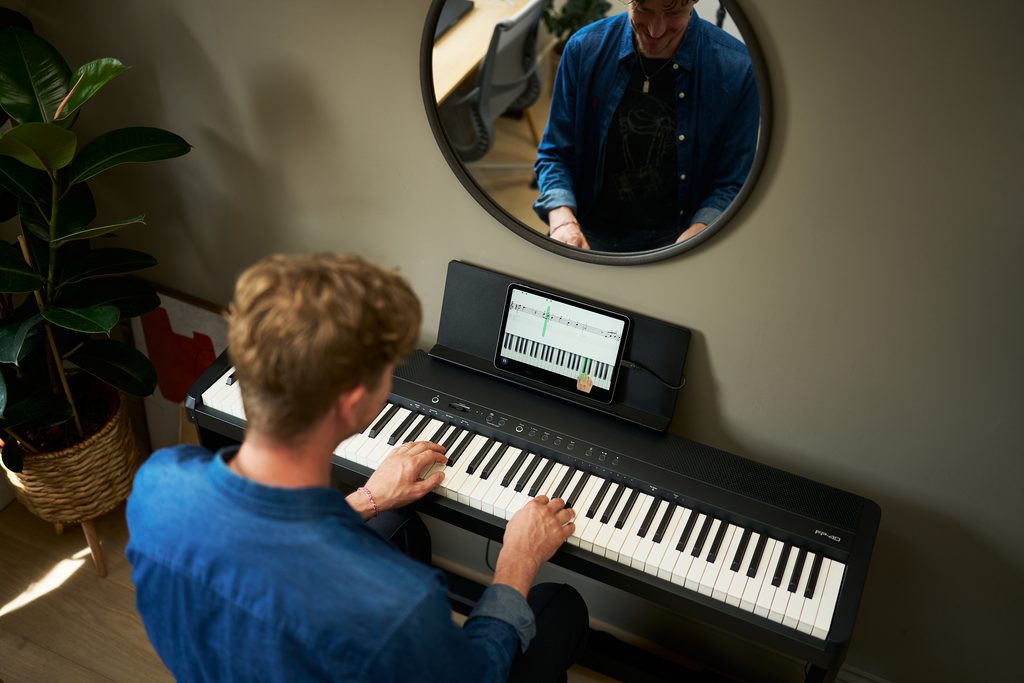
That is where the FP-40 and Piano Sphere pairing gets interesting. The FP-40 is a portable digital piano with Roland’s Piano Reality Sound Engine, PHA-4 Standard keyboard, onboard speakers, Bluetooth, and built-in Wi-Fi. Piano Sphere is the companion app, developed with Skoove, that gives players songs, courses, feedback, streaks, badges, and playing history.
The FP-40 can connect to a home network, link into Piano Sphere, update wirelessly, and record playing time even when the app is closed. For returning players and hobbyists, that kind of daily connection may be the feature that actually changes the relationship with the instrument.
To learn more about the FP-40 and Piano Sphere, visit Roland.com.
The FP-40 Is Roland’s First Piano With Built-In Wi-Fi
The biggest change here is Wi-Fi. Roland has made connected music gear for years, but the FP-40 is its first piano with onboard Wi-Fi, and that gives the instrument a different role inside the home.
After setup, the piano can communicate with the user’s wireless network. That connection supports Piano Sphere access, wireless software updates, playing-history tracking, and future service additions. In plain terms, Roland is trying to keep the piano from becoming a static piece of furniture after purchase.
That is a sensible move for the exact player this product seems built around. Beginners, returning adults, and casual hobbyists often do not fail because the piano sounds bad. They fall off because the habit gets weak, the next step feels vague, or the instrument stops giving them reasons to sit down.
The FP-40 tries to address that by keeping practice, songs, feedback, and tracking closer to the piano itself.
Piano Sphere Turns the Lesson App Into Part of the Instrument
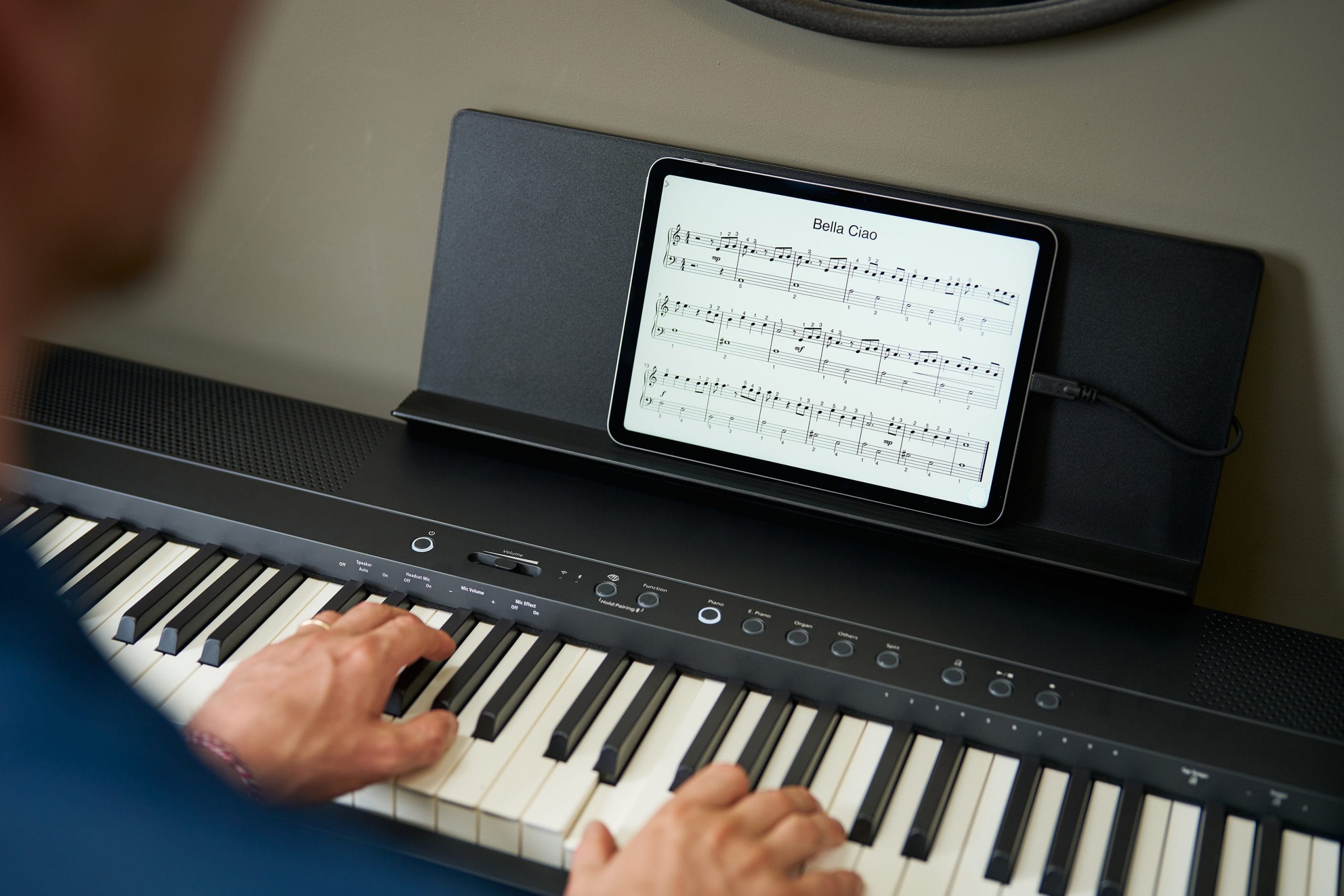
Piano Sphere is part of the FP-40 system. Powered by the Skoove learning method, the app offers guided lessons, real-time feedback, personalized plans, and a library of songs across pop, classical, and other styles.
The free tier includes 100 licensed, copyright-free songs, including selections by Coldplay, Harry Styles, and other well-known artists. Players can upgrade to access over 1,000 songs and lessons.
The app also reads where a player is struggling. The FP-40 can detect trouble in a specific section and then flash the Piano Sphere button to ask whether help is needed. That kind of nudge is a small detail, but it is aimed directly at the moment when a player might otherwise stop.
Streaks, streak freezes, and reward badges add another layer. These features borrow from habit apps, but in a piano context, they may be less about novelty and more about reducing the drop-off that often happens between lessons.
The Piano Still Has to Feel Like a Real Instrument
The connected features would not mean much if the FP-40 felt weak as a piano. Roland is leaning on its existing piano tech here, including the Piano Reality Sound Engine inspired by its flagship GP series grand pianos.
The PHA-4 Standard keyboard includes fully weighted hammer action, escapement, Ivory Feel keys, and a triple-sensor system. That gives newer players a better foundation than a lightweight keyboard would, especially for touch, control, and expression.
The onboard speaker system has also been revised with a new internal layout designed for clearer, wider sound and added low-end depth. That is important for home players because the speaker system is often how they experience the instrument.
I covered a different side of keyboard-based production in my article on Novation Launchkey MK4, where the physical feel of the controller shaped how quickly musical ideas could happen. The FP-40 serves a different player, but the same basic issue remains: the tech only helps if the playing surface keeps you engaged.
Bluetooth and the Roland Piano App Keep It Flexible
The FP-40 also includes Bluetooth, letting users stream songs or other audio from a mobile device through the piano’s speaker system and play along. That keeps the instrument tied to casual listening as well as formal lessons.
The free Roland Piano App gives users another way to personalize sounds and access FP-40 features that are not available from the front panel. That helps keep the hardware cleaner while still making deeper settings available when needed.
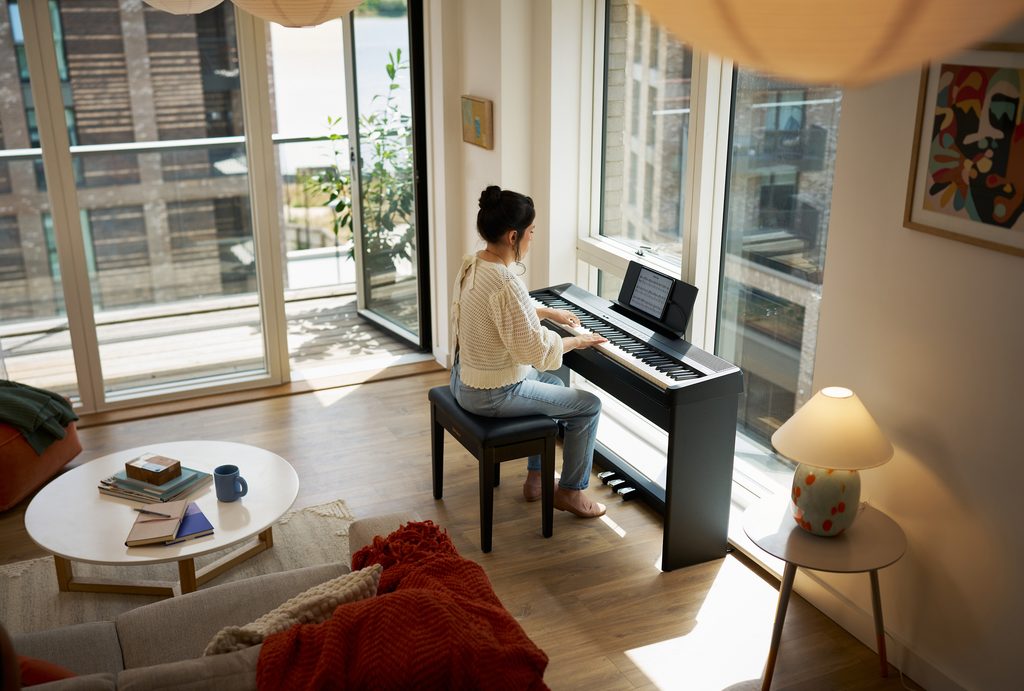
This is where Roland’s system starts to feel aimed at the modern living room rather than a formal practice room. The piano can teach, track, play audio, update itself, and still work as a normal digital piano when the user wants to sit down without thinking about the app.
FP-40 and Piano Sphere Give Roland a Clear Entry for Returning Players
The FP-40 is not the flashiest piano Roland makes, and that may be why the concept works. It is aimed at people who want the piano to fit back into daily life without needing a full studio mindset or a formal lesson routine from day one.
Piano Sphere gives those players a starting point. The FP-40 gives them weighted keys, Roland piano sound, built-in speakers, Wi-Fi, Bluetooth, and app connection in one portable instrument. Together, they create a more complete home-playing system than a piano sitting alone in the corner.
The FP-40 is available now for $749. Piano Sphere is available as a free download for iOS and Android and supports English, German, Spanish, French, Japanese, Korean, traditional Chinese, and simplified Chinese.

Will Vance is a professional music producer who has been involved in the industry for the better part of a decade and has been the managing editor at Magnetic Magazine since mid-2022. In that time period, he has published thousands of articles on music production, industry think pieces and educational articles about the music industry. Over the last decade as a professional music producer, Will Vance has also ran multiple successful and highly respected record labels in the industry, including Where The Heart Is Records as well as having launched a new label with a focus on community through Magnetic Magazine. When not running these labels or producing his own music, Vance is likely writing for other top industry sites like Waves or the Hyperbits Masterclass or working on his upcoming book on mindfulness in music production. On the rare chance he's not thinking about music production, he's probably running a game of Dungeons and Dragons with his friends which he has been the dungeon master for for many years.