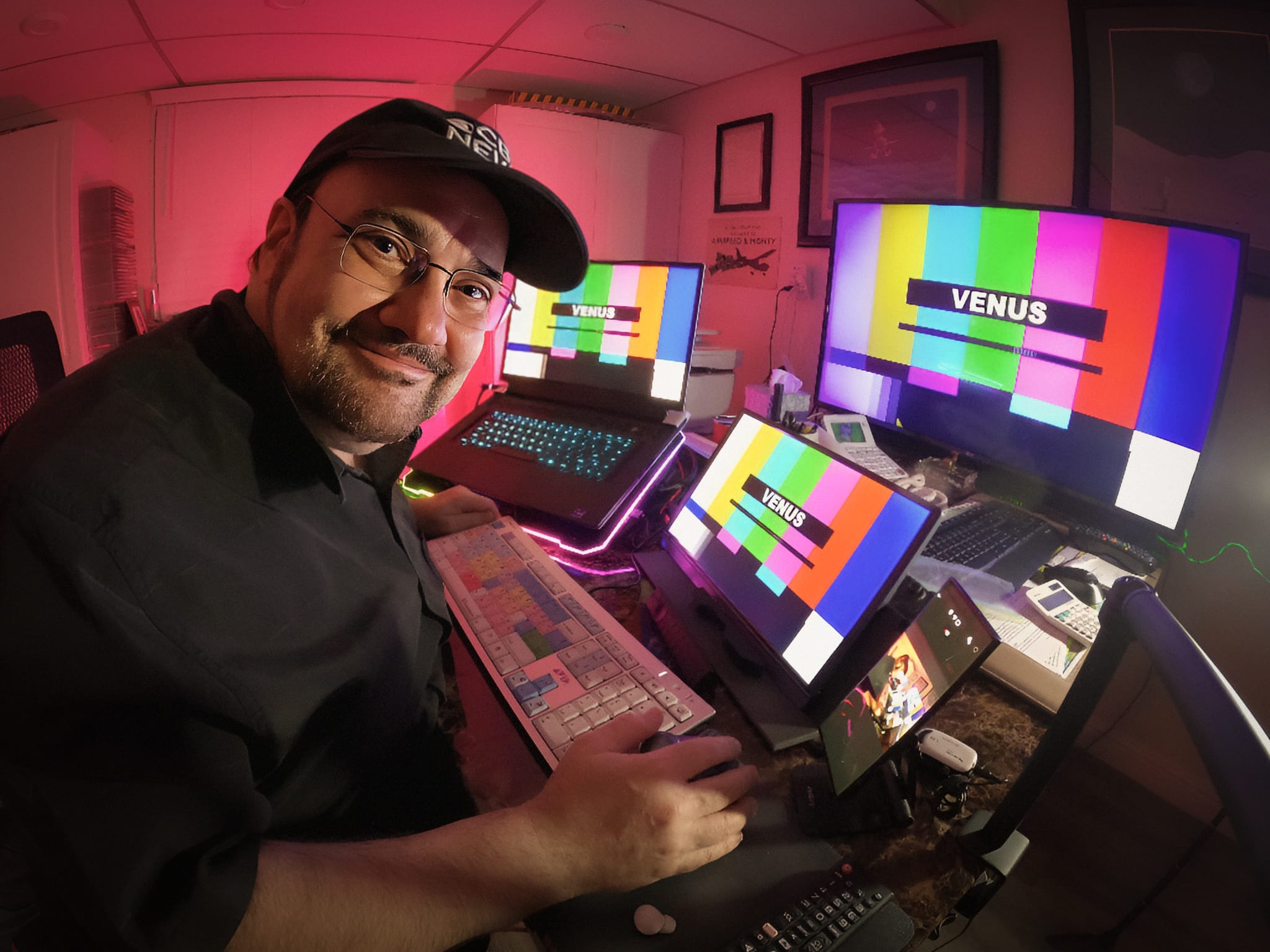
Paul Venus seems to hear songs the way an editor sees a sequence, with the wide shot, the close-up, the pause, the emotional turn, and the one small detail that tells you where the whole thing is supposed to go.
That probably starts in Lahaina, where his father ran MCTV-7, where cameras were part of daily life almost from the beginning, and where Maui was something he learned to look at with a child’s curiosity and a working editor’s eye long before he had a music project to explain.
That background gives his Hawaiian Tropical Electronic direction a more interesting center than the name might suggest. The music pulls from Hawaiian stories.
Lahaina memory, tropical atmosphere, electronic rhythm, synthesized voices, AI-assisted technology, and the kind of cinematic pacing that comes from decades spent cutting real human stories for television. He wants the technology to be audible, which is a risky and strangely honest choice, because he is not asking listeners to pretend the machine disappears. He is asking whether the person directing it has enough memory, taste, and emotional reason to make the machine say something specific.
That question runs underneath “Menehune Hana,” “E Ola (Live On!),” “Kuleana (My Destiny),” “Iwalani – Carry Me Home,” and the larger screen-first world he is building around Paul Venus Music. The songs begin with stories he still carries: legends heard as a kid, places changed by time, family memory, Lahaina after the fire, and the feeling of home becoming harder to hold once the physical world around it has shifted.
In the interview below, Venus talks about growing up inside Maui’s stories, learning to pay attention as a television editor, and building music that lets the filmmaker and the kid from Lahaina finally make something together.
Interview With Paul Venus

Growing up in Lahaina, what did you experience that you now find yourself returning to when you sit down to make music?
Growing up in Lahaina, I was surrounded by stories without always realizing they were stories. They were simply part of everyday life. The ocean, the West Maui Mountains, Front Street, Hawaiian history, and the legends we heard growing up, that was just home to me.
My father, John Venus, owned a small television station in Lahaina called MCTV-7, and from a very young age I was looking at Maui through a camera. I filmed and edited local commercials, people, businesses and events around West Maui. At the time, I certainly wasn’t thinking, “I’m documenting history.” I was a kid working alongside my dad and learning how to tell stories with pictures and sound.
Decades later, especially after the Lahaina fire, I began to understand how precious some of those images and memories had become.
That’s probably why I keep returning to Maui in my music now. Sometimes it’s a place. Sometimes it’s a Hawaiian story or legend I remember hearing. Sometimes it’s simply a feeling, what the ocean sounded like, what it felt like to come home, or something that takes me back to being that kid in Lahaina.
I’m not trying to recreate the Hawaiʻi of my childhood. I’m taking the things that stayed with me and asking myself, “How can I tell this story now?”
Music has unexpectedly become another way for me to do that.

You started working in television as a teenager in Hawaiʻi. How did learning to edit change the way you paid attention to the places and people around you?
I think editing taught me how to pay attention.
My start in television actually came much earlier than my teenage years. I was only four years old when I began hosting a children’s television show on Maui at my father’s station, MCTV-7. So cameras, television and storytelling were part of my life almost from the beginning.
By 17, I was working professionally in television, and I eventually became a news photojournalist at KHON-TV in Honolulu.
I later spent about 20 years at NBC. I initially worked on the Today show and NBC Nightly News with Tom Brokaw, and later moved into prime-time newsmagazine television with Dateline NBC, where I worked as a producer/editor. Today I edit for CBS Mornings.
Covering news taught me an enormous amount about real human emotion. I’ve spent much of my career telling stories about tragedy and loss, but also victory, resilience and failure. When you’re entrusted with those moments in people’s lives, you learn very quickly that genuine emotion can’t be manufactured. Sometimes the smallest, most honest moment says far more than something big and dramatic.
When you’ve spent that much of your life looking through a camera and working with footage, you begin noticing things other people might pass right over. A glance before someone answers a question. A pause. The sound of a room. The way someone’s face changes when they’re remembering something.
Editing also taught me that what you leave out can be every bit as important as what you put in.
Eventually you start seeing the world in sequences. I can walk into a place and almost automatically see the wide shot, the close-up, the little detail that tells you where you are, and the moment that might make somebody feel something.
That’s followed me into music.
I don’t really hear a song as simply verse, chorus, verse, chorus. I hear pacing. I hear transitions. I hear where something needs to change, where it needs to breathe, where the surprise should happen and where the emotional moment belongs.
So in a strange way, after all these years, I’m still editing. The material has just changed.
With “Menehune Hana,” which details from the stories you heard growing up stayed with you, and what made you want to revisit them now?
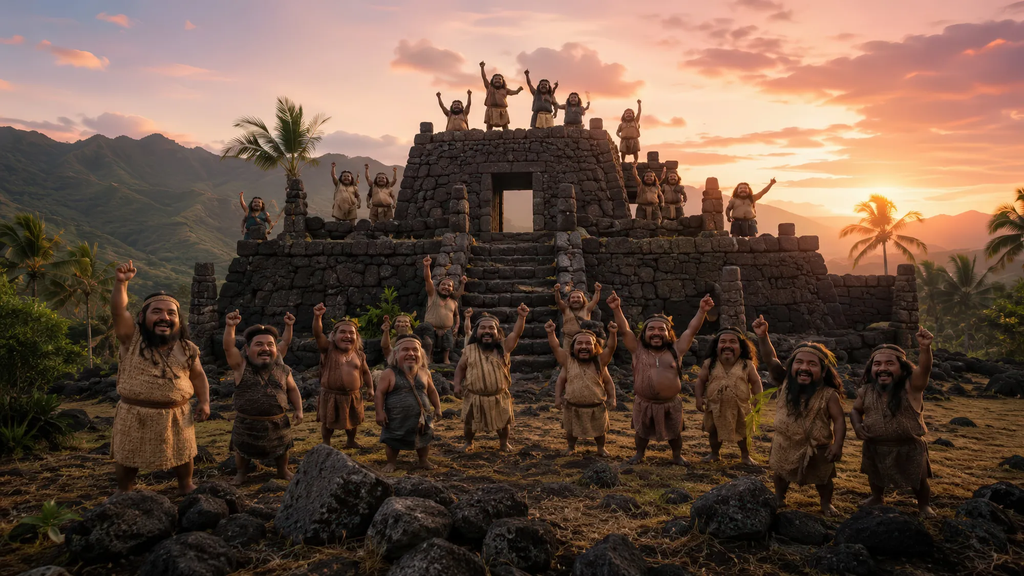
What always stayed with me about the Menehune stories was the mystery of them. Growing up on Maui, you heard these stories about little people who would come out at night and accomplish these incredible feats of construction before sunrise. Somehow, hundreds of them could work together and move enormous stones or build something that seemed almost impossible.
As a kid, how could you not be fascinated by that?
I would wonder what it actually looked like. Where did they come from? How did they organize hundreds of workers? How did they move those enormous rocks? And most importantly, what happened when the sun came up?
Those questions stayed somewhere in my imagination for decades.
With “Menehune Hana,” I wasn’t trying to create a historical reenactment or say, “This is what the Menehune really looked like.” I wanted to capture the wonder I felt hearing those stories as a kid and finally answer the question in my own imagination: “What if I could actually see them at work?”
That’s when the filmmaker in me took over. I started imagining hundreds of Menehune working through the night, passing stones from one to another, inventing ingenious ways of transporting huge rocks and racing against the approaching sunrise. Artist William Maheras helped spark some of that visual imagination as the idea developed.
But once I could see that world, I needed to hear it.
That’s where the music came from. I wanted it to have mystery and a Hawaiian soul, but also energy, rhythm and a modern electronic sound. I wasn’t trying to reproduce traditional Hawaiian music. I was taking a story that captured my imagination growing up and telling it using the creative language I have available to me today.
In a way, technology finally gave the filmmaker and the four-year-old Maui kid inside me a chance to make something together.

You’re calling this direction Hawaiian Tropical Electronic. What should that description tell someone about your music, and what might they still need to hear to understand it?
When I say Hawaiian Tropical Electronic, I’m not trying to suggest that I’m creating traditional Hawaiian music. I’m doing something quite different.
The Hawaiian part is where the heart and the stories come from: the people, places, mythology, history, memories and experiences that have stayed with me from growing up on Maui. Tropical is the atmosphere and environment. Electronic is the musical language I’m using to explore all of it.
That means electronic rhythms, synthesized voices, dance elements, unusual textures, cinematic sound and new creative technologies can all be part of the music.
And the stories can go in very different directions.
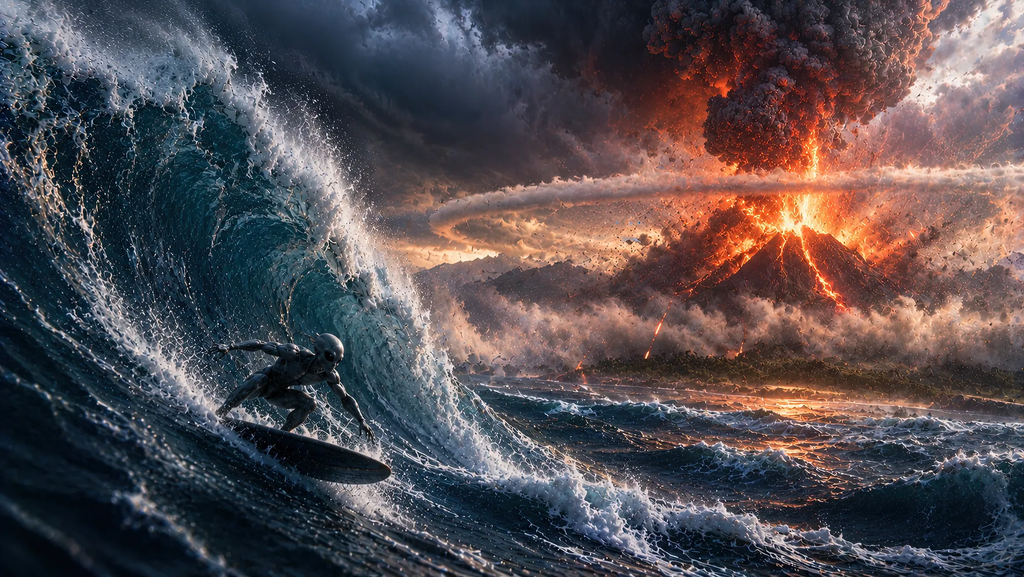
“Iwalani – Carry Me Home” explores the pueo and the Hawaiian idea of an ʻaumakua in a cinematic electronic dance track. “Kuleana (My Destiny)” is much more personal; it’s about family, responsibility, destiny and the connections between generations. Then there’s “Ride the Hurricane,” where I went completely in another direction and created this wild cinematic world around an alien traveler arriving at Jaws on Maui and surfing Peʻahi in hurricane conditions.
Those songs don’t necessarily sound alike, and I actually like that. What connects them is Hawaiʻi, storytelling, electronic music and the fact that I’m approaching all of it as a filmmaker.
I’m also very open about using AI-assisted technology in my creative process. I don’t want to disguise that technology or pretend you’re listening to a conventional band playing conventional instruments in a studio. In fact, one of the ideas I’ve developed while making this music is:
“I want you to hear the technology.”
But I also want you to hear the human being directing it.
The technology doesn’t know what it was like for me to grow up in Lahaina. It doesn’t remember my father. It didn’t hear the stories I heard as a kid. It hasn’t spent decades of its life editing stories about real people. Those are the things I bring to it.
So Hawaiian Tropical Electronic isn’t really something I expect someone to completely understand from a genre description. It’s a starting point. You still have to hear the music and, in my case, I hope you’ll see the films too.
Because ultimately, technology can give you possibilities. It can’t give you a point of view.
You’re planning around the screen as the main place people encounter your music. How does that affect the way you finish a song, and how much should it communicate to someone listening without the film?
I’ve spent almost my entire life telling stories with pictures and sound, so separating the two is actually difficult for me.
Very often, I can see the film while I’m still developing the song. I might already see a character, a location, a camera angle or an entire sequence in my head before the music is finished. That visual idea can cause me to change the structure of the song. Then something I discover in the music can completely change what I had planned for the film.
At some point, the song and the film start talking to each other.
But I never want the music to require the film in order to work. If someone discovers one of my songs on Spotify while they’re driving, I still want the music to create pictures in their own imagination. The film is the story I saw, but it doesn’t have to be the only story someone else sees.
I’ve also realized that I’m doing things a little differently from the traditional recording-artist model. I’m not building all of this around touring or a stage show. My background is filmmaking, television and editing, and that’s where I feel most at home.
My stage is increasingly the screen.
That’s where the music, filmmaking, storytelling and technology can all exist together.
So when I finish a song, I’m asking two questions: Does this work when you close your eyes? And when you open them, can I take you somewhere you weren’t expecting?

What response from someone who knows Maui well would tell you that your own relationship with the place is present in the finished work?
I think the greatest compliment someone from Maui could give me would be something very simple:
“I know that feeling.”
Not, “That’s a beautiful picture of Maui.” Everybody knows Maui is beautiful. There are millions of beautiful pictures of Hawaiʻi.
I’m much more interested in whether someone who grew up there, lived there, left there or came home there recognizes something underneath the pictures and the music.
Maybe a place takes them back to being a kid. Maybe a story reminds them of something their grandparents told them. Maybe a sound makes them think about somebody they haven’t thought about in years. Or maybe they just recognize that complicated feeling of loving a place so much that it becomes part of who you are.
Lahaina has taught me something particularly profound about that. When physical places that hold your memories change or disappear, the memories don’t disappear with them. In some ways, you hold onto them even more tightly.
That’s part of why I keep creating stories about Maui. I’m not trying to sell an image of paradise. I’m trying to express what home feels like to me.
So if somebody who really knows Maui watches one of my films or hears one of my songs and tells me:
“That took me home for a minute.”
Then I’ve accomplished something far more important to me than simply making a song about Hawaiʻi.

Magnetic byline note: This byline is used for staff produced updates and short announcements, often based on press materials and official release information. Editorial responsibility: David Ireland (Editor in Chief) and Will Vance (Managing Editor). About: https://magneticmag.com/about/ Masthead: https://magneticmag.com/masthead/ Contact: https://magneticmag.com/contact/