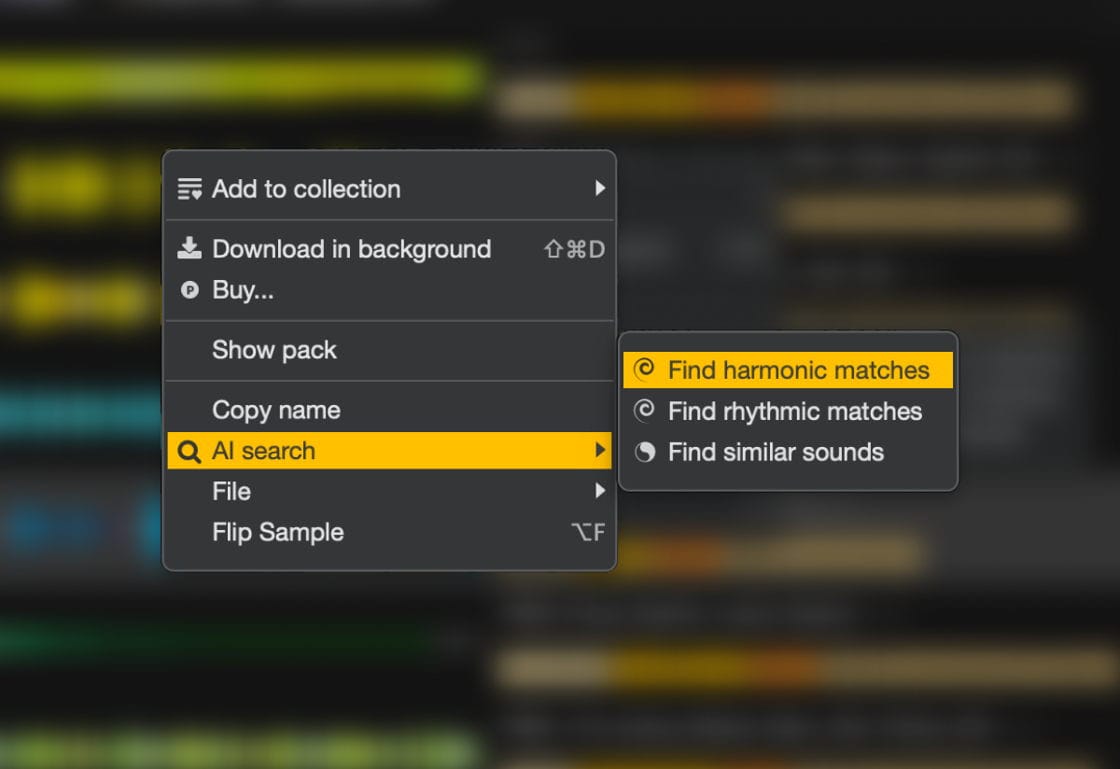
Loopmasters acquiring Jamahook makes sense because the hardest part of using samples in 2026 is rarely finding enough of them. It is finding the right one before the idea dies.
Loopcloud already sits on a huge amount of material, with Loopmasters citing more than four million royalty-free samples inside the platform and more than five million across the company’s wider catalog.
That scale is the selling point, but it is also the problem. A producer can have access to almost anything and still lose twenty minutes auditioning loops that technically fit the search term but do not fit the track.
Jamahook’s technology is built around that exact pain point. It analyzes audio from a producer’s project, identifies musical characteristics, then recommends rhythmically and harmonically compatible sounds. Producers can audition matches inside the DAW, refine results by instrument, mood, genre, or groove, and search their own audio libraries as well as the larger platform catalog.
We saw that direction earlier this year when Loopcloud added free Producertech courses, smarter AI search, and major Drum and Play updates. The Jamahook acquisition pushes the same point from another angle: discovery needs to feel closer to making music, not like a separate admin task.
Sound Matching Is About Keeping the Track Alive
There is a subtle but important difference between search and sound matching. Search asks the producer to describe what they want. Sound matching listens to what is already happening in the track and uses that context to suggest what might work next.
That matters because producers are not always thinking in clean metadata terms when they are writing.
The idea might be a bassline that needs a better top loop, a chord progression that needs a vocal texture, or a groove that needs percussion with the right swing. Typing “deep organic percussive loop” into a search bar can help, but it still makes the producer translate the track into words.
Jamahook narrows that gap by letting the track itself guide the results. That is a better fit for the actual moment of production, when the producer is trying to protect the feeling of the idea rather than label it perfectly.
Loopmasters CEO Matt Pelling framed the acquisition around that same issue, saying Jamahook has already been helping Loopcloud producers find the right sound faster and that the latest update brings that help into every stage of making a track. That is the right pitch.
For anyone who spends a lot of time building tracks from sample libraries, this is the part that matters most. I wrote about finding sample sources in my roundup of the best websites to get royalty-free samples, but access is only the first layer. Once the library gets big enough, filtering becomes the real creative tool.
Jamahook Gets Scale, Loopmasters Gets More Intelligence
Jamahook CTO Torsten Heise described the company’s original goal as helping producers spend time making songs instead of hunting for sounds. That is the entire acquisition in one line. Jamahook brings the matching technology. Loopmasters brings the user base, catalog scale, and Loopcloud platform where that technology can reach more producers.
That kind of integration tends to work best when the acquired company’s technology already has a clear role inside the buyer’s product. In this case, Jamahook was already powering intelligent search in Loopcloud. The acquisition formalizes a relationship that was already part of the user experience, then gives Loopmasters more control over where the technology goes next.
The bigger question is how far Loopmasters takes it. Intelligent sound matching can stay as a better search layer, or it can start touching more parts of production: arrangement suggestions, groove matching, harmonic replacement, personalized libraries, and project-aware recommendations that become more accurate as producers use the system.
Loopmasters has acquired Jamahook now, and the move points clearly toward the next version of sample search: less typing, less folder diving, more musical context.

Will Vance is a professional music producer who has been involved in the industry for the better part of a decade and has been the managing editor at Magnetic Magazine since mid-2022. In that time period, he has published thousands of articles on music production, industry think pieces and educational articles about the music industry. Over the last decade as a professional music producer, Will Vance has also ran multiple successful and highly respected record labels in the industry, including Where The Heart Is Records as well as having launched a new label with a focus on community through Magnetic Magazine. When not running these labels or producing his own music, Vance is likely writing for other top industry sites like Waves or the Hyperbits Masterclass or working on his upcoming book on mindfulness in music production. On the rare chance he's not thinking about music production, he's probably running a game of Dungeons and Dragons with his friends which he has been the dungeon master for for many years.