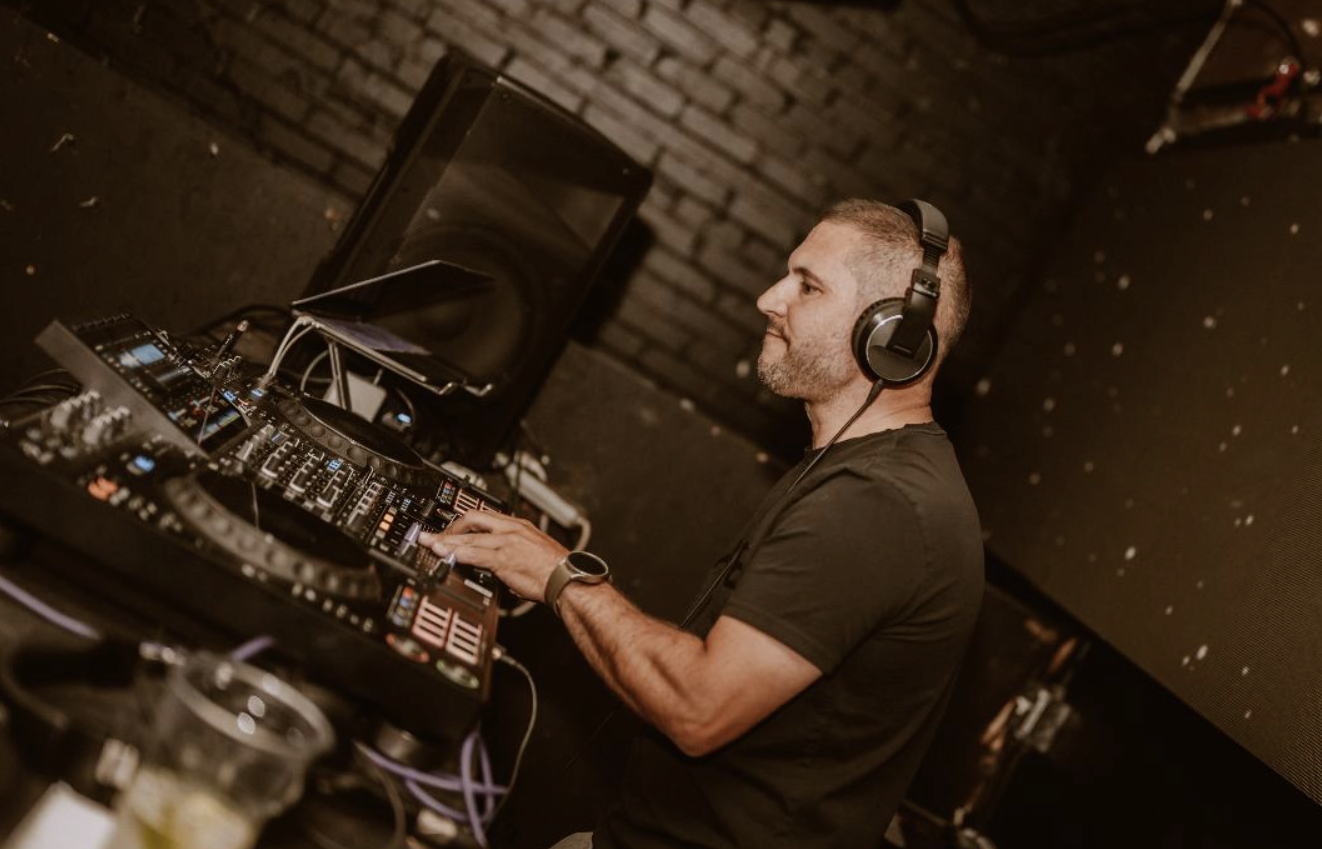
There is a weird pressure on electronic artists right now to become instantly legible before the music has even had a chance to do anything. The look, the content, the logo, the visual language, the quote-unquote thing around the project; all of it can start moving faster than the records themselves, and for an artist like Deeparture, that creates an obvious tension.
Identity matters, but the second it becomes more important than the music, the whole project starts to feel like it is serving the campaign rather than the other way around.
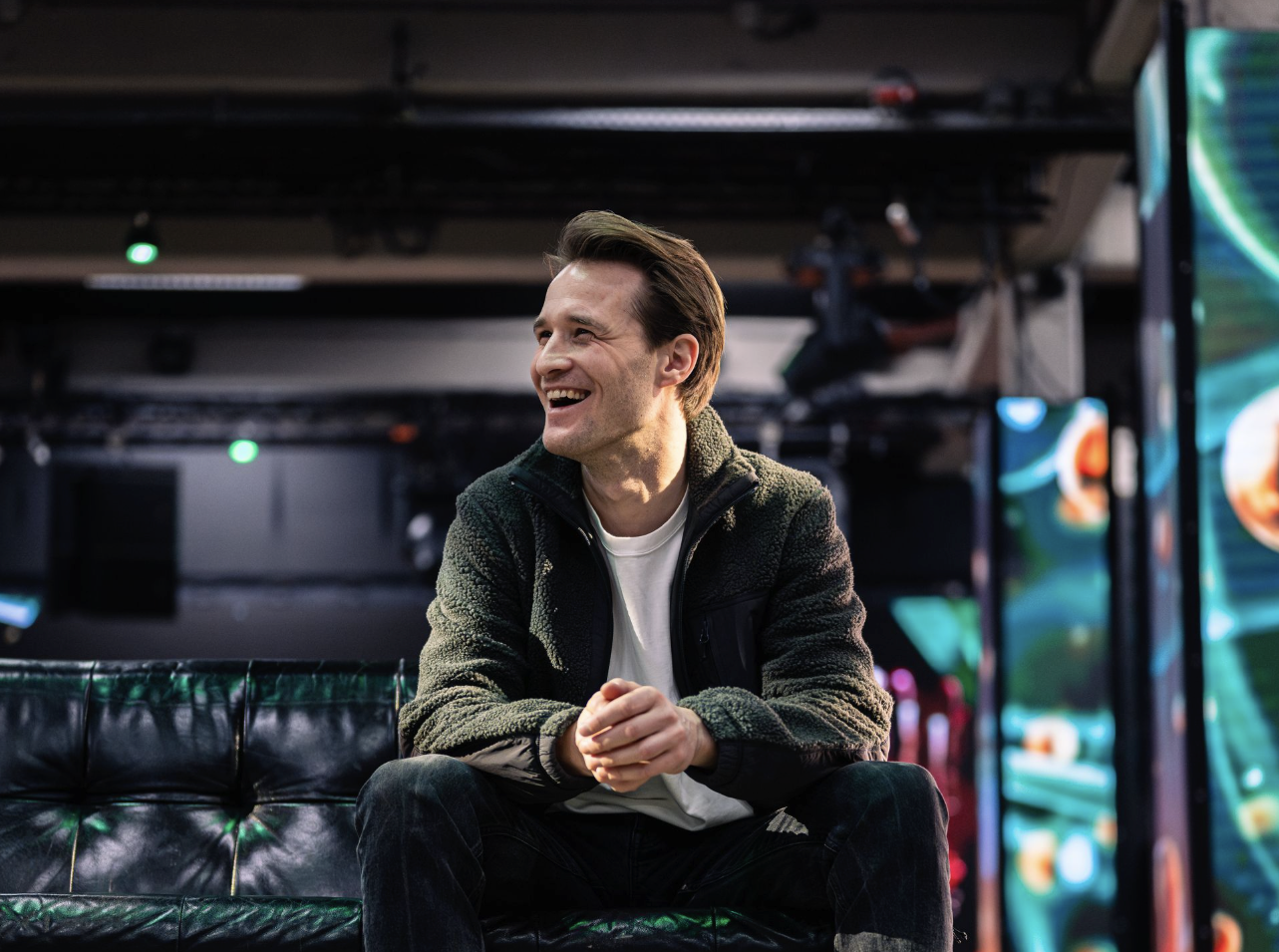
That tension sits underneath City Reverie, Deeparture’s (@deeparturenl) debut album on Zerothree.
The record is built around Amsterdam, the city he calls home, and the album pulls that setting into an energetic, melodic, retro-leaning space where early-2000s and ’90s ideas move into his current progressive language. With collaborations alongside Lazarusman, Tim Morrison, Jantine, and Yves La Rock, City Reverie does not feel like an artist trying to lock himself into one narrow lane. It feels more like a producer letting the album hold several versions of his taste at once.
The interview below gets into that exact problem from the artist side.
Deeparture talks about branding, gimmicks, genre boxes, consistency, self-development, meditation, and the slow process of learning what sounds like him without forcing the answer too early. His position is practical rather than naïve: artists do need identity now, especially when the release calendar is impossibly crowded, but the healthiest version of that identity still has to come from the music first.
Interview With Deeparture

Do you feel like DJs today are expected to have a “thing”: a gimmick, look, or brand?
I would have loved to say “only the music matters,” but this is not the case. I think DJs are definitely expected to have a recognizable brand these days, which makes sense, as there are so many people into music now that it is hard to cut through with good productions or DJ skills only, but no identity to actually promote it.
Indeed, this leads to many artists resorting to gimmicks, looks, masks, and other devices to get noticed. Personally, I don’t really have a problem with this. Competition is fierce, and I respect anyone making an extra effort to get noticed, if it is done with a sense of class, of course.
However, as a music purist and studio nerd, a side effect that does bother me is the fact that the actual music is often becoming subordinate to the brand and marketing efforts. It makes the scene feel unauthentic sometimes.
Have you ever felt boxed in by how others describe or market you?
I think I’ve never really belonged in any box, and luckily I haven’t been pushed into one. This is both very liberating and challenging in its own sense. Sometimes my style has been very progressive, sometimes almost organic, and sometimes it is more trance and even poppy. I don’t think there is one label, artist, or other type of cluster that I fit into 100%.
I do try to create music that sounds like me. Sometimes that actually makes the promotion more complex, as not the same type of DJs or radio stations might support your new releases when I tap into different subgenres within electronic music. This is very deliberate. I make music that I would personally like to hear on the dancefloor, and those dancefloors vary.
Sometimes I picture myself at a beach festival during the day, sometimes in a dark warehouse, sometimes in the jungle, and other times on a big mainstage. This approach has always kept my relationship to music really free and healthy.
How do you approach consistency without becoming predictable?
Music is not a static thing, and neither am I as a person. My music and my art reflect myself moving through life. As the years go by, my style develops, but the toolkit stays relatively stable.
I think my style of production and arrangement has become quite recognizable over the years, but the inspiration widely differs. For my City Reverie album, I deliberately tapped into a field that inspired me at that moment, which is energetic, melodic music with a big nod to retro: early-2000s and even ’90s elements. A bit faster than what I did before, but still very much me.
I get bored very easily in the studio doing the same thing too often, so I continually challenge myself to come up with new ideas. This is actually the best part of music: that magical moment when an idea suddenly develops into the early stages of a song.
My approach to DJing is the same. The type of music I play is not identical to what I did years ago, but the type of sets I play still very much are. I’ve always approached both songs and sets as little stories with ups and downs, different moods, plot twists, and a satisfying ending, haha.

What’s been your process for discovering your identity without forcing it?
It’s been a process of looking very much outward the first couple of years, toward what I thought was expected of me when pursuing a specific path in music, then slowly turning more inward and getting rid of the external noise. Every time I pause, turn inward, and listen, the little successes happen. Success often looks for the road with the least resistance.
Next to spending a crazy amount of time in the studio, being creative and getting better, meditation and self-development in general have helped greatly and have played a big role in my life for some years now.
Trying to force it has never worked for me. I try to be the most authentic version of myself that I can nowadays. I don’t always manage, but I strive to, haha.
What would you say to someone who feels like they’re not “distinct” enough?
Assuming that the question relates to musical artists: if you feel like that yourself about your own music, then there is probably work to be done. Creating music that feels different from what is already out there is step one. There is just too much music being released every week that sounds the same, and AI isn’t helping on that front.
On the other hand, if you feel like you as a persona are not distinct enough, I would say that you are more than enough. You just have to find your angle that people connect with, so you can actually get your music noticed in that big ocean. That can be challenging if you’re not the natural influencer type, and neither am I.
Don’t try to figure it out alone, but try to get some other perspectives to help you on all the fronts. Nobody is a musical genius, a marketing genius, and a movie star on camera.

Closing Thoughts
The most interesting thing in Deeparture’s answers is how clearly he separates identity from packaging. He is not pretending branding does not matter, because anyone releasing electronic music in 2026 knows that would be false. But he is also not comfortable with a scene where the music starts serving the brand, and that distinction is where the interview actually opens up.
There is also a clear link to Yeadon’s interview on AI, taste, and keeping the artist’s point of view inside the record. Yeadon’s concern was generative tools taking too much of the decision-making away from the producer, while Deeparture is talking about branding taking too much attention away from the song.
Different pressures, similar risk. The artist slowly disappears when too many decisions are made for reasons outside the music.
That is why City Reverie gives this conversation a more concrete center. Deeparture describes the album as faster than what he had done before, more energetic, more melodic, and shaped by early-2000s and ’90s inspiration, but he is careful to say it still feels like him. That is the real test of consistency. Not whether every release hits the same narrow mark, but whether the listener can hear the same person making different decisions.
His answer about not belonging to one box also feels tied to the album’s Amsterdam setting.
A city record can easily become postcard music, but City Reverie seems to use Amsterdam more as a mental and creative environment than a checklist of references. Home becomes the place where the project can widen without losing its center. That is a better way to think about a debut album than simply treating it as a producer’s largest release to date.
There is another useful comparison with Thechi’s interview on Kerala, London, memory, and finding a sound without reducing the project to one genre. Thechi is earlier in his path, while Deeparture is speaking from a more developed catalog, but both artists reject the idea that identity has to become a cage. The connective tissue is atmosphere, movement, taste, and the way a producer keeps returning to certain instincts even as the surface changes.
The meditation answer is also worth keeping in view, because it keeps the identity conversation from becoming purely strategic. Deeparture talks about turning inward, listening, clearing out external noise, and finding that small successes arrive when he stops trying to force the process. That is not a branding hack. It is a way of staying close enough to yourself that the branding can eventually describe something real.
The broader takeaway is that Deeparture is not arguing against having a visual identity, a recognizable lane, or a way for people to understand the project quickly.
He is arguing against confusing those things for the art itself. In a crowded electronic music market, artists do need a way to be understood, but City Reverie suggests that the healthiest version of that understanding still begins in the studio, with the records, and with the slow work of finding a language that can change without becoming unrecognizable.

Will Vance is a professional music producer who has been involved in the industry for the better part of a decade and has been the managing editor at Magnetic Magazine since mid-2022. In that time period, he has published thousands of articles on music production, industry think pieces and educational articles about the music industry. Over the last decade as a professional music producer, Will Vance has also ran multiple successful and highly respected record labels in the industry, including Where The Heart Is Records as well as having launched a new label with a focus on community through Magnetic Magazine. When not running these labels or producing his own music, Vance is likely writing for other top industry sites like Waves or the Hyperbits Masterclass or working on his upcoming book on mindfulness in music production. On the rare chance he's not thinking about music production, he's probably running a game of Dungeons and Dragons with his friends which he has been the dungeon master for for many years.