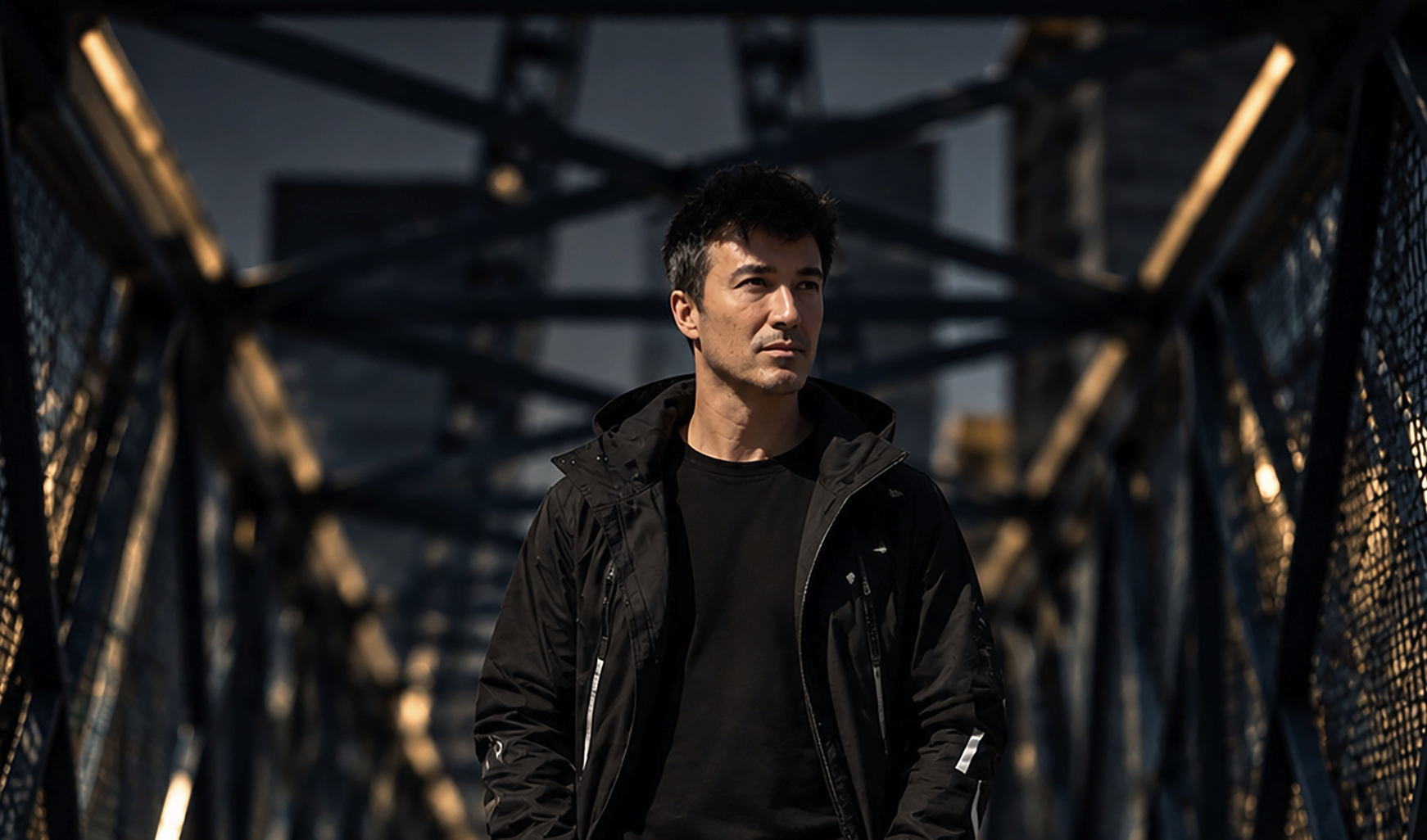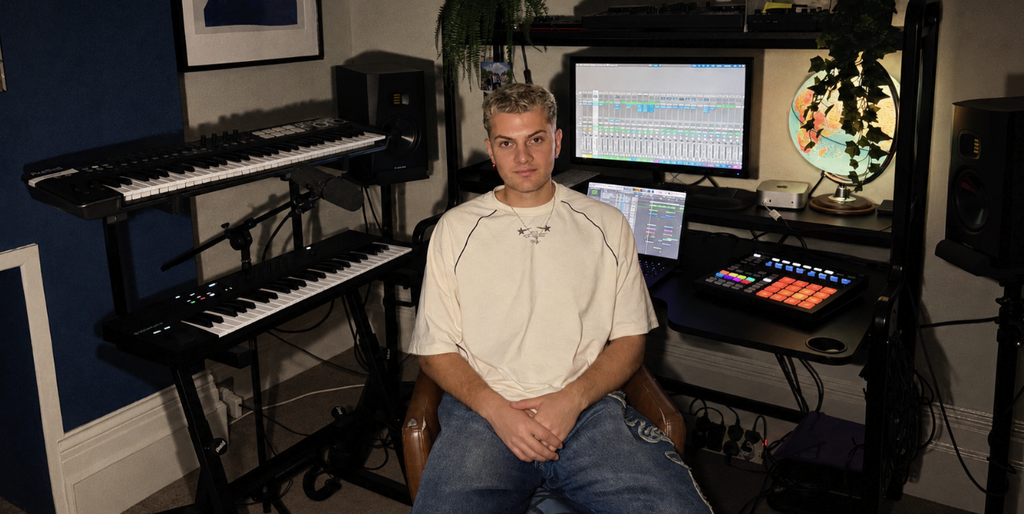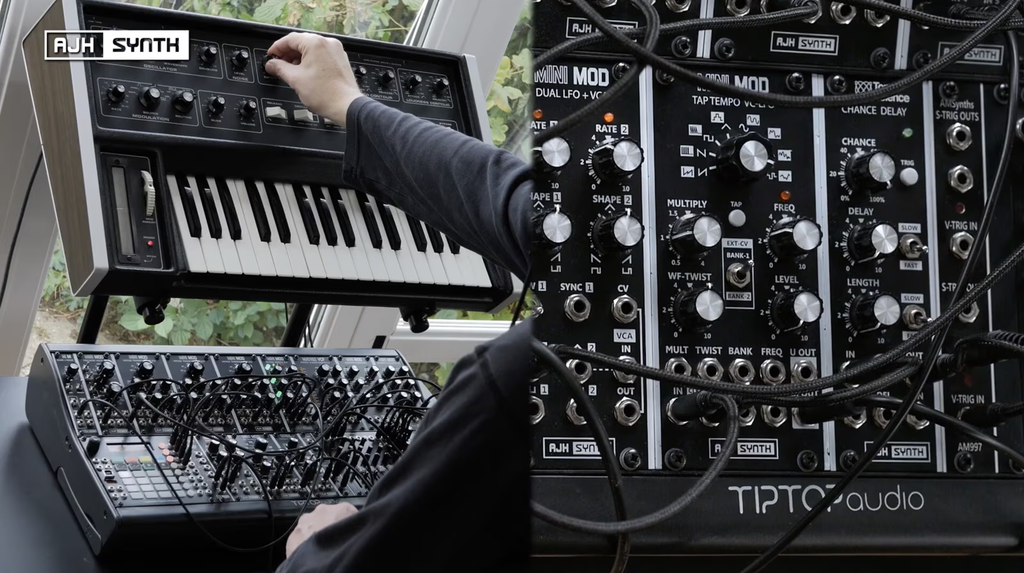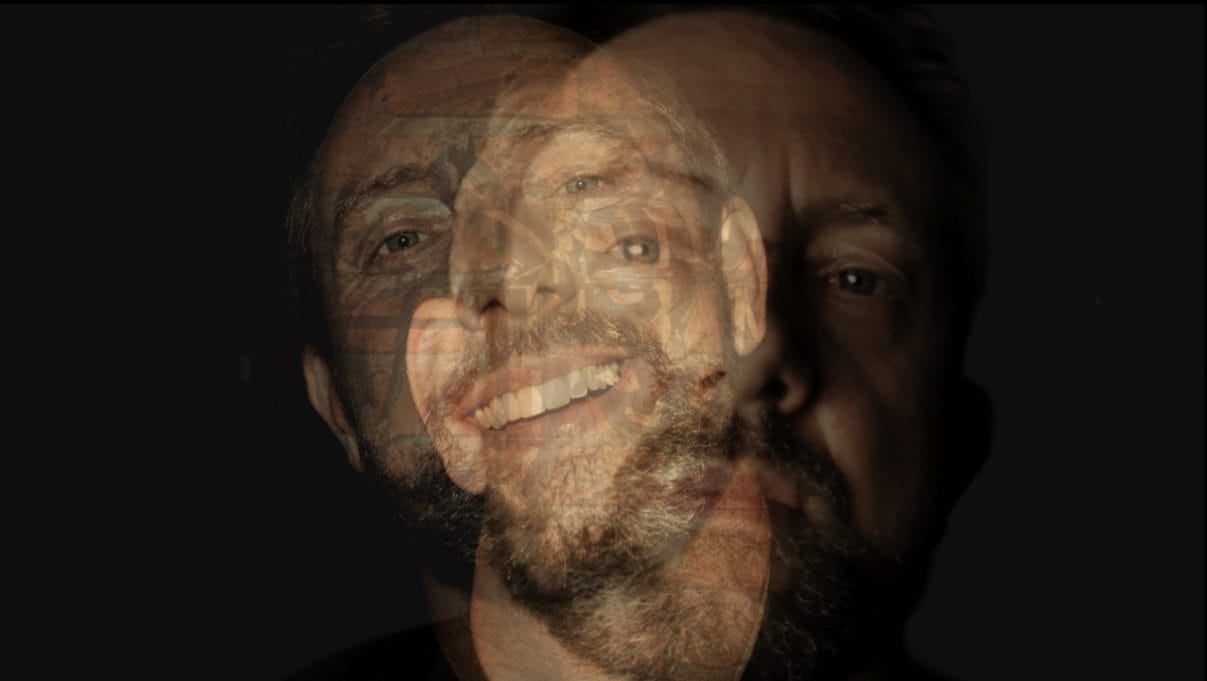
Richard Seeley has been releasing underground electronic music for over two decades, with records landing on Rekids’ Rek’d, V.V.V.W.I. and his own Glue Music Recordings along the way. His latest EP, Seeza Project No 4, brings that history back into focus, especially on opener “Do You Want Acid?”, where the influence of late-’90s rave and house comes into the production without Seeley attempting to recreate a record from that period. The four-track EP also includes “Not Going Home,” “Clap Tone” and a DeWalta remix of the latter, and arrives August 17 via Glue Music.
That distinction between referencing older electronic music and deliberately reproducing it is central to how “Do You Want Acid?” came together. Seeley began with an old piece of rave-era vocal audio, then built around it using distorted piano, a string-like polysynth and a heavy kick. There is plenty happening at the mixing stage too, including tube saturation from FabFilter Saturn 2 and frequency-dependent ducking between competing chord parts, yet the larger production idea stays relatively simple.
So with Seeza Project No 4 arriving on Glue Music, we asked Richard Seeley to open the project and explain how “Do You Want Acid?” was made. The rest of the words are from the artist…
The Idea
The idea for this track was actually pretty simple. I wanted to make something that had a slightly nostalgic feel to it, but at the same time was timeless. Something that could still be played in years to come without immediately sounding like it was made during a particular production trend.
The late 90s were really my baptism into this whole subculture, so naturally that period still has an influence on me. I was not trying to recreate the sound of the 90s, but I wanted some of that feeling and character in there. There was an energy to that period that has always stayed with me.
Once I had that in my head it became the theme for the track and helped dictate the sounds I chose. The vocal, piano and strings all reference that feeling in different ways, without me consciously trying to make a retro record.
I think having an idea of how you want something to feel before you start can really help. Of course, sometimes you just turn everything on, start messing around and something great happens, which is also fine!
The Vocal
The first real inspiration was the vocal. It came from an old piece of audio from the 1990s rave era.
There was something about the energy and character of the voice that immediately caught my attention and fitted the nostalgic feeling I was looking for.
I took small sections of the vocal rather than using it as a conventional song vocal. For me it was more about capturing a moment and an atmosphere. Once I had that, I had a direction for the rest of the track.
TIP: Interesting source material can come from anywhere. A sample does not necessarily need to be musical. Spoken words, field recordings and random bits of audio can be enough to give you the initial character or idea that gets a track moving.
Building The Musical Idea
Once I knew I wanted that nostalgic undertone, the sound choices became quite deliberate.
There is a distorted piano which obviously has that connection to 90s piano house and rave, alongside a polysynth with an almost string like quality. I wanted a slightly feel good element in there without it becoming cheesy. There is definitely a fine line!
I also wanted a really solid, heavy kick underneath it. That gave me the weight I wanted while the piano, strings and vocal provided the character.
Once I laid down the main hook I knew I had the track. The vocal, distorted piano, string sound and groove were all working together. At that point I was not searching for the idea anymore. The track was there. I just needed to arrange it.
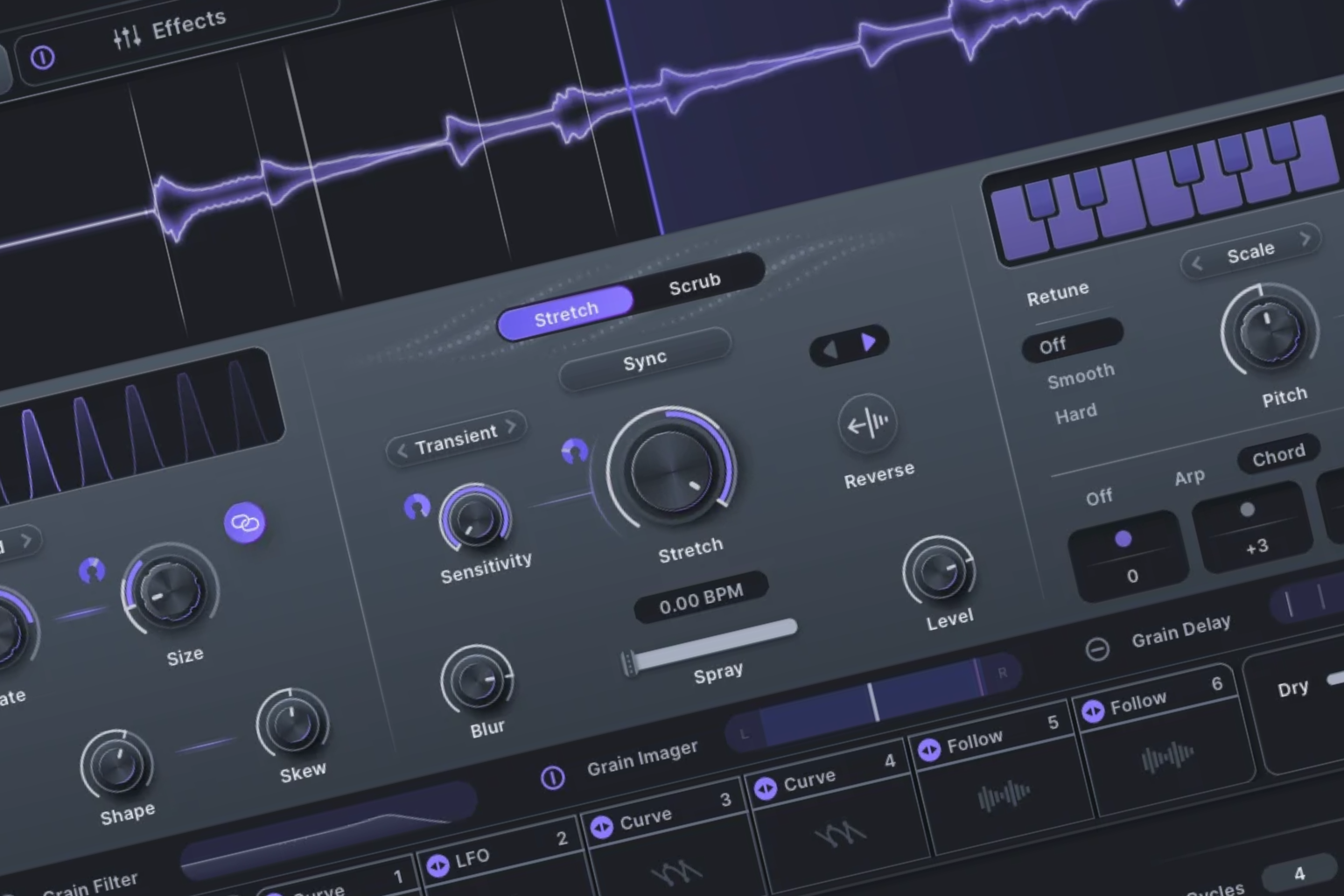
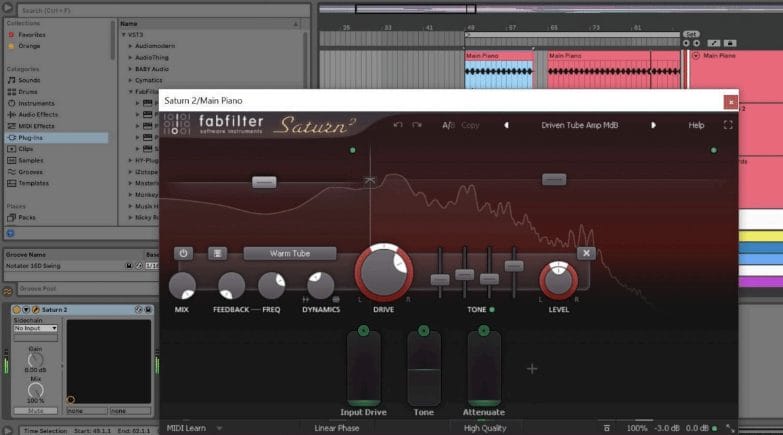
The piano itself needed to sound rough rather than polished. I used distortion to give it some initial character and then FabFilter Saturn 2 with tube saturation to add another layer of colour and harmonics. I did not want a pristine piano. The grit is part of what gives it that nostalgic rave character.
TIP: If you have a clear idea of the feeling you are trying to create, sound selection becomes much easier. You can normally tell pretty quickly whether something belongs in the track or not. And if it does not, get rid of it. Do not spend the next hour trying to make it fit!
Making It Playable
Something I think about much more these days is the DJ who might eventually play the record.
Earlier in my career I made a lot of electronic music that, looking back, was probably closer to album music even though technically it was dance music. Some of it was very experimental and probably unnecessarily difficult for another DJ to work with.
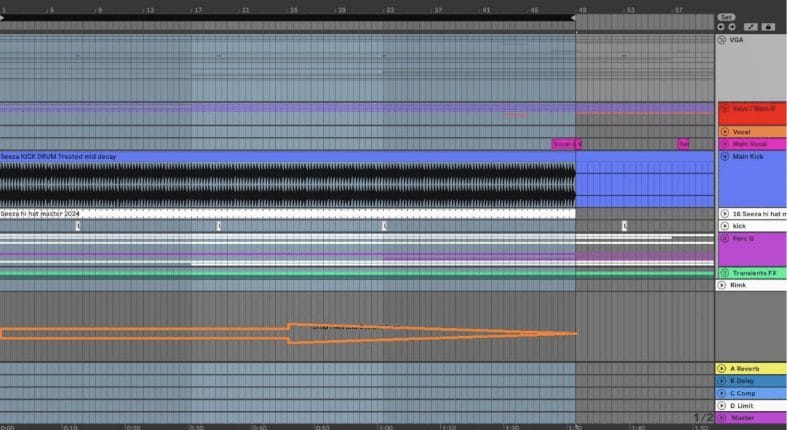
These days I am much more conscious of that. With this track I deliberately made the intro easy and enjoyable to mix. I want to give the DJ a clean way into the record rather than making them fight with it.
That does not mean the music itself has to become predictable. Once you are into the track you can do whatever you want, but if you are making club music and ultimately want DJs to actually play it, making their life slightly easier is probably not a bad idea.
TIP: Listen to your intro from the perspective of another DJ. They do not know the track like you do. Give them a clean and intuitive way into it. You can get clever later!
Giving Everything Its Own Space
A big part of mixing for me is making sure everything has its own place in the frequency spectrum.
I do not like processing things just for the sake of processing them. I would rather choose the right sound in the first place and then do what is actually necessary to make it sit correctly in the track.
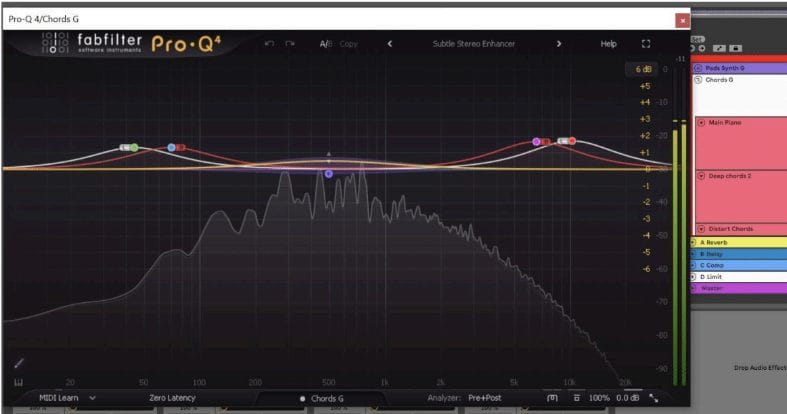
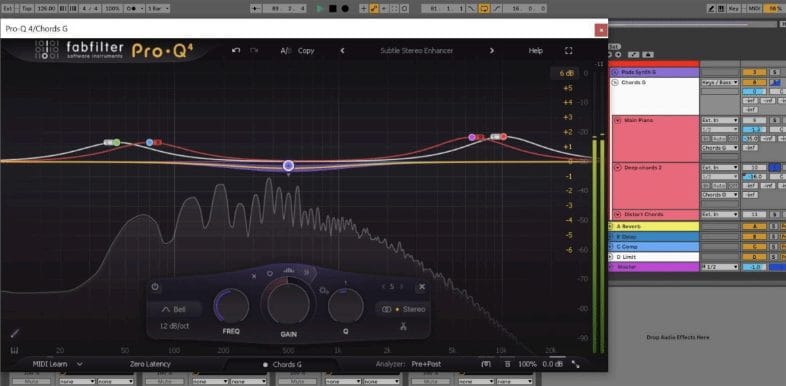
A really simple thing you can do is look at your important elements through an EQ or spectrum analyser and see where the main energy of each sound is sitting. You can very quickly start to see where sounds might be fighting for the same space.
That does not necessarily mean reaching for an EQ and permanently cutting frequencies out of one of them.
In this track I had the main piano and a second chord layer competing in a similar area. Rather than permanently removing those frequencies from the chord, I used dynamic EQ. When the main piano hits, that particular frequency range in the second chord ducks slightly. When the piano is not playing, the chord is left alone.
It is a small thing, but lots of small things like this add up. You create space without processing the life out of everything.
For me that is ultimately what I am trying to achieve with a mix. Everything has its own air and its own space, but it still sounds like one record.
TIP: Before permanently EQing frequencies out of a sound because something else needs the space, try dynamic EQ. Create the space when you actually need it and leave the sound alone when you do not.
Final Thought
Probably the biggest thing I took from making this track is not to overcomplicate things.
The vocal gave me the initial inspiration, the piano and strings gave me the nostalgic character, and the kick and groove gave it the weight. Once those things were working together, the track was basically there.
From that point it was about arrangement, making it playable and getting everything to sit together properly.
Sometimes adding another sound is the answer.
Quite often deleting one is better.

Will Vance is a professional music producer who has been involved in the industry for the better part of a decade and has been the managing editor at Magnetic Magazine since mid-2022. In that time period, he has published thousands of articles on music production, industry think pieces and educational articles about the music industry. Over the last decade as a professional music producer, Will Vance has also ran multiple successful and highly respected record labels in the industry, including Where The Heart Is Records as well as having launched a new label with a focus on community through Magnetic Magazine. When not running these labels or producing his own music, Vance is likely writing for other top industry sites like Waves or the Hyperbits Masterclass or working on his upcoming book on mindfulness in music production. On the rare chance he's not thinking about music production, he's probably running a game of Dungeons and Dragons with his friends which he has been the dungeon master for for many years.