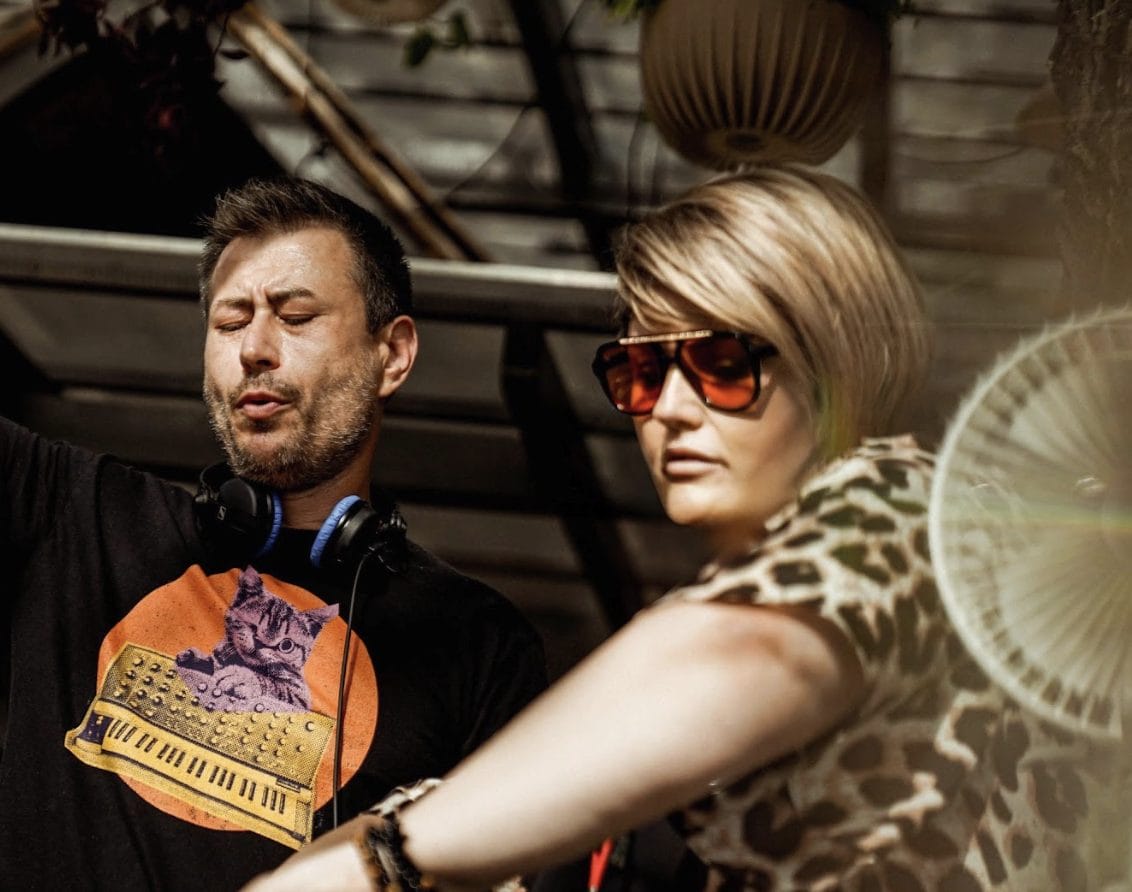
Hollow Shift’s WAR started less like a planned concept release and more like three songs slowly revealing they were all circling the same thing. Jessica Bell and Alex Zamparas were focused on arrangements, basslines, synth sounds, and lyrics, but when they played the tracks back together, the connection became obvious.
One song felt like the build-up, another like survival, and another like the aftermath, which is probably a more honest way for a record about conflict to take shape than sitting down and deciding to make a grand statement about it.
The Athens-based duo brings together Bell’s background as a novelist, lyricist, and singer with Zamparas’ history in electronic production, including his work with Keep Shelly in Athens, Expert Medicine, and Fever Kids. That mix is a big part of why WAR does not feel locked into one lane and instead is pulling from darkwave, post-punk, synthwave, and electronic music; all the while, the writing still has the emotional detail of a song that began with lived pressure rather than genre math.
In the interview below, Bell talks about the personal conflict that found its way into the record, the trust at the center of her creative relationship with Zamparas, and why Hollow Shift has helped her stop writing for an imagined audience. There is a lot to unpack here when it comes to fear, survival, and how dark music can become a way of standing up instead of sinking further down.
The more she talks about the project, the clearer it becomes that WAR is less about conflict itself and more about what conflict changes in a person after the noise has passed.
Interview With Hollow Shift
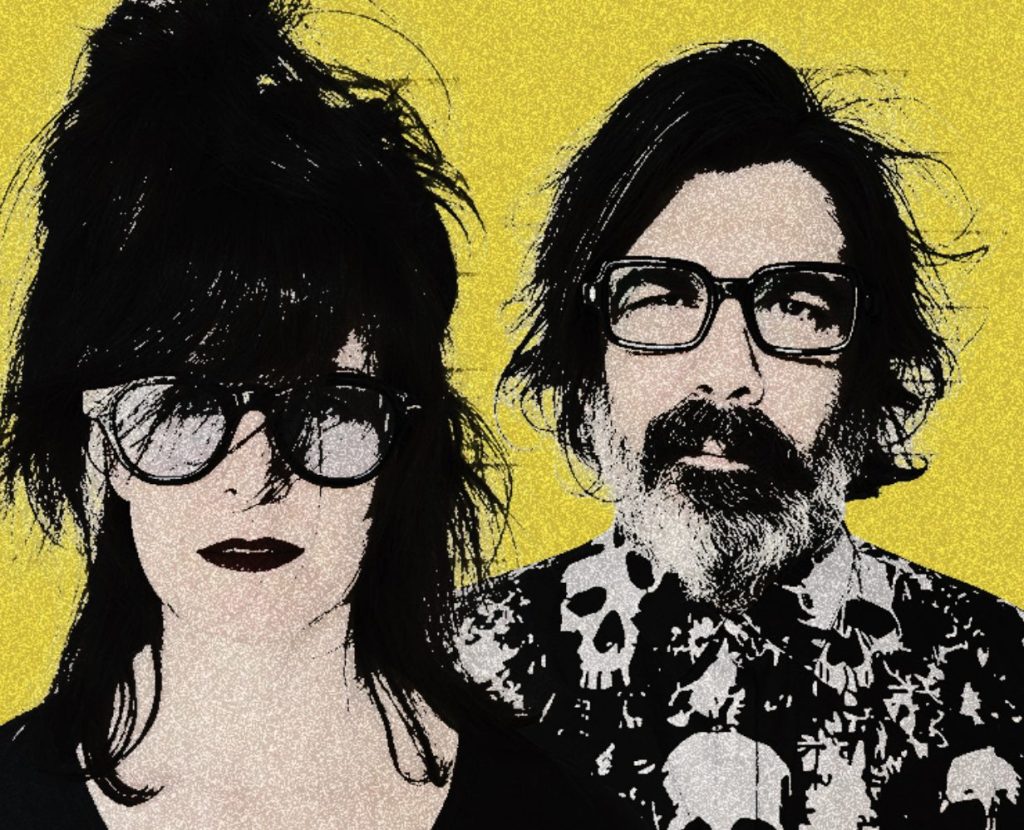
WAR deals with conflict on a personal and social level. What was the first idea that made you realize this needed to become a release?
It actually crept up on us.
We were not sitting there saying, “Let’s make a record about conflict.” If anything, we thought we were writing three completely separate songs. We were obsessing over arrangements, basslines, synth sounds, and lyrics, just trying to make the best songs we could.
Then one evening, we listened to the three tracks back-to-back, and I remember looking at Alex and saying, “They’re all talking about the same thing.” Every song was approaching conflict from a different angle. One felt like the build-up, another like survival, another like the aftermath. None of it was planned.
At the time these songs were written, conflict had very loudly become part of my everyday life. I could not sleep. Every notification on my phone made my heart race. I actually changed one person’s notification sound because I realized my body was reacting before my brain even had a chance to process it. I could not concentrate on work, and I felt exhausted before the day had even begun.
Without realizing it, those experiences were finding their way into the songs. At first, I think I was writing about the person I was afraid of. They started off as vulnerable and angry. Then they became a kind of armor. Somewhere along the way, I noticed I had stopped writing about that person altogether. The songs had become something else. They became messages to anyone carrying their own fear or trying to find a way through it.
Sometimes I would write a lyric before I fully understood why it mattered, and only later realize it was telling me something I had not admitted to myself yet. Other times, it helped me make sense of emotions that had been sitting just below the surface. The therapist was in my own head.
At the same time, I would turn on the news and see wars unfolding around the world. I felt guilty that something happening in my own life could occupy so much space in my mind when other people were losing everything. Obviously, those experiences are not comparable, but they made me think about what conflict does to us, regardless of its scale. It does not just destroy buildings. It changes the way we trust, the way we think, and the way we move through the world.
One thing I could never understand was how quickly people seemed to choose sides. Whether it is a global conflict or something deeply personal, life is almost never black and white. I think that is what WAR really became for me. It is not a record about conflict itself, but about what conflict leaves behind.
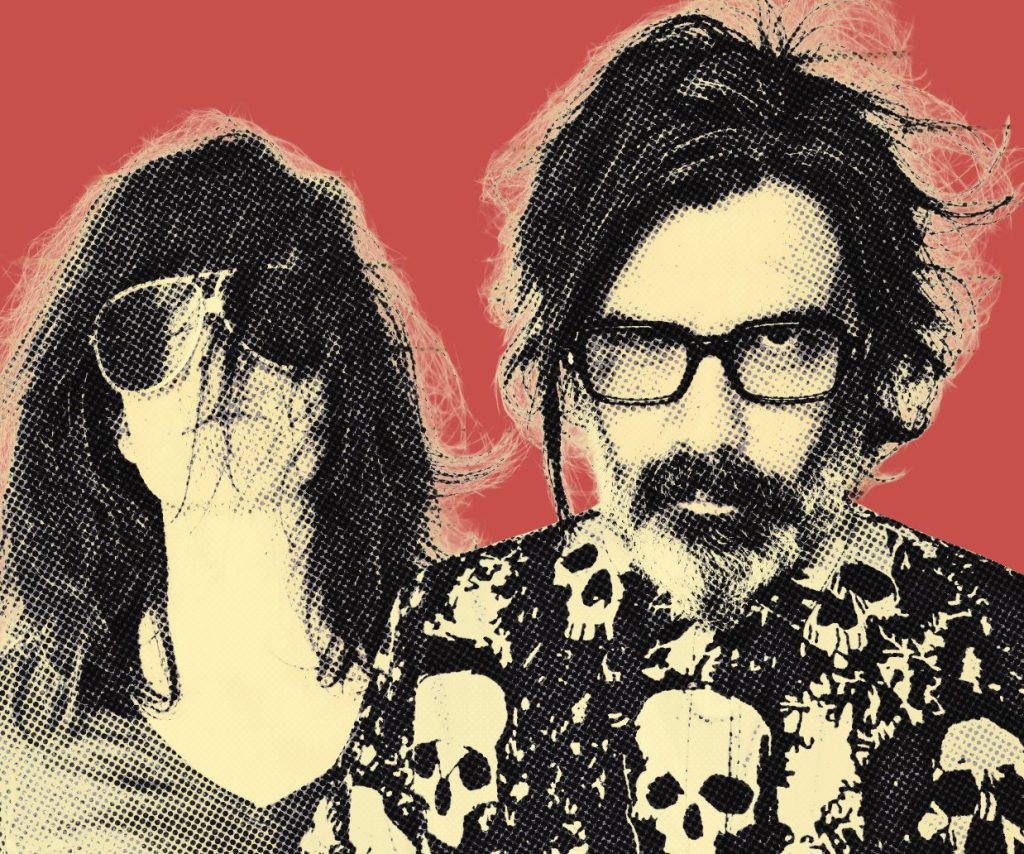
What did WAR let you say that your previous singles, “Hades” and “Without Darkness Souls Won’t Move,” did not fully cover yet?
I actually think the story starts before those songs.
Before Hollow Shift, Alex and I were making music as Mongoa, and if I am honest, a lot of my lyrics came from a much more defeated place. Looking back, there was a real “woe is me” quality to some of them. Then something unexpected happened. The moment we started writing Hollow Shift, and the music became darker, heavier, and more rhythm-driven, I actually felt stronger.
It sounds strange, but changing the music changed me.
I was still living through the same conflict in my personal life, but suddenly I did not feel like I was writing from underneath it anymore. I felt like I was standing up to it. My lyrics stopped being about what someone else was doing to me and became much more about resilience, survival, and reclaiming a sense of self.
That shift also gave me the confidence to stop second-guessing every creative decision.
I absolutely loved “Hades,” but I remember worrying that people would get bored because it stretched beyond six minutes. Those fears were not really about the song. They came from years of writing in different mediums and watching people misunderstand my intentions. I think I carried that insecurity into music without even realizing it.
Then I worried about “Without Darkness Souls Won’t Move” for the opposite reason. I thought the chorus might be too immediate, too accessible, and that people would think we had somehow softened Hollow Shift. Ironically, it became one of our most successful releases, and we barely promoted it.
I think “Hades” was probably the turning point. Before that, we had released “Electric Gloom,” which was much more immediate and radio-friendly, and I genuinely wondered whether people would disappear if we followed it with something slower, darker, and more enveloping. Instead, the audience grew.
That was a huge lesson for me.
It made me realize how dangerous it is to start writing for the version of your audience you have invented in your own head instead of the people who are actually listening. Ever since then, we have tried to trust the songs more than our fears.
WAR is probably the result of that change. It is a more conceptual record than anything we have released before, and that honestly felt scary. But I think we finally stopped asking, “Will people come with us?” and started asking, “Is this the most honest version of the music?”
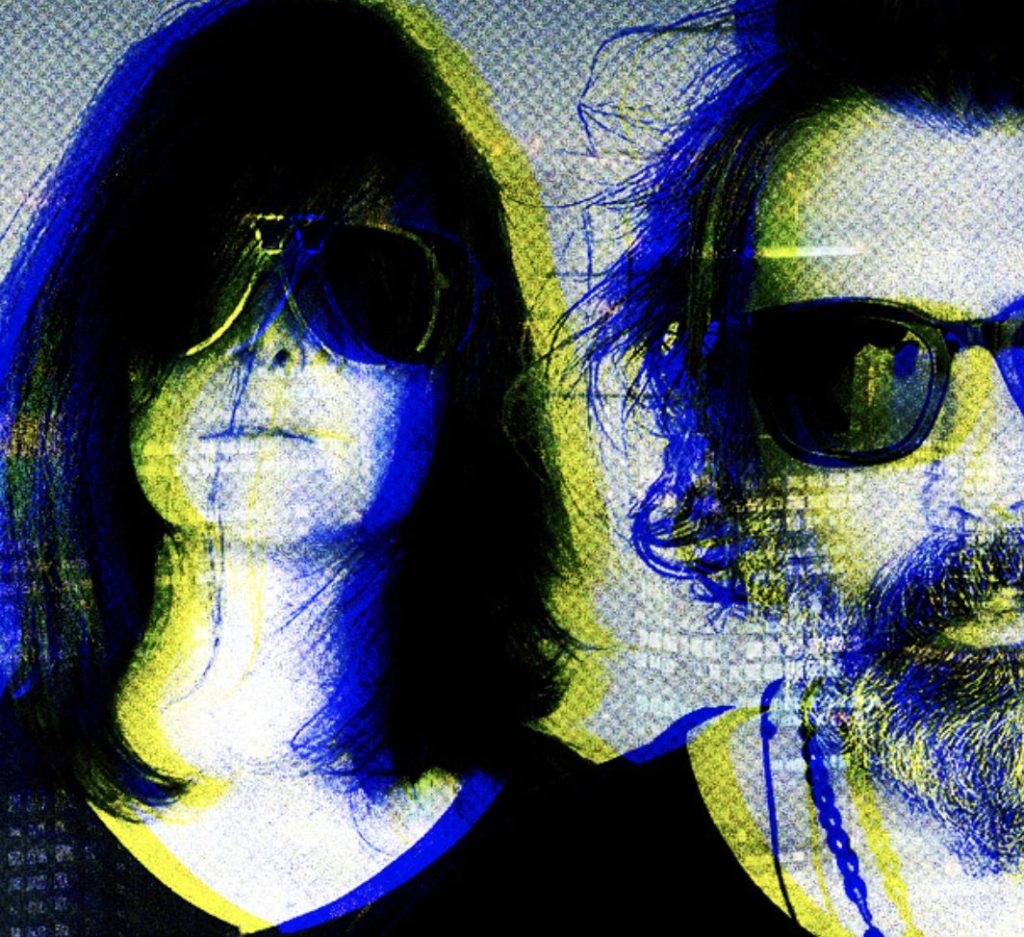
You and Alex first crossed paths through Keep Shelly in Athens. What carried over from that earlier connection, and what feels different about working together now in Hollow Shift?
When Alex and I first met through Keep Shelly in Athens, neither of us was thinking, “One day we will start a band together.” We were both immersed in our own projects and our own lives. Looking back now, it is funny how creative relationships can quietly evolve over the years before you realize they are leading somewhere.
I think what carried over was trust. We have known each other for about ten years now, and in all that time I cannot think of a single moment where either of us has tried to get one over on the other. We have always collaborated in a way that benefited us both. There has not been any competition, hidden agendas, or betrayals, and that is actually quite rare.
Funnily enough, neither of us really understands conflict. We are both pretty calm people, and we have reached a stage in life where we do not need other people’s approval to feel secure in ourselves. So if we disagree, it never turns into an argument. We just keep talking until we have figured it out. Neither of us is trying to win.
That became even more important for me because of what was happening in my personal life. Alex always showed up when he said he would. If something went wrong, he never looked for someone to blame. If he thought an idea was not working, he never made me feel stupid for suggesting it. Those things sound small, but when trust has been shaken elsewhere in your life, you notice them.
Creatively, we have very different strengths. Alex has this incredible ability to take an idea and build an entire world around it. I will arrive with a melody or a lyric, and somehow he hears possibilities that I never could. I probably bring the emotional side of the writing. English is my first language, so I naturally think in stories, images, and lyrics, and together those two approaches seem to meet in the middle.
The only thing Alex really gets frustrated with is when I try to rush the process. I do not think I am rushing. I just get excited. And I laugh because after we have released a song, he will often start telling me all the things he wishes he had done differently. Meanwhile, I am sitting there thinking, “Can we just enjoy this one for five minutes?”
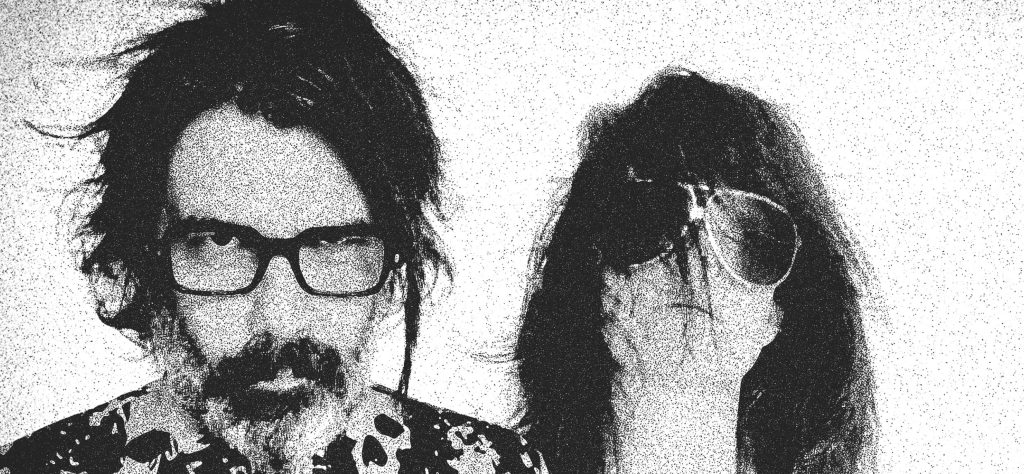
The record has a cinematic quality without feeling detached from club and post-punk energy. How do you keep that balance from becoming too polished or too distant?
I do not think either of us has a formula for it. In fact, a lot of the time we get it wrong before we get it right.
There is one song called “Awake” that we have worked on so many times I have genuinely lost count. Every time we think we have cracked it, we will come back a few weeks later and realize we have taken it in the wrong direction again. We still have not released it. Clearly, we are not awake enough yet to get that one out.
That is a pretty normal part of our process. We do not always know where a song is heading. We will follow an idea until one day we both listen back and think, “No, that is not it.” Other times, one tiny change suddenly unlocks everything.
I think what we are really chasing is honesty between the lines and between the sounds. We want the vocals to melt into the synths rather than sit on top of them. We want people to dance, but we also want them to disappear into the music for a while. If we are only achieving one of those things, we know there is still more work to do.
One thing I have learned is that excitement can be misleading. Alex will send me a mix and my first reaction is almost always, “I love it!” Then I will live with it for a few days, and only then do I start hearing what the song still needs. I have learned to trust that second reaction.
The funny thing is, we both know when we have found it. There is this look we give each other at exactly the same moment. Nobody says anything. We just know.
For me, the final test is always the same. If I hear my own voice and it gives me goosebumps, we are done.

Do you think lyric writing for electronic music demands a different kind of directness than lyric writing for guitar-led or band-based music?
Actually, I do not think I have changed the way I write lyrics all that much, and I think that is part of what gives Hollow Shift its identity.
Most of my background is in rock, alternative, and dream pop, where the lyrics and vocal melodies carry a lot of the emotional story. When I started writing with Alex, I never consciously thought, “Now I need to write like an electronic artist.” I just kept writing the way I always had.
What changed was the world those lyrics were living in.
Suddenly, those more narrative, guitar-driven songwriting instincts were sitting alongside dark electronic production, post-punk rhythms, and cinematic synths. It was not something we planned. We just realized that those two worlds complemented each other in a way that felt fresh.
I think that is what makes Hollow Shift sound like Hollow Shift. We are not just mixing musical genres. We are mixing songwriting traditions too.
I have never believed that electronic music has to be emotionally detached or lyrically minimal. If a song needs a strong narrative, we will follow it. If another song works better with repetition, we will follow that instead. We are much more interested in what serves the song than what serves a genre.
Looking back, I think we have accidentally created a space where my background as a novelist and lyricist meets Alex’s instinct for production. Neither of us is trying to imitate the traditions we came from. We are bringing them into the same room and seeing what happens.
After WAR, what feels clearer about where Hollow Shift is heading next?
More than anything, I think we have stopped chasing an idea of success and started chasing honesty.
I have wanted a career in music since I was a kid, and for a long time I measured everything against that dream. But somewhere during Hollow Shift, I stopped writing for an imaginary audience and started writing for myself. Ironically, that has been the most freeing creative shift I have ever experienced.
If Hollow Shift suddenly had a huge hit tomorrow, I think the biggest challenge would not be success itself. It would be protecting the reason we make music in the first place. My life already comes with plenty of pressure. I am a single mother, I run a publishing house, I write books, and music is the one place where I do not carry any of that. I do not ever want it to become another source of expectation.
The songwriting process is still my favorite part. That is when I disappear. I forget the emails, the deadlines, the responsibilities, and whatever else is happening in the world. For a little while, none of it exists.
I also think Hollow Shift has changed the way I see myself. It has given me permission to explore the darker parts of being human without feeling like I have to apologize for them. People often assume dark art comes from depression, but I do not see it that way. For me, it is empathy. It is curiosity. It is trying to understand experiences that are not always my own without being consumed by them.
One thing I hope never changes is that we never release something simply because we think we should. I hope every song exists because we genuinely have something to say. I would rather release less music than fill space for the sake of staying visible.
It is funny. You have asked where Hollow Shift is heading, but I think you have accidentally reminded me where it came from.
When my personal life fell apart, I was rebuilding everything from the ground up. Looking back, I think that is where the name came from. Change comes from the hollow. You need an empty space before you can rebuild. Without the hollow, the shift never begins.
If someone quietly sat in the corner of the studio for a day, what would they actually see?
The first thing they would hear is probably, “Do you want a coffee?”
That is how almost every session begins.
We will sit on the couch for a while and catch up. Sometimes we will talk about the previous release, streaming numbers, ideas we have had during the week, or something completely unrelated to music. There is no grand ritual. We just ease into the day.
Then Alex starts opening folders and playing me loops he has been working on. I almost always tell him I like all of them, but there is usually one that grabs me immediately. Neither of us can ever really explain why.
From there, we will build a rough framework together: a beat, a bassline, and some basic structure. Then I will take it home. That is where my part of the process really starts. I will live with it for a few days, walking, driving, making dinner, humming complete nonsense until a melody starts taking shape. The lyrics usually follow after that.
When I come back to the studio, the structure has almost always changed in my head. I will say, “I think the chorus needs to come in earlier,” or, “This section needs more space,” and we rebuild it together.
One thing that always makes me laugh is that I constantly forget Alex has years of production experience. I will lean over his shoulder and start telling him how I think he should use the DAW, even though I barely know what I am talking about. He never gets annoyed. He just smiles, tells me to be patient, and carries on. Eventually, I remember why he is sitting in that chair and not me.
Then we record vocals. Some days, the first take has exactly the right feeling and we are done. Other days, I will sing the same line twenty times because my head is not in the right place. My mood always finds its way into my voice, whether I want it to or not.
After that, Alex disappears into producer mode. He starts adding textures and details I would never think of, then sends me a mix. I have learned not to give feedback straight away because my first reaction is almost always, “I love it!” So I will live with it for a few days, listen in the car, on walks, while I am working, and gradually I will start hearing little things we could explore.
Sometimes it is just a text message with a couple of notes. Other times, we head back into the studio and spend an afternoon trying different ideas until something clicks.
One thing Alex has taught me over the years is restraint. My instinct has always been to keep adding, keep refining, keep saying more. He has shown me that sometimes the best thing you can do is take something away and trust that what is left is enough.

Magnetic byline note: This byline is used for staff produced updates and short announcements, often based on press materials and official release information. Editorial responsibility: David Ireland (Editor in Chief) and Will Vance (Managing Editor). About: https://magneticmag.com/about/ Masthead: https://magneticmag.com/masthead/ Contact: https://magneticmag.com/contact/