
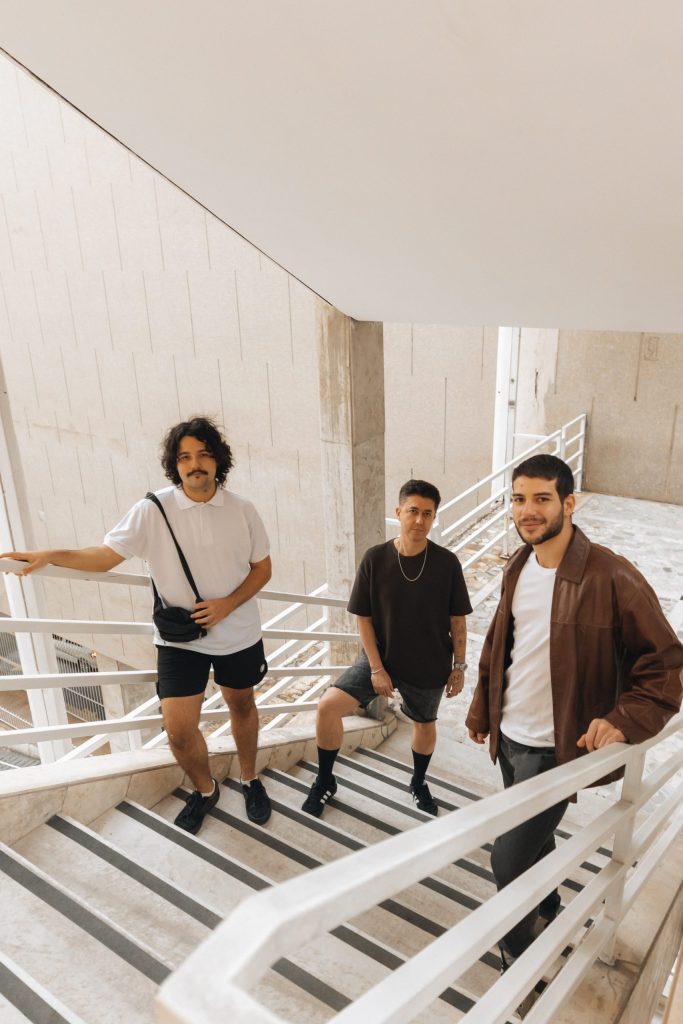
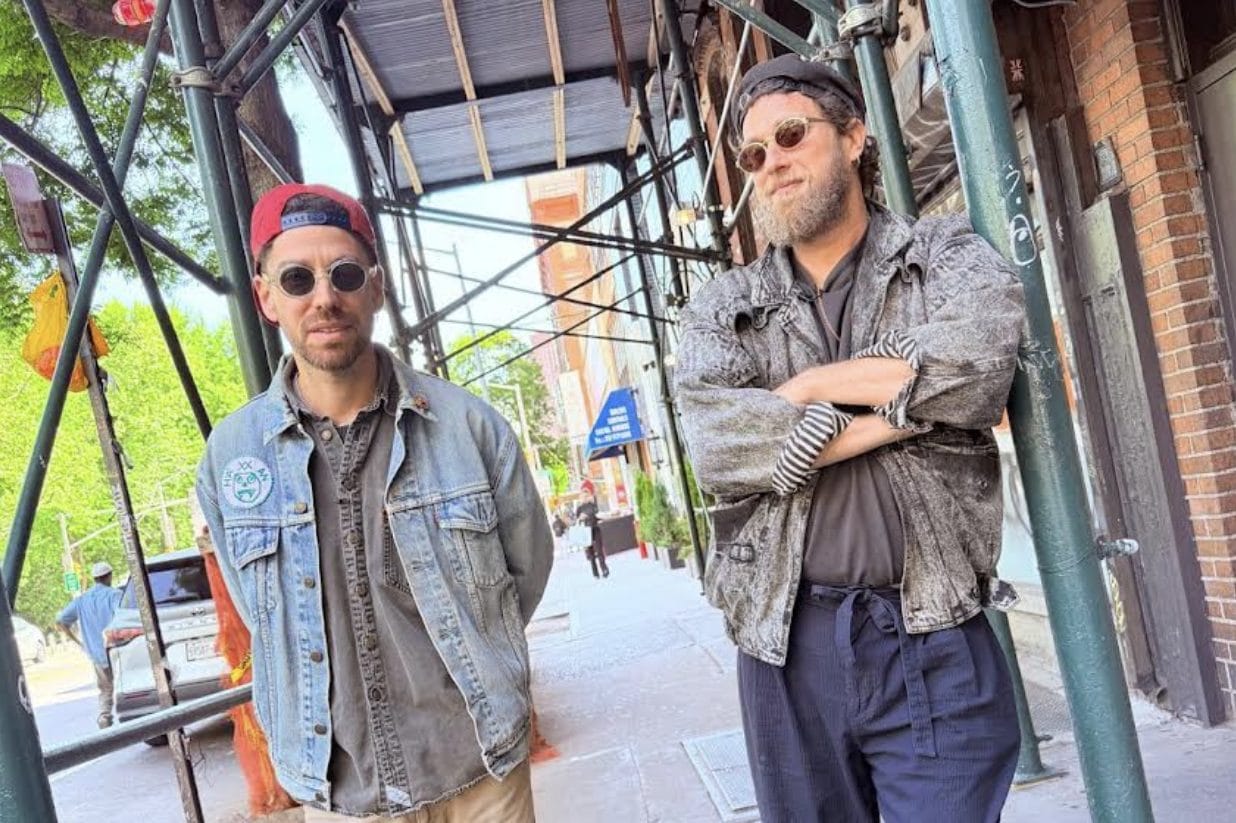
Julio Torres and Ketoots arrive on Paranormal with “Thought I Should Go All The Way,” a deep melodic house cut built around Carol Monteiro’s vocal presence, a rugged guitar riff, and a club-focused arrangement that keeps the mood direct without sanding off its personality.
It is the kind of record that pulls from Brazilian house history while still feeling tuned for contemporary rooms, with Torres bringing the perspective of a São Paulo figure who has played Rock in Rio, Tomorrowland, and Space Ibiza, and Ketoots adding the shared language of longtime collaborators who understand how to keep a track functional without flattening its character.
That context also gives this conversation a wider purpose. In the interview below, Torres and Ketoots talk through the tension between documentation and presence in club culture, from iPhone footage and professional nightlife crews to the nights that stay valuable because they were experienced in real time.
Their chat point toward a version of dance music culture that still depends on trust, timing, room pressure, and the temporary connection between the booth and the floor.
For a release like “Thought I Should Go All The Way,” that discussion feels especially relevant because the track itself sits in that same space between memory and motion. It has enough hook and vocal identity to travel outside the room, while its deeper value comes from how it would function inside one. Below, Julio Torres and Ketoots get into captured sets, lost moments, mystery, and why club music still needs experiences that cannot be fully reduced to content.
Interview With Julio Torres And Ketoots
What do you think is gained by documenting sets on iPhones, and what remains uniquely part of the moment?
Julio Torres: Documenting sets on iPhones helped dance music become more global and connected. A moment that happens in a small club in São Paulo can suddenly inspire someone in Berlin or Tokyo the next morning. Videos also help preserve emotions, aesthetics, and musical discoveries that can travel far beyond the dance floor.
I think balance is very important. I believe the best way to document nightlife is through professionals who truly understand the culture, like RAWCUTS. I’ve been to parties in São Paulo where phones were sealed at the entrance, and only professional photographers and filmmakers were allowed to document the night. The result was beautiful because people felt much freer to dance, connect, and fully live the experience without constantly thinking about recording themselves.
Professionally captured footage also creates a stronger aesthetic and tells the story of the night in a meaningful way. It can still inspire people outside the party while preserving the essence and mystery of what happened inside the room. I think the balance between documentation and presence is very important for the future of club culture.
Ketoots: Phones are great for global reach, but they often act as a barrier to the true connection between the DJ and the dance floor. The real magic is the collective tension and specific acoustic pressure in the room, which a microphone or camera simply cannot accurately translate.
Can you recall a powerful night that lived entirely in memory?
Julio Torres: I can remember several nights like that. I come from a time before smartphones existed, when only professional photographers or a few people with digital cameras were documenting parties.
One memory that immediately comes to mind is a weekend in Brazil when I played in the South, home to some of the country’s most iconic clubs, such as Warung Beach Club and Green Valley. Back then, those clubs represented very different worlds, one deeply underground, the other more mainstream, and the audiences rarely crossed paths.
That Friday, I was scheduled to play at Warung alongside Laura Jones. My set was supposed to go from midnight to 2 AM, during the transition period where I was mixing vinyl with digital formats as CDs were becoming part of DJ culture. Unfortunately, Laura had flight issues and couldn’t arrive on time, so I ended up extending my set until 4:30 in the morning, when she finally made it to the club. It became one of those unforgettable nights where I had complete freedom to experiment musically and take the crowd on a long journey.
The next day, I played at Green Valley alongside Pete Tong with one of my parallel live projects. What makes that weekend so special to me is that, at the time, almost no DJ would realistically have the chance to play both clubs in the same weekend because of how different their identities were. Somehow, through these two different projects, I experienced both worlds in less than 48 hours, and none of it was truly captured. That’s probably why the memory still feels so alive today.
Ketoots: For us, all nights become special in different ways. The most memorable ones are the nights when we are free to experiment and play whatever our feelings dictate. Every night we are together, this is always the aim: to have unlimited and uncensored communication with the audience through our sound.
How do you value moments that are never captured?
Julio Torres: Unrecorded moments carry a special weight because they belong only to the people who lived them. In club culture, not everything needs proof to be real or meaningful. Sometimes, the most important connections happen in complete darkness, between strangers, through sound and energy. There is beauty in knowing that some experiences vanish the instant the music stops. This impermanence is part of the magic of nightlife.
Ketoots: These moments are dear to our hearts because they represent the “human” side of the performance that can’t be quantified or archived. An uncaptured moment is a perspective exclusive to the booth and the floor, fueled by pure intuition and immediate feedback. These moments are formless in our memories because there is no image or sound to guide these fragments of time; they are driven only by the feelings we felt in those moments.
Does permanence change the way audiences relate to DJ sets?
Julio Torres: When everything is recorded, audiences may start consuming sets more as digital content than as lived experiences. Many times, I have observed there is less surrender to the moment because people are already thinking about the replay or social media. DJ culture was originally built on the idea of the ephemeral: one night, one crowd, one unique version of the set that will never happen the same way again. That unpredictability creates intimacy and tension, and I think people still deeply crave that feeling.
Ketoots: Digital permanence makes audiences more analytical and less instinctive, which is the opposite of what we aim for in our sets. On one side, it is great to have the historical documentation, but we have to always remember that what we are doing has a purpose that goes beyond the image and audio that is defined by the “permanent” moment.
What place does mystery still hold in club culture?
Julio Torres: Mystery has always played a fundamental role in club culture, not as an aesthetic choice, but as an emotional and social mechanism. Since the late 80s, especially during the Second Summer of Love in the UK, rave culture operated almost like an underground system: parties were announced just hours before, locations were revealed at the last minute, and communication happened through trusted networks rather than open promotion.
This was not just logistics; it was cultural language. That sense of “not knowing” created three key effects: emotional scarcity, implicit community, and heightened experience. Mystery shifts focus away from expectation and into presence. When not everything is revealed, the body responds more intensely to the moment.
Ketoots: The mystery keeps the culture from becoming a predictable commodity. Whether it’s an unreleased track or a hidden venue, the unknown creates a level of curiosity that fuels the desire to check it out. It forces the audience to trust the DJ and the environment, leading to an experience based on intuition. Without mystery, clubbing becomes a scheduled appointment; with it, it can be an adventurous ritual.

Will Vance is a professional music producer who has been involved in the industry for the better part of a decade and has been the managing editor at Magnetic Magazine since mid-2022. In that time period, he has published thousands of articles on music production, industry think pieces and educational articles about the music industry. Over the last decade as a professional music producer, Will Vance has also ran multiple successful and highly respected record labels in the industry, including Where The Heart Is Records as well as having launched a new label with a focus on community through Magnetic Magazine. When not running these labels or producing his own music, Vance is likely writing for other top industry sites like Waves or the Hyperbits Masterclass or working on his upcoming book on mindfulness in music production. On the rare chance he's not thinking about music production, he's probably running a game of Dungeons and Dragons with his friends which he has been the dungeon master for for many years.


![[Premiere] Tom Brownlow And JenJammin Sax Bring Live Sax To House On “Happiness”](https://magneticmag.com/wp-content/uploads/2026/08/Untitled-design-45-1024x614.jpg)