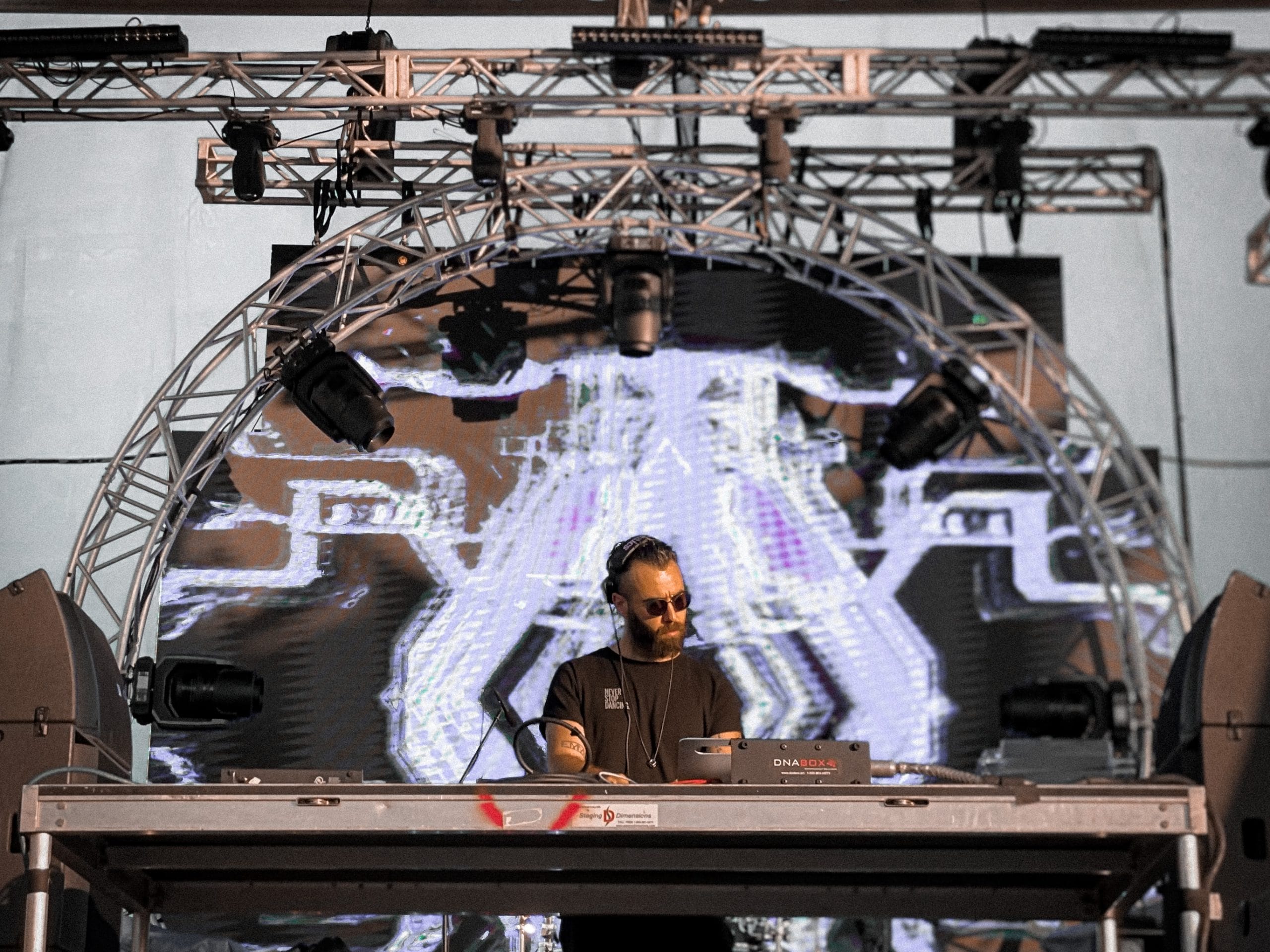
Bobi Stevkovski (@bobi.stevkovski) links back up with YokoO on Stranger Things, their second EP for SATYA, and a release that leans into the stranger, deeper edges of their shared language. Across “Someone Else” and “They From Space,” the record moves with that patient, hypnotic energy SATYA has built its name around, with Sublee and Hostox adding remixes that pull the source material into their own deeper zones.
It is club music, clearly, though it feels like the kind built for long stretches of the night rather than quick payoff moments.
Stevkovski’s story already has plenty of scene history behind it. He started in electronic music in Macedonia in the early 2000s, later moved to Atlanta, founded Project B., helped build underground events in the city, organized ZEMYA, and became a fixture across venues like The Music Room, Studio No.7, and The Sound Table.
That background really comes into play here, because his answers below don’t come from someone who sees DJ culture as a branding lane. They come from someone who has spent years inside booths, rooms, local scenes, and the practical work of building nights from the ground up.
The interview below gets into one of the simplest production and DJing lessons that somehow takes years to learn: most records do not need you to prove anything over the top of them. Bobi talks about harmony, patience, timing, and letting the record do what it was built to do, which feels especially relevant to an EP like Stranger Things, where the music production is already patient, detailed, and centered on subtle movement.
The lesson is one that’s as obvious as it is vital for DJs at any level: the room does not need a performance of control, it needs control that people can feel.
Interview With Bobi Stevkovski
Was there a point in your life as a DJ when you started thinking less about proving you could mix and more about what the room actually needed from you?
The last thing a room needs from you is proof that you can mix. If that is the case, you are either not a DJ or you are in the wrong room. Technical ability should be a given.
The real job is understanding the room, reading the energy, and knowing what music needs to be played at that particular moment. Once you stop focusing on yourself and start focusing on the experience of the people in front of you, everything changes.
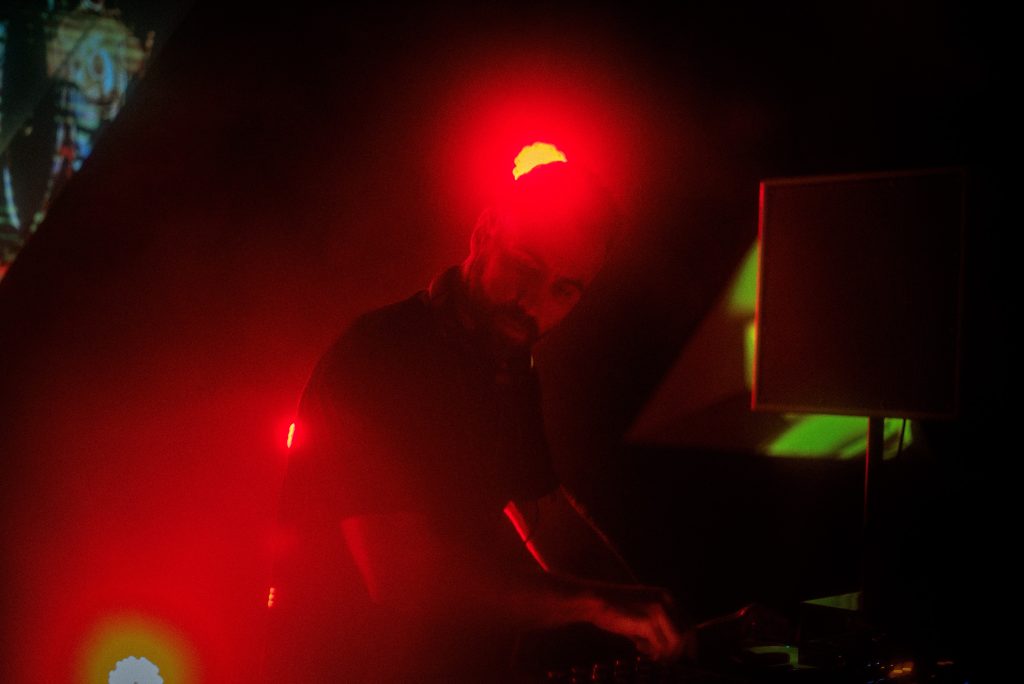
How has your use of layering, effects, and technical moves changed as you have gained more hours behind the decks?
Technique, timing, and harmony create moments unlike anything any FX would. To the young ones out there: lay off the reverb and other effects. Focus on the storytelling part and the music you select to play.
A great record played at the right time, mixed with intention and patience, will always have a bigger impact than a handful of effects. The longer I have been doing this, the less I have felt the need to add things that are not already in the music.
What tells you that a record has enough of an “it” factor to hold the room without you needing to add much to it?
Timing and technique come into context here. A track is either produced with storytelling in mind or it is a tool. Either one can hold a room when played at the right moment in time.
I have heard simple records completely captivate a dancefloor, and I have heard beautifully produced records fall flat because they were played at the wrong moment. The “it” factor often comes down to context more than the track itself.
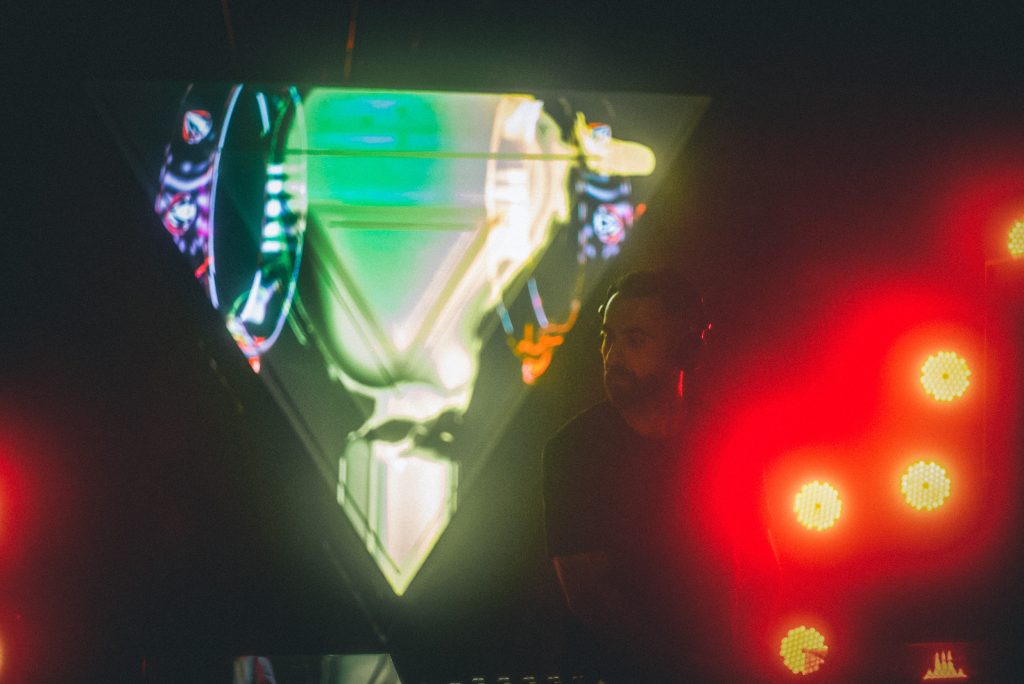
Are there records you prefer to play with as little alteration as possible, like FX or layering, and what usually tells you to leave them alone?
After nearly 20 years of DJing, one of the things that has become clear to me is that proper track selection and mixing in harmony during a set will always get the best out of a crowd.
When a record is doing exactly what it was meant to do, there is no reason to interfere with it. Some tracks have enough character, emotion, and energy on their own. My job is simply to place them in the right spot within the story. FX are not part of my playbook nowadays.
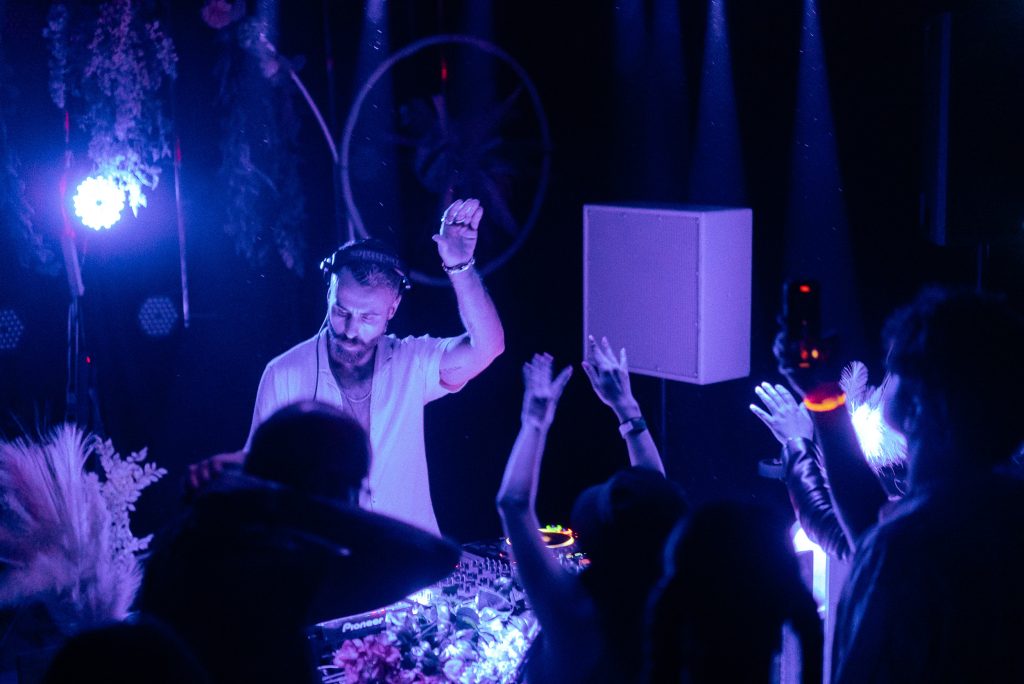
How do you balance your own personality as a DJ with the discipline of letting the music do its job?
Experience does it for me on this one. Music should always do its job, and that is something learned over time. Patience is one of the keys to delivering a good DJ set.
Earlier on, you sometimes feel the need to leave your mark on every transition and every moment. With time, you realize that your personality comes through your selection, your timing, and the journey you create. The music should always remain the main character.

What role does subtle control play in the way you play now, especially compared to how you approached DJing earlier in your career?
Subtle control comes with experience. Earlier in my career, I felt the need to constantly do something, whether that was a longer mix, an extra layer, or another adjustment.
Nowadays, I understand that less is often more. Small adjustments, proper timing, and patience usually have a much bigger impact than anything obvious. The crowd does not need to see what you are doing. They just need to feel the result of it. That is where subtle control becomes powerful.

Will Vance is a professional music producer who has been involved in the industry for the better part of a decade and has been the managing editor at Magnetic Magazine since mid-2022. In that time period, he has published thousands of articles on music production, industry think pieces and educational articles about the music industry. Over the last decade as a professional music producer, Will Vance has also ran multiple successful and highly respected record labels in the industry, including Where The Heart Is Records as well as having launched a new label with a focus on community through Magnetic Magazine. When not running these labels or producing his own music, Vance is likely writing for other top industry sites like Waves or the Hyperbits Masterclass or working on his upcoming book on mindfulness in music production. On the rare chance he's not thinking about music production, he's probably running a game of Dungeons and Dragons with his friends which he has been the dungeon master for for many years.




![[Premiere] Tom Brownlow And JenJammin Sax Bring Live Sax To House On “Happiness”](https://magneticmag.com/wp-content/uploads/2026/08/Untitled-design-45-1024x614.jpg)