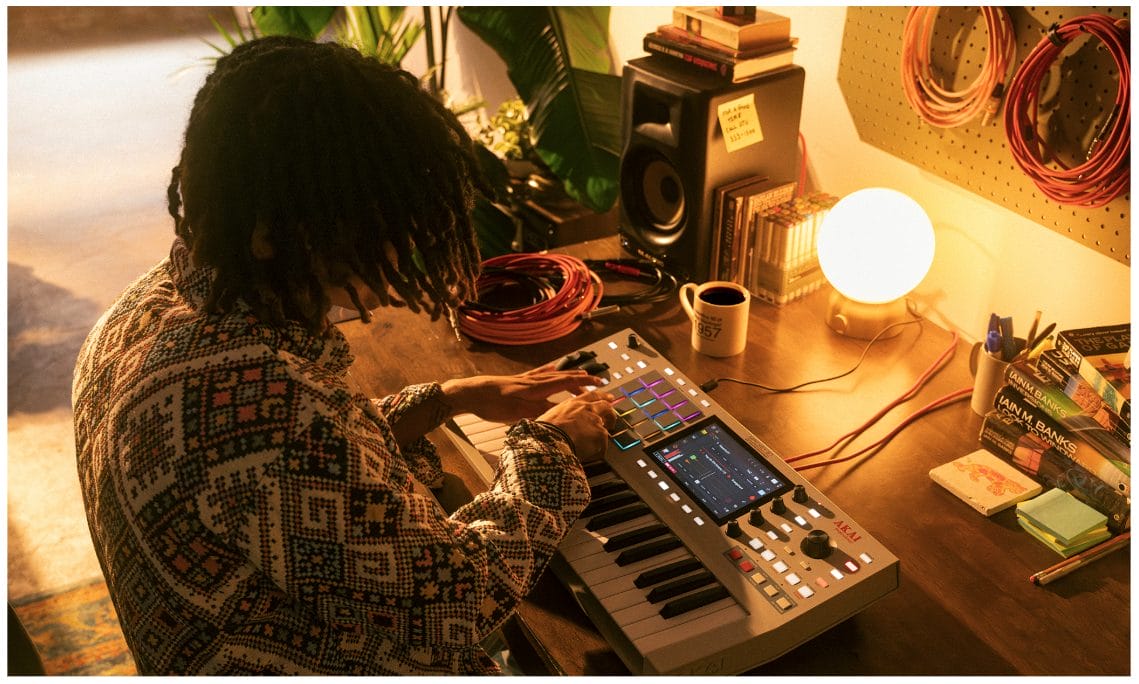
Akai Professional has introduced the MPC One G2 and MPC Key 37 G2, two updated standalone production systems that bring more processing power, more memory, and a more modern MPC3 OS workflow into two familiar hardware formats.
The update is pretty direct on paper: an 8-core processor, 4GB RAM, and 64GB of internal storage across each unit, with Akai saying the new models deliver four times the processing performance of the previous generation. That matters because standalone production can fall apart quickly when the hardware starts feeling like a sketchpad instead of a full production system. More power means larger projects, faster loading, more plugin instances, and fewer compromises when producers want to write, arrange, sample, and mix without opening a laptop.
That has always been the MPC promise at its best. You sit down with a box, build ideas from pads, samples, instruments, and sequencing, then push the track far enough that the computer becomes optional instead of mandatory.
What makes the MPC One G2 different for beatmakers?
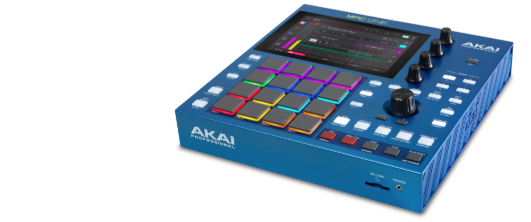
The MPC One G2 is the more compact, pad-focused option, built for producers who want the core MPC workflow on a desktop without moving into a keyboard format.
It comes in a blue finish inspired by classic MPC hardware and features 16 velocity- and pressure-sensitive RGB pads across eight banks, four touch-sensitive Q-Link knobs, 5-pin MIDI in and out, four TRS CV/Gate jacks for eight outputs total, an SD card slot, USB-A, and USB-C.
That makes it useful for sample-based producers, drum programmers, hardware users, and modular-adjacent setups where the MPC is the center of the room. The key difference with this generation is that the compact format is no longer paired with modest internal specs. With the upgraded processor, 4GB RAM, 64GB storage, and support for up to 32 plugin instruments and 16 stereo audio tracks in standalone, the MPC One G2 feels more like a complete production hub than a smaller entry point.

Who is the MPC Key 37 G2 built for?
The MPC Key 37 G2 takes the same updated standalone engine and puts it into a keyboard-led format for producers who think through melody, harmony, and chord movement as much as drums and samples.
It has a 37-key synth-action keybed with aftertouch, pitch and mod wheels, 16 velocity- and pressure-sensitive RGB pads, two quarter-inch TRS inputs, two quarter-inch TRS outputs, eight CV/Gate outputs, 5-pin MIDI in and out, and USB-C.
That makes it the better fit for composers, songwriters, melodic beatmakers, and producers who want to write full arrangements directly from the hardware. The pads are still there for drums, chops, and performance, yet the keyboard changes the starting point. Instead of building everything from samples or pads first, producers can write chords, basslines, melodies, and progressions directly into the MPC workflow.

Why does MPC3 OS matter for standalone production?
Each unit runs MPC3 OS, which is a major part of what makes these new models feel different from older standalone MPCs.
The system adds a modern track-based workflow, a full Linear Arranger, expanded arrangement tools, a built-in oscillator engine, and deeper DAW interoperability. That means producers can move beyond pattern building and actually shape full songs inside the hardware, with a 7-inch multitouch display giving the arrangement process a clearer visual layout.
The USB-C side is just as important. Each unit supports 24 by 24 multichannel audio streaming, expanded MIDI, host and device support, Ableton Live Control Mode, Ableton project import and export, and direct sampling from phones, tablets, and external devices. That kind of one-cable workflow is exactly where hardware production has been heading: less friction between the MPC, the DAW, mobile devices, and the rest of the studio.
How much content comes with the new MPC models?
Akai is also loading each system with a large starter library. Each unit includes more than 20GB of production-ready content and Native Instruments Analog Dreams MPC Edition free at launch.
The MPC One G2 includes 11 instrument plugins and nine expansion packs, including Bassline, Electric, Fabric Select, Hype, Mellotron, Odyssey, Organ, Solina, Tubesynth, Drumsynth, Acoustic Tools, Classic Drum Machines, Apollo Retro Kits, Marco Polo Lo-Fi Boom, and Producer Essentials.
The MPC Key 37 G2 includes 13 instrument plugins and six expansion packs, adding OPX-4, Jura, and Sub Factory to its plugin list. That gives the keyboard version a little more synth weight out of the box, which fits the way that unit is likely to be used.
The MPC One G2 is available now for $799, £729, and €849. The MPC Key 37 G2 is available now for $999, £849, and €999. For producers who want standalone hardware that can hold more of the full song-building process, these G2 models feel like Akai tightening the MPC idea around speed, storage, arrangement, and modern connectivity.

Will Vance is a professional music producer who has been involved in the industry for the better part of a decade and has been the managing editor at Magnetic Magazine since mid-2022. In that time period, he has published thousands of articles on music production, industry think pieces and educational articles about the music industry. Over the last decade as a professional music producer, Will Vance has also ran multiple successful and highly respected record labels in the industry, including Where The Heart Is Records as well as having launched a new label with a focus on community through Magnetic Magazine. When not running these labels or producing his own music, Vance is likely writing for other top industry sites like Waves or the Hyperbits Masterclass or working on his upcoming book on mindfulness in music production. On the rare chance he's not thinking about music production, he's probably running a game of Dungeons and Dragons with his friends which he has been the dungeon master for for many years.