What We’re Talking About
Music marketing in 2026 works best when each platform has a clear role. Spotify should capture listening and retention. TikTok, Reels, and Shorts should create discovery. Email and SMS should protect direct access. Press, playlisting, and DJ support should add proof. Ads should scale what already shows signs of working.
That is the main shift. Artists used to treat marketing as a pile of posts, pitches, ads, and playlist submissions. That is still common, but it wastes energy fast. A better plan connects the release, content, audience, data, and follow-up so each action helps the next one.
The answer: Build your 2026 music marketing plan around one clear release goal, one main audience, one content format, one owned channel, and one measurable next step. Pitch Spotify before release day, post short-form clips with different hooks, retarget engaged fans, collect emails, and use data after week one to decide what gets pushed next.
Who Is This For?
This is for independent artists, DJs, producers, small labels, artist managers, and release teams who need a clear plan for a single, EP, remix, sample pack, or label campaign.
It also applies if you already post often but cannot tell which actions actually move people from awareness to streams, saves, ticket sales, merch, email signups, or playlist adds.
When Does This Advice Apply?
Use this plan when you are:
| Situation | What To Focus On First |
|---|---|
| Releasing a first single | Profile setup, short-form clips, Spotify pitch, simple landing page |
| Releasing monthly | Repeatable content system and post-release data review |
| Promoting an EP | Longer release arc, story, press, playlisting, email |
| Running a label campaign | Shared assets, partner posts, DJ support, playlist outreach |
| Restarting an artist project | Audience reset, short intro content, proof of sound |
| Promoting a remix | Original artist audience, DJ support, stem clips |
| Running ads | One clean conversion goal and a trackable landing page |
| Building a fanbase from zero | Consistent clips, direct conversations, one owned channel |
What Changed For 2026?
The biggest change is that music marketing now has to connect discovery, conversion, and retention from the start. Posting clips is not enough. Pitching playlists is not enough. Running ads is not enough. Each part needs a role.
Spotify has more artist-facing campaign tools than it did a few years ago, including playlist pitching, Marquee, Showcase, Discovery Mode, Clips, Canvas, Countdown Pages, merch, tickets, and profile tools. Those tools help, but they work best when the release already has momentum, a clear audience, and a reason for people to come back.
Short-form video is still important, but the best approach is less random now. TikTok, Instagram Reels, and YouTube Shorts should be treated as testing grounds for hooks, visuals, and message angles. If one clip format gets saves, shares, comments, profile visits, or sound uses, that becomes the signal to build around.
The other big change is risk. Platform rules shift. Reach changes. Links break. Trends turn cold. That is why owned audience channels matter so much. Email, SMS, Discord, Bandcamp followers, Patreon, and direct community lists are still slower to build, but they give you access that does not depend on a single feed.
Why the Marketing Job Changed
Recorded music revenue continues growing worldwide, and streaming subscriptions remain the main driver, while physical formats still matter enough to influence how fans emotionally value music. That coexistence tells you something useful: audiences do not pick one lane and stay there. They move from headphones to living rooms, from playlists to merch tables, from TikTok clips to full albums, and your marketing has to move with them, or at least always meet them wherever they’re at, or it becomes background noise.
Here’s the part that catches artists off guard: AI has become routine (at least from a creative marketing perspective; jury is still out on its implementation into the actual creative process of making the art).

Marketing teams across industries now use AI to schedule, analyze, test, segment, and generate variations, and that shift raises the bar on strategy because the mechanics are no longer scarce. Anyone can run ads. Anyone can post daily and anyone can generate ten versions of a caption. The differentiator becomes creative direction/vision and sequencing, plus a clear idea of what the audience is meant to do next.

How Should Spotify Fit Into The Plan?
Spotify should be treated as the main listening and retention layer, not the only marketing channel.
Before release day, claim the profile, update photos, update the bio, prepare Canvas, confirm metadata, set the release date, and pitch through Spotify for Artists. Spotify says Spotify for Artists is the path for submitting unreleased music to playlist editors, so build that step into the timeline early.
After the release, watch saves, repeat listeners, playlists, source of streams, territories, listener age, and follower growth. Do not judge the campaign from day-one streams alone. A smaller number of listeners with a high save rate can be a better signal than a spike from low-quality traffic.
I keep coming back to my interview with UOAK about Spotify promotion, where he said, “Curated & algorithmic playlists are how users discover new music on Spotify.” That still holds up. Playlists matter, but they sit inside a larger listener system. Your job is to help the right listeners find the track, then give Spotify clean signals that people want to hear it again.
Platform Reality Check – TikTok, Meta, and Spotify
Post across TikTok, Reels, and Shorts, then study which angle gets saves, shares, comments, profile visits, and stream clicks. Do not assume the most polished video is the best one. The best clip is the one that gives people a reason to act.
This is where I would also point readers to my Social Media Marketing Tools For Music Producers article. That piece goes into the tools, but the bigger point is the same: tools help only when the content role is clear.
Platform Risk and Dependency
Social discovery remains dominant, yet platform stability has become part of the planning.
TikTok remains a giant in attention and discovery, and it still produces breakouts because its recommendations favor behavior and relevance, not follower count. At the same time, regulatory uncertainty in the United States has kept the platform’s long-term structure in the conversation, which matters for any artist who built their entire funnel on one app. A platform can change ownership, policies, link behavior, or algorithm priorities faster than you can roll out a six-week plan.
Strategic Implications for Artists in 2026
It means 2026 is a year where you build a system that connects discovery, conversion, and retention, and you do it across multiple platforms, and you measure enough to make decisions without letting the numbers hijack your creativity.
You also diversify the top of funnel, because attention sources can shift, and you strengthen owned channels, because ownership never goes out of style.
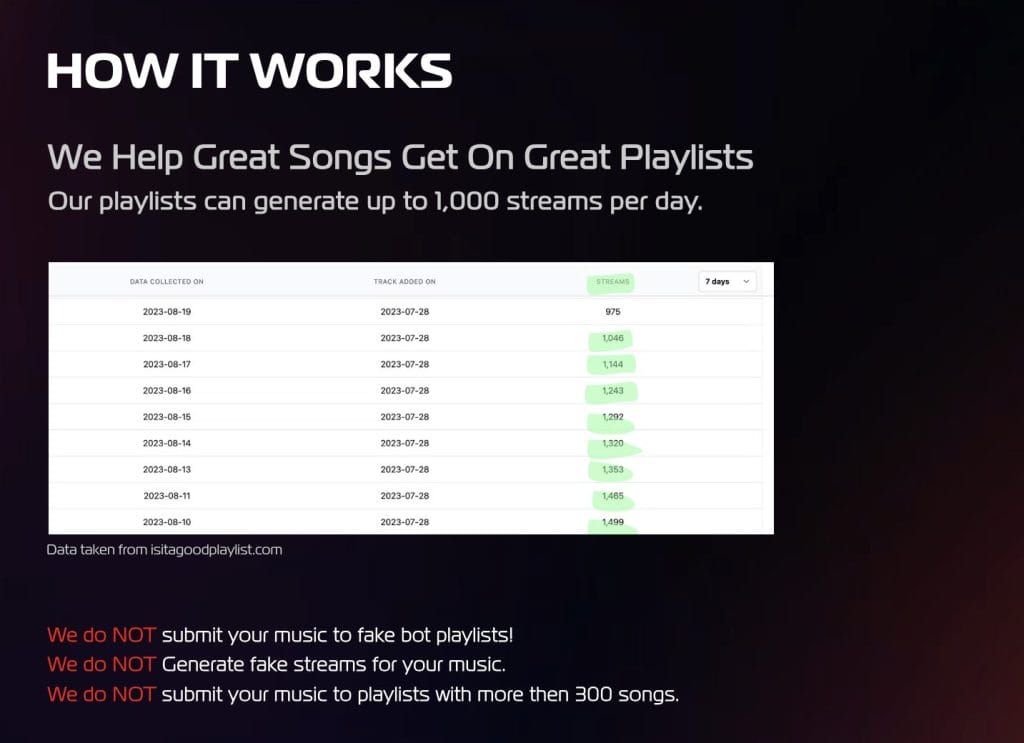
This system-first approach also changes how artists handle submissions and outreach. Platforms like One Submit, with whom we partnered to bring you this article, fit naturally here because they centralize playlist pitching, label submissions, and campaign tracking into a single workflow, which helps artists treat distribution as part of the release system rather than an afterthought scattered across inboxes and spreadsheets.
Ten strategic implications worth carrying into every plan:
- Use global growth data as a map, then localize execution. Regions that are expanding quickly respond best to market-aware creative, language choices, and region-specific targeting.
- Adopt AI for operations, then protect the artistic core. Automation should remove friction from scheduling, reporting, and versioning, while your voice stays human.
- Treat short-form video as core infrastructure. Every release should have multiple short clips designed for different contexts, not one clip repeated everywhere.
- Diversify platforms early. Reels, Shorts, TikTok, and emerging channels should share content DNA, while your core audience relationship lives elsewhere.
- Track platform policies like you track release dates. Link limits, verification paywalls, ad requirements, and content rules now affect reach materially.
- Build a superfan layer intentionally. That segment tends to buy tickets, share music, and stay active across releases, and they respond well to access and recognition.
- Integrate commerce where discovery happens. Spotify storefronts, TikTok shop tools, and email-driven drops shorten the gap between listening and support.
- Use automation in ads, then guide it with clear funnels. AI optimizes toward what you measure, so your conversion events and landing flows matter.
Spotify promotion tactics for 2026
Spotify promotion in 2026 has a different center of gravity than it did even a few years ago. Sure, pitching still matters, but it sits inside a larger structure that includes pre-release preparation, visual identity, superfans, commerce, and paid tools designed to re-engage listeners who already signaled interest.
Artists have a better chance at winning if they start treating Spotify like an ecosystem and shape signals that algorithms can interpret clearly.
Pre-Release Infrastructure
Start with pre-release infrastructure, because Spotify gives you multiple ways to build momentum before release day. Countdown Pages, pre-save prompts, and upcoming release placements can gather intent early, and that intent helps the platform understand that your audience is waiting, which changes how the release behaves during its first week.
Pre-saves are not magic and can be a massive up-hill battle to win, yet they work well as a measurable proof of interest, especially when you push them through email, socials, and partner pages. Artists can supercharge pre-saves by leaning on sites like Hypeddit to allow free sample pack giveaways or maybe the stems of an old track so others can make bootlegs in exchange for a pre-save. Label’s can also host remix contests on sites like LabelRadar and gate the stem downloads behind a pre-save. It’s something we’ve had a fair amount of success with on our label!
That same preparation extends to how you approach playlist and curator outreach. Using a structured submission layer like One Submit allows artists to align pitching activity with pre-release timing, track responses across campaigns, and avoid duplicate or mistimed outreach, which keeps Spotify signals cleaner during the most sensitive window of a release.
Building and Serving Superfans
Now you get into the part most artists underuse: the superfan layer.
Spotify’s own data points toward a familiar pattern, where a small slice of listeners drives outsized value in streams and ticket sales. Your job is to identify them, segment them, and serve them differently. You can do that through targeted campaigns, early access announcements, exclusive live recordings, private merch drops, or simple recognition that feels personal. This group responds to access, and they respond to consistency, and they often become your unpaid promotion engine.
Campaign Tools and Release Pacing
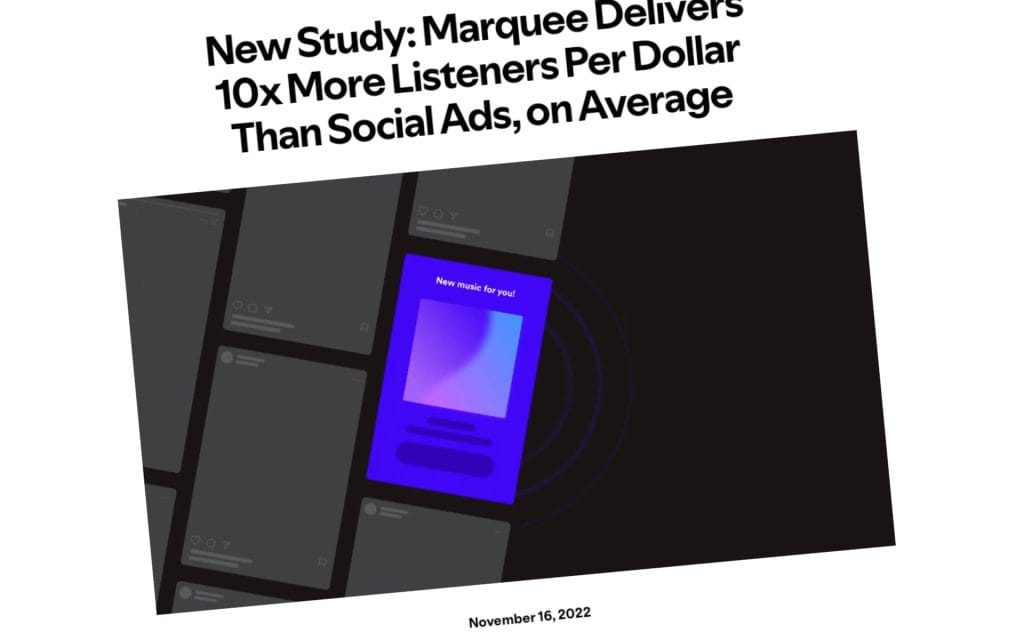
Campaign tools such as Marquee and Showcase become powerful when you stop thinking of them as “ads” and start thinking of them as pacing controls.
You can use them to re-engage listeners who drifted, to focus attention on a specific track that performs live, or to support a release in markets that are already showing activity. Bundled campaign tooling also supports multi-market planning, so you can push a campaign in one territory while testing messaging in another, and you can do it without building five separate plans.
Release pacing plays directly into this, for any number of reasons, but especially because Spotify’s algorithm responds to clarity. A consistent release schedule with meaningful support sends cleaner signals than a scattered drop schedule where the artist disappears after day two. You do not need a release every week. You need release arcs that stay alive long enough for listeners to form habits.
That can look like a single plus alternate versions, then a follow-up track that continues the story, then a playlist update that frames the era, and then a video moment that brings the release back into conversation.
Commerce integration is another lever that fits inside this system. Spotify’s storefront tools help reduce the gap between listening and support, and limited drops work well when connected to a narrative event rather than random timing. Merch performs best when it feels like a marker of membership, and Spotify makes it possible to present that offer inside the listening environment.
Shareability across platforms also remains a major growth driver.
Spotify encourages social sharing through visuals and recap culture, and you can design for that by creating Canvas visuals that look good in a repost, planning quote lines that fit within story captions, and encouraging your community to share in ways that match how they already behave. When fans share voluntarily, the story lands harder.
Data as Planning Feedback
Finally, treat the dashboard as a feedback loop, not a scoreboard. Post-release data should inform your next move, and you should look for patterns that translate into action, like which territories spike first, which songs drive repeat listening, which playlists send the highest saves-per-stream, and which visual formats generate the strongest profile actions. That becomes your planning intelligence for the next arc.
TikTok and Meta advertising strategies for music
TikTok and Meta can work together beautifully when you assign them roles.
TikTok thrives as a discovery and participation engine, while Meta thrives as a structured amplification and conversion layer, and when you treat them like a system you stop chasing random virality and start building repeatable outcomes.
TikTok as a Participation Engine
TikTok’s biggest advantage remains cultural momentum. A track can travel quickly when it attaches to a behavior, a format, a meme structure, a dance, a mood montage, or a creator narrative that people want to emulate. That means your first job on TikTok is to design clips that invite participation. You want content that fans can copy, stitch, duet, remix, or interpret through their own lens.
One strong creator using your sound with a clear format can outperform a week of generic posting, because the platform responds to watch time and repeat engagement, and users respond to content that feels usable. You are not only promoting a track. You are handing people a tool they can play with.
Paid Amplification on TikTok
Ads on TikTok extend that. In-feed ads blend into the feed when they match the platform’s visual language, Spark Ads let you amplify organic creator content without killing authenticity, and branded formats can scale participation when you have a clear mechanic that people want to join. Branded effects and AR elements can also work well if they feel native and easy to use.
Commerce on TikTok has also matured, even if the content on the platform itself has not and remains largely optimized towards short-form attention capture for short-term gains. Live shopping and in-app purchasing reduce friction, and that can apply to music when you treat merch or limited drops as part of the story. A live session that includes a behind-the-scenes breakdown, a performance snippet, and a limited merch offer can turn attention into revenue without pushing people off-platform.
Meta Funnels and Conversion Logic
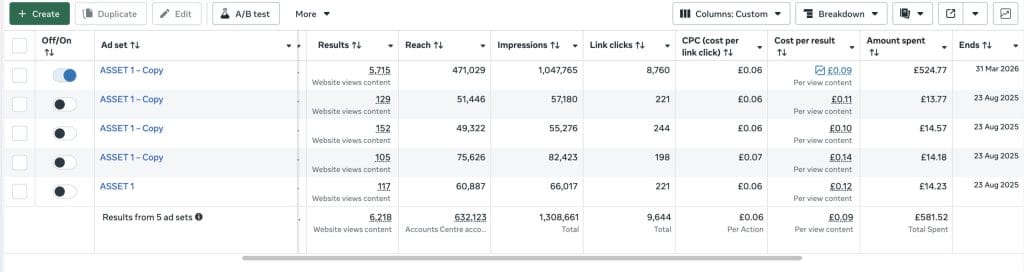
Meta plays a different role, and it rewards structure.
Meta ads perform best when you give the algorithm clean signals, which usually means you route traffic through a landing page that can be tracked, and you define conversion events that represent real progress, such as email signups, pre-saves, or merch actions. Sending traffic directly to Spotify often limits optimization because the platform cannot see what happens after the click.
A simple funnel tends to work best: ad to landing page, landing page to destination, then retargeting based on behavior. That gives you the ability to follow up with people who engaged but did not convert, and it helps you refine creative based on what actually drives action.
Meta’s automation tooling can be powerful when you support it with good assets. Advantage-style placements and creative optimization can test combinations at scale, which helps you learn what hooks work, which visuals hold attention, and which copy structures drive action. You still need to feed it good creative. Automation cannot rescue weak storytelling.
If your TikTok side leans toward raw participation content, then your Meta side can lean toward slightly more structured messaging, while still keeping it human. Short reels that look native, creator-style clips, and UGC-driven formats tend to perform well because they feel like content rather than ads. Your goal is to build trust quickly, and then give the viewer a clean next step.
What Should The Budget Look Like?
A small artist can still run a real campaign with a modest budget if the plan is focused.
| Budget Level | What To Do |
| $0 | Organic clips, Spotify pitch, email, DMs, playlist research |
| $50 to $150 | Test two or three clips on Meta or TikTok |
| $150 to $500 | Retarget video viewers and landing-page visitors |
| $500 to $1,500 | Add press, playlist tools, creator seeding, and ads |
| $1,500+ | Build a multi-week campaign with paid testing and reporting |
How Should You Build An Owned Audience?
Owned audience means you can contact fans without relying on one platform’s feed. Email is still the easiest starting point. SMS, Discord, Patreon, Bandcamp followers, Substack, and community channels can come later.
Start with one offer:
| Offer | Good For |
| Free download | Producers, DJs, sample users |
| Early access | Fans who want the track before release |
| Private playlist | Tastemaker-led artist projects |
| Remix stems | Producers and DJs |
| Ticket presale | Local fanbases |
| Merch discount | Fans already buying |
| Behind-the-scenes note | Writerly artist projects |
Keep it simple. Do not ask people to join a list because you “have a newsletter.” Ask them to join because they get something specific.
For producers, stems can work especially well. I recently wrote about Acon Digital Remix, and that review reminded me how stem-based thinking can open up content and fan engagement. You can use stems for remix contests, short clips, DJ tools, sample packs, and email capture when you own or control the rights.
Cross-Platform System Design
Now bring it together across platforms. TikTok builds awareness and participation, Meta follows with retargeting and conversion, Spotify captures listening and retention, and your owned channels capture long-term access. The system works when each step hands the audience to the next step smoothly.
Owned channels matter more in this year’s environment because platform policies shift, link behaviors change, and regulatory issues can alter distribution. Email and SMS are not exciting, yet they are stable, and stability gives you leverage. A small list with high intent often outperforms a large following with low commitment.
Diversification also reduces fragility. Cross-posting across TikTok, Reels, and Shorts turns one creative session into multiple distribution opportunities and protects you when one platform throttles reach for reasons beyond your control. Your content should travel, and your messaging should remain coherent even as the format shifts.
Finally, blend digital with moments people remember. Live events, pop-ups, listening parties, AR filters, interactive visuals, and community-driven challenges create a memory layer that keeps the release alive. Digital campaigns grow reach. Real moments build attachment. Attachment drives retention.
People want to feel part of something.

Will Vance is a professional music producer who has been involved in the industry for the better part of a decade and has been the managing editor at Magnetic Magazine since mid-2022. In that time period, he has published thousands of articles on music production, industry think pieces and educational articles about the music industry. Over the last decade as a professional music producer, Will Vance has also ran multiple successful and highly respected record labels in the industry, including Where The Heart Is Records as well as having launched a new label with a focus on community through Magnetic Magazine. When not running these labels or producing his own music, Vance is likely writing for other top industry sites like Waves or the Hyperbits Masterclass or working on his upcoming book on mindfulness in music production. On the rare chance he's not thinking about music production, he's probably running a game of Dungeons and Dragons with his friends which he has been the dungeon master for for many years.