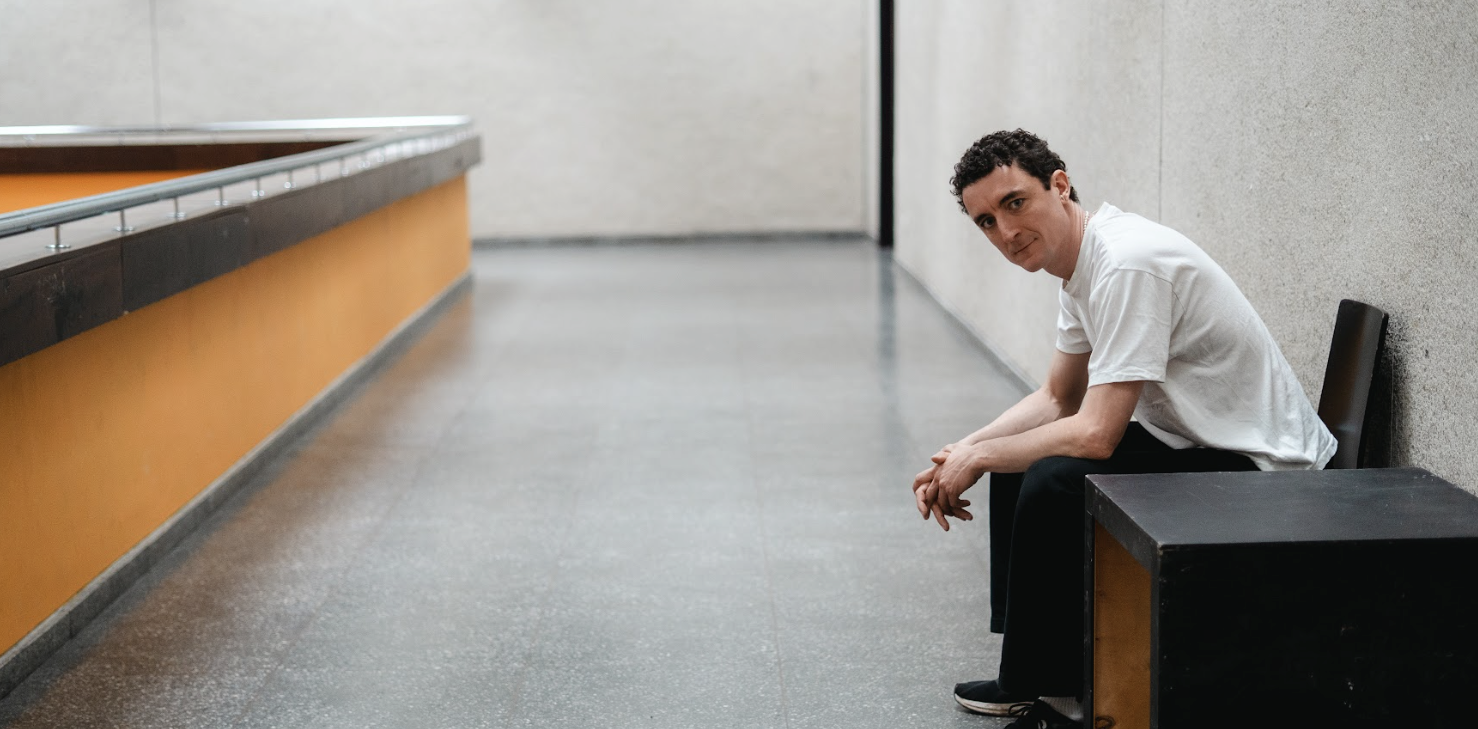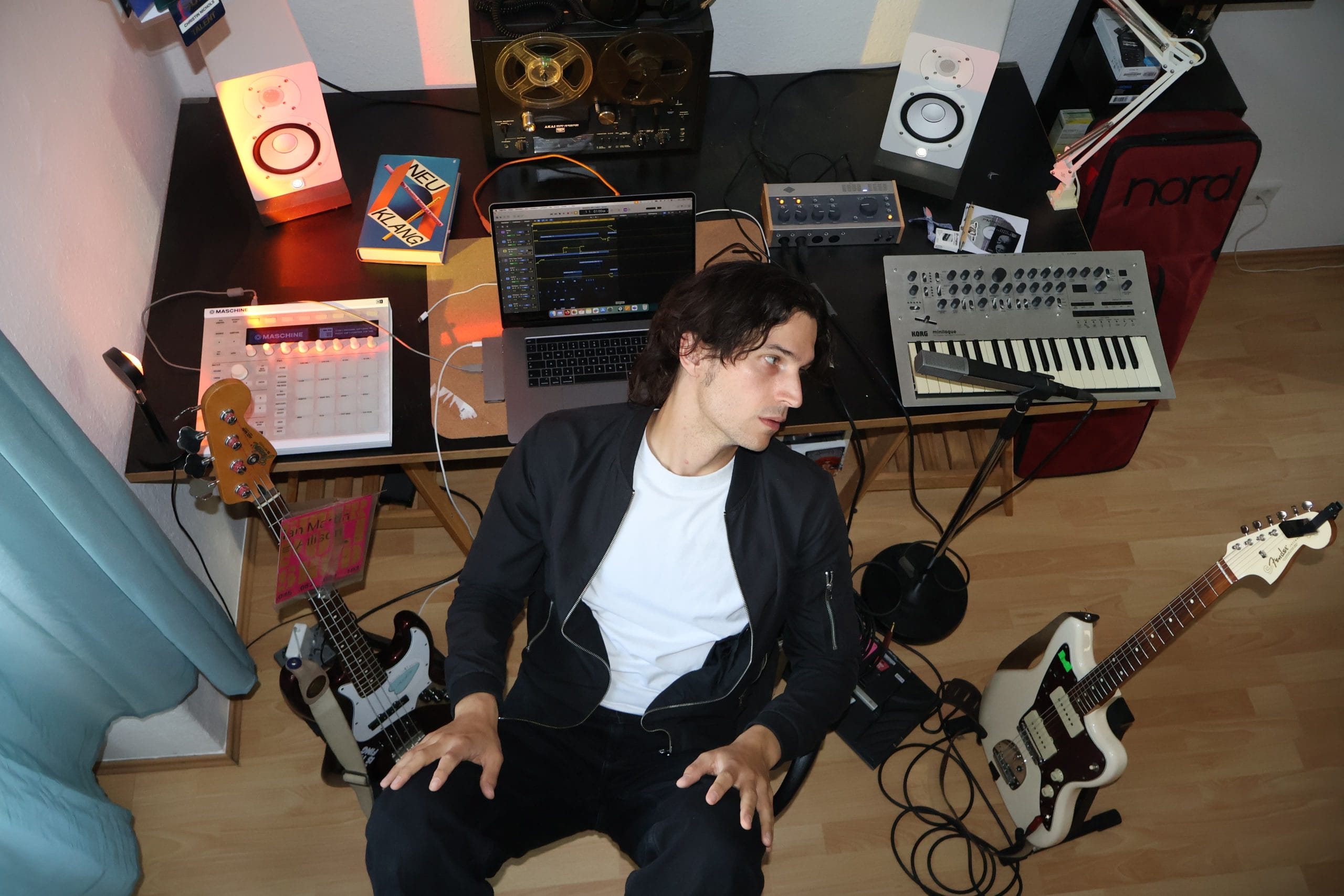
“Konsole“, the debut solo EP by Berlin-based musician Marc Gundermann, is a phenomenal example of what leftfield electronica should be.
Having worked as a collaborator and multi-instrumentalist for artists like Christin Nichols, Sid Vision, & Max Paul Maria, Gundermann’s latest work shows his technical skill at an extremely high level. The five track package, full of foreboding atmospheres, analog warmth, and experimental rhythms, is both eerie and beautiful. Gundermann also heavily leans into a cassette-based aesthetic, with crackle, static, and intentional imperfections found all over the EP – in fact, he’ll be printing 50 tapes of “Konsole”, which we can only assume will be the best possible listening experience for these tracks. It’s a collection that’s meditative, cinematic, and clearly produced with intention.
Today, Gundermann will show us how he made the standout track “Apparition“. He’ll take us through the analog synthesis and post production on display, as well as some expert tips for producing leftfield electronica of your own. Take a listen below, and read on!
KORG Minilogue
The Korg Minilogue was my first synthesizer. It’s super easy to understand – even for beginners – and it’s designed in a way that lets you create your own patches quickly and intuitively. I mostly use the Minilogue as a bass synth. In the track “Apparition”, the Minilogue is all over the place — I also used it to create pad sounds as well as percussive elements.
The foundation of the track was this pulsing bass synth. The filter slowly opens up, but the cycles in which the filters opens get longer. It was super easy to produce, because I could just follow my impulses and focus on the performance. I just slapped some compression on it and boom — done. I think if it weren’t for the Minilogue, I’d probably still be searching for a good bass patch in my DAW today. I could really focus on the performance.
I love seeing the Minilogue as an extension of the bass guitar — kind of like Stevie Wonder did, for example. I originally bought the synth for different reasons, but I’m more than happy with the sounds it keeps surprising me with, plus adding your favorite pedals to it doubles the fun.
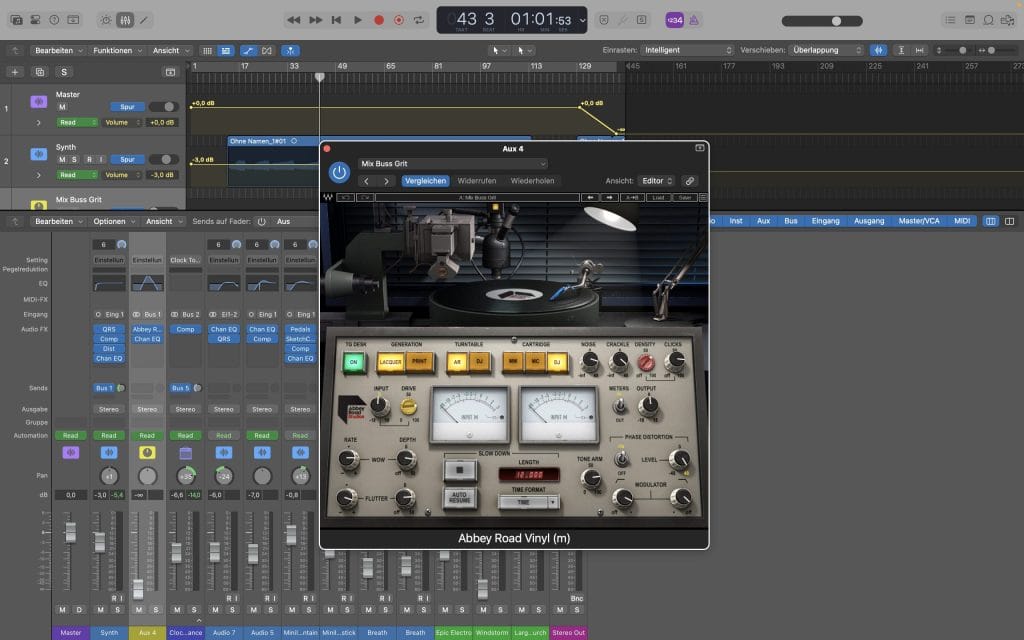
WAVES Abbey Road Collection Bundle
As a Beatles fan, I obviously had to get one of these Abbey Road Collection bundles from Waves at some point. The bundle I own includes tape machines, multiple compressors, mastering chains, simulations of mics and vinyl… and so much more. Super fun to use! I used the plugins multiple times on the “Konsole” EP — especially the REDD17 and RS57 compressors, and the above mentioned vinyl emulation. I use the plugin for the same reasons I use the SketchCassette plugin — it shapes the sound in a specific way and gives it instantly more character.
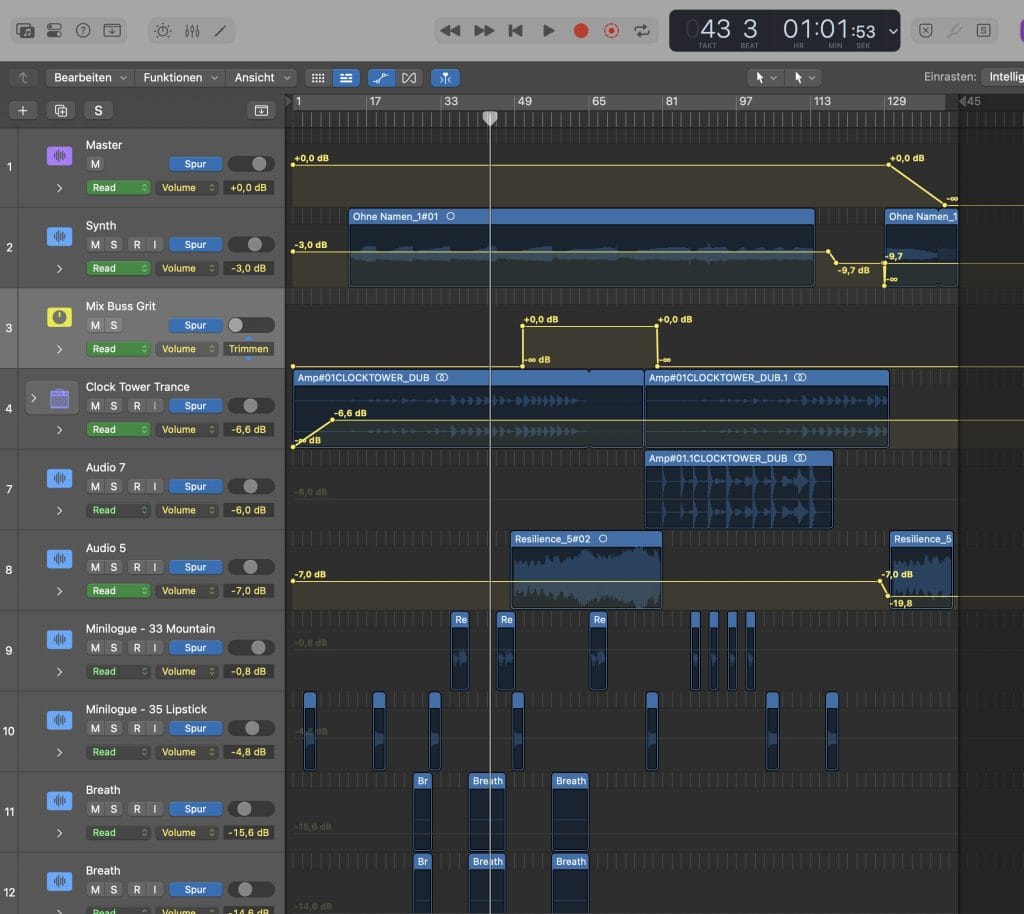
There’s a section in “Apparition” where the track almost disappears under the noise, like bad reception. You can see in the screenshot that I didn’t hold back with the “Noise” and “Crackle” settings. I also cranked up the phase distortion pretty well. I placed it on the mix bus of the master channel. Between bars 49 and 81, it’s full-on noise. One of my favorite moments.
It’s definitely worth trying out — actually both plugins — on every instrument, just to see what cool stuff might come out of it. It’s easy to get lost in all the
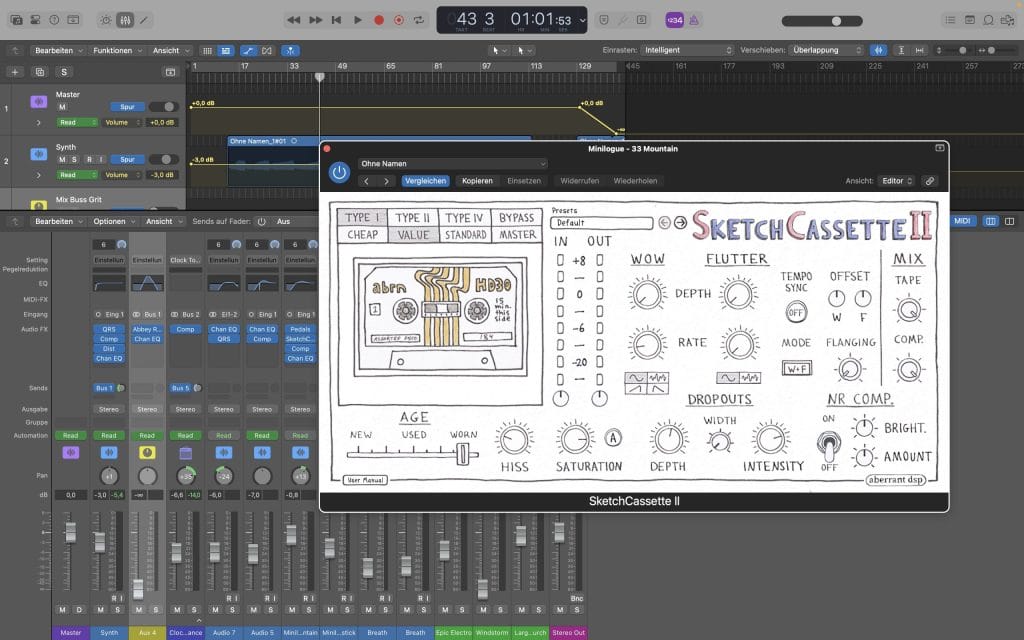
Aberrant DSP SketchCassette II
Many sounds — especially from a DAW — tend to come across as a bit sterile and, well, basic. I grew up in a time when people still made cassette tapes for car rides, their friends and secret (and not-so-secret) crushes and so almost every household had some old, worn-out tapes lying around. That experience has something magical to it and that lo-fi quality instantly gives me a vibe aura of +3000. Especially when the music is rather vibe dependent, like ambient, drone, electronica and so on, it’s cool to have easy tools, to keep the momentum while recording going.
The plugin offers various modulations typically associated with tape — saturation, modulation like wow and flutter, noise and also compression. I can’t remember ever opening the plugin and thinking, “Nah, I’ll turn this off again!” It’s THAT addictive. As you can see, I set the tape age to “worn” and the saturation to 3 o’clock. Each selectable tape has its own unique sonic character.
What I love about this plugin is that anyone can use it and make it work for them. Everyone would do something different with it.
Quick Fire Tips For Making Leftfield Electronic
Tip #1: As always: Listening is the most important thing.
Tip #2: Bounce your unfinished song and take a walk through the park listening to it, either in the morning or evening. The next idea will come.
Tip #3: Try to be inspired by everything — architecture, movies, video games, fonts… literally everything.
Tip #4: Use an instrument you can’t play that well. Trick yourself.
Tip #5: You don’t need all of your gear. Limit yourself.
Stream “Apparition” here.

Ben Lepper is a music producer and journalist from Boston, Massachusetts.