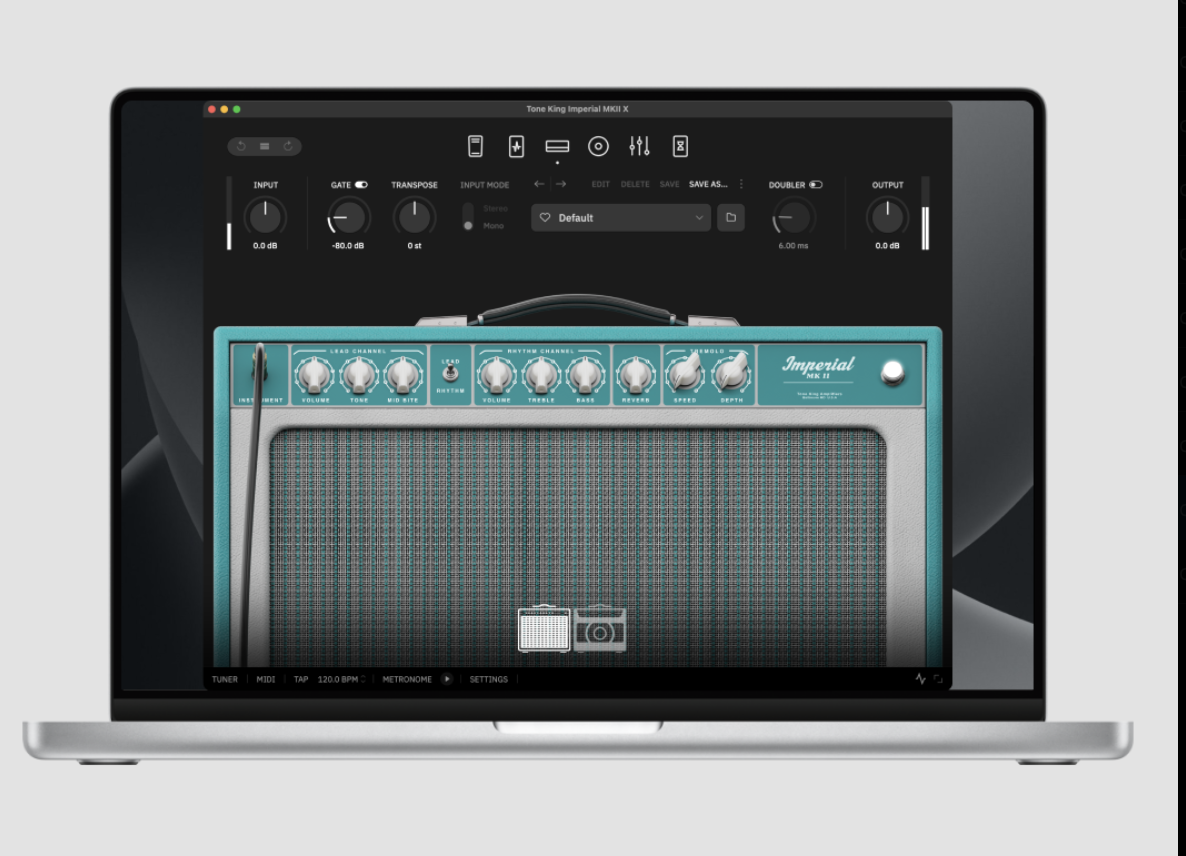
Amp simulation has reached an interesting point where the conversation increasingly focuses on what happens around the amplifier.
The modeling has become remarkably convincing over the years, and companies like Neural DSP have spent considerable time refining the small details guitarists notice when they’re playing. The amp’s response to picking dynamics, how the distortion develops as the input gets louder, and how cabinet and microphone choices affect the final tone are all part of the appeal.
But there’s also the question of how quickly you can get from an idea to a recording without spending the first twenty minutes setting everything up.
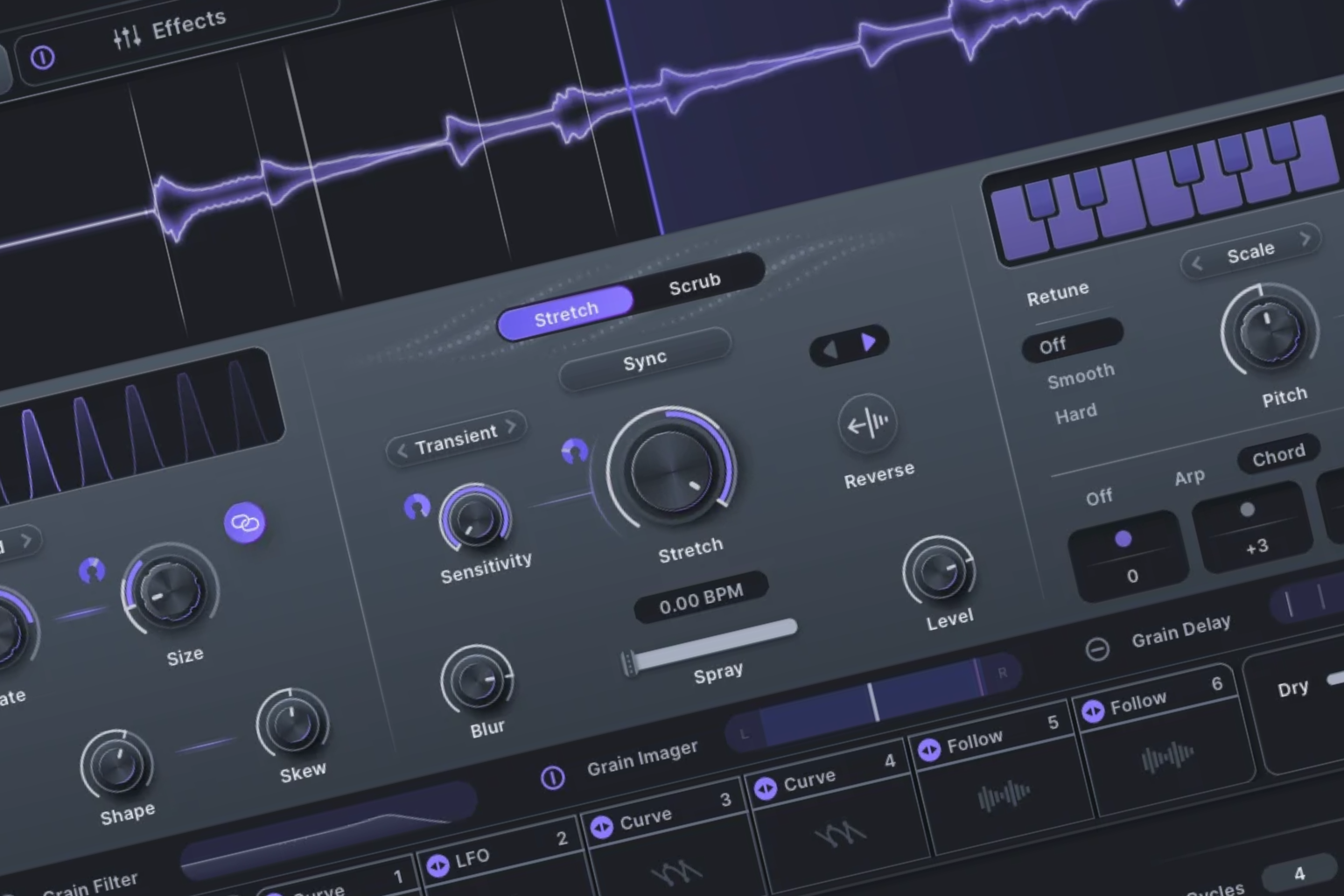
Neural DSP is addressing that side of the experience with Tone King Imperial MKII X, an update to its vintage-inspired guitar amplifier plugin that adds several creative and performance features while preserving the underlying amplifier modeling.
Released today on October 14, the update introduces a new interface, pitch transposition, stereo doubling, improved preset management, and several smaller additions aimed at making the plugin easier to work with. Existing users receive the update for free, which is a welcome decision considering how much of the original amplifier remains at the center of the product.

The Original Tone King Sound Remains
The Tone King Imperial has a history going back to 1993, when the original hardware amplifier was introduced with a sound influenced by classic American amplifier designs from the 1950s and 1960s.
The idea behind it was to bring together two characteristics that guitarists often associate with different amplifier circuits: the open, articulate response of mid-1960s American designs and the thicker, more compressed overdrive of earlier tweed amplifiers.
Neural DSP’s software version recreates the Imperial MKII, including its Rhythm and Lead channels, Mid-Bite control, bias tremolo, tube-driven spring reverb, and Ironman II reactive attenuator.
The Rhythm channel prioritizes clarity and headroom, while still allowing natural breakup as the playing gets more aggressive. The Lead channel moves toward thicker mids and additional gain, offering a different response without leaving the vintage amplifier territory that defines the product.
The Mid-Bite control is another important part of the original design, letting players move between softer overdrive characteristics and a more assertive crunch.
What I appreciate about this kind of amplifier modeling is that it doesn’t have to rely on huge distortion or exaggerated processing to be interesting. The playing becomes a bigger part of the sound, especially when the amp responds to small differences in attack and dynamics.
Neural DSP has kept that character at the center of the X update.It’s the sort of feature that becomes more appreciated over time, especially when moving between different guitars or developing a collection of presets for a live performance.
Neural DSP Gives Existing Users a Free Update
One of the better parts of this announcement is Neural DSP’s decision to make Tone King Imperial MKII X free for existing owners.
That is a reasonable way to introduce new functionality to an established product, particularly when the amplifier modeling and tonal identity remain the foundation of the experience.
For existing users, the new features offer additional creative options without giving up the sounds and settings that drew them to the plugin originally.
For new users, the X version presents a more complete package, bringing vintage-style amplifier tones together with a collection of modern recording conveniences.
I wouldn’t expect this update to completely change someone’s opinion of the original Tone King sound. If you weren’t particularly interested in American-style cleans, natural breakup, and tweed-inspired overdrive before, the additional features probably won’t change that.
But if those tones are already part of your recording setup, the improvements are easy to appreciate.
Neural DSP Tone King Imperial MKII X is available now, with a free update for existing owners and a 14-day trial for anyone interested in trying it.
Learn more at Neural DSP’s official website.

Will Vance is a professional music producer who has been involved in the industry for the better part of a decade and has been the managing editor at Magnetic Magazine since mid-2022. In that time period, he has published thousands of articles on music production, industry think pieces and educational articles about the music industry. Over the last decade as a professional music producer, Will Vance has also ran multiple successful and highly respected record labels in the industry, including Where The Heart Is Records as well as having launched a new label with a focus on community through Magnetic Magazine. When not running these labels or producing his own music, Vance is likely writing for other top industry sites like Waves or the Hyperbits Masterclass or working on his upcoming book on mindfulness in music production. On the rare chance he's not thinking about music production, he's probably running a game of Dungeons and Dragons with his friends which he has been the dungeon master for for many years.