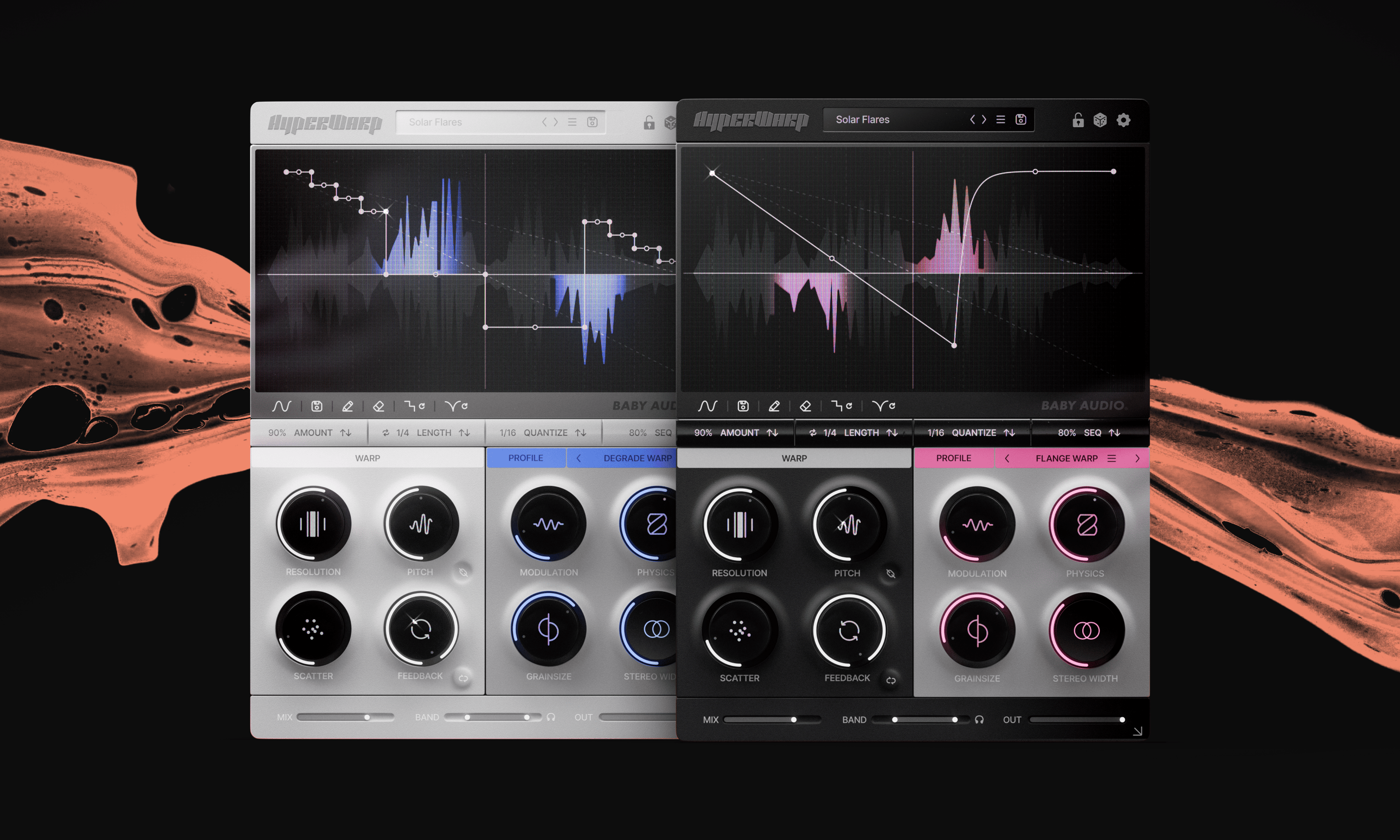
Baby Audio’s HyperWarp is built around a familiar producer problem: you have a loop, stem, vocal chop, pad, drum break, or synth line that is fine, but it needs motion before it feels like an idea worth keeping.
The plugin answers that with a granular engine and a graphical time sequencer. Users can draw speed shifts, stutter steps, and direction changes directly into the plugin, then use the granular side to reshape the audio into rhythmic chops, smeared motion effects, lo-fi damage, or more fluid time-warped movement.
That is a smart direction for Baby Audio.
The company has spent years turning advanced processing ideas into interfaces that invite quick decisions, and HyperWarp seems to follow that same path. Granular processing can get technical fast, but the best use of it in a writing session is often simple: make the part less obvious, add movement, and get the idea back into the track before the creative window closes.
That is also where HyperWarp connects to my earlier coverage of Baby Audio’s Grainferno.
Grainferno pushed granular synthesis into a playable instrument format. HyperWarp takes a different angle, putting granular manipulation directly on existing audio so you can reshape loops and stems without rebuilding the part from scratch.
The Graph Sequencer Is the X Factor
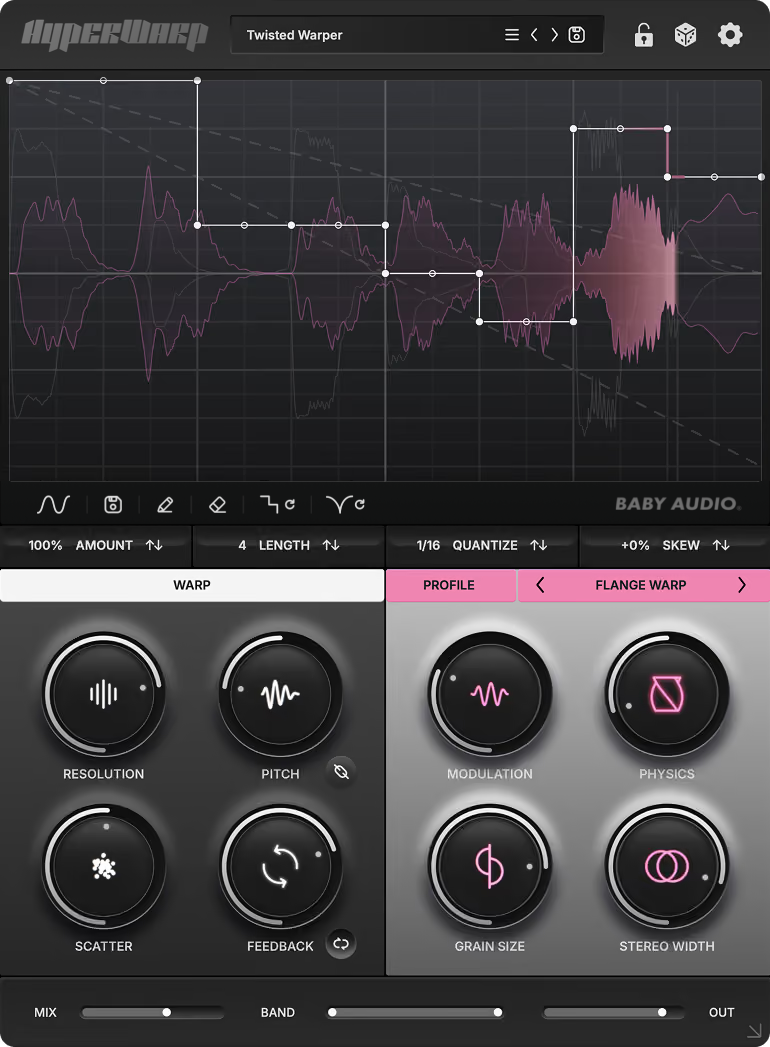
The most important part of HyperWarp is not only that it uses granular processing. It is that the time behavior is visible and drawable.
That matters because time effects can become hard to manage when the user is stuck thinking in tiny parameters. HyperWarp gives producers a graph sequencer for shaping how the audio speeds up, slows down, stutters, reverses, or shifts direction. The plugin then breaks the incoming audio into microsampled grains and rebuilds it with one of seven effect profiles.
Those profiles range from clean time manipulation to more frantic modulation and extreme lo-fi treatment. Instead of asking the user to start with every granular parameter exposed, HyperWarp gives eight front-panel controls, four curated macro knobs, preset graph shapes, and smart randomization.
That design choice is important. A plugin like this works best when it produces happy accidents quickly, then lets the producer decide how far to push them. If the interface gets too technical too early, the effect becomes a sound design exercise instead of a writing tool.
HyperWarp seems aimed at the middle ground: fast enough for producers who want instant ear candy, but flexible enough for people who want to dig into wet/dry blend, graph shape, and the behavior of the granular engine.
Baby Audio Keeps Chasing Motion
HyperWarp also fits into a larger Baby Audio pattern. The company has been focusing heavily on effects that make static parts feel like they are changing shape inside the track.
That was a big part of the appeal behind Transit 2, the motion-focused multi-effect plugin Baby Audio built with Andrew Huang. I covered that launch in my article on Transit 2, and HyperWarp feels like a more granular, time-focused extension of that same broader instinct.
Transit 2 was about movement across chains and transitions. HyperWarp is more about warping the actual timing and grain-level identity of the audio. That difference gives it a clear role in a production setup. It is less about making a riser or transition feel bigger and more about turning a static piece of audio into something that moves in a new way.
For electronic producers, that can be the difference between a loop that sounds like a loop and a loop that feels performed. The same drum break, vocal hit, synth phrase, or pad can become a rhythmic edit, a broken texture, or a warped melodic layer depending on how the graph is drawn.
Granular Sound Design Without the Homework
Granular plugins often ask the user to think like a technician. Grain size, density, spray, position, playback behavior, pitch, windowing, timing, smear, and modulation all matter, but they are not always what a producer wants to stare at during a writing session.
HyperWarp’s pitch is that it does not require granular knowledge to start.
The preset graph shapes and smart randomization give users a quick way in, while the seven profiles provide distinct sound characters without forcing a blank-patch setup every time.
That makes the plugin easier to imagine in normal production work. A vocal stem can get chopped into glitchy rhythm. A pad can turn into a moving granular wash. A drum loop can become a stuttered pattern. A synth line can be reversed and bent into a new phrase. The plugin is not limited to one genre because the source material is the real starting point.
The plugin includes over 190 custom presets from producers and sound designers, which should help users get into the intended range quickly. It is compatible with major DAWs on Mac and PC, including Apple Silicon systems.
HyperWarp is available October 6, 2026 at $99 MSRP, with an introductory price of $49. More information is available at Baby Audio’s official HyperWarp page.

Will Vance is a professional music producer who has been involved in the industry for the better part of a decade and has been the managing editor at Magnetic Magazine since mid-2022. In that time period, he has published thousands of articles on music production, industry think pieces and educational articles about the music industry. Over the last decade as a professional music producer, Will Vance has also ran multiple successful and highly respected record labels in the industry, including Where The Heart Is Records as well as having launched a new label with a focus on community through Magnetic Magazine. When not running these labels or producing his own music, Vance is likely writing for other top industry sites like Waves or the Hyperbits Masterclass or working on his upcoming book on mindfulness in music production. On the rare chance he's not thinking about music production, he's probably running a game of Dungeons and Dragons with his friends which he has been the dungeon master for for many years.