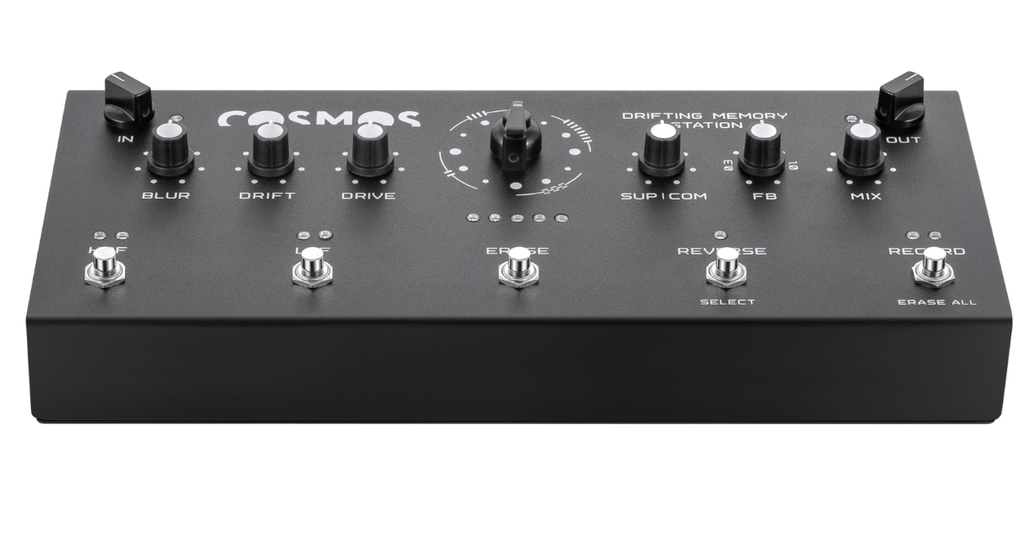
Analogue Solutions’ Filtopia is not built around the usual monosynth pitch. The headline here is the filter section, and that is where the synth makes its case.
The limited-edition stereo analog monosynth is anchored around five parallel analog filters, giving users a way to shape sound across multiple frequency areas at once. That is a different mindset from the standard single-filter subtractive synth workflow, where most of the movement happens around one cutoff-and-resonance relationship.
With Filtopia, you can offset the filters, push them into higher resonance settings, and modulate them in different ways. Analogue Solutions says this lets users create dense harmonic shaping, multi-band frequency sweeps, and vowel-like formant effects that mimic aspects of how the human voice works.
That is the most interesting part of the machine. It is not trying to win by adding another screen, patch memory, or software layer. It is leaning into the physical behavior of analogue circuitry, then giving players enough routing to find sounds that might be hard to repeat exactly.
For anyone working with hardware synths, that kind of instability can be the point.
I touched on this in my article on processing analogue synths, where the appeal often comes from movement, inconsistency, and the way a signal changes once it passes through real circuits.
Five Filters Give the Synth Its Personality
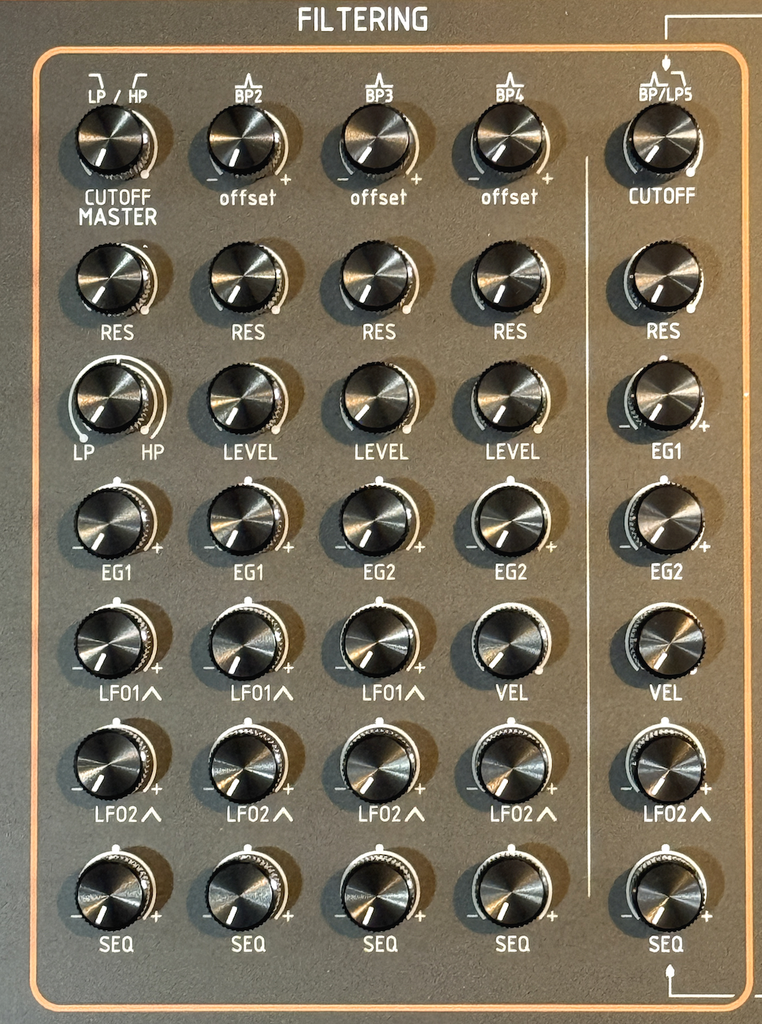
Filtopia’s filter bank is laid out with one LP/HP balance filter on the far left, three bandpass filters in the middle, and a fifth filter on the far right that can switch between bandpass and low-pass behavior. All five filters are 12dB-per-octave designs, with origins traceable to the Oberheim SEM, then adapted to fit Analogue Solutions’ own sound and design aims.
That SEM link matters because it points toward a certain kind of analogue behavior: open, animated, and very responsive to performance moves. I covered a more modern part of that lineage in my piece on the Oberheim TEO-5, and Filtopia comes from a different company and format, but the filter heritage gives it a familiar reference point.
The routing is where Filtopia becomes its own thing.
You can assign the first two filters to EG1 with positive or inverted modulation. The third and fourth can be assigned to EG2 in the same way. The fifth can be assigned to both EG1 and EG2. All five can be assigned to LFO 2, while the first three can also be assigned to LFO 1. The fourth and fifth filters add velocity level controls.
That gives the synth a lot of ways to move. One filter can rise while another falls. One part of the spectrum can respond to the envelope while another pulses under LFO control. The result is a machine designed for evolving sweeps, unstable harmonics, and the sort of sound design that rewards hands-on tweaking.

The Oscillators Feed the Filters Differently
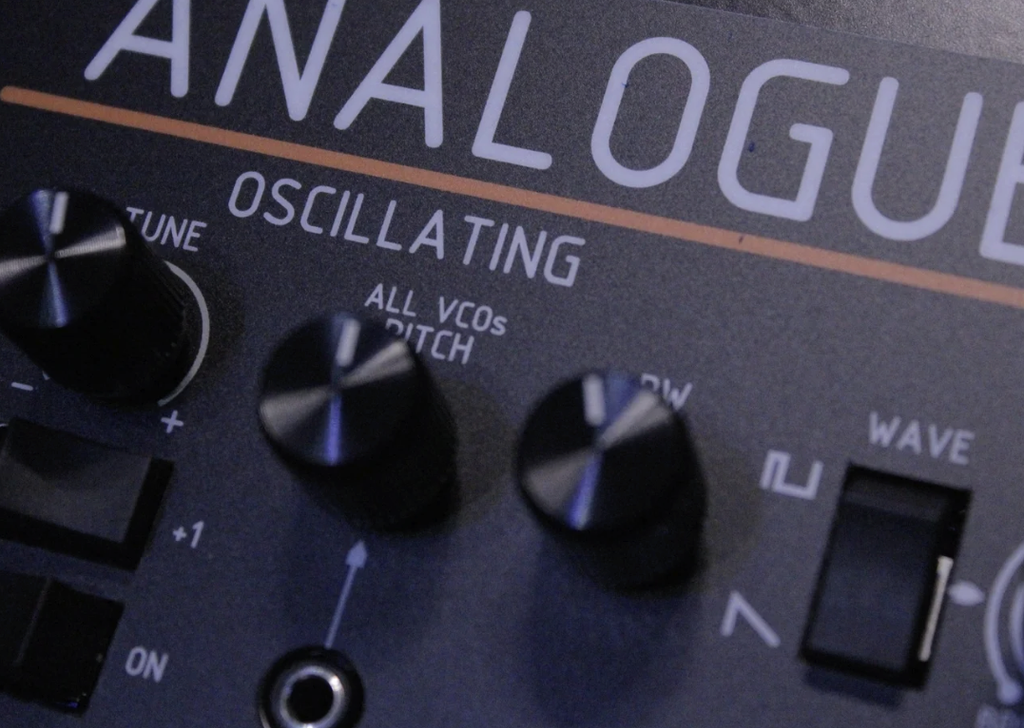
Filtopia includes three VCOs, a sub oscillator, and noise, but the audio sources do not all reach the filter bank in the same way.
VCO1 can be routed across the bandpass filters or toward the low-pass filter option. The sub oscillator feeds the fifth filter’s low-pass side. Noise, VCO2, and VCO3 feed the bandpass filters. That routing decision gives the synth the feeling of multiple sources being shaped by different parts of the filter bank, which can create the impression of several synth voices moving together.
That is smart design because it makes the architecture feel more alive without turning the instrument into a full modular wall. The user still has a defined instrument in front of them, but the signal can behave in layered ways once the filters, envelopes, and LFOs start interacting.
This is also where Filtopia sits near the semi-modular conversation without becoming a standard semi-modular box.
It has patch sockets, CV options, MIDI and CV use at the same time, and a front panel built for routing, but the core identity is still a compact analogue monosynth. For readers comparing this kind of setup against more conventional semi-modular instruments, my breakdown of semi-modular synths for learning sound design offers some helpful context.
Stereo Movement Is Built Into the Design
Filtopia also gives users two high-headroom VCAs for stereo operation. Main VCA1 and Aux VCA2 each have their own quarter-inch output, which means players can pan the two outputs and use separate envelope behavior to create stereo motion.
EG3 controls Main VCA1 and includes audio from the onboard echo section. Aux VCA2 carries a dry signal controlled by EG2. By changing the EG2 and EG3 settings, users can create wide sweeps and separation between the two outputs.
The echo section itself is based around an onboard solid-state delay block, giving the synth a built-in path toward space, feedback, and retro delay character. It is a fitting addition because Filtopia’s filter bank already encourages motion. Delay gives those moving harmonics somewhere to smear, repeat, and build.
There is also a step-based CV sequencer for per-step pitch control and performance movement, along with an audio input for routing external synths, drum machines, or line-level material into the filter section. That means Filtopia can operate as a synth and as an analogue processing box for outside sounds.
That second role may be the sleeper appeal. Five parallel analogue filters are interesting on internal oscillators. They may be even more interesting when fed drums, pads, vocals, or another synth.
That philosophy will not be for everyone. Filtopia is for players who want a hardware instrument that can get strange, tactile, and hard to pin down. It is for basses, leads, bleeps, sweeps, sound effects, and filter behavior that feels alive under the hands.
The second batch gives synth players another shot at a rare machine, but probably not for long.

Will Vance is a professional music producer who has been involved in the industry for the better part of a decade and has been the managing editor at Magnetic Magazine since mid-2022. In that time period, he has published thousands of articles on music production, industry think pieces and educational articles about the music industry. Over the last decade as a professional music producer, Will Vance has also ran multiple successful and highly respected record labels in the industry, including Where The Heart Is Records as well as having launched a new label with a focus on community through Magnetic Magazine. When not running these labels or producing his own music, Vance is likely writing for other top industry sites like Waves or the Hyperbits Masterclass or working on his upcoming book on mindfulness in music production. On the rare chance he's not thinking about music production, he's probably running a game of Dungeons and Dragons with his friends which he has been the dungeon master for for many years.