
The semi-modular synth architecture strikes a balance between traditional hard-wired synthesizers and fully modular synthesizers. It offers a normal signal path that doesn’t require any patching to produce sound but also has patch points for those who want to explore more intricate and creative patches.
The growing popularity of Eurorack modular synthesis and the demand for affordable analog instruments has brought semi-modular synthesizers back into the spotlight. Today, there is a wide range of these instruments available at different price points, from budget desktop modules to grand keyboards with sequencers.
Whether you prefer an authentic analog sound, a unique and esoteric sound, or a modern cutting-edge synth, this roundup highlights the best currently available semi-modular synthesizers to help you on your musical journey.
Korg MS-20 Mini
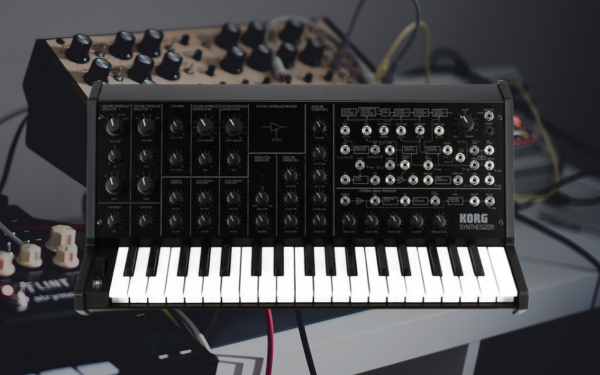
The Korg MS-20 Mini has gained a stellar reputation in the world of music production as a semi-modular monosynth with a powerful impact. Its semi-modular design provides a fascinating exploration into the complexities of modular synthesis, offering a plethora of customization opportunities, making it a perfect choice for those investing in their first hardware. With its ability to generate a diverse range of monophonic sounds, from intense leads to deep basslines, this synth proves to be a versatile tool in any music producer’s arsenal.
One of the most remarkable features of the Korg MS-20 Mini is its resonance filter. This filter possesses a unique quality that has earned recognition and praise from both novice and experienced music producers. It excels in creating leads that stand out in the mix, making it an essential asset for those who aim to produce unforgettable tracks.
The Korg MS-20 Mini also excels in crafting captivating leads. For instance, by simply utilizing the basic sounds of the oscillators and filter, along with the portamento glide, you can create a bright, sliding lead that infuses depth and character into your music, without tapping into the patch bay. When combined with the filter resonance at low cutoff frequencies to boost the mid frequencies, this synth can hold its own in the mix, even when the bassline is understated. The Korg MS-20 Mini’s flexibility and exceptional sound make it an indispensable monosynth for any producer looking to create exceptional leads in their compositions.
The Korg MS-20 Mini’s X-Factors Are:
- Semi-modular Design: Offering a gateway to the complexities of modular synthesis and ample customization, it’s perfect for beginners and seasoned professionals.
- Resonance Filter: This unique feature allows producers to create distinct tonalities and leads that significantly impact the mix.
- Versatile Lead and Bassline Production: With its capacity to craft both strong leads and profound basslines, the Korg MS-20 Mini can provide a diverse range of sounds to suit any production needs. Hear the MS-20 in action on my latest release playing the bright and glidy lead synth below.
Learn More About This Synth While Supporting Our Small Team Of Writers Through Our Affiliate Partnership With Sweetwater Here
Moog Mother-32
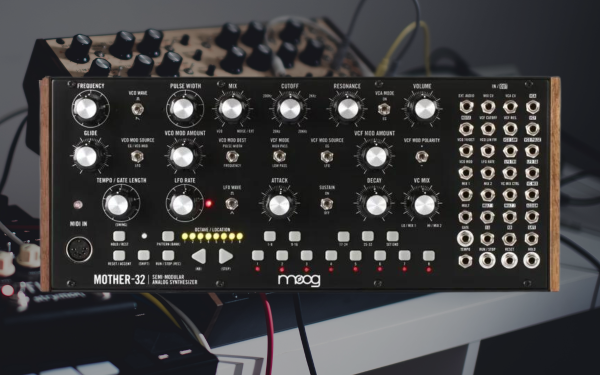
The Moog Mother-32 has taken the music production world by storm as an impressively versatile single oscillator synth. Despite the abundance of hardware and software options available, this synth has managed to carve out its unique space in the industry due to its semi-modular nature and Eurorack compatibility. Its affordability also serves as an attractive entry point into the world of patchable analogue gear, proving that top-tier sonic performance can be achieved without breaking the bank. MIDI connectivity and a built-in sequencer make this synth an ideal addition to any professional production setup.
Visually, the Moog Mother-32 is enticing with its robust knobs, industrial toggle switches, and compact retro-industrial case that evokes an intriguing atmosphere reminiscent of a mission control panel. Its design also demonstrates exceptional attention to detail and practicality, featuring a clear layout divided into oscillator/sound modifier controls, a single octave keyboard, a 32-step sequencer, and a 32-point patchbay. This design ensures that the user experience is intuitive, even with the complexities of its semi-modular nature. The rich, Moog-esque sound produced by the VCO and the iconic Moog 24dB/octave ladder filter are sure to satisfy seasoned and aspiring music producers alike.
Despite its size, the Mother-32’s versatility should not be underestimated. The synth offers numerous features such as waveform selection via toggles, sequencer speed control, and a patchable VCF with both low-pass and high-pass modes. This, coupled with the 32-point patchbay, makes the Moog Mother-32 an incredibly flexible instrument that can be molded to suit any production needs. The fact that the Mother-32’s sound can be augmented via patching demonstrates its capability as an ever-evolving, dynamic piece of hardware. Additionally, its 64-recallable pattern sequencer provides extensive programming options that push the boundaries of sonic creativity.
The Moog Mother-32’s X-Factors Are:
- Semi-modular and Eurorack compatible: You can start with it as a standalone synth, but as you dive deeper into the modular world, it can integrate seamlessly with your expanding setup.
- Feature-rich oscillator and patchbay: With a versatile VCO, flexible VCF, and a 32-point patchbay, you’re in full control of the Mother-32’s sound sculpting capabilities.
- 64 recallable pattern sequencer: This sequencer goes beyond simple step-sequencing, offering an impressive array of deep ‘under the hood’ style programming options to fuel your creativity.
Learn More About This Synth While Supporting Our Small Team Of Writers Through Our Affiliate Partnership With Sweetwater Here
Cre8audio West Pest
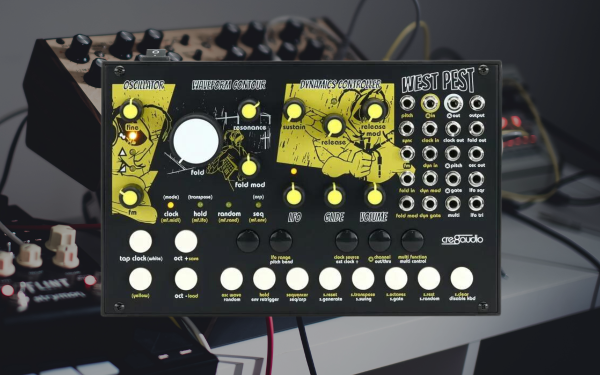
The West Pest is an exceptional addition to any music production setup. This semi-modular analog synthesizer has received a lot of attention since its introduction at NAMM due to its unique harmonic character and compatibility with other synthesizers. It generates rich, full sounds that can be further enhanced by incorporating robust wave folding for unique harmonics. With three distinct waveforms available, you can experience endless possibilities for musical creativity.
The West Coast synthesis approach, which involves adding harmonics to simple waveforms, is at the heart of the synth. This makes it an excellent choice for those looking for a semi-modular analog synthesizer. The West Pest is also user-friendly, with intuitive controls such as the Resonance knob, which allows for nuanced manipulation of sound by increasing the amplitude of the waveform’s peaks. The Fold knob, Sustain, and Release offers a four-pronged approach to sound manipulation.
In addition, the sequencing arpeggiator from the East Beast adds an uncomplicated and fun element to the experience. The Generate button uses algorithms to alter your notes, creating new melodies slightly. Finally, the synth has various randomization features that provide a dynamic and exciting musical journey. Overall, the West Pest is an affordable and powerful piece of equipment that is sure to inspire creativity in any musician.
The West Pest’s X-Factors Are:
- Dynamics Controller: This feature allows for the simulation of natural sound wave behavior, leading to a richer, more organic sound.
- Sequencing Arpeggiator and Generate Button: These tools simplify the creation of new melodies, adding to the West Pest’s appeal as a tool for creativity and innovation.
- Randomization Features: The array of randomization options available in the West Pest results in a dynamic, exciting musical experience, ensuring that every session is unique and inspiring.
Learn More About This Synth While Supporting Our Small Team Of Writers Through Our Affiliate Partnership With Sweetwater Here
Moog DFAM
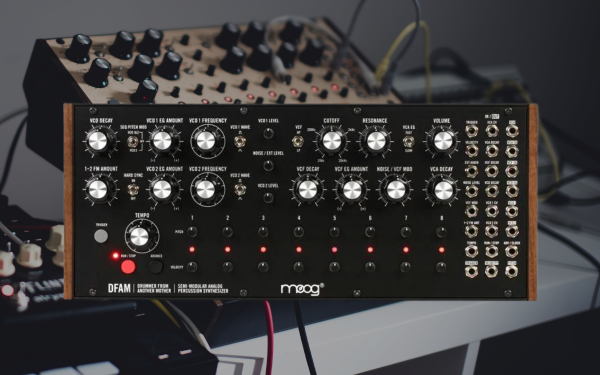
The DFAM, also known as the Drummer From Another Mother, is a unique addition to the world of music production. It serves as the successor to the Mother-32 of 2016, offering a semi-modular design contained within a compact metal chassis. This design blends traditional analog synth elements with a built-in sequencer and patchbay that’s perfect for Eurorack setups. While it may not fit the mold of a typical drum machine, the DFAM is better described as an analog monosynth that’s optimized for delivering electronic percussion, atonal textures, and impactful synth sounds with a rhythmic edge.
Upon delving into the DFAM’s sonic engine, you’ll come across two versatile oscillators and a white noise generator. All of them have a ten-octave frequency range spanning the entire audible spectrum. What sets the DFAM apart is the option to choose whether both oscillators or just Oscillator 2 track the pitch of the sequencer. You also have the ability to introduce frequency modulation and hard sync. After passing through the mixer section, the signal goes through a switchable dual-mode filter, featuring a 4-pole (-24db) Ladder design. This filter provides depth, grit, and warmth to the sound and can self-oscillate, adding a rich and appealing character.
The DFAM’s three envelope generators, wired to the oscillator pitch, filter cutoff, and VCA level, are perhaps the most defining elements of its character. They offer tremendous sonic shaping possibilities, and while they’re tight and punchy, they’re perfect for the DFAM’s sound engine. The envelopes can create sharp, clean-cut percussive sounds or evolve into an adept drone machine when fully drawn out. Despite the relatively limited parameters, this synth stands out for its timbral variation, ability to craft synth percussion, deep kicks, crunchy noise snares, and more. It’s important to note, however, that to fully appreciate and exploit the DFAM’s potential, you’ll need a decent understanding of synthesis.
The Moog DFAM’s X-Factors Are:
- Wide Range Oscillators and Noise Generator: With square and triangle modes and a ten-octave frequency range, these provide a rich sonic palette, perfect for creating versatile and unique rhythmic compositions.
- Ladder Design Filter: This 4-pole (-24db) filter, switchable between HPF and LPF settings, offers tonal versatility, from thick, rounded lower frequencies to gritty, abrasive, high-resonance sounds.
- Three Envelope Generators: Hard-wired to key synth elements, these envelope generators allow users to craft punchy, sharp percussive sounds or lush, evolving drones, emphasizing the DFAM’s character and flexibility.
Learn More About This Synth While Supporting Our Small Team Of Writers Through Our Affiliate Partnership With Sweetwater Here
Behringer 2600
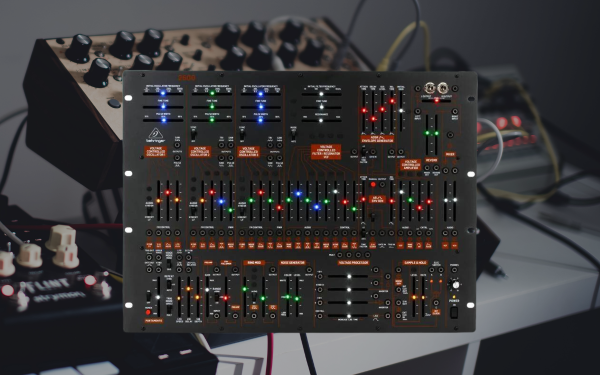
In the competitive world of music production hardware, the Behringer 2600 stands out as an exceptional semi-modular synthesizer that promotes musical creativity and innovation. This unique synth is a clone of the legendary Arp 2600 from the 70s and 80s, offering an affordable price point and an impressive array of features. Its design focuses on patching and signal flow, creating an environment that encourages users to explore a vast sonic universe and achieve unique and unparalleled results.
The Behringer 2600 impresses with its attention to detail and faithful reproduction of the original 2600’s charm and versatility. Almost every feature of the iconic synthesizer has been retained and packed into an 8U rack-mountable unit, making it accessible and manageable for modern music producers. Its array of 78 faders and 93 patch points allows for limitless sound design possibilities, fueled by its prioritization of signal path and patching. Additionally, its Eurorack compatibility opens up a treasure trove of sounds and creative potential, sure to captivate even the most experienced producers.
Interestingly, while the Behringer 2600 may appear daunting with its complex layout, it proves to be surprisingly intuitive and user-friendly once familiarized with its workings. This blend of complexity and usability allows the 2600 to capture the timeless sounds that defined an entire generation of music. Behringer has successfully emulated the rich, punchy waveforms of the original analog gear, offering music producers access to these iconic sounds without the premium price tag. Furthermore, its unconventional workflow and layout, featuring faders instead of knobs, transport users into an entirely different creative space, encouraging fresh ideas and novel approaches to composition.
The Behringer 2600’s X-Factors Are:
- Faithful Recreation: The Behringer 2600 accurately emulates the iconic sounds of the original Arp 2600, providing an affordable access point to the tones that shaped an era of music.
- Complex yet User-Friendly Design: Its seemingly complex layout conceals a highly intuitive design. Once the signal pathing, basic modules, and essential functions are understood, the synth is surprisingly easy to use, encouraging endless sonic exploration.
- Unconventional Workflow: The Behringer 2600’s unique fader-based interface, contrasting with the traditional knob-based designs, offers a refreshing and stimulating workflow, opening up new possibilities for composition and sound design.
Learn More About This Synth While Supporting Our Team Of Writers Through Our Partnership With Sweetwater Here
Pittsburgh Modular Taiga
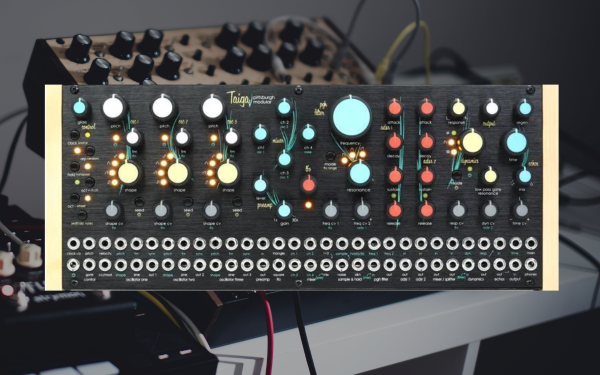
The Taiga by Pittsburgh Modular is an exceptional semi-modular device that combines classic analog design with innovative features. Developed by the creative minds in Pennsylvania, the Taiga represents a new direction in synthesizer design, showcasing the brand’s ingenuity and vision. This compact and powerful synth strikes a perfect balance between sound quality, size, and affordability, catering to both novice and experienced music producers alike.
The Taiga’s emphasis on flexibility and power sets it apart from other products in its class. It boasts three Voltage Controlled Oscillators (VCOs), two envelope generators, an impressive multi-mode filter, and Pittsburgh’s distinctive dynamics controller, making it a highly versatile and expandable instrument. Unlike other semi-modular devices, the Taiga seamlessly combines the functionality of 15 separate modules into one shared front panel, enabling you to unleash your creativity and explore limitless possibilities.
At the core of the Taiga’s sound are its three VCOs, which generate eight unique wave shapes by combining sine, triangle, sawtooth, and pulse waves. The oscillators offer a diverse range of sounds, allowing you to create unique timbres even before engaging with sync, FM, and wave shape modulation. Coupled with the exceptional PGH multi-mode filter and the Buchla-inspired Dynamics module, the Taiga provides ample opportunities for you to experiment with unconventional sounds and create powerful bass, organic melodies, and percussive beats.
The Taiga’s X-Factors Are:
- Versatile Oscillators: The three identical VCOs offer an extensive range of sound options, capable of creating diverse timbres.
- PGH Multi-mode Filter: The well-known ‘gummy’ and ‘relaxed’ filter interacts beautifully with the Taiga’s oscillators, allowing a broad range of effects.
- Dynamics Module: Inspired by the designs of Don Buchla, this module can emulate various sounds, from plucky, twangy noises to more conventional envelope-controlled VCA sounds.
Learn More About This Synth While Supporting Our Team Of Writers Through Our Partnership With Sweetwater Here
Moog Grandmother
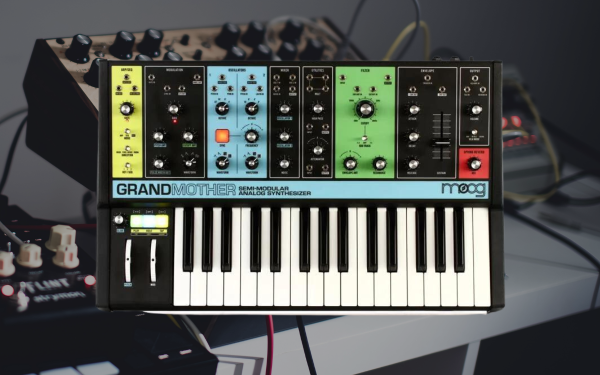
Although the Moog Grandmother may appear playful with its vibrant aesthetics and name, it is a formidable piece of music technology deeply rooted in Moog’s rich history. This semi-modular synth combines vintage technology from the 1960s and 70s with modern elements, enclosed in a sturdy case reminiscent of the Realistic MG-1. The Grandmother boasts dual oscillators inspired by the Minimoog Voyager, offering four waveforms: triangle, sawtooth, square, and pulse. Its patch cables greatly expand its capabilities, allowing you to create unique audio and control signal paths, making it an engaging partner for a Eurorack module setup.
The Grandmother’s signal path is enhanced by the vintage Moog CP3-inspired mixer, which can handle audio signals, control voltages, or a blend of the two. The characteristic distortion that occurs above mid-level input settings is not a flaw, but a desirable feature that adds richness to the fundamental frequency or creates a soft high-end fizz. The 24dB/oct ladder filter further sculpts the signal, providing a unique sound that differs notably from the Minimoog filter. This semi-modular synth also includes a VCA and a six-inch spring reverb for a touch of vintage ambience. Furthermore, the Grandmother’s modulation section has an oscillator with an impressive frequency range, presenting exciting FM and AM possibilities.
The Grandmother’s ADSR contour generator adds another dimension to your sound shaping, based on the Moog 911 module. The performance controller panel gives further control, providing pitch-bend and modulation wheels, along with the option for six types of portamento, shifting keyboard functions and controlling the built-in arpeggiator and sequencer. Despite its compact form, the Grandmother delivers a massive range of tones, especially when experimented with patch cables, unlocking a vast palette of sounds reminiscent of Moog’s modular synths. When connected with MIDI devices or other modules, the Grandmother truly shines, showing its full potential not just as a beginner synth, but as a versatile centerpiece in a modular setup.
The Grandmother’s X-Factors Are:
- The Dual Oscillators: Derived from the Minimoog Voyager that offers a diverse range of four waveforms, enabling the creation of a myriad of unique sounds and effects.
- The Vintage-Inspired Mixer and Ladder Filter: This allows the sculpting of sound signals in distinctive ways that recall the texture and tonality of classic synths.
- The Modulation: The wide-ranging modulation section offers exciting FM and AM possibilities, further enhanced by the extensive patching capabilities that allow the Grandmother to adapt and interact seamlessly with other devices in a modular setup.
Learn More About This Synth While Supporting Our Team Of Writers Through Our Partnership With Sweetwater Here
FAQs
What is a semi-modular synthesizer?
A semi-modular synth combines the best of traditional synthesizers and modular synthesizers by offering pre-wired connections alongside flexible patch points. With a set of components similar to a conventional synthesizer, a semi-modular synth allows for greater versatility by enabling you to adjust or create new connections, resulting in unique sounds. This adaptability means that you can modify or work around parts of the synth that do not suit your preferences.
In contrast, modular synthesizers present each component as an individual module that you can assemble into a personalized instrument. This approach allows for extensive customization, such as pairing ’70s style filters with modern digital oscillators. Using voltage to communicate between modules via patch cables, modular synths have the ability to create and manipulate sounds that are difficult to reproduce with a conventional synthesizer. With a vast array of modules available from numerous manufacturers, the range of possibilities for sound creation and manipulation is nearly limitless.
Are semi-modular synths good for beginners?
Semi-modular synthesizers present a relatively friendly entry point for beginners venturing into the expansive world of modular synthesis. The inherent complexity and the extensive combination of modules, such as VCAs, multi, attenuators, and oscillators, in modular synthesis, can be daunting for newcomers. However, semi-modular synths offer a well-balanced solution, avoiding some of the costly trial-and-error aspects typically associated with building your first modular synth.
The charm of semi-modular synthesizers lies in their self-contained nature and their normalized signal path, allowing them to produce sounds without the need for any patch cables. Despite this, they still provide a realm of possibilities for more adventurous exploration with the use of patch cables, and the capacity to reconnect components and even interface with other modular or semi-modular synths. They offer beginners a comprehensive platform to start creating immediately while still leaving room for expansion and exploration, making them an ideal choice for those starting their modular journey.
How can I expand the capabilities of my semi-modular synth?
There are various ways to enhance the capabilities of a semi-modular synthesizer. One approach is to connect expression inputs of synths and guitar pedals using a floating ring cable for voltage-based modulations. Another way is to modify the fixed synth envelope slopes by adding external envelopes, which can significantly alter the VCA attack slope of a sound.
Additionally, MIDI to CV can be utilized for sound layering and external control, which can introduce new synthesis methods to your sound design. Lastly, modular sequencing can overcome the limitations of typical semi-modular synth sequencers by incorporating unique sequencers such as Euclidian and Turing machine-style sequencers.
Check Out More Guitar Pedals Here
What factors should I consider when buying a semi-modular synth?
Before buying a semi-modular synth, there are a few essential considerations to keep in mind. Modular synths allow for customization, letting you decide everything about the structure. You choose the modules – filters, oscillators, mixers, ring modulators, envelopes – according to your taste. This freedom is distinct from non-modular systems, which have preset flows from the sound source to tone control to dynamics/articulation. Modular synths let you configure your desired system, module by module, potentially leading to a never-ending journey of adding and altering modules. The world of modular synthesis is limited only by your imagination and budget.
Choosing the right modular synth also involves sifting through a myriad of manufacturers that range from those providing a broad range of modules. Moreover, one must navigate the terrain of module sizes, patch-lead types, power supply formats, and compatibility issues. The most popular formats include Eurorack, Moog/MOTM/Synthesizers.com, and Frac rack. While it’s possible to mix and match modules from different manufacturers, it’s advisable for beginners to stick with one format to avoid complications. Personal preference also plays a role: considerations such as whether you’re comfortable with the size and layout of a particular system and if it fits within your designated space are crucial.

Will Vance is a professional music producer who has been involved in the industry for the better part of a decade and has been the managing editor at Magnetic Magazine since mid-2022. In that time period, he has published thousands of articles on music production, industry think pieces and educational articles about the music industry. Over the last decade as a professional music producer, Will Vance has also ran multiple successful and highly respected record labels in the industry, including Where The Heart Is Records as well as having launched a new label with a focus on community through Magnetic Magazine. When not running these labels or producing his own music, Vance is likely writing for other top industry sites like Waves or the Hyperbits Masterclass or working on his upcoming book on mindfulness in music production. On the rare chance he's not thinking about music production, he's probably running a game of Dungeons and Dragons with his friends which he has been the dungeon master for for many years.