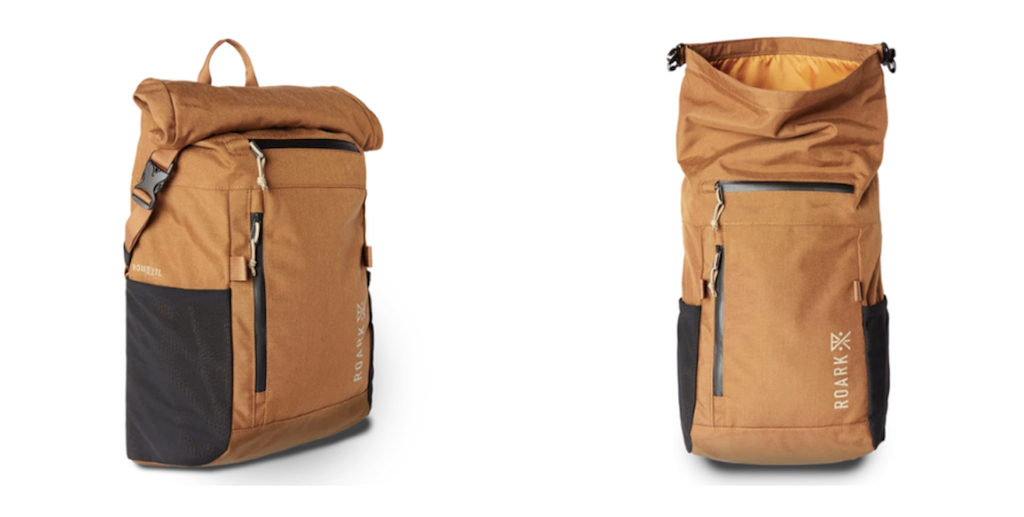
Ultralight backpacking has become a dominant part of outdoor equipment design, and I understand why hikers count ounces across long distances. That calculation changes when a buckle snaps, a strap pulls loose, or thin fabric catches on a branch away from a maintained trail.
The RADL Pack 01 takes a different position, and I appreciate that it does so without apology.
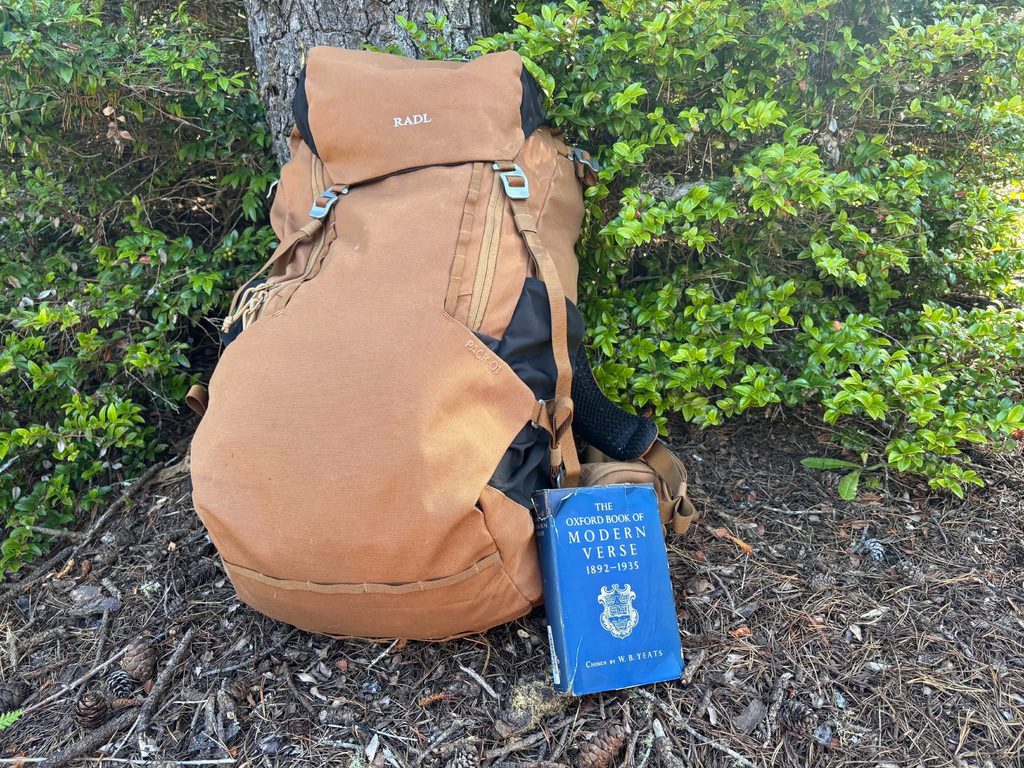
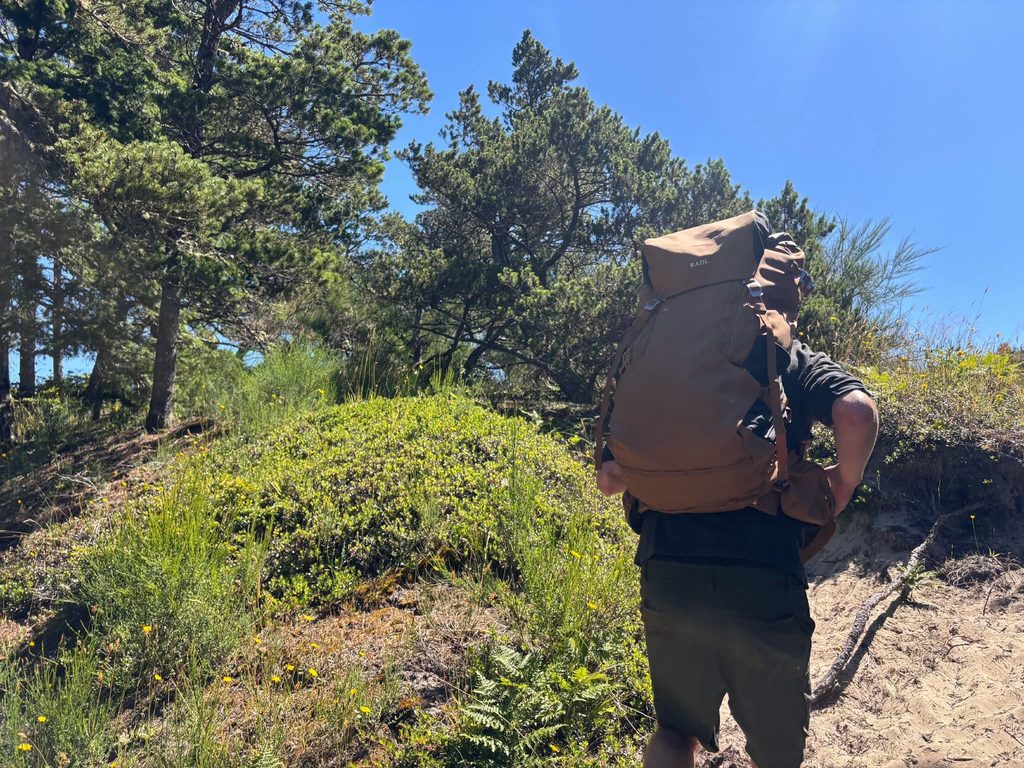
This 65-liter backpack weighs 5 pounds 3 ounces before any equipment goes inside, so no one will mistake it for an ultralight option. RADL has used dense 900D fabric, a hollow aluminum frame, substantial padding, aluminum attachment hardware, and oversized YKK reverse-coil zippers. Those decisions produce a pack that feels intended for repeated contact with brush, rocks, dirt, and the back of a vehicle, and I am willing to carry additional weight when the materials reduce my concern about snagging or tearing during off-trail exploration.
Materials, Construction, and Specifications
The Pack 01 costs $369 and measures 35 inches high, 19 inches wide, and 9 inches front-to-back, with an adjustable torso length ranging from 18 to 23 inches. Its 65-liter capacity places it firmly in multi-day territory, while nine pockets spread storage across the lid, hip belt, sides, and interior.
The main compartment can be reached from the top or from a large U-shaped zipper on the front, and the removable lid can also be adjusted to hold a bear canister outside the main body. Overall, it checks a lot of boxes for what you’d need a pack like this to do. Does it reinvent the wheel? Nah, but it’s not really trying to.
The 900D fabric feels appropriate for a backpack that is expected to scrape against rough surfaces, and the waxed olive-green finish has an appearance that I would be comfortable using regularly. Appearance is relevant when choosing outdoor equipment, particularly when the item may remain in use for years, and RADL has given this pack a considered identity without covering it in decorative additions.
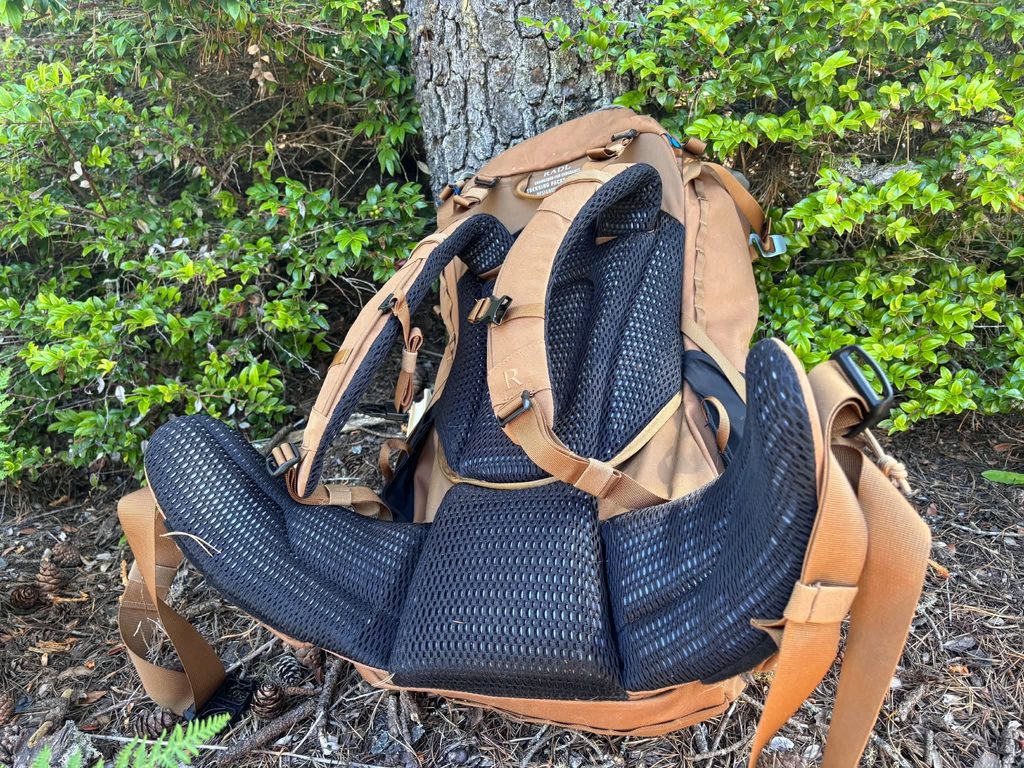
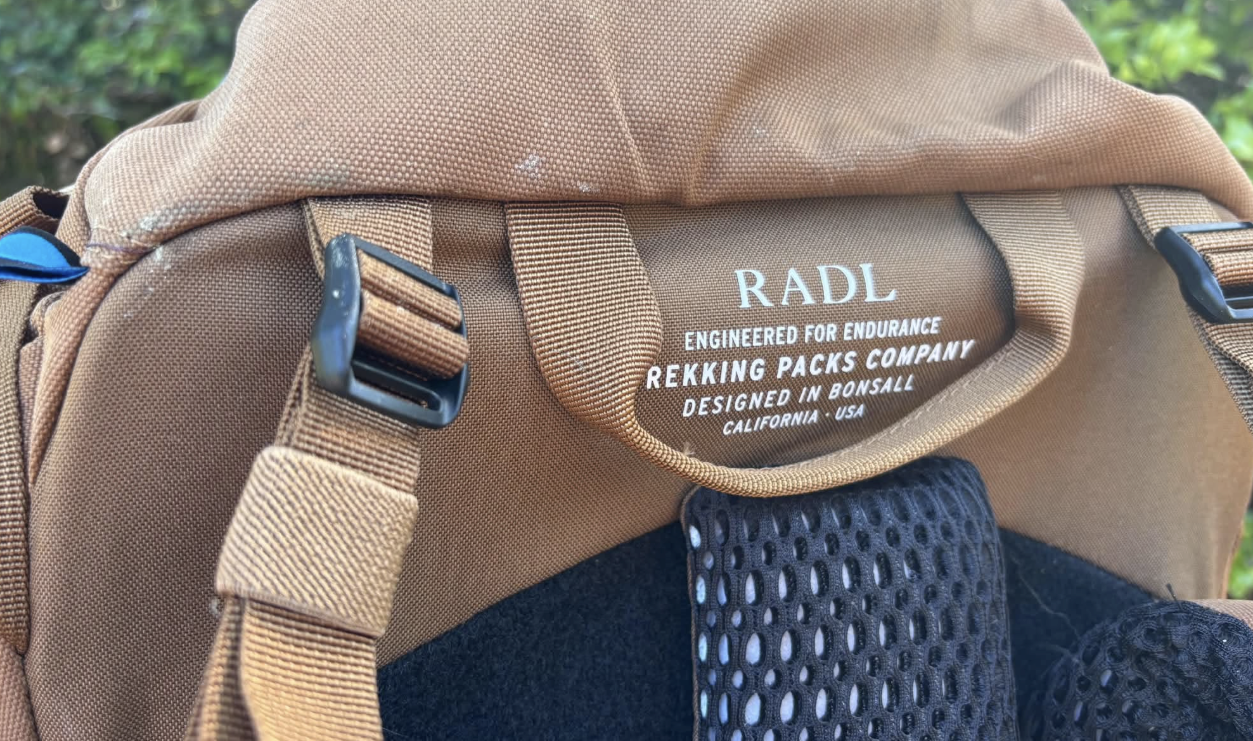
The old-style typography gives the Pack 01 a considered identity without adding unnecessary decorative flourishes. RADL’s name references Dylan Thomas’s “Rage Against the Dying of the Light,” which fits the company’s focus on demanding outdoor use.
I trust those aluminum hooks and fasteners because I have dealt with broken plastic buckles and strap hardware on other backpacks. Plastic hardware can reduce cost and mass, yet a failure far from camp is difficult to ignore. Metal attachments add ounces, although I accept the penalty without much hesitation.
Comfort Under a Full Load
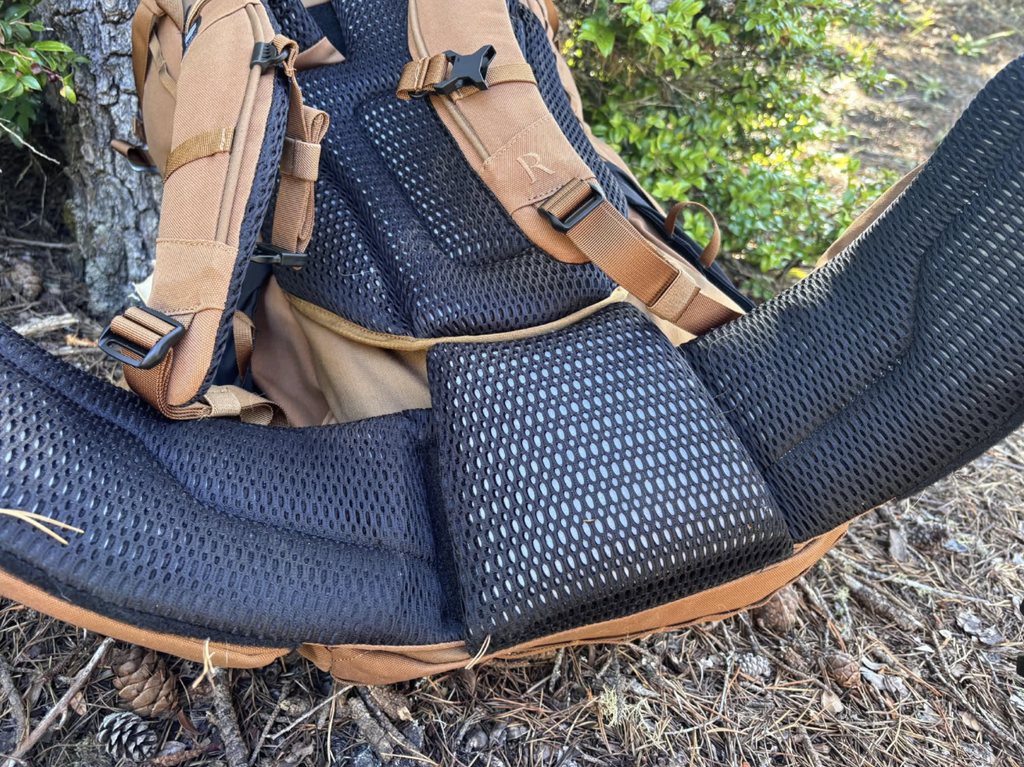
A heavier backpack still needs to justify itself once it has been packed, and the Pack 01 attempts to do that with its tubular 5 mm aluminum frame and CCubed breathable foam. The carrying system includes a padded back panel, thick shoulder straps, an adjustable hip belt, and a chest strap, while upper and lower Z-pattern compression helps pull the load toward the body.
The thick shoulder padding is one of the features I appreciate most, especially in a pack designed to carry a full 65 liters. Minimal shoulder straps become less appealing once food, water, shelter, clothing, and camera equipment are added. Here, RADL provides a broad, padded surface across the shoulders, and the aluminum frame is designed to keep much of that pressure centered on the hips.
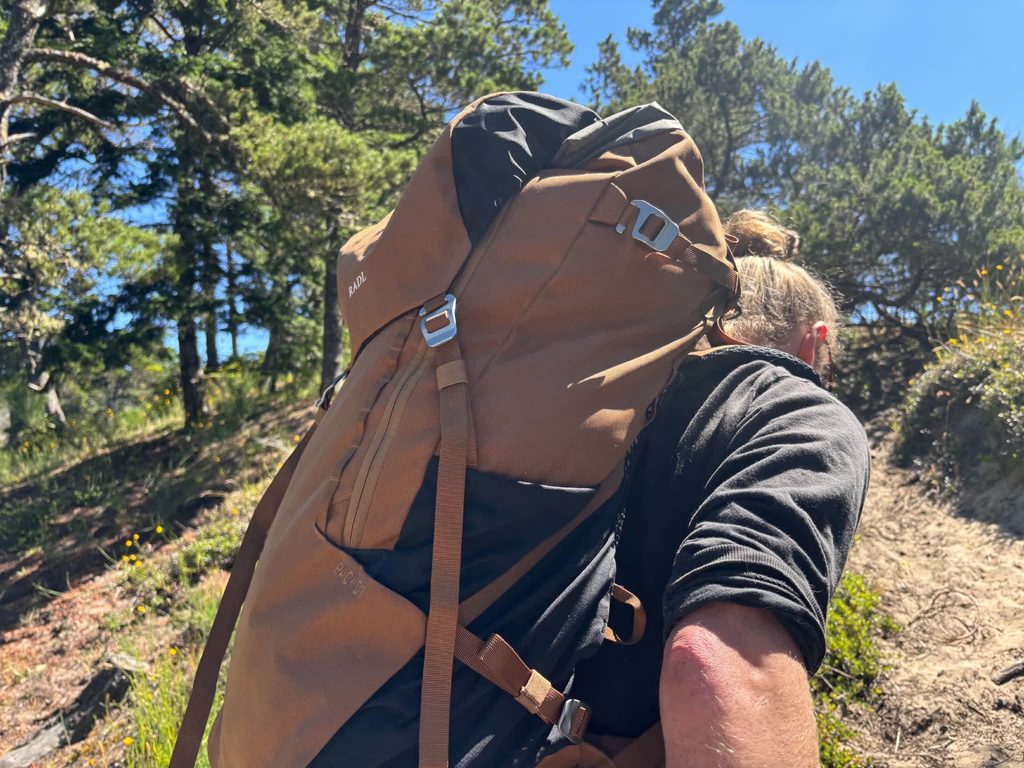
The adjustment system meets my expectations pretty easily without adding suspension features that require repeated attention. The adjustable back length provides a 5-inch range of fit, while the 59-inch hip belt and 36-inch shoulder straps leave room for clothing layers. Once fitted, the aim is to keep the pack close and distribute the load without concentrated pressure points.
The empty weight deserves a part of this chat too, since a 5-pound-3-ounce pack consumes a meaningful portion of a lightweight equipment target before the first bottle of water goes inside. A hiker carrying compact equipment for one night may gain little from this system, while someone carrying winter layers, photography equipment, or a large food supply may place greater importance on padding and load transfer.
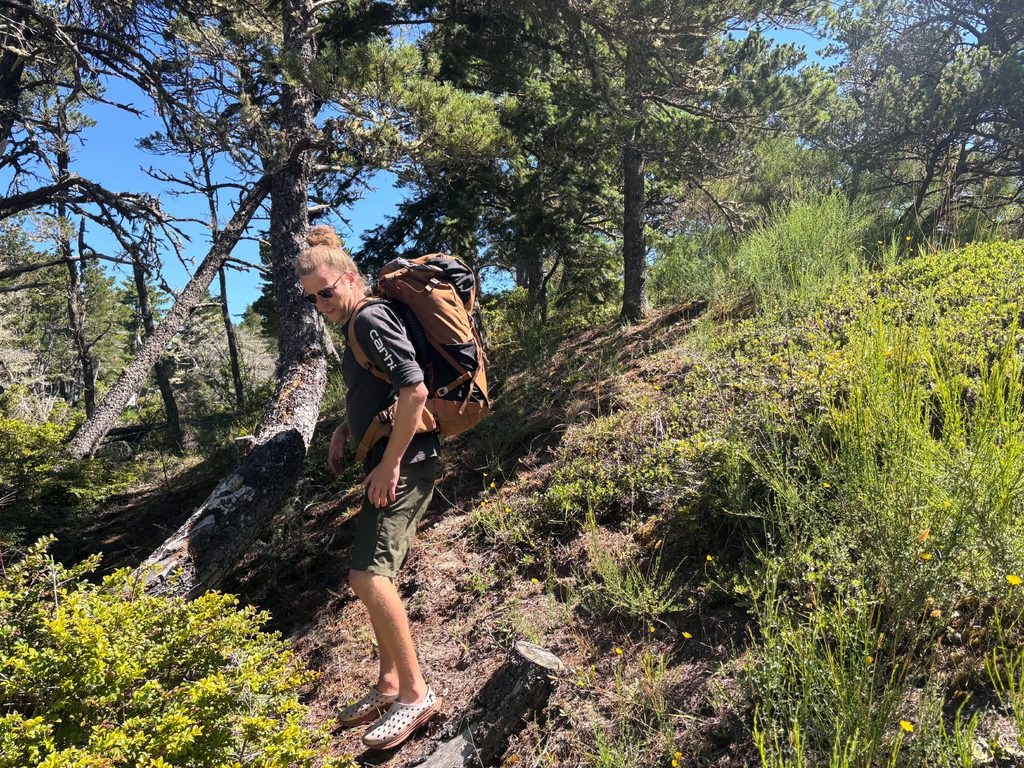
I would not recommend the Pack 01 to someone primarily focused on minimizing weight, because its materials and suspension run directly counter to that goal but again, I don’t think that’s really a factor for those looking at this pack (lightweight maxxers probably know the space well enough to be looking in completley different corners of the internet for their packs). I would recommend it to hikers who carry heavier loads, especially when the route includes brush or surfaces that could damage thinner fabric.
Packing, Storage, and Equipment Access
The U-shaped front panel is one of the Pack 01 features I appreciate most at camp. Top-loading backpacks can become frustrating when the required item has settled near the bottom, since retrieving one layer or cooking item can mean removing most of the contents. The front zipper opens a wide section of the main compartment, so equipment near the base can be reached without turning the campsite into a complete unpacking area.
That access works well with the nine-pocket layout because storage is distributed across the lid, main compartment, sides, and two low-profile hip-belt pockets. I like having designated locations for keys, snacks, water treatment, headlamps, and small accessories that become difficult to locate inside one large compartment.
The side pockets are best treated as storage for water bottles or similarly large items. Top and side access helps while the pack is being worn, yet the secondary openings introduce a clear limitation. I would hesitate to place keys or loose snacks in those pockets because movement or setting the pack down at an angle could allow them to fall out. A zipper or added closure would make those areas easier to trust with smaller items.
RADL has included front, side, and bottom attachment options using daisy chains, removable straps, compression straps, and G-hooks. These points give larger equipment a place outside the main compartment. The detachable floating lid also creates an external position for a bear canister, and the concept appears credible for a longer cylindrical container.
I would still assess that setup under a complete trip load before depending on it. A canister mounted high on a backpack can change balance, and the effect will depend on the container’s dimensions, its contents, and the placement of heavier equipment inside the main compartment. The feature has merit, although its success depends on careful packing rather than attachment capacity alone.
The hydration compartment and dual-hose exits are less of a concern for me. A dedicated bladder position is essential on longer hikes, and routing options on either side let the wearer choose a comfortable hose position. In addition to side-pocket bottle access, this accommodates multiple hydration preferences without complicating the main compartment.
Trail Performance and Main Limitations
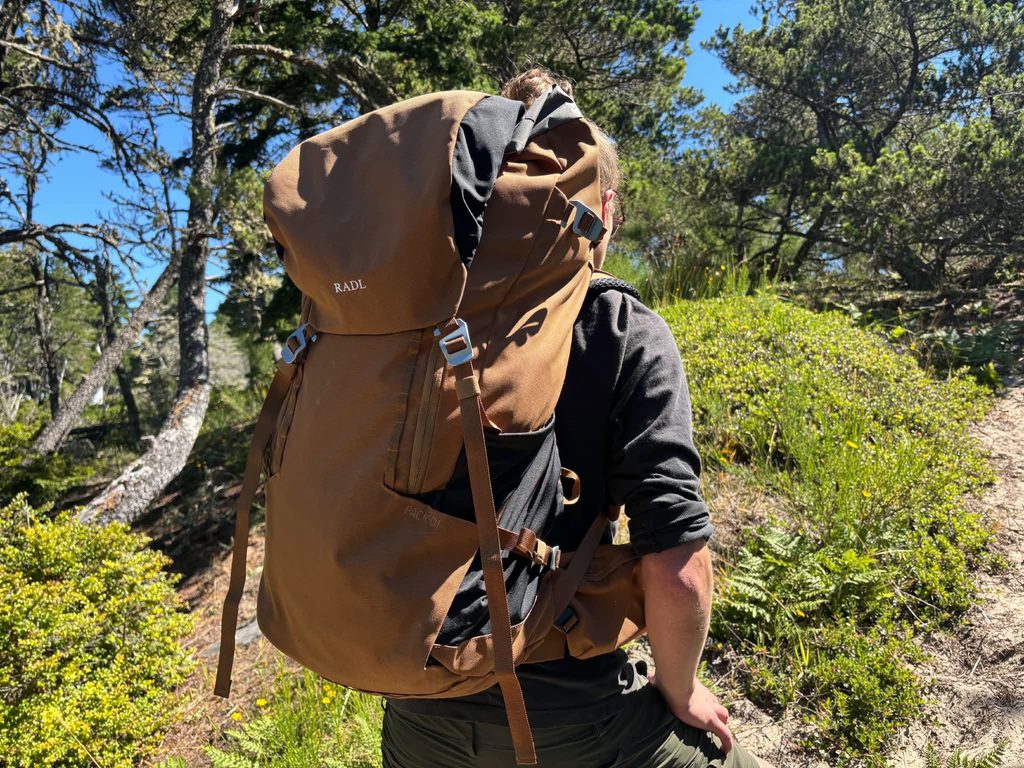
Upper and lower compression straps should control the contents when the full 65 liters are not being used, which is important on uneven terrain where a partially loaded tall pack can shift. Its 35-inch height also deserves consideration around low branches, particularly for hikers near the lower end of the torso range.
Durability remains the reason to accept those dimensions.
I would feel comfortable taking the Pack 01 into brush, placing it on rough ground, or loading it into a vehicle without treating the exterior as delicate equipment. Its materials and hardware address failure points that have affected packs I have owned in the past.
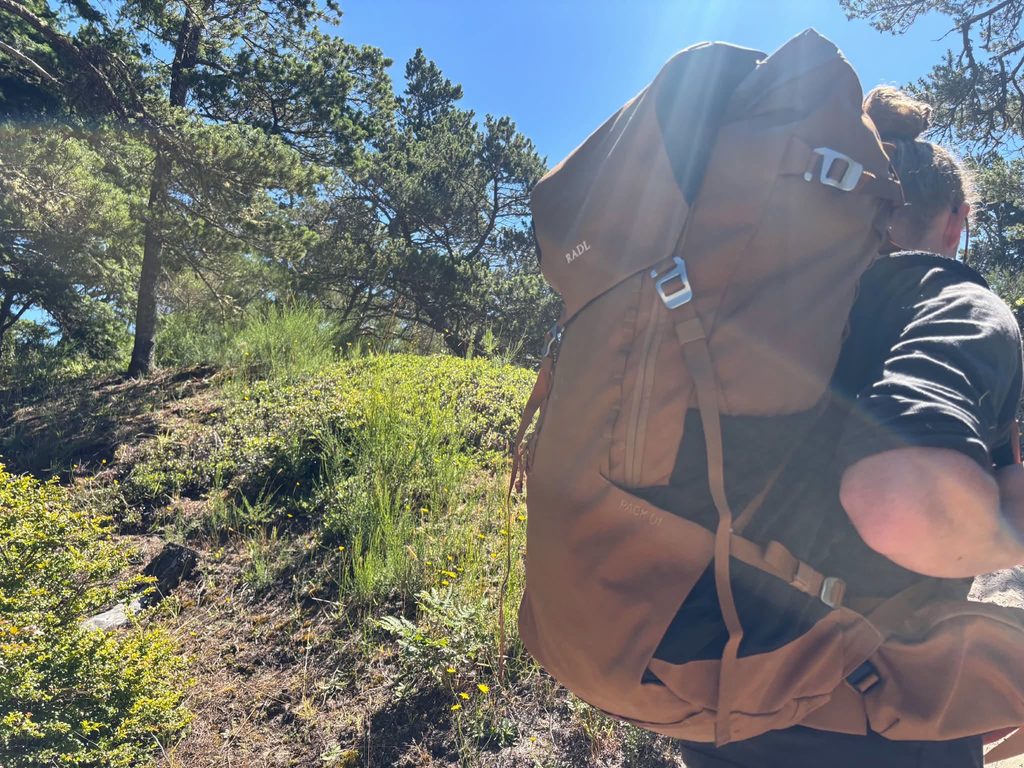
The limitations are still there, though, but I don’t think they’re really deal breakers as long as you know what you’re getting into. It is heavy when empty; its exterior pockets are better suited to larger items; the hip-belt pockets do not offer adjustable positioning; and there is no separate bottom opening. The front panel reduces the effect of that final omission, since it already provides access to the lower main compartment, although some of you hikers may still prefer a divided sleeping-bag area.
The Pack 01 has chosen abrasion resistance, hardware confidence, and generous padding, which come with added mass and bulk but if those priorities need to align with how you hike, because this pack does not serve the person seeking the smallest possible number on a scale.
Is the RADL Pack 01 Worth $369?
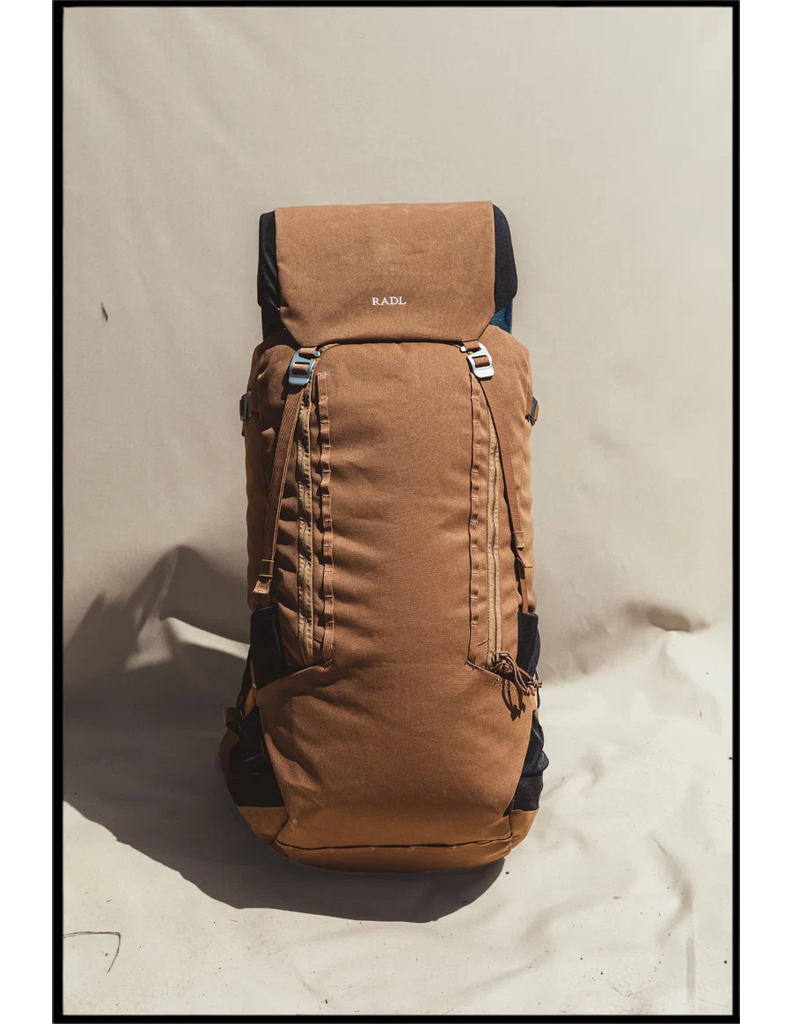
For the intended owner, I think the $369 price is pretty reasonable. The Pack 01 combines a 65-liter capacity with dense exterior fabric, an adjustable aluminum carrying system, substantial shoulder padding, metal attachment hardware, front access, nine pockets, hydration compatibility, and external bear-canister storage. Its price is easier to accept if the plan is to keep using the same backpack for years and expose it to conditions that can wear down lighter materials.
I would recommend it to hikers who travel across brushy terrain, carry heavier equipment, or want a backpack that can tolerate rough handling. Front access and organized storage also help at camp when frequently needed items must remain accessible.
I would steer weight-focused hikers elsewhere, since the Pack 01 begins at 5 pounds 3 ounces and makes no attempt to conceal that compromise. For me, that number does not cancel out the appeal, because I am willing to carry additional weight when it buys thicker padding, metal fasteners, and a fabric that feels suited to off-trail use. The result is a backpack with a clear purpose, a considered visual identity, and a design I would be comfortable using on a regular basis.

Will Vance is a professional music producer who has been involved in the industry for the better part of a decade and has been the managing editor at Magnetic Magazine since mid-2022. In that time period, he has published thousands of articles on music production, industry think pieces and educational articles about the music industry. Over the last decade as a professional music producer, Will Vance has also ran multiple successful and highly respected record labels in the industry, including Where The Heart Is Records as well as having launched a new label with a focus on community through Magnetic Magazine. When not running these labels or producing his own music, Vance is likely writing for other top industry sites like Waves or the Hyperbits Masterclass or working on his upcoming book on mindfulness in music production. On the rare chance he's not thinking about music production, he's probably running a game of Dungeons and Dragons with his friends which he has been the dungeon master for for many years.