SYEYL’s (@syeylmusic) “desire” sits in a corner of electronic music where repetition works best when it never repeats in quite the same way. Released August 20 ahead of the Music Is The Answer EP on September 25, the track draws from the electronica and post-dubstep that shaped SYEYL’s taste, but much of its character comes from deliberately giving up some control over exactly what happens next.
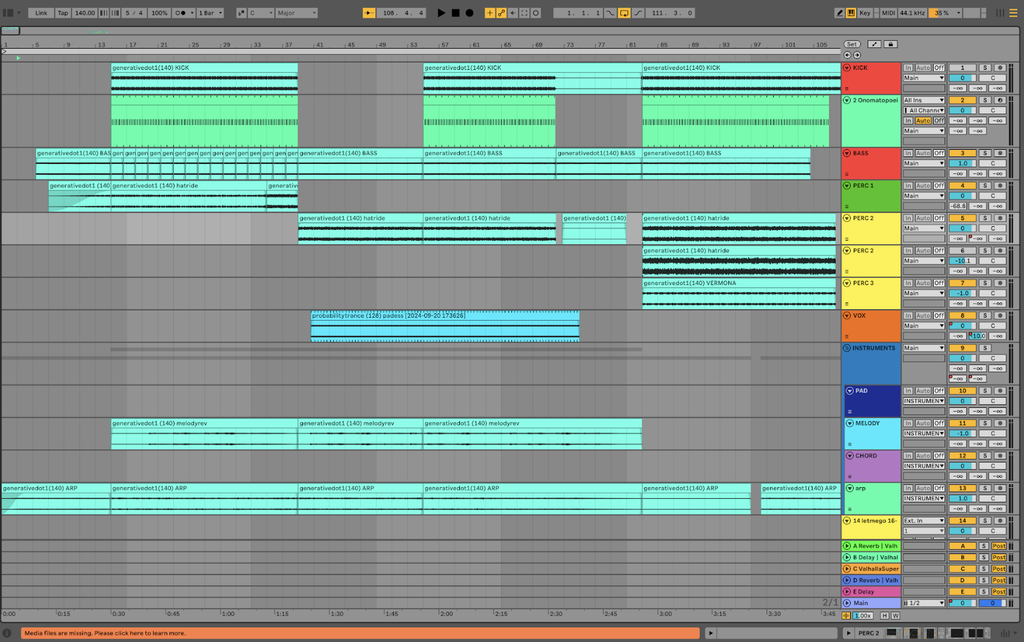
The central arp is built from Arturia Pigments running into a double Euclidean Max for Live sequencer, while the hi-hats use randomized modulation to make individual hits change continually. Even the processing follows that idea, with Valhalla SpaceModulator bringing an artificial quality to the sampled saxophone and generative synth material rather than smoothing everything into something predictable.
That balance between intention and randomness runs across the production.
SYEYL sets the conditions, chooses the source sounds and decides what belongs, then gives the machines enough room to produce details that would be difficult to draw by hand. Below, he explains how “desire” came together.
Pigments // Analog Lab (Generative Arp)
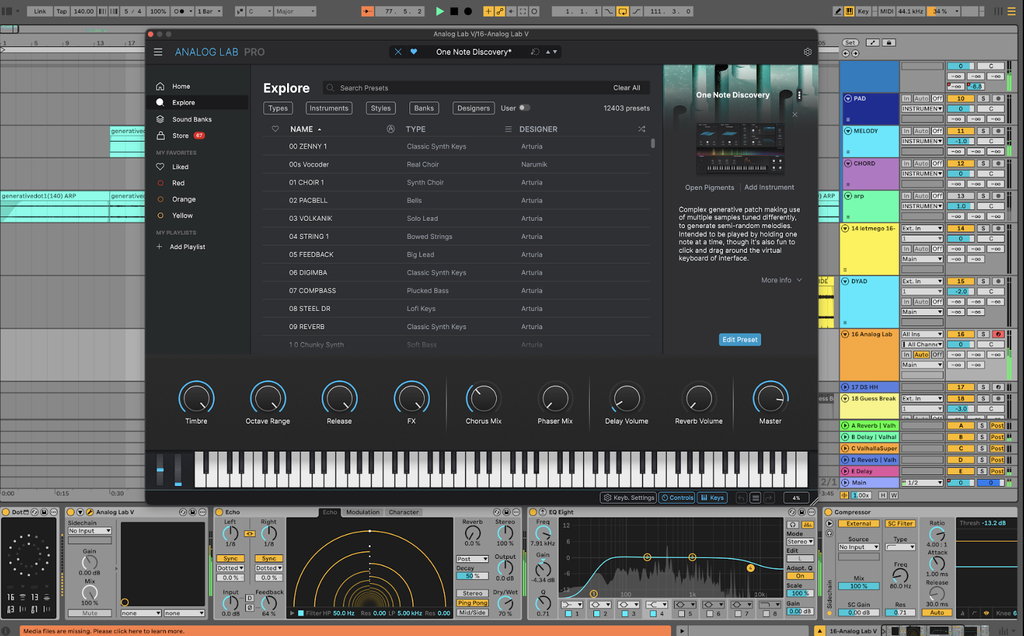
Pigments is available on Plugin Boutique, as is Analog Lab Pro, which includes sounds from Arturia’s instruments and Pigments. Pigments 7 on Plugin Boutique Analog Lab Pro on Plugin Boutique
For the main element of the track, which is a generative arp, I used Arturia Analog Lab, particularly Pigments. I used a preset called ‘One Note Discovery’ and ran it through a geometric, double-Euclidean sequencer called ‘DOT’ by Fors, a developer who makes some really interesting Max for Live devices.
This chain helped me achieve the random, generative synth pattern that forms the backbone of ‘Desire’.
This Max for Live device can be used by producers for various things, such as creating creative basslines, arps and ever-evolving melodies. The key is to trust your ears and intuition, which can really help create interesting sequences. So let’s hear in his own words how he made the track…
DS HH (Modular Drum Rack Stock Chain)
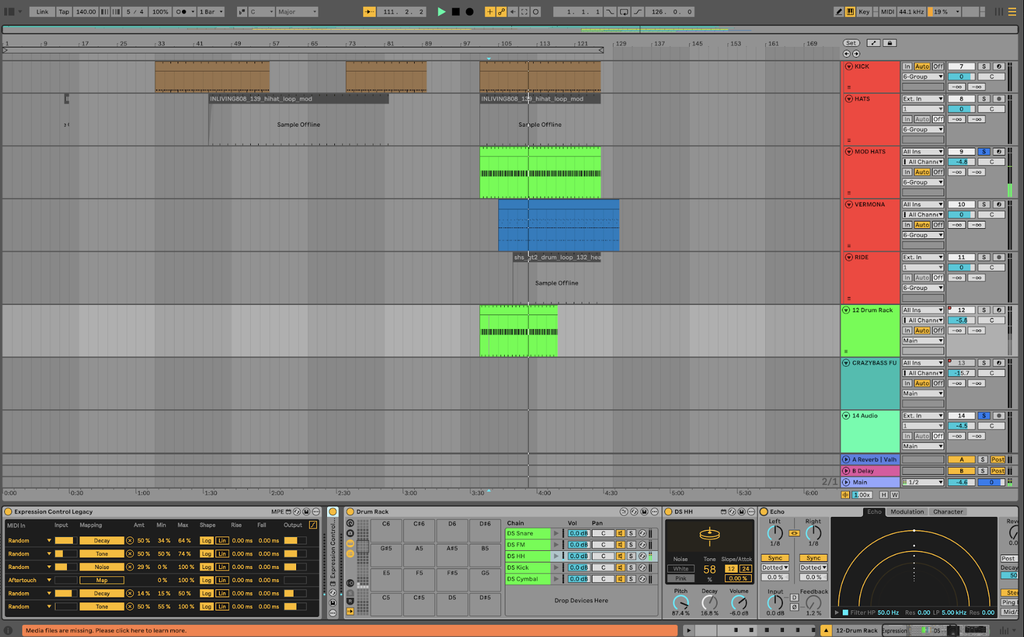
For the percussion in this track, I created a drum rack using stock devices to build an ever-evolving hi-hat pattern, relying on digital randomisation.
I built it around ‘DS HH’, a Max for Live device that combines noise and sine waveforms to create everything from short, sharp closed hats to long, sizzling open hats. It also features a toggle between white noise and pink noise for different tonal characteristics.

I mapped various parameters such as tone, decay, noise, delay time and feedback to an ‘Expression Control’, which randomly modulates these values. This means every hit has a unique character, keeping the pattern constantly evolving and working really well alongside the generative arp and sampled saxophone.
Valhalla SpaceModulator

For the transitions in the track, I used a preset called ‘Nightclubbing’ in Valhalla SpaceModulator, which is a unique take on flanging. It uses barber pole flanging, an audio effect that creates the psychoacoustic illusion of a continuous frequency sweep moving endlessly up or down in pitch.
This helped add a sense of synthetic texture to the existing natural and evolving soundscape, with the saxophone and arp creating a fusion between something real and unreal.
Quick Fire Hot Takes On the Industry And Production

Hot Take #1
My music is influenced by the electronica and post-dubstep that emerged in the early 2000s. It’s still a pretty niche space, especially in India, where there is relatively little demand for this kind of electronic music.
But trends tend to move in waves, whether it’s music, fashion or art. Electronic music has gone through cycles, from techno and bass music in the late ’90s to electronica and trance, and eventually the shift towards commercial EDM. Techno and bass might be what’s “in” right now, but I’m ready for the next wave. 🙂
Hot Take #2
With the rise of AI and platforms like Splice, Cymatics and Tracklib, a lot of music today, especially in pop and rap, is being built around samples as a starting point, sometimes even using them almost as they are. I think electronic music can benefit from the same approach. Samples can introduce unexpected textures and ideas that an artist might never have created on their own, leading to something genuinely unique. Use every resource available to you, and chase the sound, not the ego.
Hot Take #3
Artists should focus on finding their own unique voice, which only comes through experimentation rather than relying on established formulas. With the rise of AI, it’s becoming increasingly easy to replicate formulas. But authenticity, rawness and randomness are still things that can’t truly be replicated, so that’s where artists should focus their energy.
Hot Take #4
No piece of gear or amount of music theory is going to make you a better musician or help you create more worthwhile tracks. Everything you need to make music is already in the box, so stop procrastinating and start doing the work with whatever you have.
Less is more. Focus on adding elements that actually make an audible difference, and if you can’t explain what a decision is adding to the final product, it’s probably the wrong decision. Every production choice should be made with intent.
Hot Take #5
Trends and hype are usually most visible once they’ve already passed, so trying to make music around a particular sound or genre is often a losing game. Artists should create what they genuinely want to create, and if it becomes popular, great; if it doesn’t, at least they stayed true to themselves. 🙂

Will Vance is a professional music producer who has been involved in the industry for the better part of a decade and has been the managing editor at Magnetic Magazine since mid-2022. In that time period, he has published thousands of articles on music production, industry think pieces and educational articles about the music industry. Over the last decade as a professional music producer, Will Vance has also ran multiple successful and highly respected record labels in the industry, including Where The Heart Is Records as well as having launched a new label with a focus on community through Magnetic Magazine. When not running these labels or producing his own music, Vance is likely writing for other top industry sites like Waves or the Hyperbits Masterclass or working on his upcoming book on mindfulness in music production. On the rare chance he's not thinking about music production, he's probably running a game of Dungeons and Dragons with his friends which he has been the dungeon master for for many years.