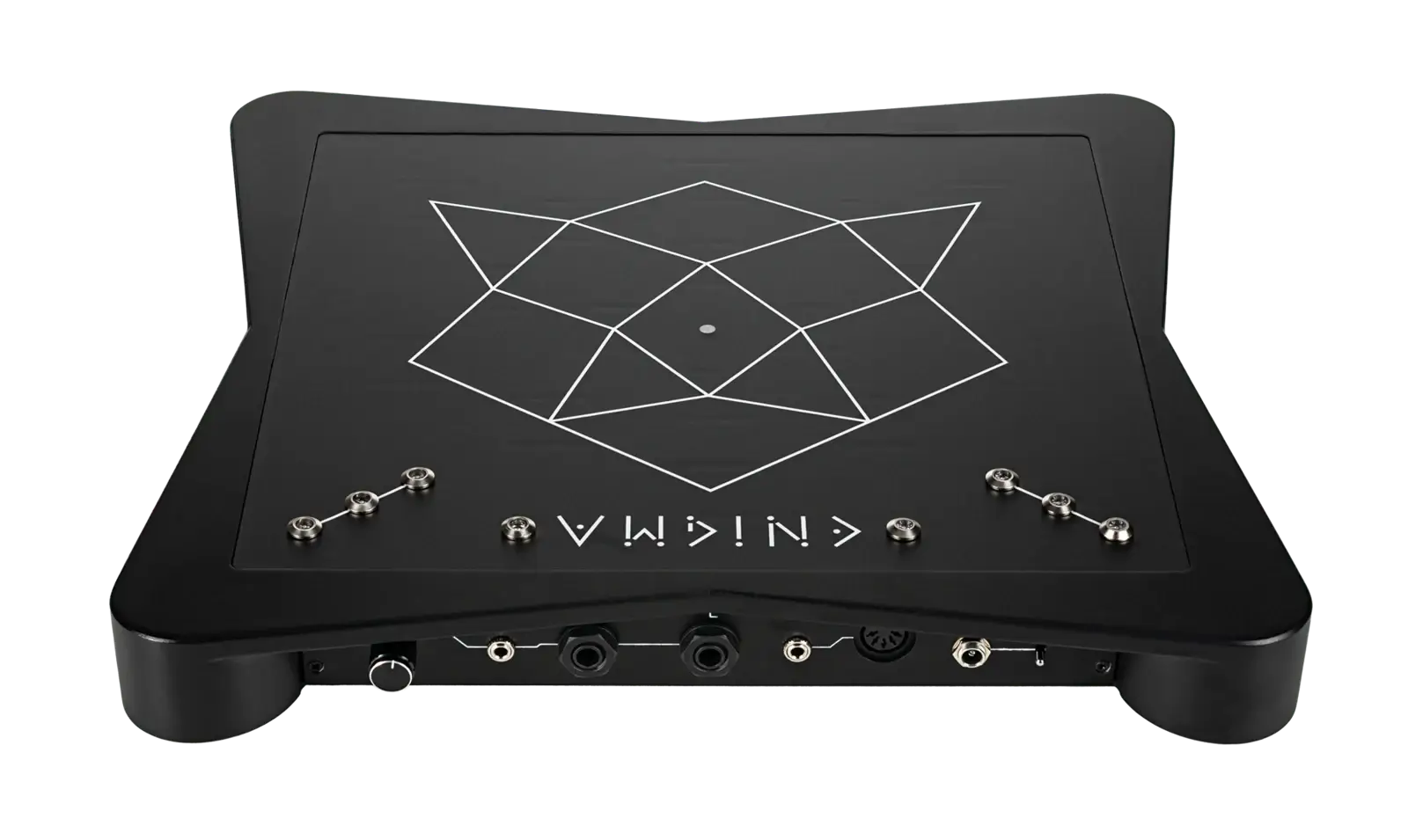
SOMA Laboratory has never been the company you look to for normal synth behavior, and ENIGMA keeps that streak going.
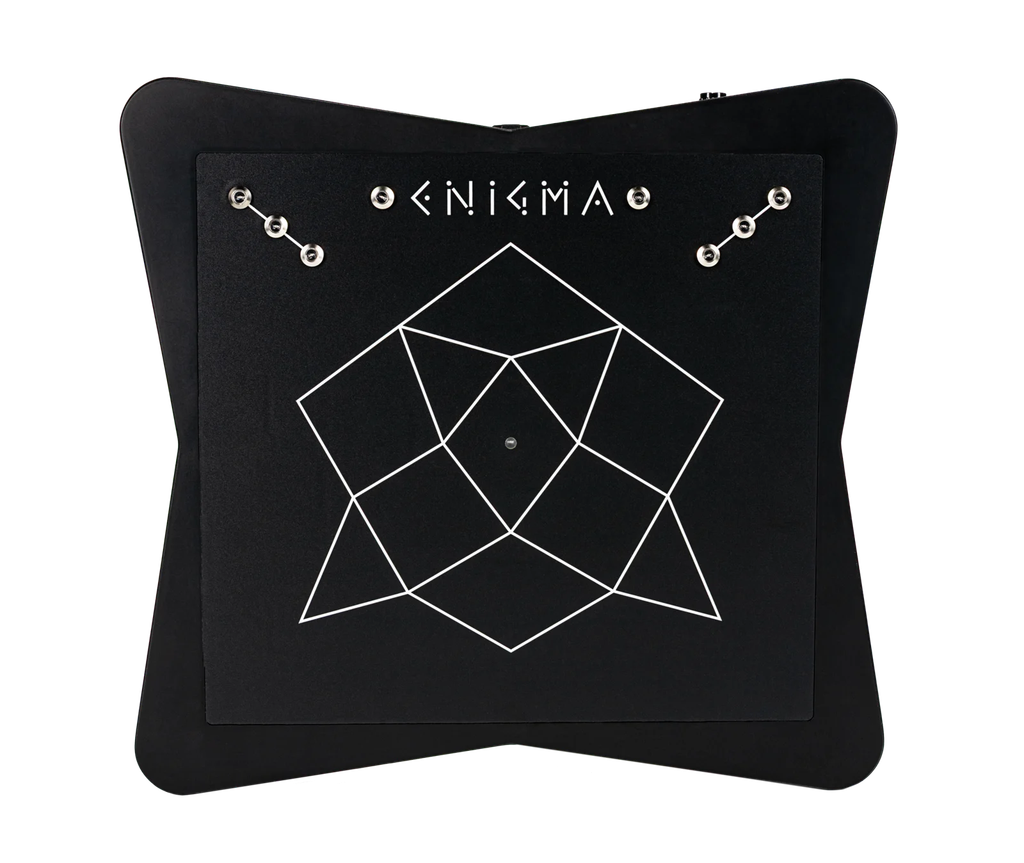
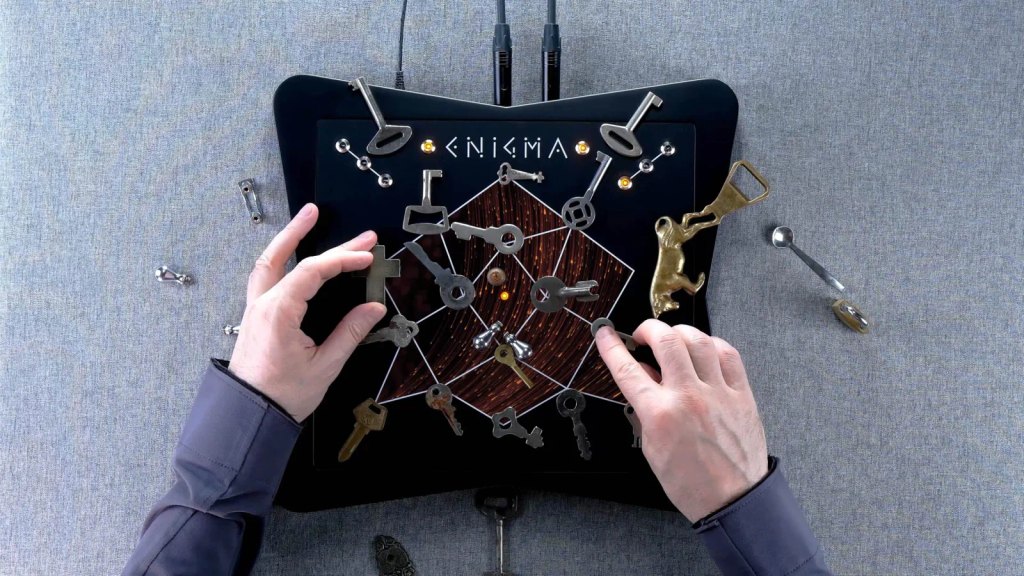
The new instrument is now shipping after its debut at SUPERBOOTH26, and the basic concept is immediately different from the usual keyboard, pad grid, modular panel, or touchscreen workflow. ENIGMA is controlled by metallic objects placed on or near its sensing field. Coins, screws, gears, tools, fragments, and other conductive bits become part of the performance.
That sounds strange because it is strange.
But it also fits SOMA’s larger idea of electronic instruments as living systems, where the player is not only selecting presets or turning parameters. The player is negotiating with the machine. ENIGMA pushes that relationship further by making position, material, movement, and tiny physical changes part of the sound.
The surface is highly sensitive.
Even a fraction of a millimeter shift can change the result.
That means the performance is not only about placing an object and getting a tone. It is about nudging, sliding, grouping, removing, and discovering what the instrument decides to reveal.
To learn more about ENIGMA, please visit https://somasynths.com/enigma/.
The Interface Is the Instrument
The most important thing about ENIGMA is that the control surface is not a side feature.
It is the instrument.
SOMA describes ENIGMA as a sensing field, essentially a scanner that detects metallic objects placed on the surface or within a short distance above it, up to 20 mm. The shape, size, type, and spatial arrangement of those objects affect the sound. Eight touch sensors let the player switch between different operating states, which SOMA frames as different perceptual modes of the same underlying field.
That last part is key because ENIGMA does not seem built around one clean, explainable signal path.
It is closer to an object-based performance environment. The player brings metal into the field, the instrument responds, and the relationship between gesture and sound becomes the thing being learned in real time.
That puts ENIGMA close to the kind of experimental-instrument thinking we covered in our piece on Eternal Research’s Demon Box, where the appeal was not only tone, but a different way of touching sound. SOMA is working in a different design language here, but the mindset is similar: the interface should change the kind of music the player thinks to make.
This Is Not a Preset Machine
ENIGMA is clearly built for people who want discovery to be part of the work.
There is no obvious “play it correctly” idea here. SOMA is leaning into the fact that two musicians might read the same instrument completely differently, depending on which objects they use, how they move them, and what patterns they start to hear in the field.
That is where ENIGMA gets interesting for sound designers, experimental performers, ambient artists, noise musicians, and producers who are bored of familiar modulation paths.
It is not trying to be fast in the usual production sense. It is trying to make the player listen harder.
There is a real studio angle there too.
A synth like this may not become the center of every track, but it can create the kind of raw material that does not come from a standard subtractive patch, wavetable sweep, or sample folder. For producers building hardware-heavy systems, that same search for a different source point is why our article on audio interfaces for hardware synth setups keeps coming back to signal flow before processing. The source decides a lot.
ENIGMA Is Shipping Now
SOMA Laboratory’s ENIGMA is now shipping.
It is not another synth trying to win on more oscillators, more presets, or a cleaner screen. It is a metal-object instrument built around contact, placement, movement, and the strange behavior that appears when the player stops treating synthesis like menu work.
That is the best case for ENIGMA.
It gives musicians a reason to bring physical chance back into electronic sound. The object becomes part of the patch. The gesture becomes part of the composition. The small accident becomes something you either chase or avoid.
For a company like SOMA, that feels right on brand. ENIGMA is not asking to be understood in five minutes. It is asking to be played until the logic starts to show itself.

Will Vance is a professional music producer who has been involved in the industry for the better part of a decade and has been the managing editor at Magnetic Magazine since mid-2022. In that time period, he has published thousands of articles on music production, industry think pieces and educational articles about the music industry. Over the last decade as a professional music producer, Will Vance has also ran multiple successful and highly respected record labels in the industry, including Where The Heart Is Records as well as having launched a new label with a focus on community through Magnetic Magazine. When not running these labels or producing his own music, Vance is likely writing for other top industry sites like Waves or the Hyperbits Masterclass or working on his upcoming book on mindfulness in music production. On the rare chance he's not thinking about music production, he's probably running a game of Dungeons and Dragons with his friends which he has been the dungeon master for for many years.