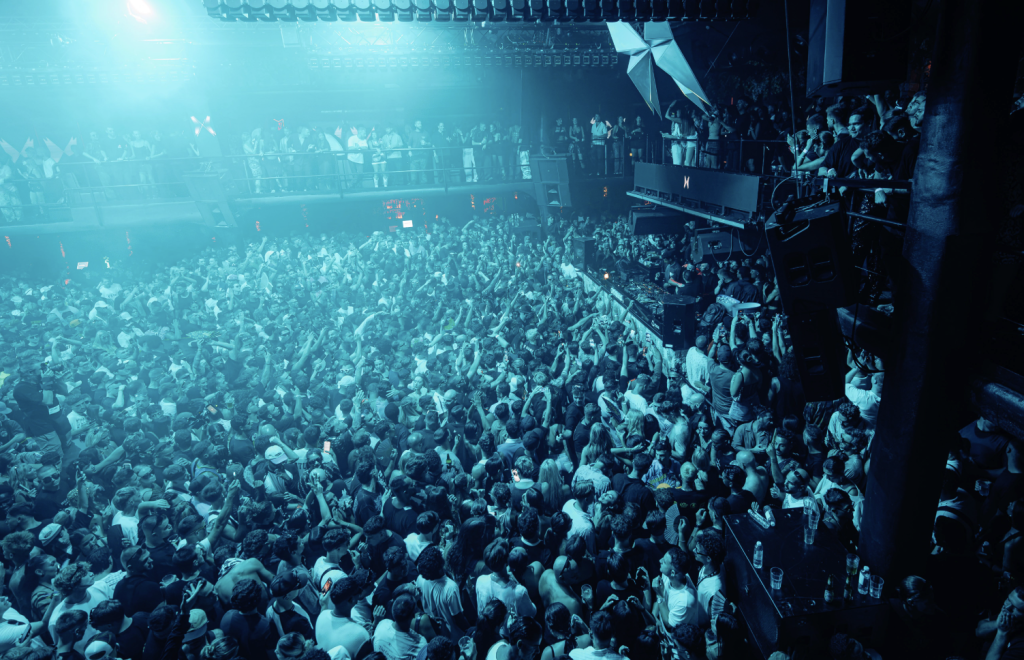
Colorado Modular Synth Society brought EMIXX West 2026 to Denver for a weekend of modular synths, electronic music hardware, DIY culture, and the sort of wonderfully obsessive gear conversations that make the synth community what it is.
Denver has never exactly suffered from a shortage of electronic musicians. Between the producers, DJs, modular obsessives, experimental artists, and hardcore modular users, there’s a thriving community here.
What Denver hasn’t always had is an event that brings all of those people together under one roof with the gear companies that make the gear that we all love.
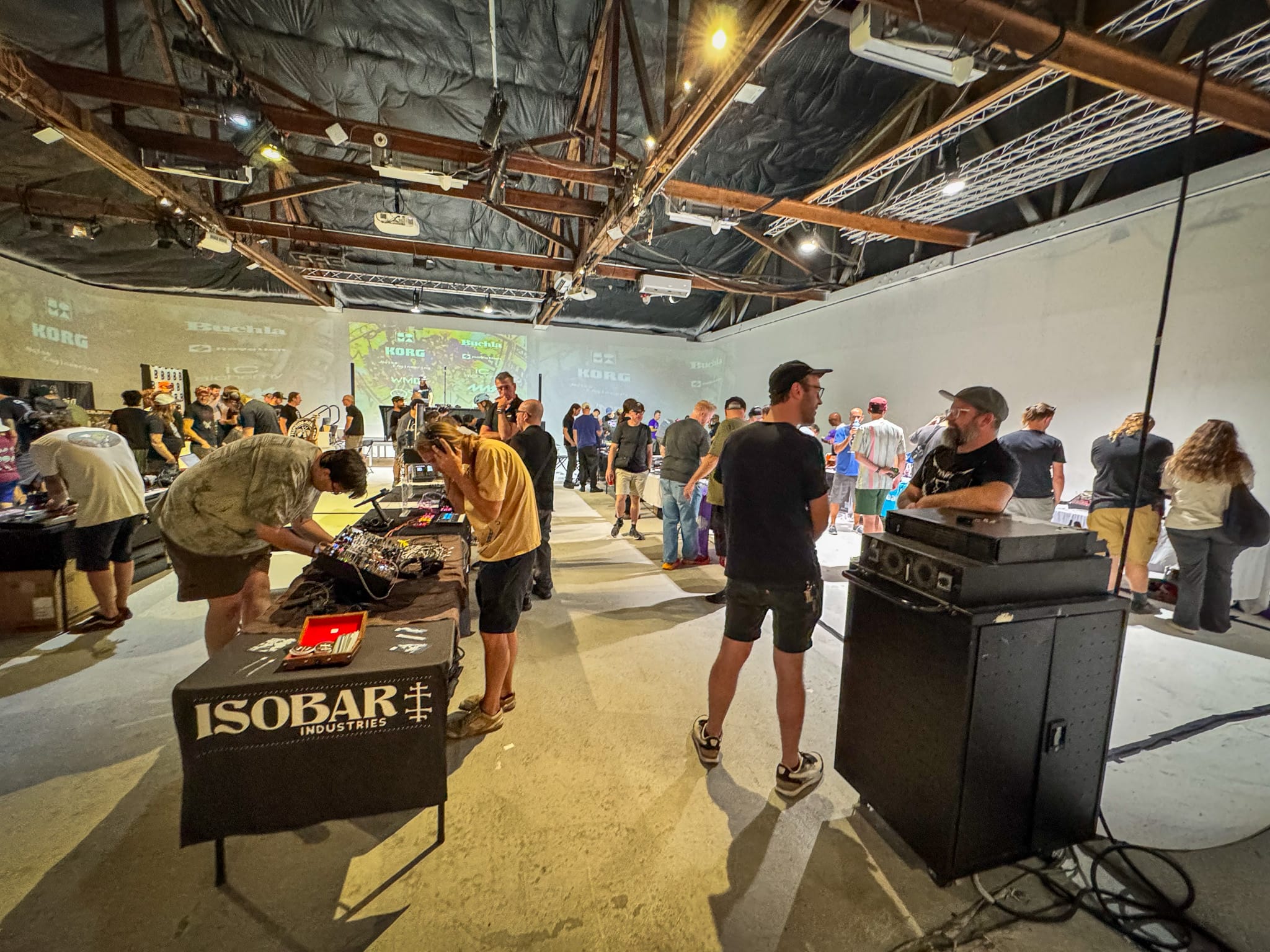
Presented by the Colorado Modular Synth Society, with Boredbrain Music helping bring the EMIXX concept west, the weekend ran August 28–30, with the main expo taking over Void Studios just off Broadway, just south of downtown, on Saturday. The format included gear exhibits, DIY sessions, workshops, gear swapping, and live performances.
I was only able to spend a couple of hours at the expo, but that was plenty of time to get a sense of what was happening and I can certainly see this gathering getting bigger year over year if they stick with it.
EMIXX West 2026 A synth show with a strong communal feel
The crowd at Void Studios was somewhere between 150 and 200 people during my time there, and what immediately stood out wasn’t necessarily a particular piece of hardware. It was the people.
Everyone was remarkably friendly, enthusiastic, and genuinely excited to have something like EMIXX West happening in Denver.
This wasn’t a convention-center gear show where you’re battling 110 dB of competing product demonstrations while somebody attempts to explain oscillator architecture six inches from your face. EMIXX West felt considerably more grassroots and boutique.
This event is geared toward people who actually enjoy getting inside electronic instruments, building things, patching things, sequencing things, and sharing knowledge. This is what the modular community thrives on: a spirit of DIY, a dash of open source, and a lot of creativity.
Modular synthesis has always existed somewhere between music production, engineering, collecting, and an extremely elaborate form of adult LEGO. Putting all those personalities in the same physical space creates something YouTube demos and Discord channels can’t quite replicate. It also brings together Left, Right and Center types of personas, people that love to make nasty noises and others who prefer a gentle analog groove.
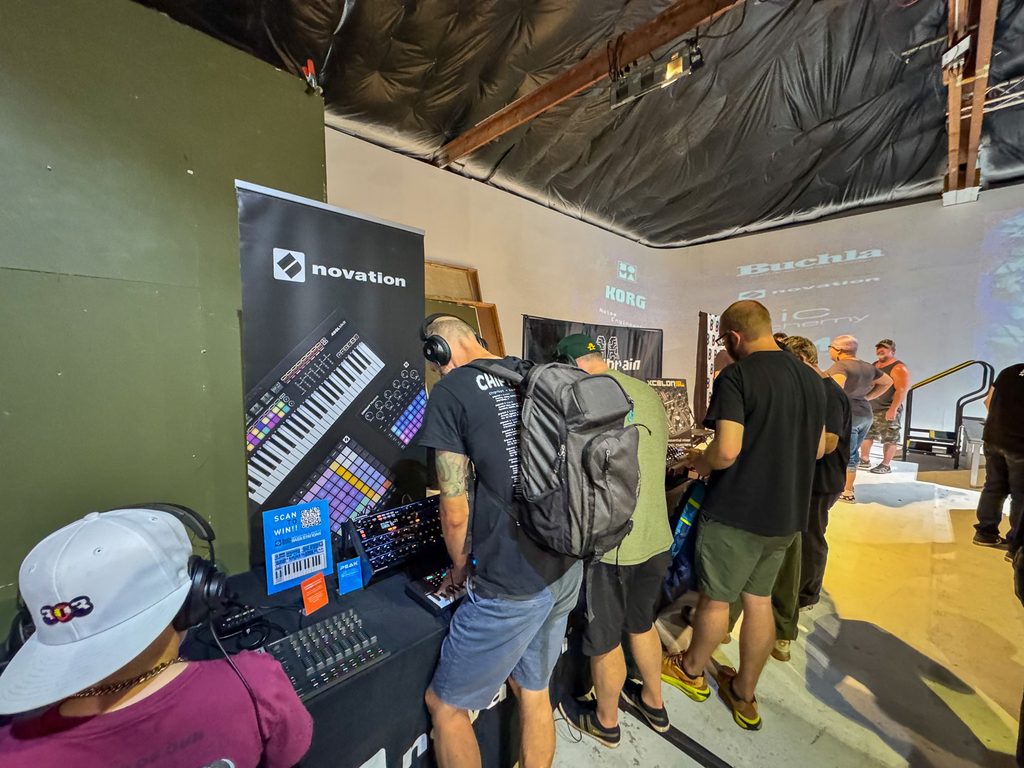
You can touch and play the gear, which is fantastic for those considering dropping their cash on it. You can talk to the people making it. You can ask questions, unlike a big-box gear store that will most likely either not carry this stuff or have a staff that isn’t up to speed.
You can just hang out and make noise.
Korg Brings Some Serious Toys
Among the bigger manufacturers represented, Korg had a couple of products that immediately caught my attention as I had seen them at the NAMM show back in January, but didn’t get a chance to mess around with them..
The Korg phase8 has already generated plenty of buzz, and seeing it in this environment makes sense. It’s the kind of instrument that naturally appeals to people interested in experimental synthesis and hands-on sound design rather than simply scrolling through another 4,000 presets looking for “Analog Bass 37.”
Also in need of more attention was Korg’s latest evolution of its KAOSS concept. This was a groundbreaking piece of kit when it originally came out almost three decades ago, and now it’s packed with so many features that it would take a month to get through them all. Do I want one, of course I do.
The KAOSS family has always occupied an interesting corner of electronic music culture. These are instruments that encourage you to stop thinking quite so much and start touching things, which, frankly, isn’t terrible advice for electronic music in general.

Drift Zero from Drift DJ Is One to Watch
One of the show’s more interesting discoveries came from Drift DJ and its new Drift Zero.
It’s a remarkably compact piece of hardware—roughly the footprint of a couple of decks of cards, but it’s designed to function as a powerful DJ and live-performance tool. That combination is particularly interesting right now.
The line between DJing and live electronic performance keeps getting blurrier. Producers want to take more of their music out of the laptop, DJs want more flexibility than simply playing finished tracks, and nobody particularly enjoys dragging an entire studio through airport security.
Compact hardware that can bridge those worlds has a real opportunity.
The Drift Zero looks like one of those devices that makes you start mentally rebuilding your live rig while you’re still standing at the booth.
1010music Continues to Impress
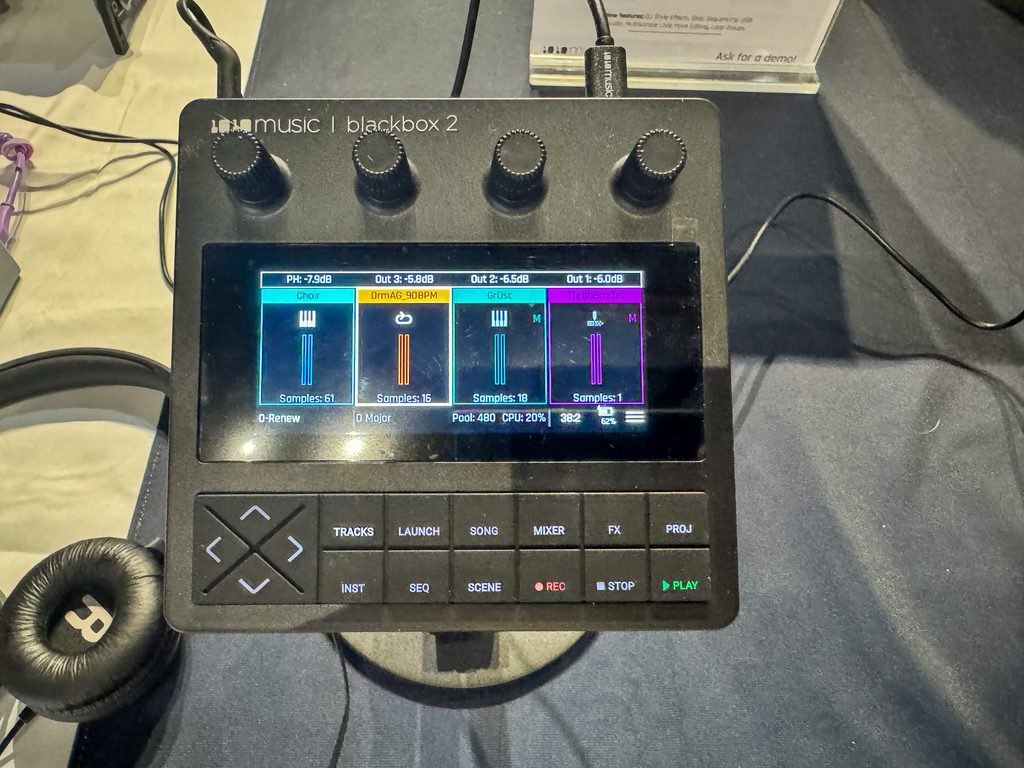
Another standout was the 1010music Bento and blackbox2.
Bento is essentially a portable sampling and production workstation built for musicians who want to work without a laptop. It combines sampling, sequencing, performance controls, MIDI connectivity, effects, and a built-in battery in a compact desktop unit.
There’s quite a lot packed into the box: eight tracks, a 7-inch touchscreen, 16 velocity- and pressure-sensitive pads, eight endless encoders, multiple stereo inputs and outputs, MIDI I/O, USB connectivity, and microSD storage.
More importantly, it feels like part of a broader shift toward genuinely capable standalone hardware.
For years, “DAWless” could occasionally feel like electronic music’s equivalent of deciding to churn your own butter. Artisan beats. Devices like Bento and blackbox 2 (the sampler in the lineup) make the argument considerably more convincing.
If you’re sampling, sequencing external synths, building loops, or assembling a compact live rig, having one small box tying everything together starts making a lot of sense—particularly if your idea of a fun Saturday afternoon involves a sampler, three synths, and absolutely no software-update notifications.

SOMA, Novation, and Plenty of Modular Weirdness
SOMA was also represented, with their newest piece of kit the Enigma creating a buzz, they are always worth checking out if you haven’t gotten a chance to play with their boxes.
Put SOMA hardware on a table and eventually someone is going to wander over and start making noises that sound like an abandoned Soviet research facility.
Novation was also there, alongside a healthy selection of modular manufacturers, builders, and smaller companies.
And that’s where EMIXX West starts to separate itself from a conventional music-technology trade show.
You could get your hands on recognizable gear from established companies and then wander a few feet away and encounter something created for the much deeper end of the modular pool.
There’s a lot here for people who genuinely understand modular synthesis, people who hear the words “clock divider” and don’t immediately start looking for an exit.
I’m not going to pretend every module on every table made perfect sense to me. That’s part of the fun.
Why EMIXX West Matters for Denver
The biggest takeaway from EMIXX West wasn’t a synthesizer.
It was seeing the beginnings of an event that could become an important fixture for Denver’s electronic music community. The Mile High City already has the artists.
An event like EMIXX West gives those different pieces of the community somewhere to intersect.
That’s valuable because music scenes aren’t built entirely online. They’re built when people meet each other, discover somebody else’s work, try an instrument they would never have ordered sight unseen, start a conversation, exchange information, and potentially end up collaborating six months later.
EMIXX West had that feeling. It wasn’t enormous, but it did leave me wanting more, in all the right ways.
In fact, the relatively intimate scale is part of what made it enjoyable. You could actually talk to people, get your hands on instruments, and spend some time exploring without feeling like you were sprinting through an airport terminal made entirely out of synthesizers.
For an event that’s beginning to establish itself in Denver, that’s a strong place to start.
If EMIXX West continues growing while hanging onto that grassroots, community-first character, it could become something pretty special for Colorado’s electronic music scene.
And judging by the enthusiasm inside Void Studios, there are plenty of people here ready to support more of these types of shows.
Learn more about EMIXX 2026 HERE

David Ireland is a professional strategist, creative, and marketer. He began his career in 1995 as creator and publisher of BPM Magazine. In August 2000, BPM Magazine merged with djmixed.com LLC, an online media company based in Los Angeles, which later evolved into the Overamerica Media Group [OMG] in 2003. In 2009, Ireland left Overamerica Media Group to serve as the VP of Marketing at Diesel. In 2011, he returned to his roots in media and cofounded the online electronic music publication Magnetic Magazine and created The Magnetic Agency Group. In June 2018, Ireland joined Winter Music Conference (now owned by Ultra Music Festival) as the Director to lead the reboot for 2019 and usher in a new era for the iconic brand. He served as Chief Marketing Officer at Victrola for three years, guiding product innovation and brand growth. He currently serves on the advisory board of Audiopool, a new music tech startup focused on AI-generated music licensing and artist revenue models.