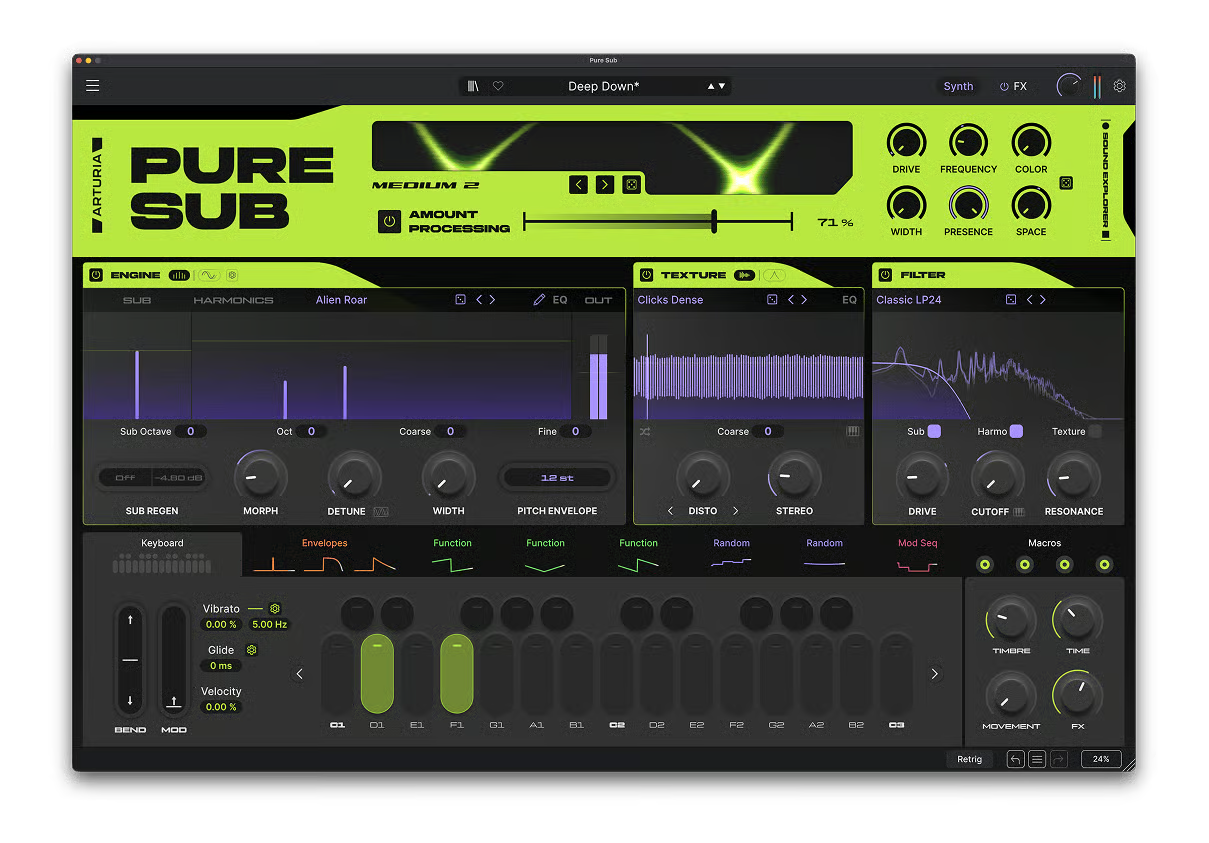
Arturia Pure SUB is built around a simple idea that a lot of producers already understand: bass needs its own workspace.
That does not mean every track needs a separate low-end designer, but modern production has made bass more important than a supporting layer. In drum and bass, dubstep, bass house, trap, techno, and plenty of pop production, the low end is often the thing that decides whether the track feels finished. It has to hit, translate, stay controlled, and still carry enough character to avoid sounding like a placeholder sine wave.
Pure SUB is Arturia’s new answer to that problem.
The plugin is monophonic, but it is not trying to be another simple subtractive bass synth in the lineage of a Bass Station or SH-101. It is better understood as a bass-design environment, built around three dedicated stages: sub, harmonics, and texture.
That split is the reason the plugin is interesting. Bass production often becomes a compromise between clean fundamentals and character. Keep the sub too pure, and the sound may disappear on smaller systems. Push the harmonics too hard, and the low end can lose focus. Pure SUB is designed to let those layers work together without forcing everything through one blunt sound source.
The Sub Layer Keeps the Foundation Intact
The sub section handles the low-frequency foundation, with a sub-oscillator that can move from 0 down to -2 octaves.
That is the part of the sound that has to stay disciplined. Producers can add distortion, modulation, width, and filtering all day, but the track still needs a clean fundamental to work on a real system.
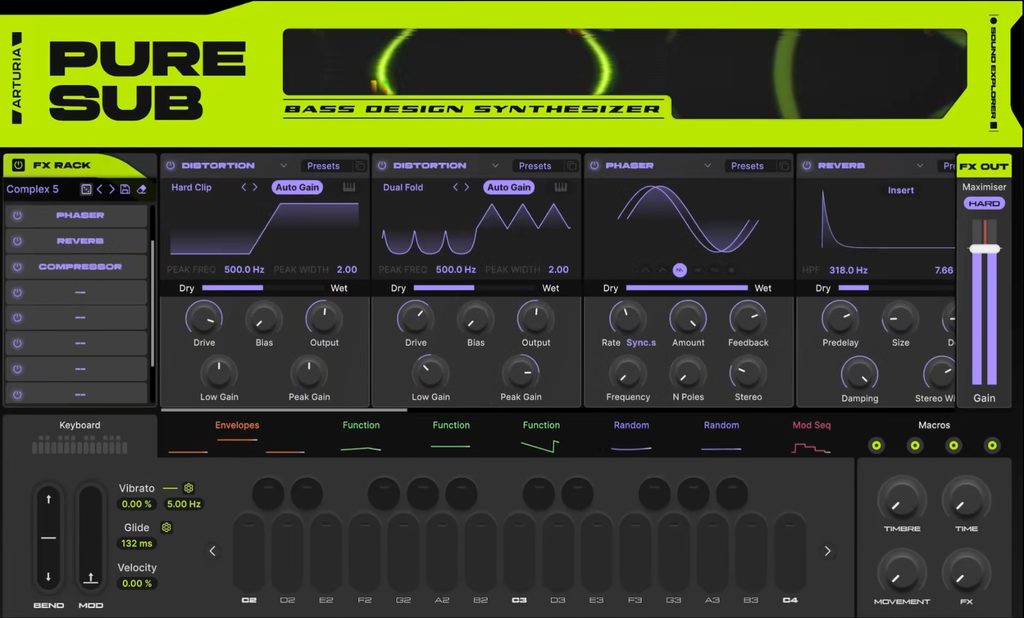
Pure SUB’s sub-regeneration feature is one of the smarter parts of the design. It can restore a clean fundamental later in the chain, including after the filter, processing, or effects rack. That means producers can push the sound harder without completely destroying the low-end center.
That is the kind of feature that sounds technical until you are in a mix and realize the bass has become exciting, but useless.
We have talked about this kind of low-end discipline in different forms across production coverage, including my article on Bark of Dog 3 and low-end mix control. The low end is rarely only about adding more bass. It is about keeping the part of the sound that actually translates.
Harmonics Decide Where the Bass Lives
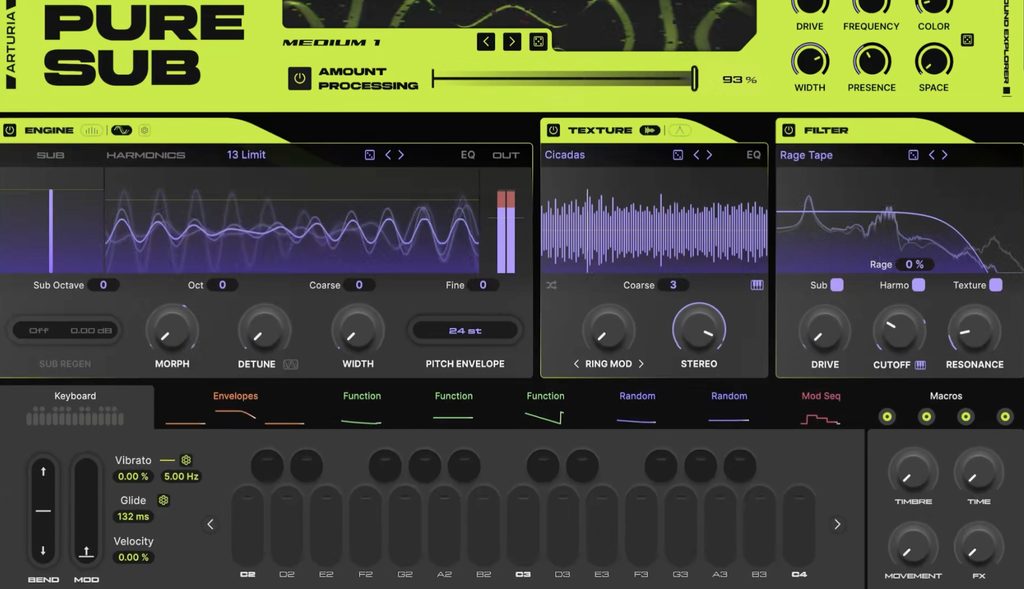
The harmonics layer is where Pure SUB starts to move beyond a clean sub generator.
Arturia gives users two sound engines here: additive and wavetable. The additive side includes preset waveforms, but the deeper option is a waveform editor where users can build their own shapes using partials. Up to eight waveforms can be arranged and morphed, which gives the bass a more evolving feel.
The wavetable engine is more immediate. It includes factory wavetables and also supports user imports, giving producers a faster way into digital tone, movement, and aggression.
The shared controls are straightforward: morph, detune, width, octave, coarse tune, fine tune, pitch envelope, and EQ. That makes the harmonics layer broad enough for simple bass color, but deep enough for more detailed low-end design.
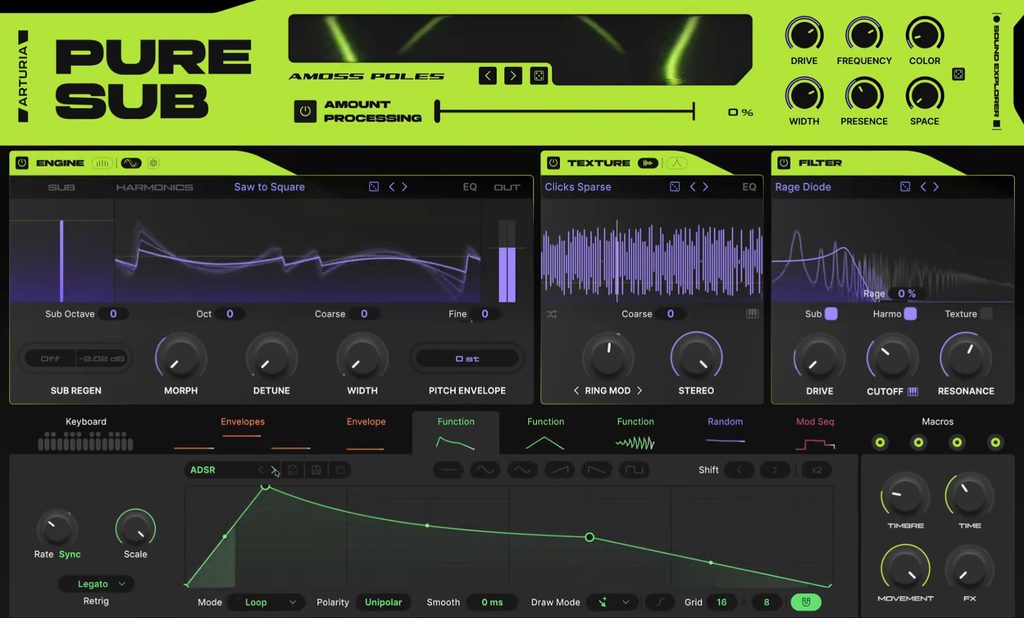
This is also where Pure SUB starts to feel very Arturia. The workflow has some familiar DNA from Pigments, especially in modulation and visual control, but the focus is tighter. You are not building pads, leads, and keys here. You are building the part of the track that has to carry weight without falling apart.
That same producer-first workflow angle connects with my Arturia AudioFuse 16Rig review, where the best part of the hardware was not just spec density, but how clearly it understood modern hybrid production needs. Pure SUB is a different product, but it has a similar appeal: give producers the right controls for the actual job in front of them.
Texture Adds Dirt, Noise, and Motion
The texture section gives Pure SUB its rougher edge.
Users can work with a sample-based noise oscillator or a Corroder engine. The noise side includes texture options such as white noise, pink noise, crackle, and user-imported field recordings. Those sources can key follow and be shaped with distortion, AM, ring modulation, and stereo width.
That is a good move because bass character does not always come from the oscillator.
Sometimes it comes from the layer sitting around the sub: a little grit, air, electrical noise, movement, or dirty midrange that tells the ear the bass is doing something even when the lowest frequencies are being felt more than heard.
The Corroder engine seems aimed at that more mangled side of the plugin, functioning almost like a dirty filtering and modulation layer that can add unstable character around the core bass.
That makes Pure SUB relevant beyond club basslines. It could be used for kick design, low-end FX, aggressive transitions, distorted synth basses, and weird low-frequency sound-design material.
For another recent sound-design comparison, my piece on Minimal Audio Lucid looked at how a focused plugin can become more interesting when it gives producers ways to reshape a sound at the source rather than just decorate it later. Pure SUB is working with bass instead of granular processing, but the idea is close.

Will Vance is a professional music producer who has been involved in the industry for the better part of a decade and has been the managing editor at Magnetic Magazine since mid-2022. In that time period, he has published thousands of articles on music production, industry think pieces and educational articles about the music industry. Over the last decade as a professional music producer, Will Vance has also ran multiple successful and highly respected record labels in the industry, including Where The Heart Is Records as well as having launched a new label with a focus on community through Magnetic Magazine. When not running these labels or producing his own music, Vance is likely writing for other top industry sites like Waves or the Hyperbits Masterclass or working on his upcoming book on mindfulness in music production. On the rare chance he's not thinking about music production, he's probably running a game of Dungeons and Dragons with his friends which he has been the dungeon master for for many years.