Table of Contents
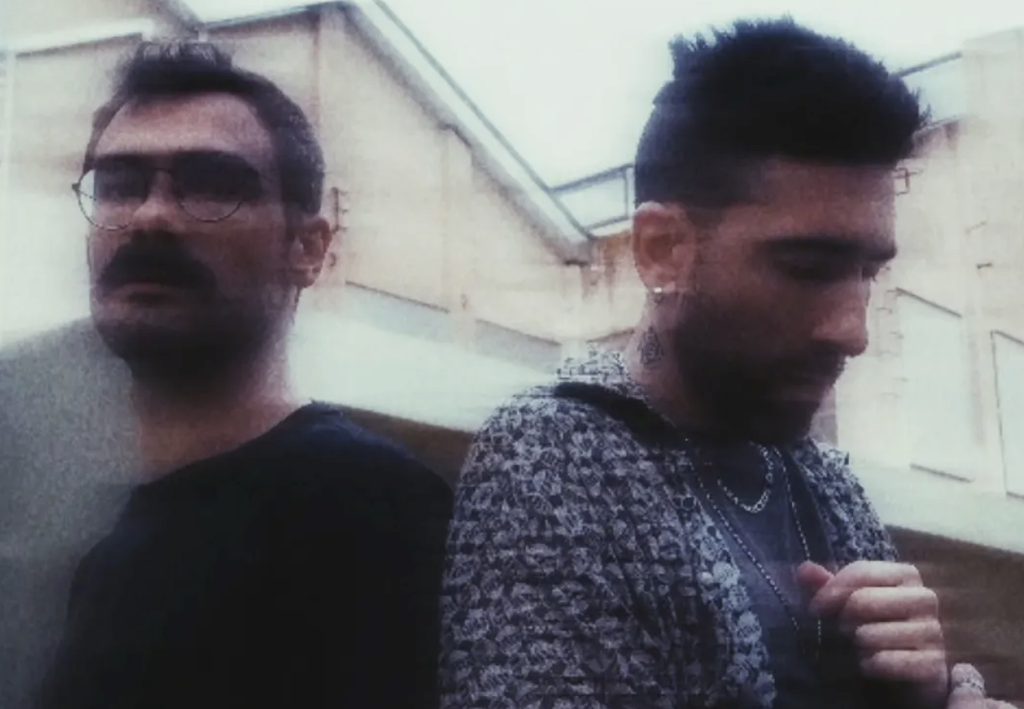
After more than a decade of building one of indie dance/synthwave’s most beloved catalogs, The Midnight are at an unexpected crossroads. Syndicate isn’t simply another album; it’s the last act of a creative arc that stretches back through Kids, Monsters, and Heroes. It’s also the first time Tyler Lyle and Tim McEwan have allowed themselves the freedom to ask what comes next.
Speaking from his Atlanta home between tour dates, I caught up with Tyler Lyle to talk about the new Deluxe edition of Syndicate available on Ultra Records, the biggest tour yet, and what the future holds.
Lyle reflected on the personal journey he’s had over the last decade or so, and its influence on his creativity in weaving the musical narrative, the band’s evolution from a studio project into a six-piece live act, the importance of storytelling, and why the creative process still starts with a notebook instead of an algorithm.

The Midnight Album Review: Syndicate Time Machine Edition (Gold Vinyl Variant)
The Midnight – Syndicate Time Machine Edition on Gold vinyl (Limited to 2000 copies)
The Midnight’s Syndicate Time Machine Edition on gold vinyl is exactly the kind of object this band’s universe has been asking for: a true collectible that marks the end of this chapter in The Midnight’s creative output. The gold pressing is slick in all the right ways, but unfortunately, it is hard to come by, as the Time Machine edition was limited to only 2k copies sold on the tour.
Syndicate is an homage to the last ten years of the band’s output with a familiar blend of widescreen synth-tinged indie vibes, romantic wreckage, and late-night existentialism.
Unfortunately, my pressing wasn’t great and had a lot of surface noise out of the sleeve, so hopefully other pressings of this Time Machine edition of the vinyl sound better. This is a really cool collector’s edition that fans will appreciate. This may be the end of an era for the band, but it’s an amazing moment in time for those of us who have been following them since the beginning. If you really want to find it, my best advice is Discogs.
Track Listing
Side A – Syndicate (Intro)
Shadowverse
Runaways (feat. Bonnie McKee)
Friction
The Right Way
Side B – Afterglow pt. 1
Digital Dreams
Sentinels
Chariot
Side C – First Night In Paris (feat. Carpenter Brut)
Afterglow pt. 2
Fatal Obsession (feat. Jupiter Winter)
Quiet Earth
Long Island
Side D – Love Is an Ocean
Sanctuary
Summer’s Ending Soon
Q&A Interview With The Midnight’s Tyler Lyle

Magnetic: Syndicate feels like more than another record. Does it represent the end of a creative chapter for The Midnight?
Tyler Lyle: I think it does.
When we started The Midnight, we didn’t really know what we were doing. Then we found our team, built the live show, and over the years, it evolved into this six-piece band that felt much more like a rock band than an electronic project.
After the Chromeo tour, it felt like we’d achieved what we’d set out to do creatively on stage. Around the same time Tim decided to step back from touring for health reasons, and it just felt like we’d reached the end of the story we’d been telling for the last decade.
The Kids, Monsters, and Heroes records were always connected. They explored self-knowledge, self-love, and eventually empathy. Syndicate became the epilogue, asking what comes after that. It’s really about life, death, and deciding that if the present moment isn’t enough, you have to make it enough. Once we finished that thought, it felt like the right place to close the book.
Magnetic: While making Syndicate, did you know you were wrapping up this particular chapter, or did that realization come later?
Lyle: We knew we needed to make a statement. We actually wrote around 35 or 40 demos and threw a huge amount of material away because it wasn’t saying the right thing.
At the same time, my perspective had changed dramatically. Going through cancer with my wife made me realize I couldn’t make music just to sustain a career anymore. It had to be joyful. If it wasn’t bringing real meaning into my life, it wasn’t worth doing. So the decision wasn’t really musical—it was personal. I wanted to finish the story properly so we could clear the table and start fresh.
Magnetic: Some songs didn’t make the final album but returned for the deluxe edition. What made those tracks worth revisiting?
Lyle: Most of the songs weren’t cut because they were bad. They just didn’t serve the story. That’s really my role in the band. Whatever tells the strongest story stays. Some songs simply didn’t fit the emotional or musical arc, while others we’ll probably revisit in a completely different context down the road.
Magnetic: This tour feels much more ambitious than previous ones. How has the live show evolved?
Lyle: We’ve always wanted lasers, video walls, and a more cinematic production. We just never had the budget.
Eventually, we decided the fans deserved it. The whole show is built around the idea of time. It starts with nostalgia as this dreamlike version of childhood, then moves into memory, the messy reality of growing up, and finally reaches this moment where time almost explodes, and you’re reminded that the present is the only thing that’s actually real.
Every visual, every transition, every song serves that story.
Magnetic: That’s a huge investment for a band to make.
Lyle: It is. Sometimes you look at a tour and know it probably isn’t going to make much money, but you ask yourself one question: “Is this going to be awesome?”
If the answer is yes, then it’s worth doing. Our fans have given us so much over the years. At some point, you want to give something back instead of optimizing every decision around the bottom line.
Magnetic: How do you build a setlist when fans want the classics but you’re excited about new material?
Lyle: Story always comes first. Tim, Oliver, and I spent about a week going through nearly six hours of music, asking ourselves, “What’s the best ride?” How do we take people from the opening song to the last without losing momentum?
Because we’re fundamentally a studio band, we don’t really road-test songs before they’re recorded. Instead we build the story first and then figure out how to bring it to life on stage.
Magnetic: Where do songs usually begin for you?
Lyle: Usually with a lyric. My degree is in philosophy, so I’m constantly wrestling with big questions. I’ll hear a single line while I’m walking or making coffee and immediately throw it into my notes app.
I’ve been collecting those ideas since around 2009. I think there are close to 5,000 notes now. Sometimes it’s a melody, sometimes it’s a phrase, but eventually I’ll sit down and ask, “What seeds do I already have?” That’s usually where the songs begin.
Magnetic: AI has become a huge topic across creative industries. Is it something you see fitting into your songwriting?
Lyle: Not really.
I’ve played around with it out of curiosity. I gave Suno a rough guitar demo and asked it to make it sound like The Midnight. It did a perfectly adequate job.
But that’s not why I became an artist. Making art is supposed to be messy. It’s supposed to be human. It’s about wrestling with difficult questions over years or decades. If I wanted to make lots of average songs quickly, AI could probably help with that. But that’s not the garden we’ve cultivated.
The interesting parts of art are the imperfections—the strange little moments that only happen because people are people.
Magnetic: Has your relationship with creativity changed over the years?
Lyle: Completely. In my twenties, I thought routine was something other people needed. Now I have to earn feeling normal. I exercise. I see a therapist. I don’t drink during the week. I was diagnosed with ADHD last year, and that explained a lot.
I’ve also kept morning journals every day since 2013. Some people can point to awards or chart positions. I point to a decade of sitting down every morning and filling three pages. Those habits make creativity possible.
Magnetic: The Midnight’s music has become synonymous with huge synth textures. Did anything new define Syndicate sonically?
Lyle: Tim deserves most of the credit there.
I’m the analog guy. I own way too many synthesizers, but most of them never actually make the record. Tim works largely inside the box because he can move faster, and honestly, he’s incredibly clean as a producer.
This album leaned into early-’90s Eurodance, French Touch, Kavinsky, Daft Punk, and Gesaffelstein. If I were producing everything myself, there’d be a lot more noise and distortion.
Fortunately for everyone, Tim’s driving the ship.
Magnetic: Outside of music, what inspires your songwriting?
Lyle: Films are probably our biggest shared language. We reference movies constantly.
Personally, I’m fascinated by architecture. If I had another life I’d probably become an architect.
I’m also obsessed with the idea of creative spaces. I often imagine Michel de Montaigne’s writing tower—that small room where he spent decades thinking and writing.
Every record seems to have its own room. Monsters had the childhood bedroom. My solo records have had different spaces. I don’t know exactly what room Syndicate lives in, but it probably looks something like a cyberpunk apartment.
Magnetic: Finally, when you begin this new chapter, where do you start?
Lyle: I don’t think I need to go searching anymore.
I’ve traveled, I’ve lived around the world, and I’ve read plenty of books. I’ve learned that I can’t control inspiration—I can only pay attention when it arrives.
The last few months have been incredibly creative. Right now it’s mostly journals and scattered ideas.
Eventually, Tim and I will compare notes, see where our respective muses have been wandering, and start building something entirely new. And honestly, that’s exciting.

Catch The Midnight on Tour this fall
What makes The Midnight compelling has never been nostalgia for its own sake. Beneath the VHS aesthetics and soaring synths has always been a band asking bigger questions about memory, identity, mortality, and what it means to keep moving forward.
Syndicate feels less like a farewell than a deep breath before the next chapter. After ten years spent refining one vision, Tyler Lyle sounds ready to embrace uncertainty again, and perhaps that’s the most exciting place an artist can find themselves.
The Midnight’s Fall 2026 North American Headline Tour
USA:
Sep 09 – New Orleans, LA – The Civic Theater
Sep 10 – Houston, TX – House of Blues Houston
Sep 11 – Austin, TX – ACL Live at Moody Theater
Sep 12 – Dallas, TX – The Bomb Factory
Sep 14 – San Antonio, TX – The Aztec Theater
Sep 17 – Tucson, AZ – Rialto Theatre
Sep 18 – San Diego, CA – SOMA
Sep 19 – Anaheim, CA – House of Blues Anaheim
Sep 20 – Sacramento, CA – Channel 24
Sep 22 – Las Vegas, NV – Brooklyn Bowl
Sep 23 – Phoenix, AZ – The Van Buren
Sep 24 – Santa Fe, NM – The Bridge at Santa Fe Brewing
Sep 26 – Tulsa, OK – Cain’s Ballroom
Sep 27 – St. Louis, MO – The Pageant
Sep 28 – Omaha, NE – The Admiral
Sep 30 – Nashville, TN – Marathon Music Works
Oct 01 – Asheville, NC – The Orange Peel
Oct 02 – Raleigh, NC – The Ritz
Oct 03 – Richmond, VA – The National
Oct 05 – Baltimore, MD – Nevermore Hall
Oct 07 – Philadelphia, PA – The Fillmore
Oct 08 – New Haven, CT – College Street Music Hall
Oct 09 – Portland, ME – State Theatre
Oct 10 – Worcester, MA – The Palladium
Oct 12 – Columbus, OH – KEMBA Live!
Oct 13 – Louisville, KY – Old Forester’s Paristown Hall
Oct 14 – Milwaukee, WI – The Pabst Theater
Oct 15 – Detroit, MI – Royal Oak Music Theatre
Mexico:
Oct 17 – Morelos, MX – Vaivén Festival
Oct 19 – Monterrey, MX – Escenario GNP

David Ireland is a professional strategist, creative, and marketer. He began his career in 1995 as creator and publisher of BPM Magazine. In August 2000, BPM Magazine merged with djmixed.com LLC, an online media company based in Los Angeles, which later evolved into the Overamerica Media Group [OMG] in 2003. In 2009, Ireland left Overamerica Media Group to serve as the VP of Marketing at Diesel. In 2011, he returned to his roots in media and cofounded the online electronic music publication Magnetic Magazine and created The Magnetic Agency Group. In June 2018, Ireland joined Winter Music Conference (now owned by Ultra Music Festival) as the Director to lead the reboot for 2019 and usher in a new era for the iconic brand. He served as Chief Marketing Officer at Victrola for three years, guiding product innovation and brand growth. He currently serves on the advisory board of Audiopool, a new music tech startup focused on AI-generated music licensing and artist revenue models.





![Saad Ayub on Phones, Presence, and Dancefloor Focus [PREMIERE]](https://magneticmag.com/wp-content/uploads/2026/01/7F68AD0C-7634-4D25-A161-C44BB098F8BD-2.jpg)