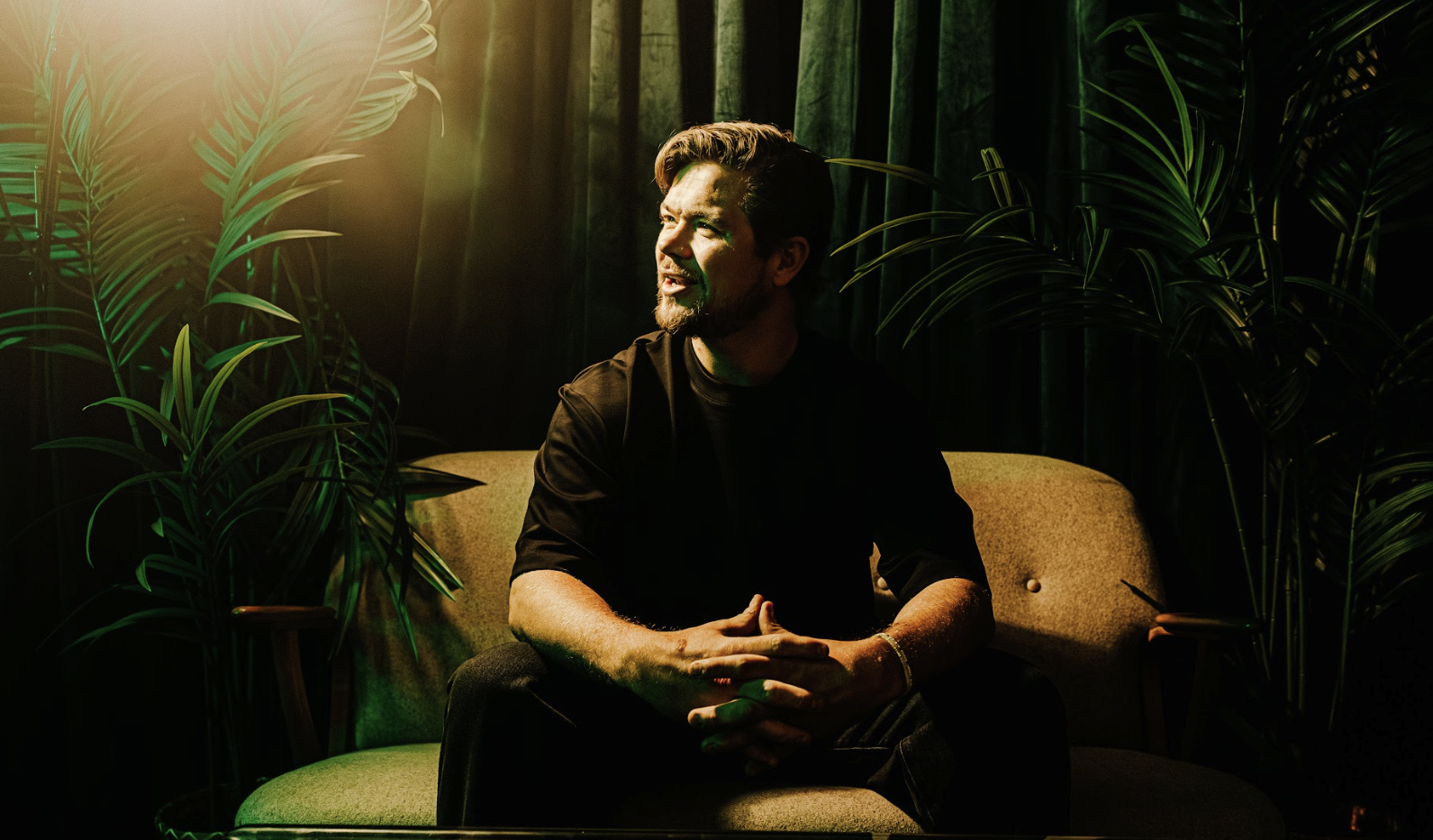
The enigmatic and talented artist talks us through his background and musical approach
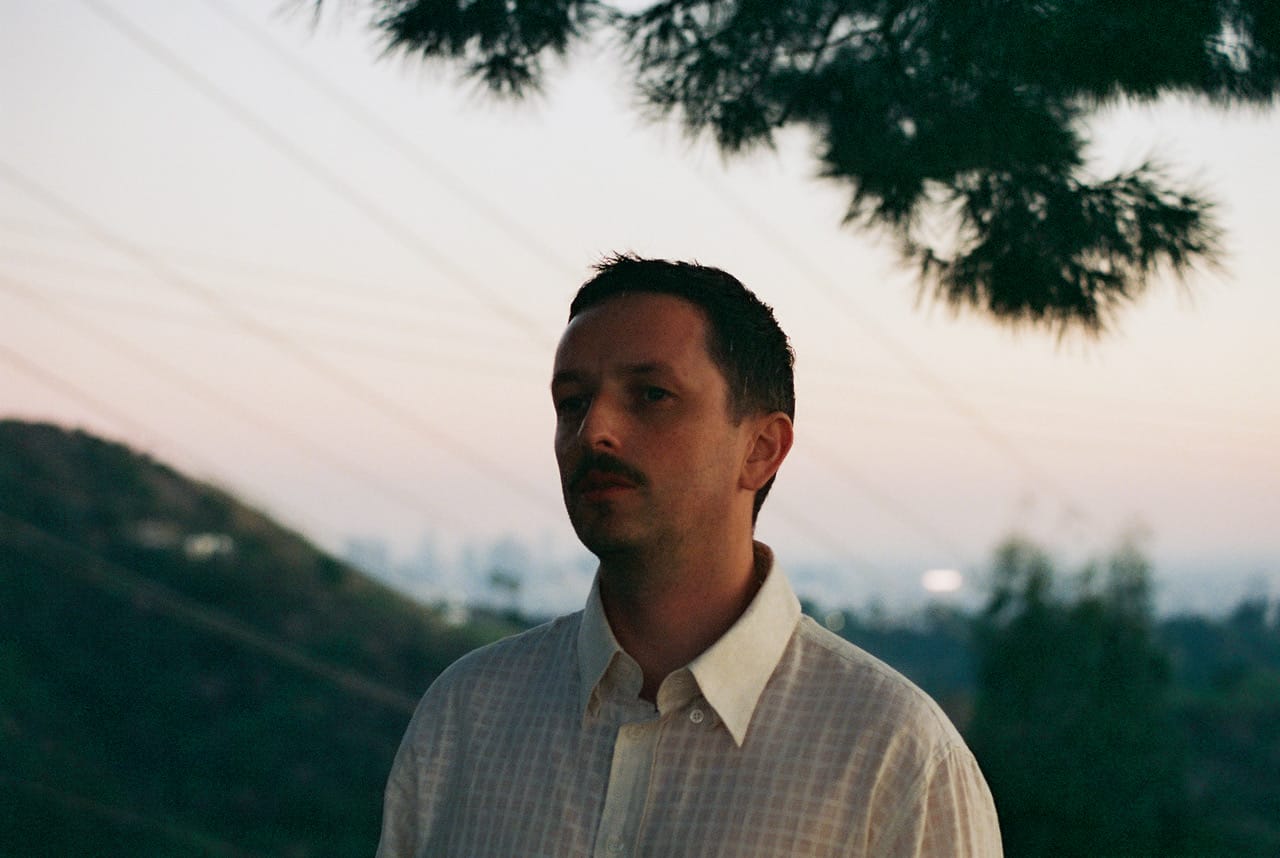
London and Zürich-based artist Lucas F. Jordan is a flutist, composer, and producer whose work bridges diverse worlds, but he’s far more than that in many, many ways. Raised across Brazil, the USA, Switzerland, and the UK, Jordan’s compositions are deeply influenced by an immigrant sensibility—the experience of navigating multiple cultures and never fully belonging to one place.
His recent single, “À Procura,” exemplifies this, evolving from a spontaneous creative impulse into a universal exploration of shared humanity. By collaborating with Catalan and Lebanese artists, Jordan shifted the project’s focus from a conventional love song to a broader musical journey. This reflects his core artistic philosophy: a refusal to treat classical music as a static “museum” piece. Instead, he integrates his rigorous training from the Royal Academy of Music and the Zurich University of the Arts into the visceral, evolving reality of modern life.
For Jordan, the flute—humanity’s oldest instrument—is his “mother tongue.” But he approaches his projects with a completely open mind, bringing elements of instrumentation from across the sonic landscape..
We spoke to Lucas about his background and musical approach..
You’ve lived in Brazil, the USA, Switzerland and the UK — that’s an extraordinary amount of cultural movement for one person. When you sit down to write music, do you feel all of those places pulling in different directions, or has the experience of moving between worlds eventually settled into something that feels unified?
For a long time in my life music had been a way to stay connected to my birthplace of Brazil. Exploring all kinds of Brazilian music directly and through the lens of composers like Heitor Villa-Lobos helped me anchor part of my identity growing up. Eventually I had spent more time of my life outside Brazil than in Brazil so I started to consider what is beyond my national identity and as my lack thereof became part of my identity, so did my musical interests evolve beyond that border, from the music of Kabuki theatre to Indian Classical music to music of the Balkans and further. I noticed some common thread that connects music between the various cultures that I have explored which made me convinced that borders (whether it be of musical genres or of countries) should not be taken as seriously, rather with curiosity and respect. This in-betweenness is probably why I live between two cities as well, that’s my way of becoming unified!
“À Procura” weaves together musical traditions from across the globe, some obvious, others deliberately disguised within the arrangement. How conscious is that layering process — are you thinking about those references explicitly as you compose, or do they arrive instinctively?
In my life so far I would say I’ve gone from instinctive composing to very analytical and conceptual processes and back to a probably more refined instinctive way of composing. In the particular case of À Procura it was a happy accident of being in the context I was when I created it and having contact to the people that were around me. It started as a task while I was at Abbey Road Institute, just some chords played in a particular style that I can’t give away here (there is a spoiler if I do!) – so go listen! – and in a session I laid down those chords. As we built a track for that task a Catalan friend Marti Canales sang over those chords in a very Catalan way and this got me thinking about the Arabic influence behind that way of singing and samba, so I had this curiosity: can these various musical cultures co-exist in some way? So I collaborated with Lorette Helou from Lebanon, who was also my friend from the Institute, to explore some phrases of Arabic singing. Interestingly her choice of words (Ya Leil Ya Tin – Oh night, oh sorrowful eyes) gave a new perspective to the lyrics I had been exploring for the spoiler section of this piece. This is the moment it went from love song to something broader. So from task through happy accident and being in an environment with people with different perspectives from mine it was possible for it all to come creatively together in a considerate yet intuitive way. Once that door opened, it became a rabbit hole drawing on all my musical background and knowledge (institutional and lived/experienced) guided by curiosity.
You trained at two of the most prestigious classical institutions in the world, the Royal Academy of Music and the Zurich University of the Arts, and yet your work consistently resists the boundaries of classical music. How do you hold those two things together?
This might be controversial, but I don’t really hold either of these institutions nor the modern concept of classical music in very high regard, since either of them do anything to prepare a music student for the reality of what it means to be a musician in today’s society. So I don’t really see a relevance in that and I will explain why. What formed me in these studies were my professors and fellow students for whom I hold an endless amount of gratitude. Not only, but in particular to my flute professors Matthias Ziegler in Zurich and William Bennett (WIBB) in London, both of whom taught me much more than just playing the flute. Both of them push in their own ways what those “boundaries” are and I guess I am just continuing to pull on that same thread. For me classical music built a very strong foundation of technique and it showed me an openness of exploration, that I have yet to experience in other musical contexts. Also as a kid I was obsessed with classical music for some reason and always felt it was very cool and couldn’t understand why so many other people didn’t find it cool.
The flute is an instrument people rarely associate with the kind of genre-blurring neo-classical.. How do you think about the relationship between your instrument and the broader sonic world you’re building around it?
Flute is the most fundamental musical instrument in humanity. The oldest flutes ever found are up to 60’000 years old, predating all other instruments! And there is a version of the flute in every single culture in the world. The modern flute designed by Theobold Böhm in the 1830s and 40s is simply the newest iteration of this. It is an instrument of endless possibilities and considering the fragility of blowing air into nothingness across a 2mm edge and an entire universe of sound happens, it has something deeply existential about it too. So if there is an instrument capable of exploring a broad genre-blurring sonic world I can’t imagine any other instrument to inspire that!!
“À Procura” started life as something close to a love song and shifted direction entirely through what you’ve described as a happy accident. How often does that kind of unplanned pivot happen in your work, and do you trust those accidents when they arrive?
Yes, I do, because if I don’t it never goes well!! The music knows where it wants to go and what it wants to express and my job is to be able to listen to that and in one way or another capture and shape it – sometimes whether I might like it or not, though I try to keep my judgments out of the creative process and trust my instincts. It’s like life, sometimes blessings come in disguise and it’s up to you to unravel it – and life can be quite insistent sometimes too and in the same way if you don’t acknowledge and face it things don’t quite work out! One of my favourite quotes is “life is on the other side of fear”, and this kind of pivot in music is wonderful way to practice this for living life! At least for me, this way of thinking has helped every time I’ve respected it…
You’ve spoken about wanting to reconnect classical music to society and make it feel less like a museum. What does that actually look like in practice — is it about the music itself, the way it’s performed, the spaces it’s performed in, or something else entirely?
It’s not the music. This is a very complicated, layered question, that has been on my mind for a very long time and I feel is getting more and more in the minds of many classical musicians (finally!) and probably lots of books could be written about this too. Here is part of my unacademic, modest answer based on experience: I have always felt like there is a disconnect between classical music and the world, for a lack of a better way of saying that and when you start to learn about classical music and lives of composers and their times you start to realise that something was lost in classical music. A music that, initially in Europe, used to be an essential form of human expression became slowly placed on an intellectual pedestal (a museum) and removed from the context of human experience. This is why I went to London to study with Wibb. He was one of the last few people still connected to that more expressive, more human approach to classical music and I think this sums it up in the clearest way possible: the first time I met Wibb, he asked me and the accompanist of the course a simple question, because he was curious about our sense of musicianship and musical understanding: “where did you learn music?” We started with the typical answer of explaining the prominent places and professors that we studied with and he interrupted and said: “no, not where did you study music, that isn’t important, where did you learn music?” Classical music in its modern sense has become about high standards of technical ability. Though it is very important and often a bit lacking in other genres, if it become technique for the sake of technique (or even music for the sake of music) it lacks life, expression and meaning. Even Brahms, one of the strictest composers of all time, would tell his students: practice one hour less a day and go for a walk, read a book, look at a painting, go out into the world and experience life instead – that’s what makes a musician.
Growing up bilingual and multicultural, did music feel like a language that belonged to you in a way that other things didn’t — somewhere that the question of where you were from simply didn’t apply?
And how! I started music, playing the violin, when I was 5 years old, though my obsession with it started earlier. At that time I had already moved from Brazil to the USA and was figuring out English. Later my family moved back to Brazil when I was 9 years old and I again started to struggle with language having to figure out how to read and write in Portuguese. After not having music for a year I had a pivotal moment when I was about 10 years old, realising I had forgotten how to write a treble clef! Shortly after I started guitar lessons at a music school around the corner called “Movimento”. That’s when I suddenly had this realisation: music is like a language – with an element of universality to it: it was in my 10 year old mind the same in Brazil and in the USA – and since playing an instrument is like speaking and reading the score is like reading language, so all I was missing was writing. So one bored afternoon I started composing music and decided: “I’ll make this my mother tongue instead of Portuguese (or English)! Music is my language” At least that is how music felt to me, and it felt like home, and still does!
Connect with Lucas F. Jordan: Instagram | Website
Photo credit – Credit Diana Dingi