Table of Contents
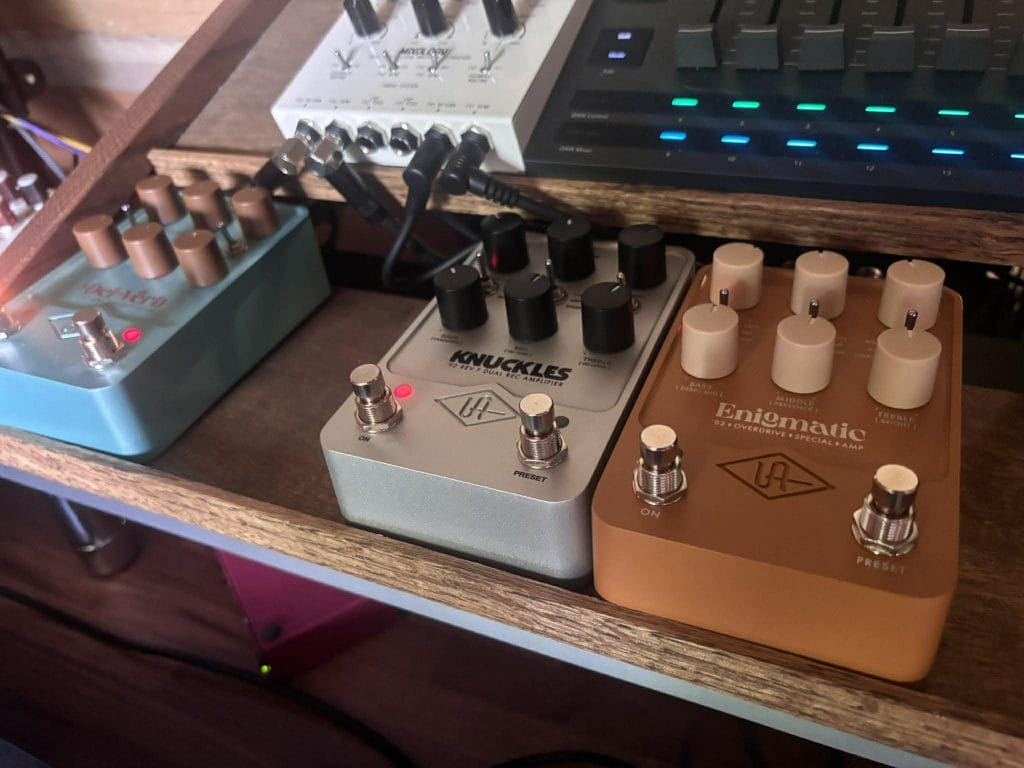
Knuckles ’92 has been on my radar since it dropped in 2024, and I finally got it into the studio for its high-gain guitar amp with the whole intention of seeing how it handles on my synths; that framing quickly felt secondary. UA’s smaller pedals have always sounded amazing on my synths, just as much as their bigger delay pedals, so I was more than keen to see how the Knockles ’92 could stack up as well. In my studio, I found that its synth use case is where the pedal becomes far more interesting, especially once I stopped thinking of it as a guitar amp replacement and started using it as a hardware processing chain.
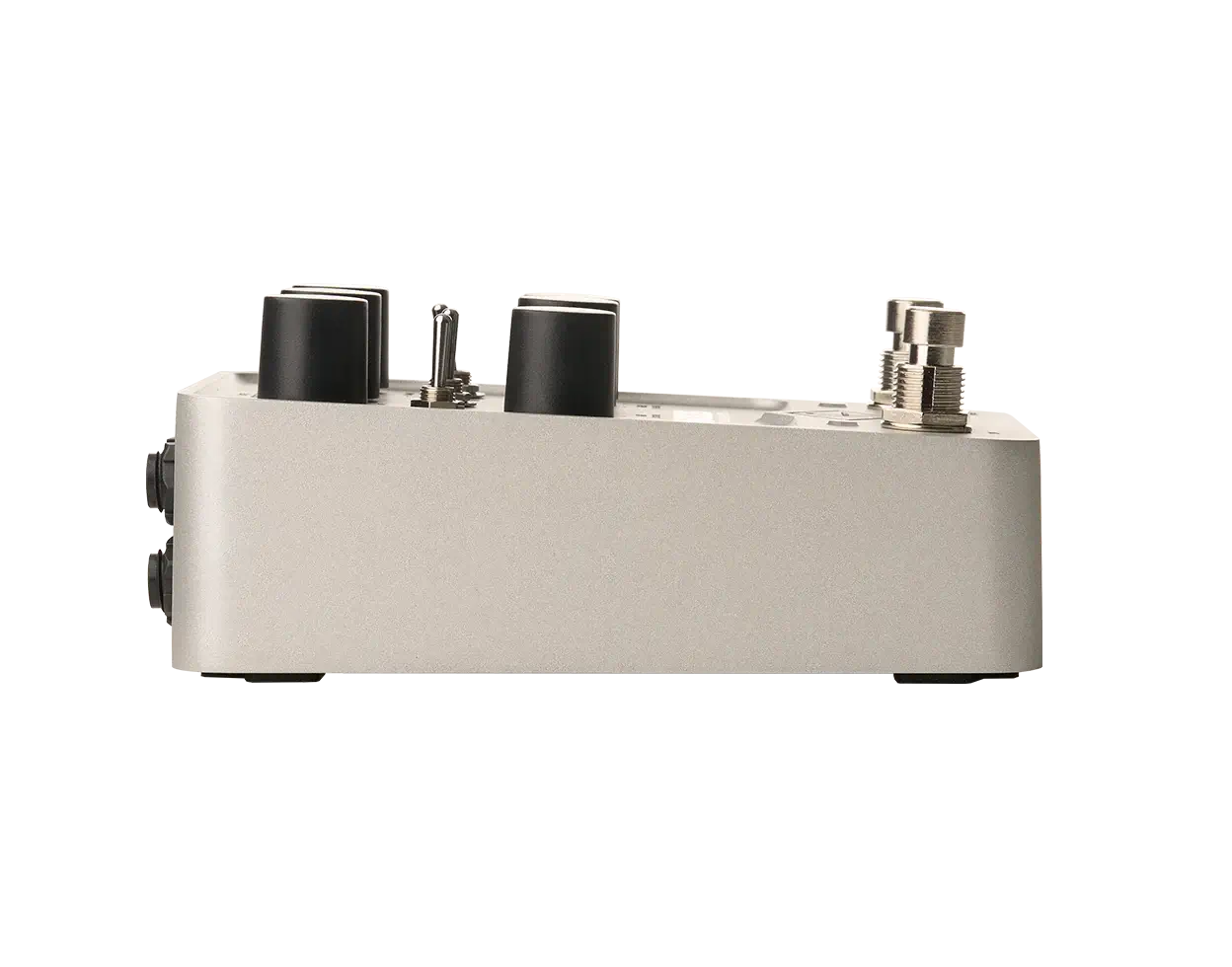
The central design is built around a Rev F Dual Rec-style circuit, with Clean, Orange, and Red amp channels, cab and mic modeling, front-end drive options, room ambiance, a gate, presets, MID (which was a massive update across their whole line of pedals late last year), and deeper control through UAFX Control. On paper, that feels like a guitar rig in pedal form. In a synth setup, it becomes a way to reshape a source from several angles before it returns to the recording.
I found that a synth does hit this pedal the same way a guitar does.
A saw bass, a square lead, an FM stab, a drum machine hit, or a long pad can send dense low end, hard transients, sharp harmonic content, and long sustain into the circuit. On my synths, Knuckles reacted through the amp channel, tone stack, drive section, cab choice, room control, and output stage, and that layered response is why it felt deeper than a normal distortion box. It did not feel like I was adding a single layer of grit. It felt like I was running the source through a full chain with multiple places to shape the tone.
Learn More On Universal Audio’s Website Here
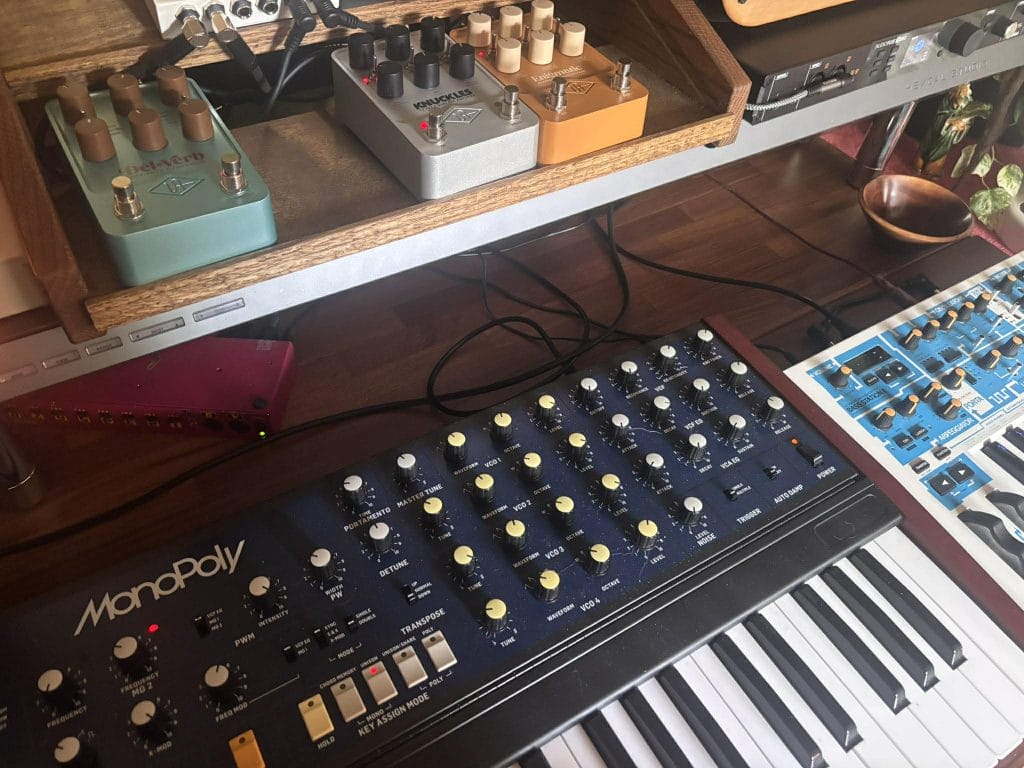
The main takeaway from my time with it is that Knuckles works best when I use it like a chain. It can add grit, push mids, trim lows before the amp, filter the top end through a cab model, tighten tails with the gate, and create a printed sound that feels finished before I start adding plug-ins.
That makes it useful for electronic producers who want hardware processing with a clear imprint on the source. In my studio, it worked best when a clean synth patch felt too direct, too clean, or too separate from the rest of the track.
Synths Hit Different
I found that synths make the pedal’s gain structure easy to hear.
A guitar performance changes constantly because the player controls pick attack, muting, and dynamics in ways that naturally move the amp around. A synth can hold a waveform steady, and that exposes exactly how the pedal shapes the source. On my synths, a saw wave quickly showed the saturation curve. A square wave made the midrange behavior obvious. A bass patch revealed how the low end interacted with the amp model and cab choice.
The Clean channel was the quiet surprise for me. On synths, it can stay restrained enough for pads, drones, arps, and soft leads, while still adding amp color, cab tone, and room when needed. I found myself using it when I wanted the synth to feel recorded through a physical path without turning it into a high-gain part.
It gave simple patches a bit of movement and texture, and that was amazing when a line already had enough harmonic information.
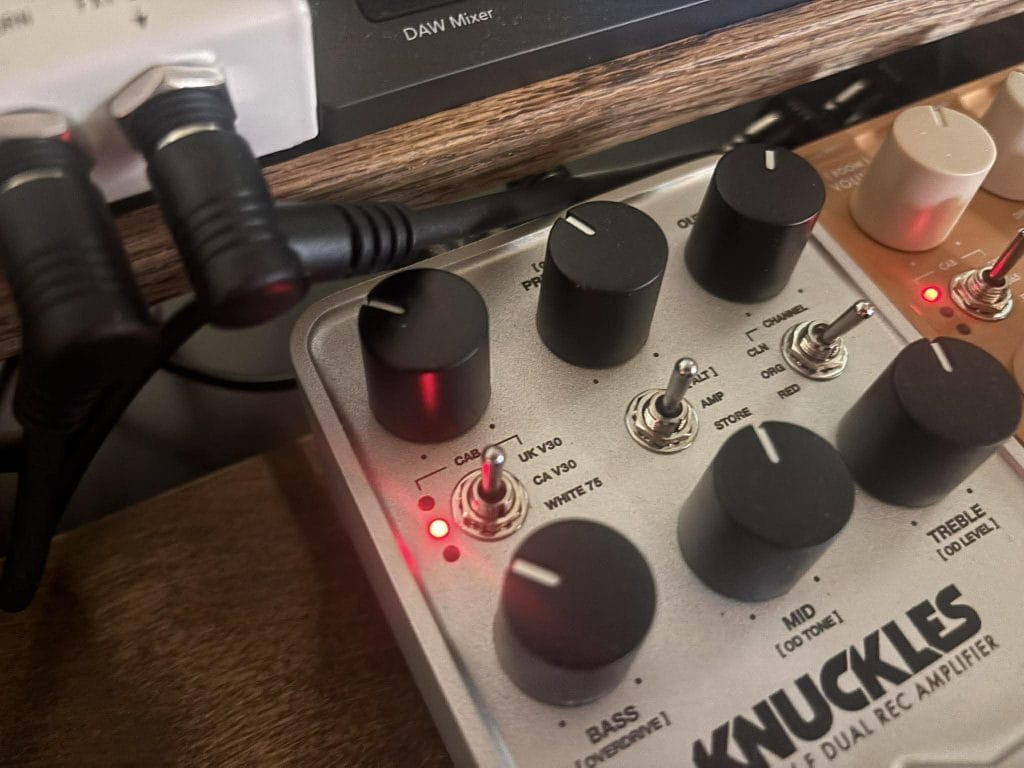
The Orange channel felt like the main lane for electronic production. It has enough saturation to make mono leads and bass layers feel finished, while still keeping the tone controllable. In my studio, this was where I kept landing for mid-bass layers, acid lines, square leads, and synth hooks that needed edge without losing note identity. It had enough bite to give a part purpose, but it still left room for EQ after the pedal.
The Red channel is where Knuckles becomes most obvious. It has the heaviest gain structure, scooped mids, large lows, and a brighter high-gain profile. On synths, I found that it can turn harsh fast, so the cab choice and Presence control become critical. I would save it for stabs, printed hooks, resampled phrases, and short moments where the sound needs a clear, aggressive shape. When I used it with restraint, it gave synth parts a finished edge that felt committed as I brought them back into the DAW.
Gain Needs Discipline
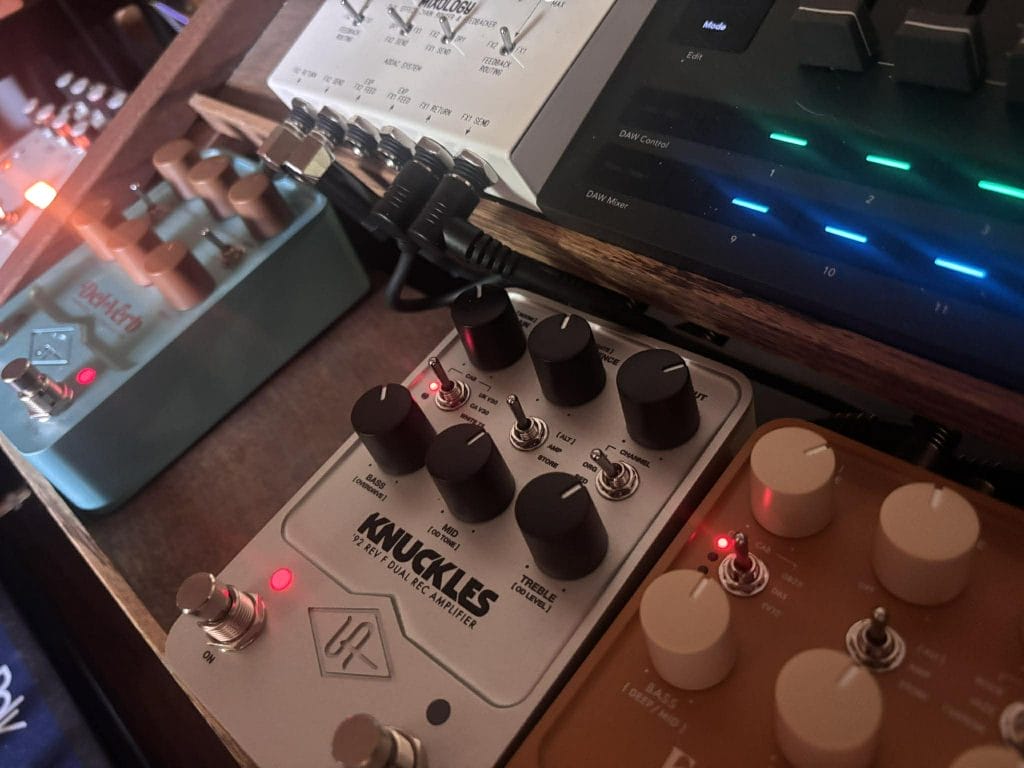
Synths can hit Knuckles with a lot of levels, and that is where the whole process starts to get really interesting.
The pedal can handle a healthy maximum input level, so the issue is less about safety and more about tone. In my studio, when my synth output or interface sends a hit too hard, the amp model starts to lose shape, the low end spreads out, and the top becomes brittle. Pulling the source down before it reached the pedal gave the circuit room to react.
That one single, simple move made the Gain knob feel far more usable in a studio setting.
The Output and Master controls do different jobs, and that became clear once I started sending synths through it. Output is the practical level control for matching the pedal back into the interface or the next piece of gear. Master changes how the amp section feels and adds its own gain behavior. On synths, that separation is useful because I can shape the amp response first, then set the final level afterward. I found that approach gave me cleaner decisions than trying to fix everything at the end of the chain.
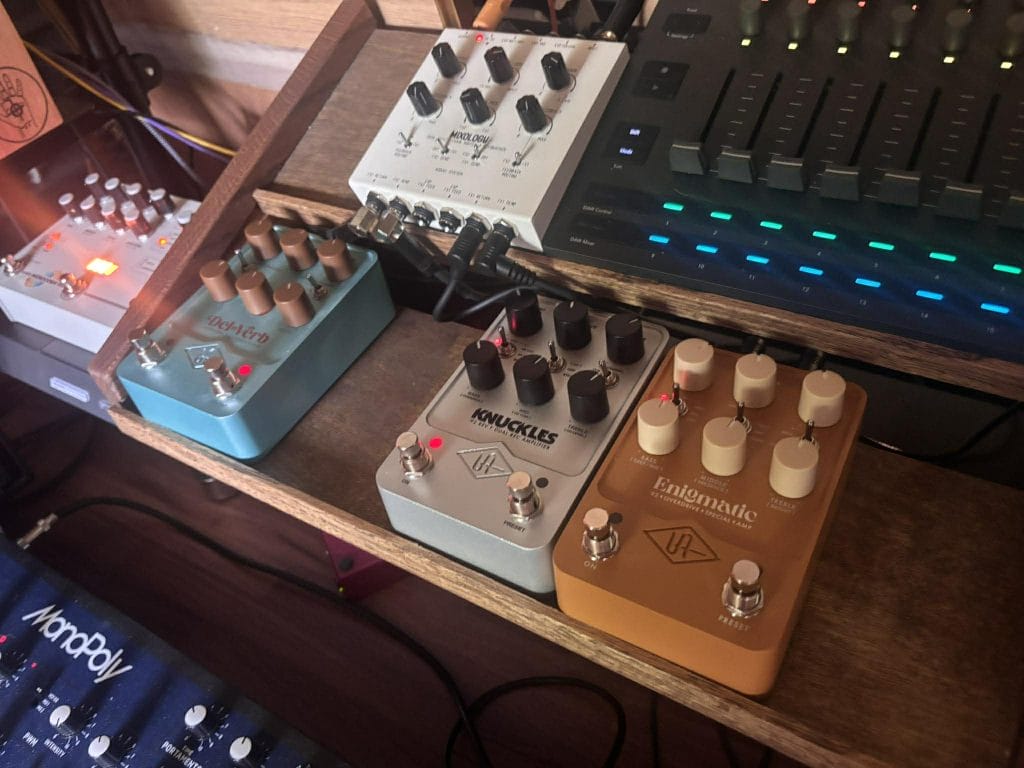
The front-end drive section is a major reason Knuckles works on synths.
The TS-style option was especially useful on bass synths because it trims low-end excess and pushes mids before the amp stage. That helped my mid-bass layers translate on smaller speakers without handing the entire low-end range to the distortion circuit. I kept the drive low most of the time and used the level and tone behavior as the main tools.
On synths, the source already brings a lot of harmonic content, so the drive section usually worked better as a preamp shaper.
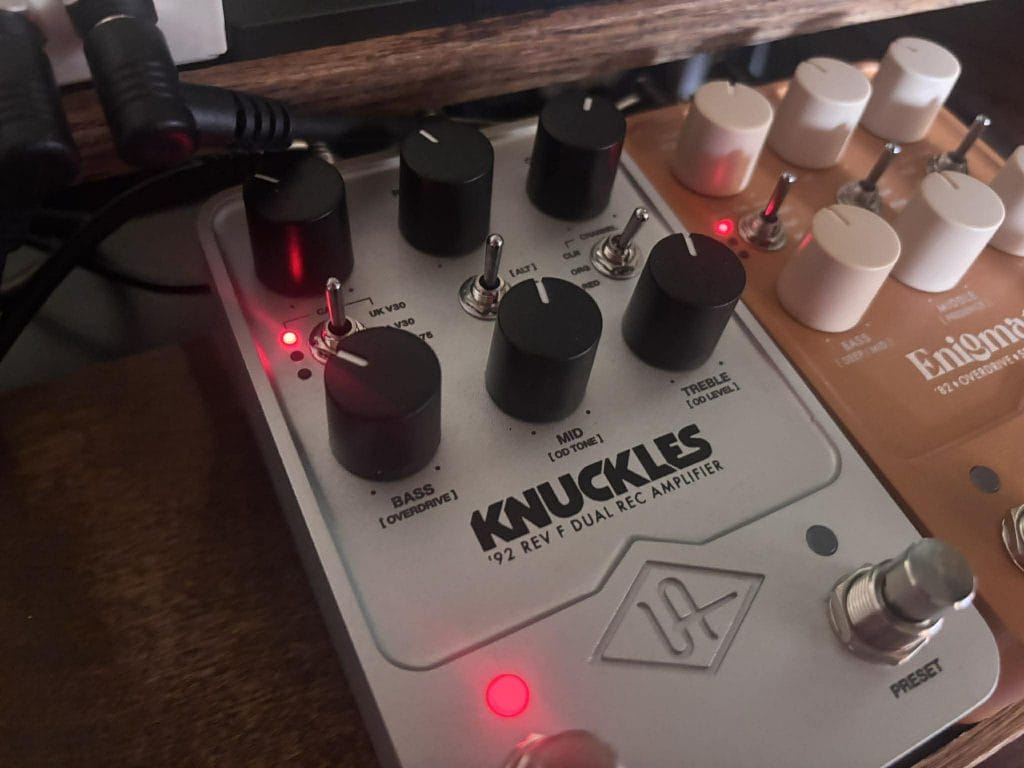
The TC-style preamp option gave me a different kind of control. It has bass, treble, and level behavior before the amp, which made it useful on acid lines, mono sequences, and hooks where the front edge needed shaping before saturation. Cutting bass before the amp tightened the part, while treble control decided how much bite entered the gain stage. I found this especially useful when the synth patch had too much low-mid energy and started crowding the track after distortion.
The EQ controls also act like part of the gain structure.
Low, Mid, High, and Presence do far more than polish the sound afterward. They decide how the amp responds and how the processed synth sits once it returns to the mix. In my studio, I used Low carefully, pushed Mid when the processed layer needed better translation, and handled High and Presence with restraint because synth harmonics can get sharp fast.
Cabs Shape Everything
The cab section is where Knuckles became much more useful for synths. Distortion on its own can add harmonics, and cab filtering decides if those harmonics feel finished. The speaker and mic pairings shape the low mids, smooth the top end, and give the processed signal a recorded quality. That is the reason a synth through Knuckles can feel printed into the track rather than sitting on top as a raw clipped layer.
UK V30 was a practical first stop for bass synths and leads. It gave the sound a focused midrange profile and helped the distorted part speak without heavy EQ afterward. CA V30 worked when a bass layer or lead needed heavier low-mid content, especially when I kept the sub clean in the DAW and sent only the upper layer through the pedal. White 75 brought more top-end presence, which worked well on hooks and leads, although it needed careful handling with brighter synth patches.
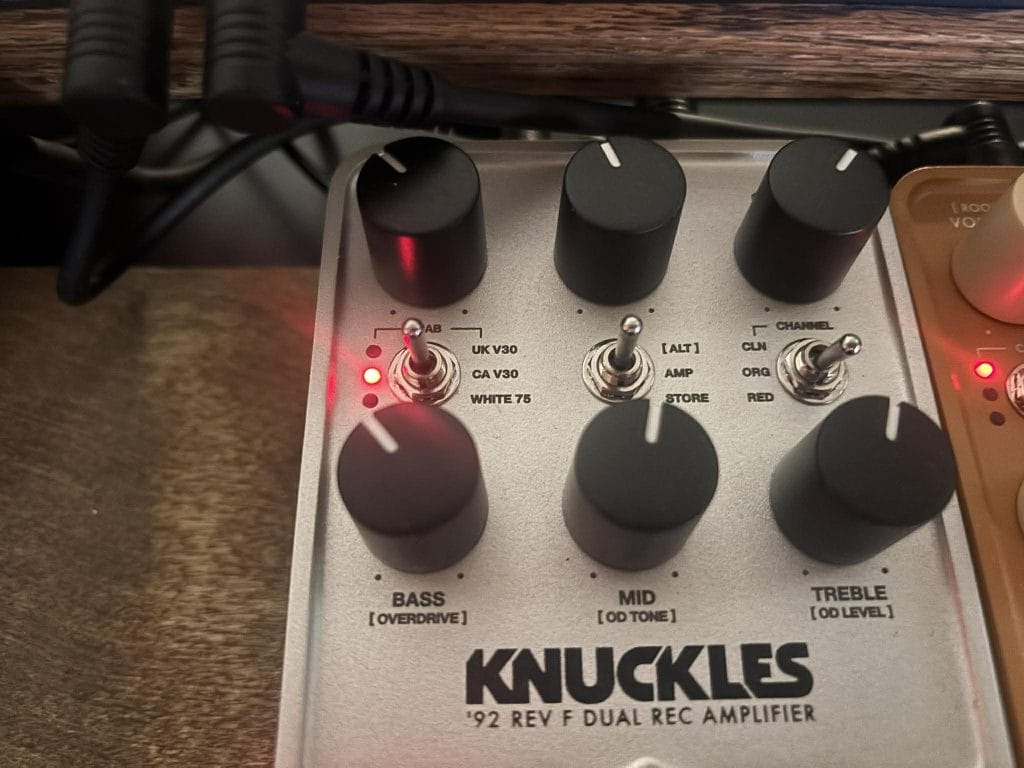
The bonus cab options extended the pedal’s range in ways I found useful.
EV12 gave focused single-speaker character that worked on mono lines and stripped-down hooks. Super 80 softened the treble while keeping the mids forward. Brown JB had a different upper-range character that made resampled phrases feel less predictable. On my synths, these options changed the part enough to influence the writing, which is exactly what I want from a hardware processor.
Cab bypass has a clear use as well. When the cab LED is off, the pedal removes cabinet, mic, and room emulation, which makes sense when I want to run Knuckles into another cab processor, an external IR chain, or a different hardware path. For most synth processing in my studio, the internal cabs were a major reason to use the pedal because they kept the distortion shaped and helped the top end settle.
The room control adds another layer when the cab section is active.
A small amount helped pads, drones, arps, and low-gain leads feel less flat coming straight back into the DAW. I kept it subtle on bass because ambience can blur the low end. On upper-register material, it added enough space to make the part feel captured before I added mix effects.
Best Studio Uses
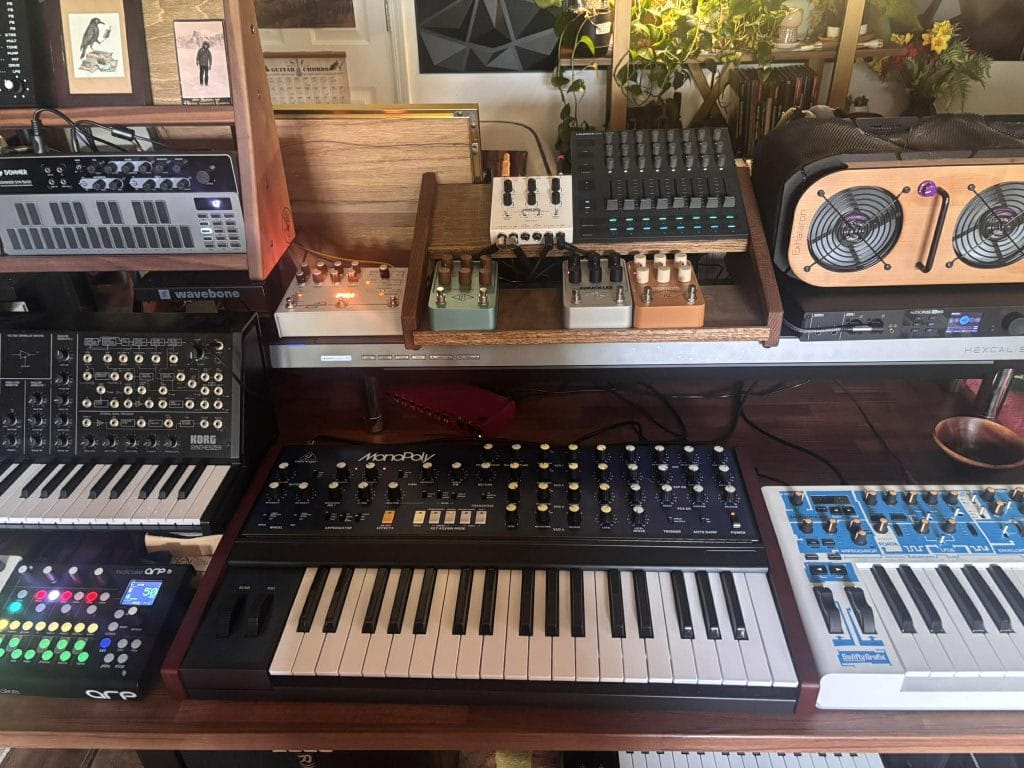
The clearest use case for me was mid-bass layering. I kept the clean sub inside the DAW, duplicated the bass line, sent the upper layer through Knuckles, and blended the processed layer back in. That kept the low end controlled while the pedal added harmonics, amp behavior, and cab tone to the part people hear on smaller systems.
The TS-style front end worked well here because it trimmed low-end excess before the amp and helped the mid-bass layer stay defined.
Mono leads were another natural fit for this pedal too.
A simple saw, square, or FM-style lead through the Orange channel felt finished quickly once the input level was controlled. I started with moderate gain, chose the cab early, then used Presence and Mid to place the lead in the track. Red worked for harsher hooks, especially when I planned to print short phrases and edit the best moments back into the arrangement.
Pads and drones needed a lighter touch. The Clean channel, lower gain, a darker cab, and a small amount of room added texture without turning the pad into the main event. I found this useful when a pad felt too clean or too separate from the other elements. Knuckles gave it enough amp color to feel recorded through a chain while still leaving space for vocals, drums, and melodic parts.
The gate was really fun to use, also beyond the basic noise control. Because it responds to the input while acting later in the signal path, it tightened stabs, percussion, acid patterns, and rhythmic synth phrases after the amp and cab had already shaped the sound. On pads and drones, I kept it light or left it off so the decay stayed natural. On shorter material, I found that it helped turn smeared distortion into something I could edit much faster.
App Depth And Control
The front panel gives enough control to work quickly. Gain, Output, Presence, Low, Mid, High, channel selection, cab selection, and alternate controls for room, gate, drive amount, drive tone, and drive level are all available without going too far into setup mode. That kept the pedal usable during a session. I could send a synth through it, find a channel, pick a cab, shape the level, and print the part without stopping the flow.
The app adds the pedal’s deeper side. Power tube choice, rectifier type, power mode, signal flow, channel styles, gate settings, drive type, preset management, and footswitch modes all matter when Knuckles is used as a synth processor. A synth source can expose changes in feel and EQ very quickly, so the deeper controls gave the pedal wider use across basses, leads, pads, and printed effects. I found that the app made the pedal feel less fixed and more like a studio box I could adapt to the source.
The signal flow settings were useful in a studio context. Full mode gives the complete amp path. Preamp and tone EQ mode bypasses the power amp when I want a tighter front-end tone. Tone EQ and power amp mode bypasses the preamp when I want to feed the power section from another source. Those options let the pedal behave like several different hardware stages instead of one fixed amp sound.
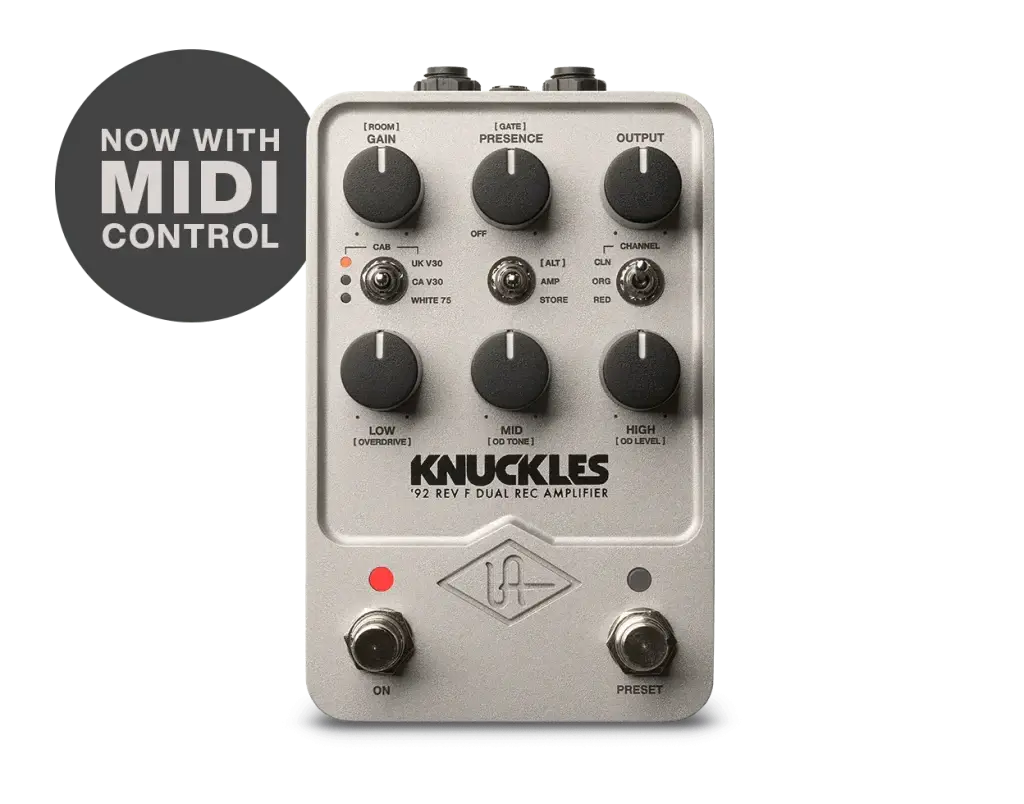
MIDI support also fits the electronic producer angle. Channel selection, cab selection, bypass, gain, boost, gate parameters, output, power tube choice, rectifier type, power mode, room, and other controls can be addressed through MIDI CCs. That opens the door for studio automation, performance routing, and repeatable sound design chains. In a synth-heavy setup, that matters because hardware processing gets far easier to reuse when it can respond to MIDI.
Final Take On The Universal Audio Knuckles ’92
Knuckles ’92 is a high-gain amp pedal that works surprisingly well as a synth processor because it gives electronic sources a full amp-shaped path. In my studio, it was strongest on mid-bass layers, mono leads, and atmospheric pads I wanted to have a more gritty vibe to. The key is level control. Send it a clean, controlled source, choose the cab early, use the drive as a preamp stage, and print the result once it feels right.
The best results with this one came from using less gain than expected.
Synths already bring harmonics, sustain, and low-end energy, so Knuckles does not need to be pushed to extremes. Clean worked for texture and room. Orange covered most of the bass and lead work. Red worked best for obvious printed effects. The cab section shaped the distortion, and the room control helped the upper-register parts feel less flat.
The limitations are clear, too, with the app editing being part of the experience. External IR loading would be useful for producers with specific cab chains. A headphone output would make it better for desktop work, and the power supply being sold separately is hard to ignore at this level as well. Sure, those are workflow complaints, though, and in my studio, they did not erase what the pedal does well and brings to the table in terms of tonal and timbral control.
For my own setup, the draw here is plain as day.
Knuckles gives synths a way to feel recorded, filtered, driven, and committed before they reach the mix. I found that it can take a basic patch and turn it into a part with a clear role. It rewards careful setup, and it punishes careless gain staging, which is exactly why it can produce useful results. When I treat it like a full processing chain instead of a distortion pedal, it becomes one of the more interesting hardware boxes I have used for turning synth parts into finished audio.

Will Vance is a professional music producer who has been involved in the industry for the better part of a decade and has been the managing editor at Magnetic Magazine since mid-2022. In that time period, he has published thousands of articles on music production, industry think pieces and educational articles about the music industry. Over the last decade as a professional music producer, Will Vance has also ran multiple successful and highly respected record labels in the industry, including Where The Heart Is Records as well as having launched a new label with a focus on community through Magnetic Magazine. When not running these labels or producing his own music, Vance is likely writing for other top industry sites like Waves or the Hyperbits Masterclass or working on his upcoming book on mindfulness in music production. On the rare chance he's not thinking about music production, he's probably running a game of Dungeons and Dragons with his friends which he has been the dungeon master for for many years.