Table of Contents
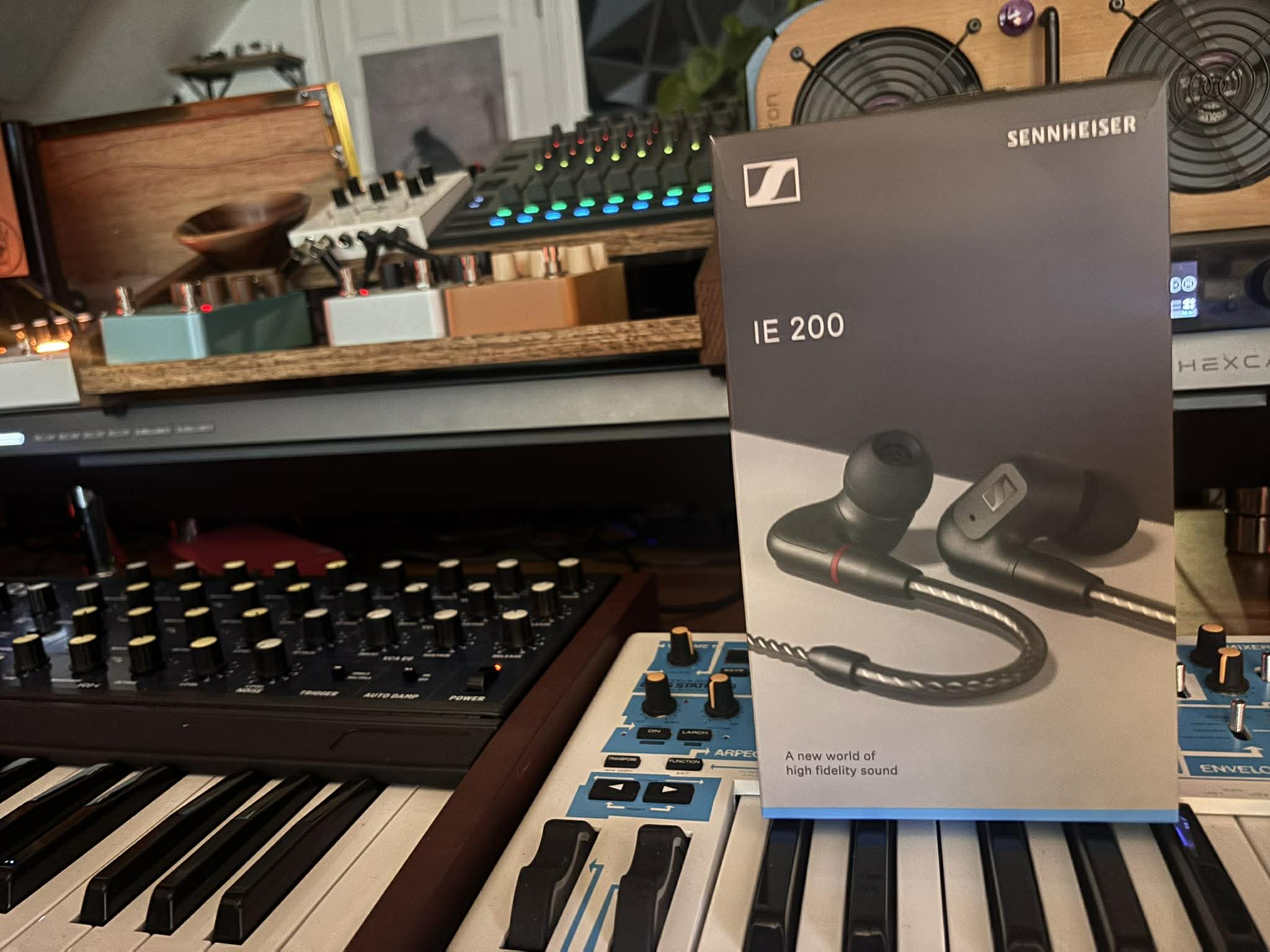
The Sennheiser IE 200 is still one of the easiest wired IEMs to recommend in 2026 for listeners who want a small, comfortable, neutral-leaning earphone from a major brand without jumping into $500-plus audiophile territory. It is light, easy to drive, and more balanced than many budget IEMs that push bass and treble too hard.
The catch is that the IE 200 is very fit-sensitive. Ear tips, cable position, seal, and source choice can change the experience more than some buyers expect. Get the fit right and the IE 200 feels like one of the safest wired IEM buys under $200. Get the fit wrong and the low end can feel thin.
The answer: The Sennheiser IE 200 is still worth buying in 2026 if you want a comfortable wired IEM with balanced tuning, a tiny shell, a detachable cable, and a more hi-fi sound than most casual earbuds. At $149.95 to $159.95, it is best for listening, travel, light studio checks, and quiet work.
What Is The Verdict On The Sennheiser IE 200 In 2026?
The Sennheiser IE 200 still earns a recommendation, but with one big condition: buy it only if you are willing to spend time getting the fit right.
The IE 200 is not a bass-head IEM, and it is not a stage monitor in the same way the Shure SE215 or Sennheiser IE 100 PRO is. It is a small wired listening IEM that works well for detailed casual listening, travel, desk work, low-volume production checks, and people who want a cleaner wired earphone without spending IE 600 money.
The current price checked is $159.95 direct from Sennheiser and $149.95 at Sweetwater. Sale pricing can dip lower, and that is where the IE 200 becomes especially easy to recommend.
My verdict is direct: buy the IE 200 if comfort, balanced tuning, low weight, and wired reliability matter. Skip it if you want big bass, wireless features, active noise cancellation, an inline mic, or a rugged stage-first IEM.
Comfort Is The Biggest Selling Point

The biggest reason I kept coming back to the IE 200 is the comfort. The shell is small, light, and easy to wear for long sessions, and that alone gives it a real advantage over a lot of bulkier IEMs that may impress on a spec sheet and still become annoying after an hour. The plastic housing can feel a little cheap when you first pick it up, yet the shape itself is practical once it sits in the ear.
That small shell also makes the IE 200 a good option for people who normally struggle with larger IEMs…
It has a low-profile fit, it disappears in the ear better than a lot of competitors, and it is easier to wear while lying down or working at a desk. For smaller ears, that compact shape may be the main reason to pick it over flashier alternatives that will often costs much higher
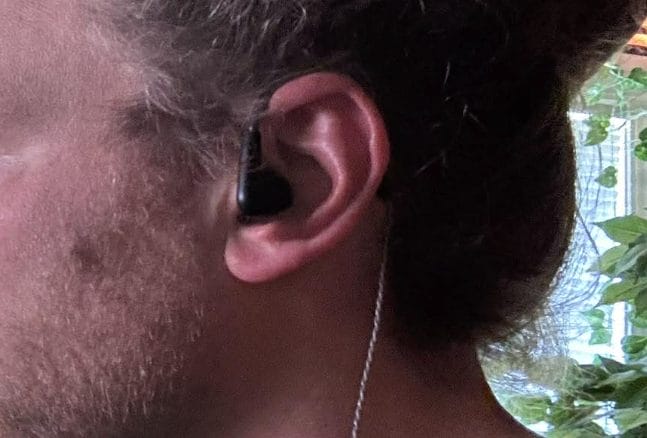
The fit does have some quirks, though.
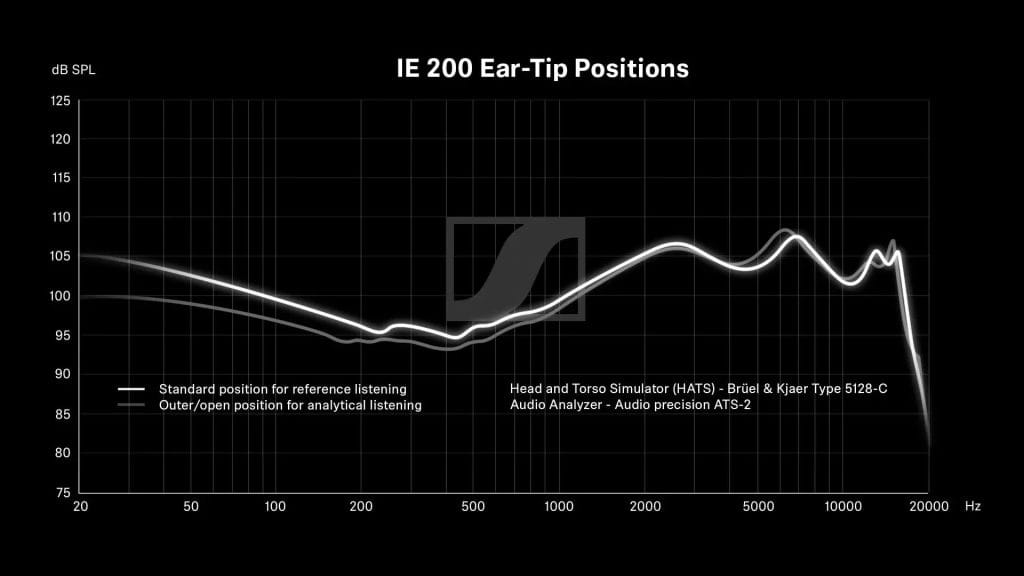
The nozzle and tip match are picky, and if the seal breaks, the bass response drops fast. That means the IE 200 can sound too thin and too treble-forward when the tips fail to sit correctly, which can happen a lot if you’re using them at the gym for strenuous activities or even walking your dogs at the park, but not so much of a factor if you’re using them for casual listening around the house or for a reference pair while mixing music.
I found that a tiny change in tip position can alter the whole low-end response, so this is one of those IEMs that rewards setup, even if that also makes it less friendly for casual buyers.
How Much Does The Sennheiser IE 200 Cost In 2026?
The current Sennheiser direct price is $159.95 for the black and silver versions. Sweetwater currently lists the black IE 200 at $149.95, down from $159.95.
| Product | Current Price Checked | Best For | Buy Or Skip |
|---|---|---|---|
| Sennheiser IE 200 | $159.95 direct | Balanced wired listening | Buy if comfort and tuning matter |
| Sennheiser IE 200 at Sweetwater | $149.95 | Lower current street price | Buy if you want the best current retail deal |
| Sennheiser IE 200 Silver Edition | $159.95 direct | Same IEM in silver | Buy for the color, not a sound change |
| MMCX Microphone Braided Cable | $89.95 direct on the accessory page | Adding a mic to the IE series | Skip unless you need calls |
| MMCX Balanced Cable for IE Series | $149.95 direct on the accessory page | Balanced portable players and DACs | Skip unless you use balanced outputs |
The IE 200 sits in a slightly awkward price zone. It costs more than many popular Chi-Fi IEMs and about the same as the Meze Alba, while staying far below Sennheiser’s IE 600 and IE 900.
That price context matters. Around $150 to $200, readers are often choosing between very different kinds of purchases. My Tuneshine review covered a visual desk piece at that same rough spend, while the affordable synths under $200 article looks at sound-making gear in the same bracket. The IE 200 is the opposite kind of buy: small, wired, unshowy, and built around everyday listening.
The Cable And Tips Hold It Back
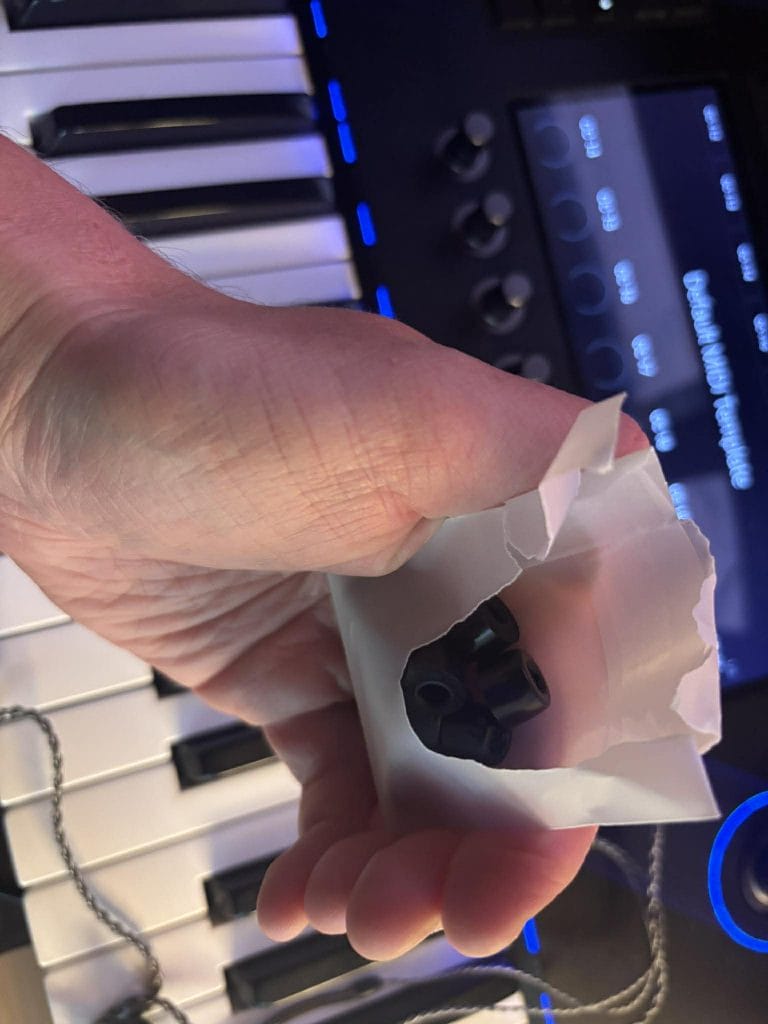
The cable is the weakest part of the IE 200 package I think.
It tangles, it holds bends, and it can create movement noise when it rubs against clothing. That cable noise becomes especially annoying when walking, commuting, or using the device where the wire brushes against a shirt or jacket. It also creates problems for glasses, which I wear around the studio (granted, they’re a bit more cumbersome blue-light glasses for myscreen use, but still). The ear hooks can rub against frames, turning a comfort-first IEM into something that feels fussier than it should. The over-ear design should help with stability, yet the stock cable works against that benefit in use.
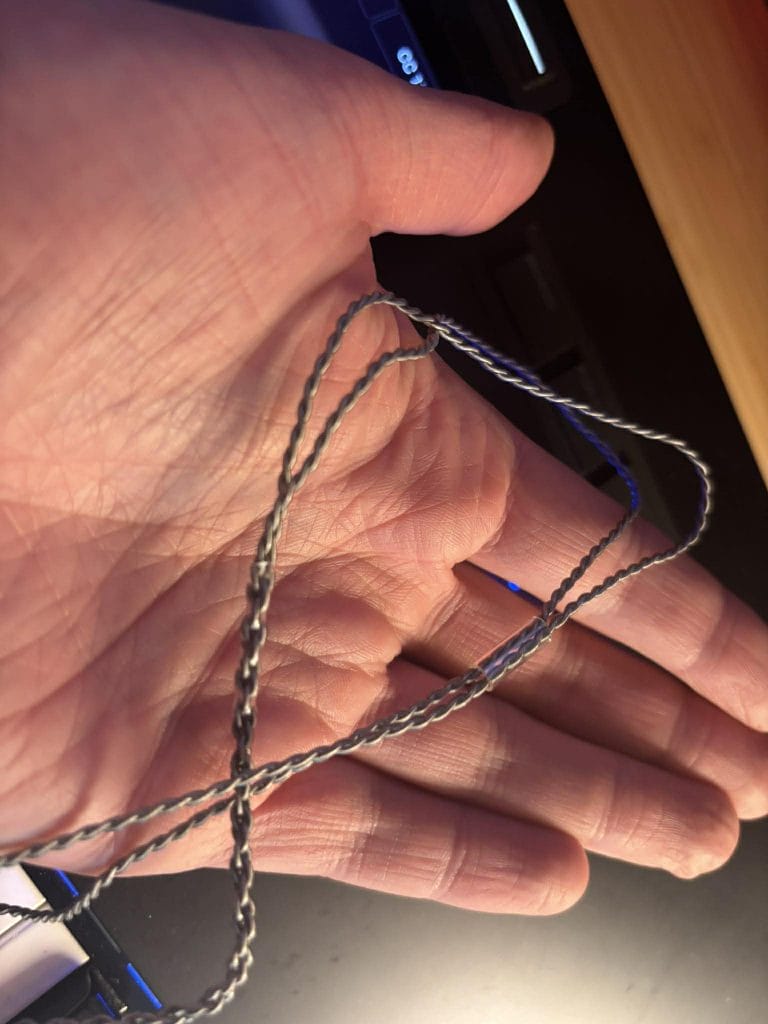
A cable swap could quickly change the experience and would have made the IE 200 feel calmer and more secure behind the ear, reduce noise from movement, and help the whole product feel closer to what it should have been from the start. The catch is that the recessed MMCX connector limits cable options, so replacing the cable can add hidden cost and extra research and is probably out of the skillset and capacity of anyone buying entry-level products.
The tips have the same problem. The stock silicone tips can break the seal too easily, and once that seal breaks, the IE 200 loses a lot of its low-end authority. Foam tips tend to bring out a rounder bass response, while silicone tips can feel a bit tighter and cleaner. There are aftermarket tips that are worth testing, because tip choice changes the sound here in a way that feels much larger than usual but I’ll leave that up to your own research!
Bass Depends On Fit, And Fit Depends On Patience
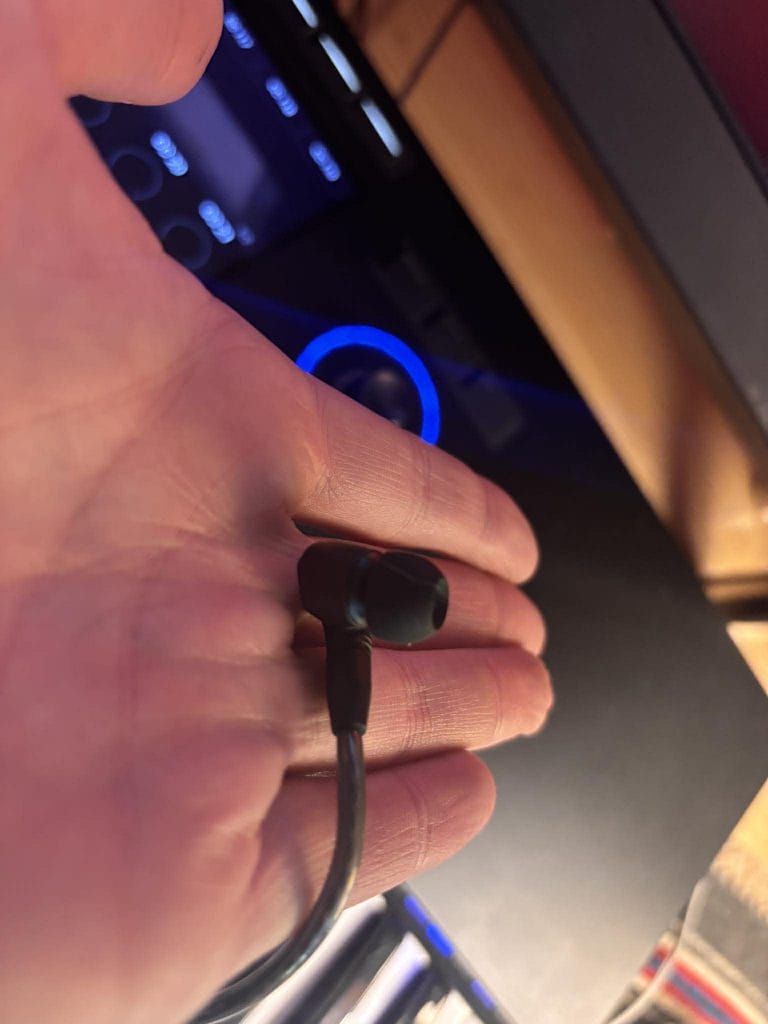
When the seal is right, the bass is one of the IE 200’s best traits. It has punch, enough sub-bass presence for modern music, and avoids the bloated low end that hurts many cheaper IEMs. Kick drums and bass lines come through with body, and the low end stays out of the midrange well enough that vocals and guitars remain clear.
The bass still has limits. It is clean and easy to enjoy, yet it can feel a little smoothed over, especially compared to newer IEMs that offer better texture at the same price. The IE 200 is polished in a way that works for casual listening, though detail-oriented listeners may want more definition from bass guitars, acoustic drums, and low synth parts, which kind of also sums up the product as a whole.
The Tuning Easy To Live With!
The IE 200 uses Sennheiser’s 7 mm TrueResponse driver, and the tuning feels like a mild V shape with a controlled low end, clean mids, and extended treble. The bass and treble get a little extra attention, yet the midrange still holds its place. That balance makes the IE 200 easy to live with across pop, electronic music, rock, and vocal-focused tracks.
The midrange is one of the strongest parts of the tuning. Vocals sit in a good place, and the center image feels clear without pushing singers too far forward. Male vocals sound clean and steady with a fuller seal, and female vocals can benefit from the treble extension when the recording is controlled up top.
There is a small tradeoff in the upper mids and lower treble. Some instruments can sound slightly dull in the 4 to 5 kHz region, which means the IE 200 may not fully satisfy listeners who want forward vocals or sharper instrumental presence. Still, it avoids the shouty quality that makes some IEMs tiring, and that restraint helps with longer sessions.
The treble brings air and openness, and for the most part, it stays controlled. Hi-hats and cymbals can sound thin on certain tracks, and sibilant vocals can push the IE 200 into sharper territory, yet clean recordings tend to work well. This is a tuning that adds energy without turning the whole presentation harsh.
Technical Performance Is Good, With Clear Limits
The IE 200 sounds wide for an IEM, especially because of its treble lift. The stereo image is clear enough for casual and focused listening, and the center image is positioned naturally. Vocals do not feel shoved forward, and the main parts of a mix are easy to follow.
Depth and layering are where the limits start to show. Dense arrangements can make the IE 200 feel flatter, and separation can get less precise when many parts are competing for space. It presents the main information clearly, yet it does not always reveal the smaller textures that some planar or hybrid IEMs can pull forward.
Resolution is decent for daily listening, and it sounds cleaner than many basic budget IEMs. Still, at full retail, it runs into tougher competition from newer models with better accessories and stronger perceived detail. That is the tension with the IE 200: the sound is tuned well, the comfort is excellent, and the technical ceiling is solid rather than class-leading.
For gaming, it works well enough because of the comfort and sense of width. It is not the most precise option for imaging, so players who need exact placement may want another route. For long sessions, though, the low shell profile and easy fit give it a practical edge.
Easy To Drive, Best Upgraded In The Right Order
The IE 200 does not need a large amp and even a simple dongle DAC is enough for most use, and it works well with laptops, portable players, and phone-based setups. A better source can help a little, yet the first upgrade should be tips, then cable, then source.
Balanced 4.4 mm cables can be useful for people already using balanced portable gear, although the IE 200 does not need a huge power setup to perform well. The real gains come from stabilizing the fit, reducing cable noise, and making the bass response consistent. Once those pieces are handled, the IE 200 starts to feel much closer to a complete, daily-use IEM.
This also affects value. At full retail, the IE 200 is harder to defend because the real cost rises when you add tips and a better cable. Around the $90 to $110 range, it becomes much easier to recommend, because the core driver and shell design are strong enough to justify a little extra setup work.
Who Should Buy The Sennheiser IE 200?
Buy the IE 200 if comfort matters as much as sound. That is the main reason it stays competitive in 2026. Many IEMs under $200 sound good, but some are heavier, larger, sharper, or less comfortable across a long workday.
Buy it if you want wired listening without charging, pairing, firmware, or battery wear. The IE 200 plugs into a headphone jack, dongle, DAC, audio interface, or portable player and just works.
Buy it if you are a producer who wants a small second reference. It is not a replacement for monitors or full-size studio headphones, but it can help catch vocal detail, clicks, sibilance, edits, stereo reverb tails, and balance decisions from a different angle.
That connects with the way I think about monitoring generally. In my best IEMs for stage and studio update, the main split is between stage use, studio checking, and casual listening. The IE 200 belongs more to the listening and reference-check side than the hard stage-monitor side.
Who Should Skip The Sennheiser IE 200?
Skip the IE 200 if you want heavy bass. The IE 200 can sound fuller with the right tip position and seal, but it is not tuned like a bass-first IEM.
Skip it if calls matter. The included cable does not have an inline microphone. Sennheiser sells a microphone cable for the IE series, but that adds real cost.
Skip it if you want the best measured value under $100. TRUTHEAR HEXA, SIMGOT EA500LM, and Etymotic ER2XR are all serious alternatives depending on fit and taste.
How Does The IE 200 Compare Against The Best Alternatives?
| Product | Current Price Checked | Best For | Main Reason To Buy | Main Reason To Skip |
| Sennheiser IE 200 | $149.95 to $159.95 | Comfort, balanced wired listening, travel, reference checks | Tiny shell, balanced tuning, Sennheiser IE family driver | Cable and tips may need upgrading |
| Meze Alba | $159 | Stylish wired IEM with USB-C adapter included | Great package and travel-friendly design | Larger shell and different tuning feel |
| TRUTHEAR HEXA | Around $79.99 to $89.99 | Sub-$100 hybrid IEM value | 1 dynamic driver plus 3 balanced-armature drivers | Fit and brand support may not suit everyone |
| Etymotic ER2XR | Often $75 to $149.99 depending on retailer | Isolation and accurate midrange | Deep isolation and controlled tuning | Deep insertion fit is not for everyone |
| Shure SE215 | Around $109 to $119 | Stage use and durability | Up to 37 dB isolation and stage-proven shell | Less balanced hi-fi tuning than IE 200 |
| Sennheiser IE 100 PRO | Around $99.95 to $109 | Entry stage monitoring | Better stage-first Sennheiser option | Less refined for hi-fi listening |
| Moondrop KATO | Around $189.99 | Metal-shell dynamic-driver IEM | More premium build and energetic presentation | Heavier and usually costs more |
| Final A4000 | Around $159 | Spacious, lightweight listening | Very light shell and open-feeling presentation | Brighter tuning may not suit everyone |
| SIMGOT EA500LM | Around $89.99 | Low-cost dynamic-driver energy | Excellent sub-$100 value | Can be brighter and more forward |
| Sennheiser IE 600 | $899.95 | Higher-end Sennheiser IEM | Clear upgrade path inside the IE line | Far more expensive |
Final Verdict
The Sennheiser IE 200 is a flawed product with a good driver, a comfortable shell, and accessory decisions that hold it back. The tuning is clean, the bass is satisfying when the seal is right, and the small housing makes it one of the easiest wired IEMs to wear for long sessions. It works best for people who value comfort, balanced tuning, and a compact fit over a premium unboxing or maximum detail retrieval.
I would not buy the IE 200 expecting a perfect out-of-the-box experience, nor would I buy the IE 200 expecting a flagship-level audiophile experience. I would buy it knowing that tips and cable changes are likely part of the cost but with better tips and if you wanted to go the extra milr and gett a better cable (which I only recommend to those who really know what they’re doing), the IE 200 becomes a much better product and one that’s easy to use in a way that’s flexible in about as many different situations and environments as a common user who simply loves their music would find themselves in.
That is the most honest read I have had on it after using it in the studio, around the house, and walking about town. Sennheiser got the central sound right, then compromised on the smaller bits (some of which are important despite their size). At a good sale price, the IE 200 is worth considering for anyone looking for a small, comfortable wired IEM with clean tuning and enough low-end presence for modern listening.

Will Vance is a professional music producer who has been involved in the industry for the better part of a decade and has been the managing editor at Magnetic Magazine since mid-2022. In that time period, he has published thousands of articles on music production, industry think pieces and educational articles about the music industry. Over the last decade as a professional music producer, Will Vance has also ran multiple successful and highly respected record labels in the industry, including Where The Heart Is Records as well as having launched a new label with a focus on community through Magnetic Magazine. When not running these labels or producing his own music, Vance is likely writing for other top industry sites like Waves or the Hyperbits Masterclass or working on his upcoming book on mindfulness in music production. On the rare chance he's not thinking about music production, he's probably running a game of Dungeons and Dragons with his friends which he has been the dungeon master for for many years.