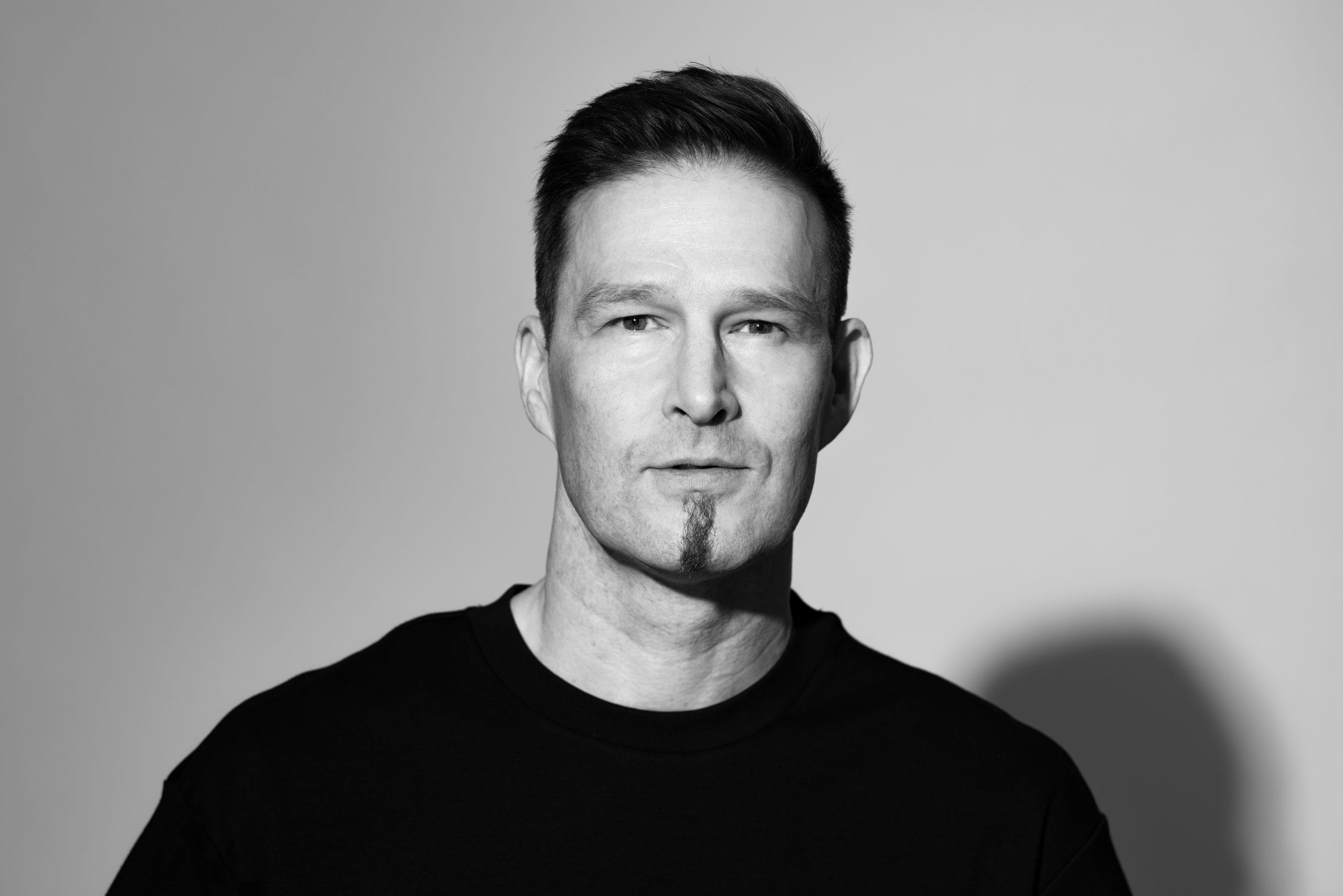
Janika Tenn has built a reputation for bringing personality back to house music. Her latest release, “Going Down,” on her label Tenn Tonik, takes that philosophy straight to the dancefloor. The track channels 90s club culture with rolling basslines, classic vocal chops, and that unmistakable swing that defines her sound. It’s fun, confident, and clearly made by someone who understands how to move a crowd without overcomplicating the formula.
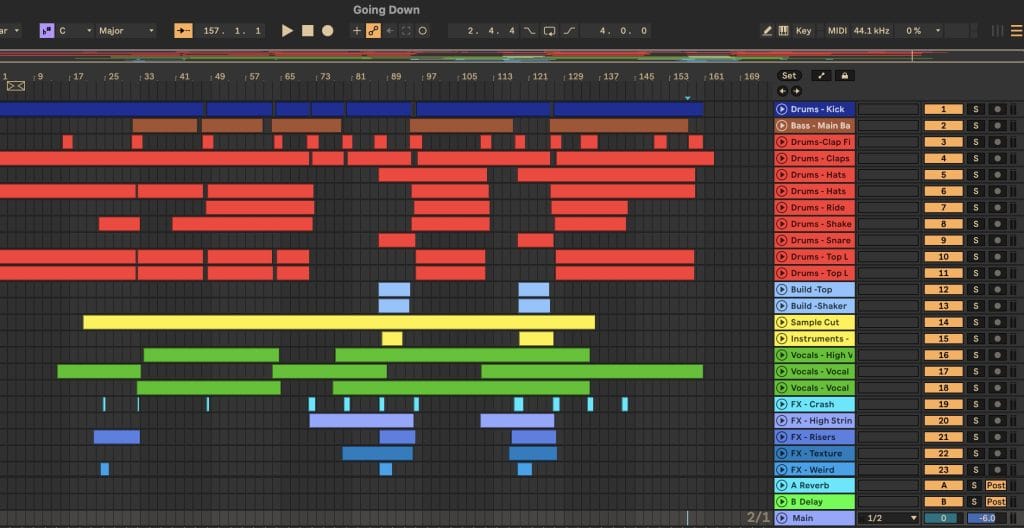
Her production setup reflects that same mindset—modern tools with classic sensibilities. From the punch and control of Serum to the unmistakable tone of the Korg M1, every sound feels deliberate. Janika’s approach isn’t about chasing trends but about finding texture and groove in simple ideas. Her workflow keeps energy and balance front and center, proving that tight sound design doesn’t have to come at the expense of feeling.
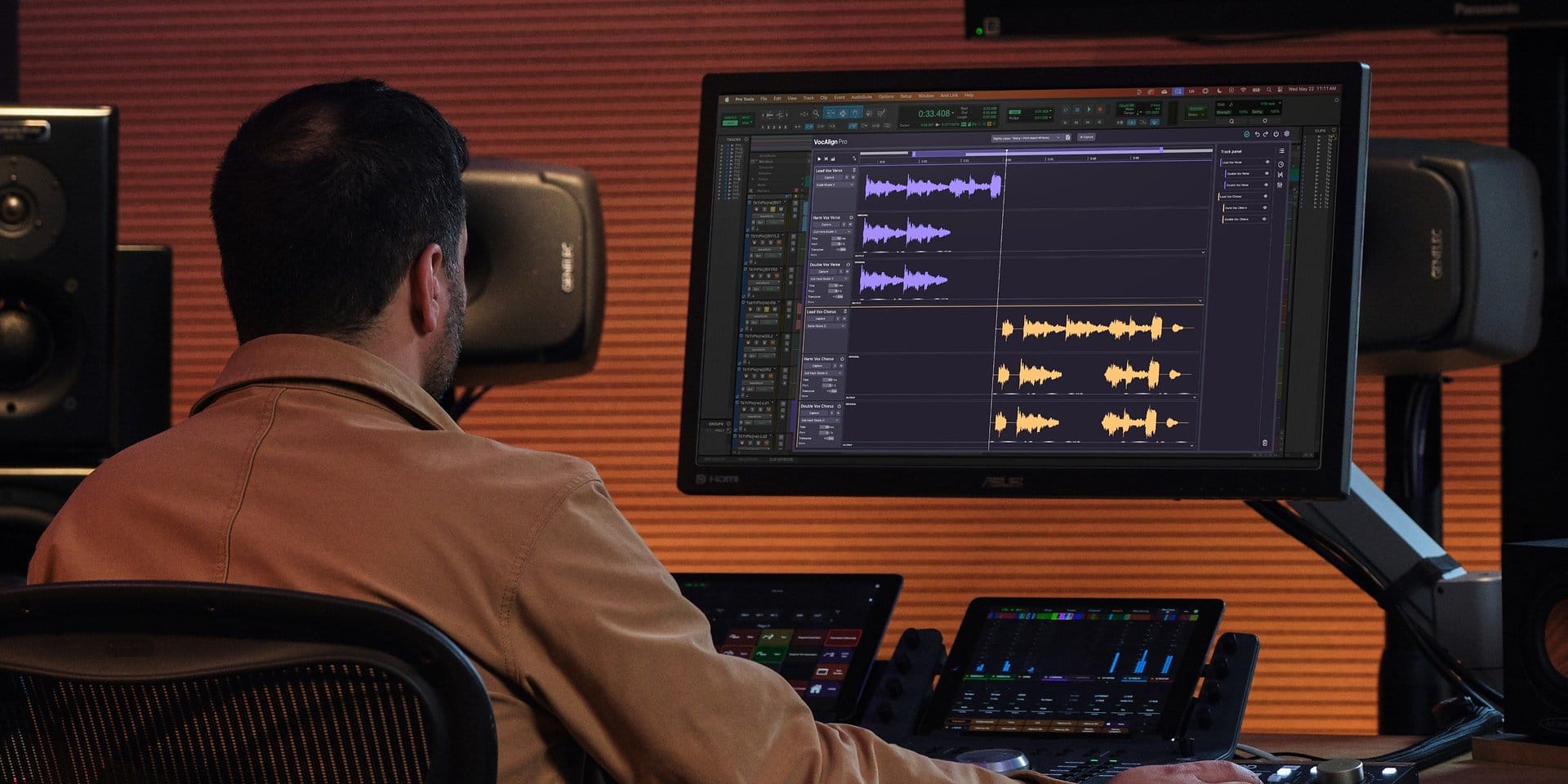
In this How It Was Made, Janika walks through the plugins and techniques behind “Going Down,” including the Serum bass patch that anchors the mix, the Korg M1 layers that build tension, and the finishing work with FabFilter Pro-Q 3 that ties it all together. She also shares her quick-fire takes on production, DJ culture, and why keeping it simple often leads to the strongest results.
Serum
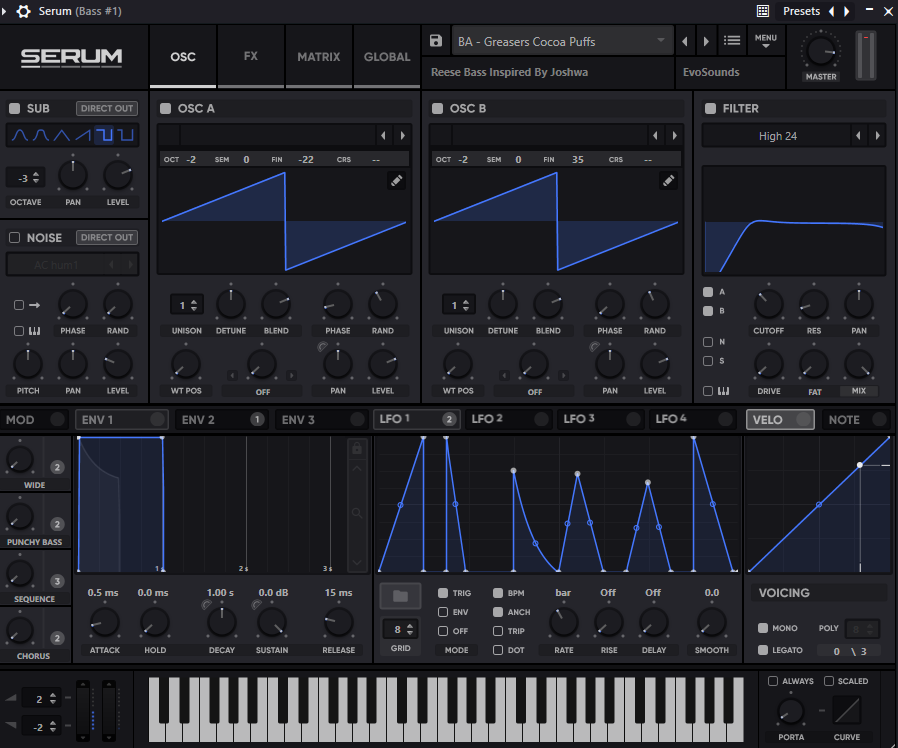
Serum has become one of the go-to synths for modern house producers thanks to its clean sound engine and super visual workflow. It’s a wavetable synth that gives you full control over shaping and layering sounds, from deep subs to bright leads. What I love is how transparent and punchy it stays, even when you push it with modulation or drive. It’s that combination of clarity and grit that makes it ideal for club-focused low-end sounds.
For “Going Down,” the bassline came straight out of Serum, using the preset Greasers Cocoa Puffs. It’s a Reese-style bass patch inspired by Joshwa that I tweaked quite a bit; both oscillators are running saw waves pitched two octaves down for that thick, rolling tone. I adjusted the filter cutoff and drive to keep it tight but dirty, and used an LFO to add subtle rhythmic movement so the bass doesn’t just sit static under the groove. I also brought in a touch of sub oscillator for extra body and ran the output through Serum’s built-in distortion for bite before sidechaining it to the kick.
If you’re producing house or tech house, Serum is brilliant for sculpting a warm but punchy bass that fills the room without muddying the mix. One thing I’ve learned is to use LFOs musically—don’t overdo modulation, but let it move just enough to breathe. Try layering a Reese-style bass with a simple sine sub underneath for depth. And don’t forget to drive the filter slightly; that’s where you get that tasty midrange growl that cuts through on a club system.
Korg M1
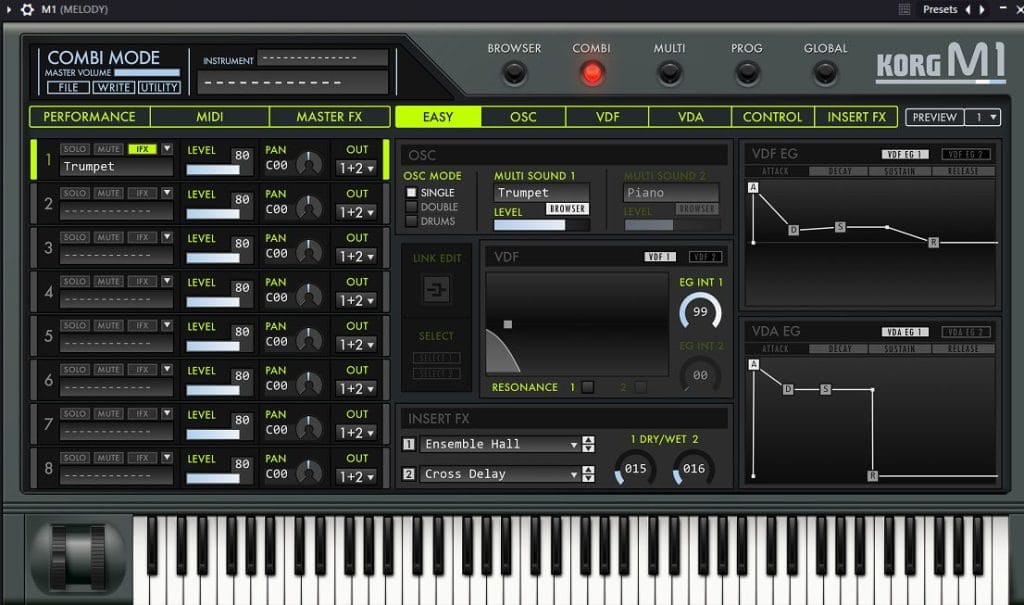
The Korg M1 is a synth that just refuses to go out of style. It’s packed with those unmistakable 90s tones, from classic organs and pianos to brass and atmospheric pads, all with a slightly lo-fi digital edge that instantly adds warmth and nostalgia. The built-in effects like ensemble and delay can make even the simplest sound feel alive. It’s one of those instruments where a single layer can completely shift the mood of a track.
In “Going Down,” I used the M1’s Combination Mode Trumpet patch as a layer to build tension before the drop rather than for a melodic part. I filtered out the low end, added hall reverb, and automated both the filter and volume to make it rise naturally through the buildup. It sits quietly in the mix but adds a sense of lift and pressure that pushes the track forward. You don’t really notice it until it’s gone, but it helps create that anticipation right before the bass hits.
For producers working in house or tech house, the M1 can be a great tool for layering atmosphere rather than just leads or chords. Try loading unexpected presets like brass or pads, then filter and automate them to act as risers or transitional sounds. The key is subtlety. You can keep the groove driving while adding that old-school color underneath. It’s a reminder that the most effective build-ups don’t always need big sweeps or white noise; sometimes, a classic synth doing something understated can have more character.
FabFilter Pro-Q 3
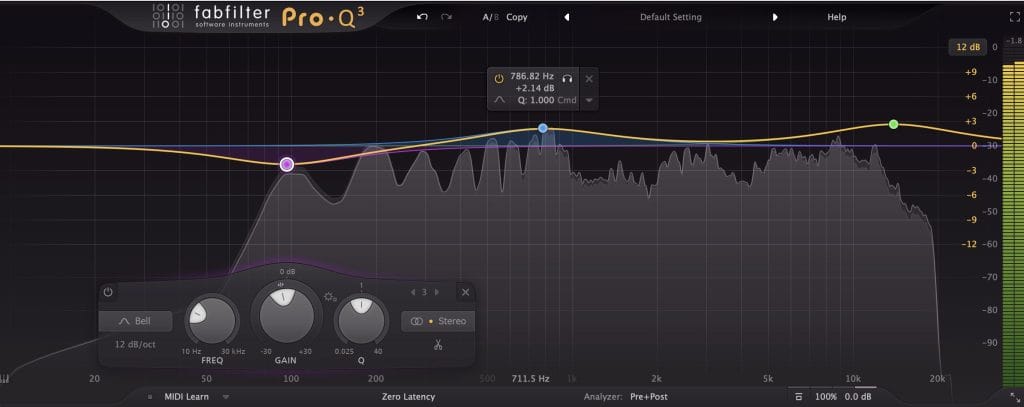
FabFilter Pro-Q 3 is one of those plugins that ends up living on almost every channel. It’s a clean, transparent EQ that gives you full control over shaping frequencies without coloring the sound. The interface is super visual, which makes it easy to spot problem areas quickly, and its dynamic EQ features make it powerful for both subtle tone shaping and more surgical moves. It’s flexible enough for everything from light vocal polishing to full-on mix bus work.
For “Going Down”, I used Pro-Q 3 on one of the vocal layers to gently shape and balance the tone. I cleaned up a bit of low-end mud, added a small lift in the midrange for clarity, and a touch of air on top to help it sit in the mix without overpowering the groove. What I love about this plugin is that it doesn’t lock you into one way of working. Every record needs something different, so I use my ears rather than a preset approach. It’s a quick, reliable way to make sounds breathe in the mix.
If you’re producing house music, Pro-Q 3 is a tool that will make your life easier. It’s not about fancy tricks; it’s about being precise and flexible. I’ve learned to trust small, subtle moves rather than drastic cuts or boosts. Whether it’s vocals, bass, or the master channel, it helps me shape things cleanly and keep the groove front and center. There’s never one exact way to use it, and that’s what makes it so essential.
Quick Fire Hot Takes
Hot Take #1: House music doesn’t need reinventing. It just needs the right groove. People don’t go to the dancefloor to overthink; they go to feel something.
Hot Take #2: If the drums don’t make you move when they’re soloed, the track’s not ready. The groove should hit even before the bassline comes in.
Hot Take #3: Stop chasing trends. Find what actually excites you in the studio. The sound that feels most like you will always cut through more than what’s currently charting.
Hot Take #4: You don’t need a wall of hardware to make a record that slaps. It’s not about the gear, it’s about how you swing the loop.
Hot Take #5: Everyone’s obsessed with being underground, but the real underground was never about hiding. It was about freedom. Make music that connects, not just impresses.







Magnetic byline note: This byline is used for staff produced updates and short announcements, often based on press materials and official release information. Editorial responsibility: David Ireland (Editor in Chief) and Will Vance (Managing Editor). About: https://magneticmag.com/about/ Masthead: https://magneticmag.com/masthead/ Contact: https://magneticmag.com/contact/