Table of Contents
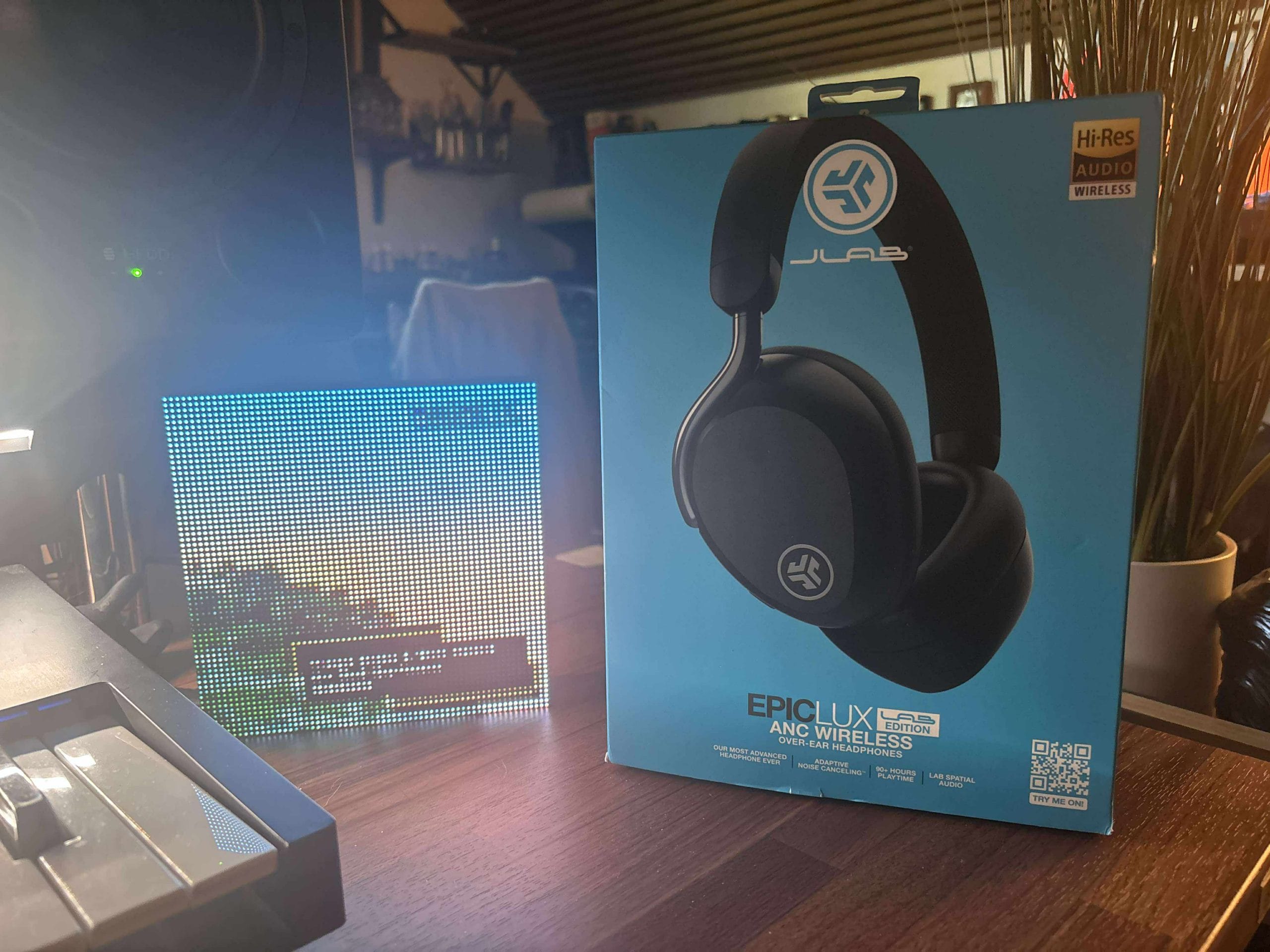
JLab sent over the Epic Lab Lux a few weeks ago, and I wasn’t expecting to be too impressed. I’ve always known them as the “budget brand”—great for backups, casual listeners, or people who just want something decent without thinking too hard.
But honestly, I found that these don’t feel like a side option even after a fair amount of use. They feel like the main course. Sure, they can’t compete with something like Audeze or my beyers for mixing and producing music in the studio but I don’t really think that’s the point they’re trying to hit.
I’ve been using them on planes, in the studio, on long walks, and during editing sessions at home. They’ve held up across all of it. Not in a “good for the price” kind of way—these are actually great, period. So let’s talk about them!
Comfort and Build on the Epic Lab Lux Headphones
Comfort’s the first thing that either sells me or loses me on headphones. This is true for casual listening headphones and more intensive ones used for professional mixing and audio work. I’ve got a high tolerance for sound quirks if the fit is right, and these passed that test pretty damn well.
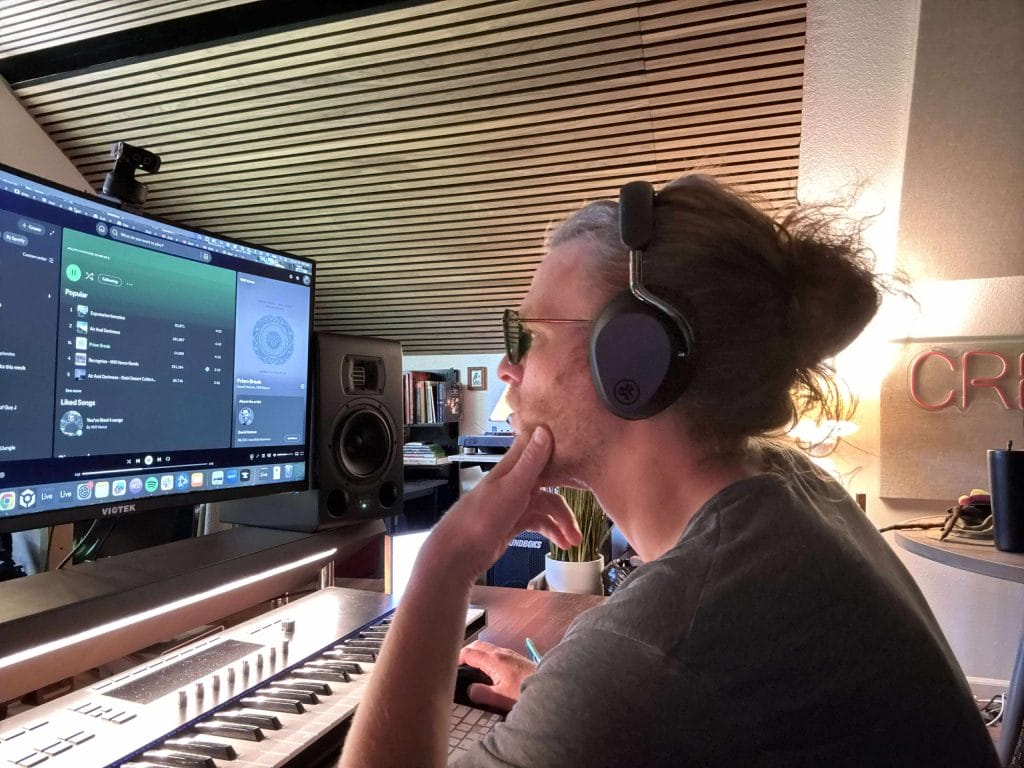
The headband doesn’t dig in, even after a few hours, and the memory foam earcups sit right where they should. I wear blue-light glasses most of the day when I’m working in front of screens, and they didn’t pinch or mess with the seal. No ear fatigue. No weird pressure spots. Just a clean fit.
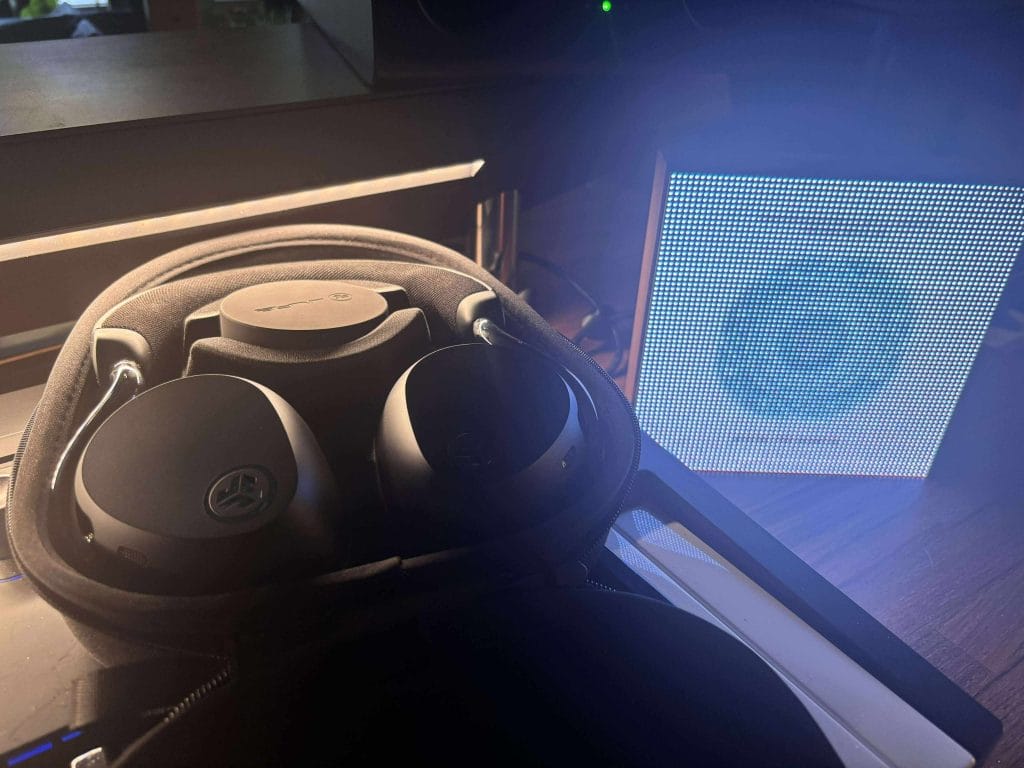
The design doesn’t fold, which I thought would be annoying at first—but the hard case solves that. The earcups rotate fully, so if you’re someone who wears headphones around your neck between uses, it won’t feel like a brace choking you out. They do have a little weight to them—around 300 grams—but it’s balanced enough that I barely noticed after the first session.
Swipes handle most of the playback controls, and you’ve got two physical buttons: one for power and one you can customize. I usually hate swipe controls, but these work way better than I expected. No lag, no missed inputs, and the sensitivity feels dialed in just right.
Noise Canceling and Audio Performance
Let’s get to what matters: the ANC is solid. On par with some of the $300+ headphones I’ve used. I tested them on a few flights and in some chaotic open offices, and the engine noise, AC hum, and background chatter all dropped out cleanly. Human voices still poke through a bit if you’re standing right next to someone, but I didn’t feel like I had to crank the volume to compensate.
There’s a transparency mode, and I’ll be honest—I never like that feature on any headphones. I’d rather pull one earcup off and talk like a normal person. But I tried it out anyway, and it did a better job than I expected. My own voice didn’t sound overly artificial, and I could hold a conversation without needing to shout.
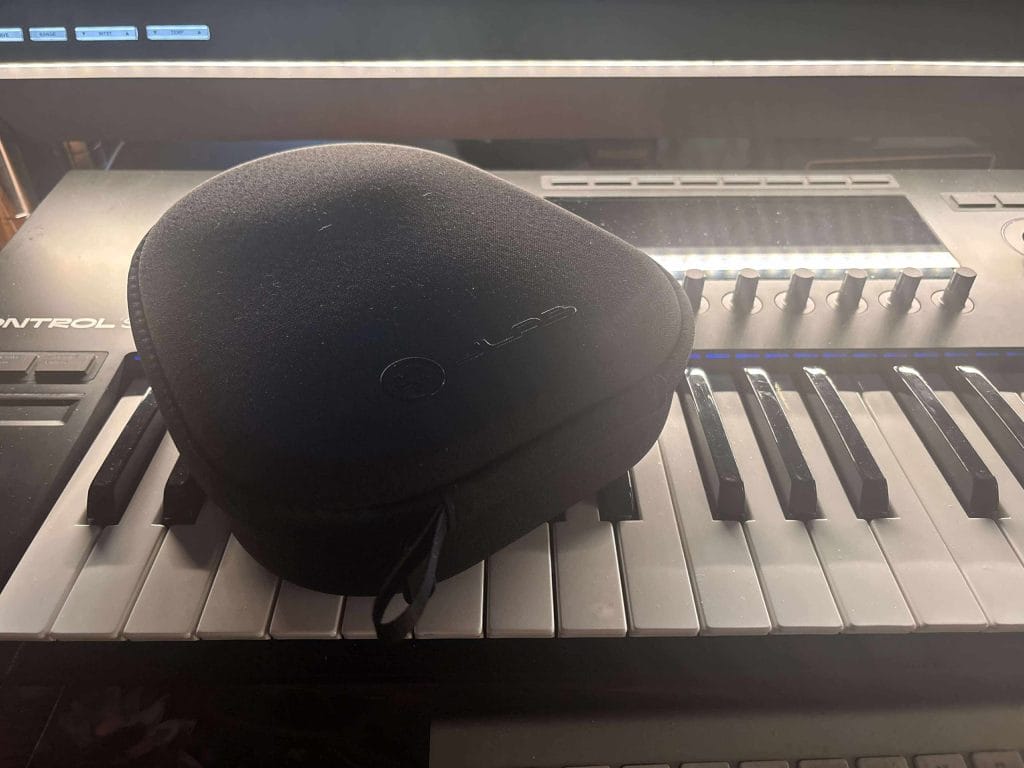
Out of the box, the default tuning leans a little bass-heavy, which isn’t surprising for more consumer-level headphones like this. But after loading up the JLab app and switching to a custom EQ, things really opened up. I was able to build a curve that hit exactly where I wanted: punchy low-end without bloat, present mids, and just enough clarity up top. I’ve never been a big fan of app-supported hardware, as I feel hamstrung unless I hand over my data to their app but I guess that is just a sign of the times isn’t it…
One weird thing: switching to the custom EQ drops the overall volume significantly. I had to jump from 60% to nearly 90% to get the same output. No idea why, and it’s not a dealbreaker, but it’s something to keep in mind. Once you get it tuned the way you want, it sounds excellent—especially for the price.
I tested a few tracks I know inside and out, including “Expressive Iteration” from yours truly. The bass on that one usually rattles headphones in all the wrong ways, but here, it held firm. Clean low-end response, no distortion, and the rest of the mix stayed intact. Vocals sit forward without sounding separated or artificial. I’d still keep your EQ adjustments subtle, though—boost too much and the highs can start to warp the stereo image.
Battery Life, Charging, and App Features
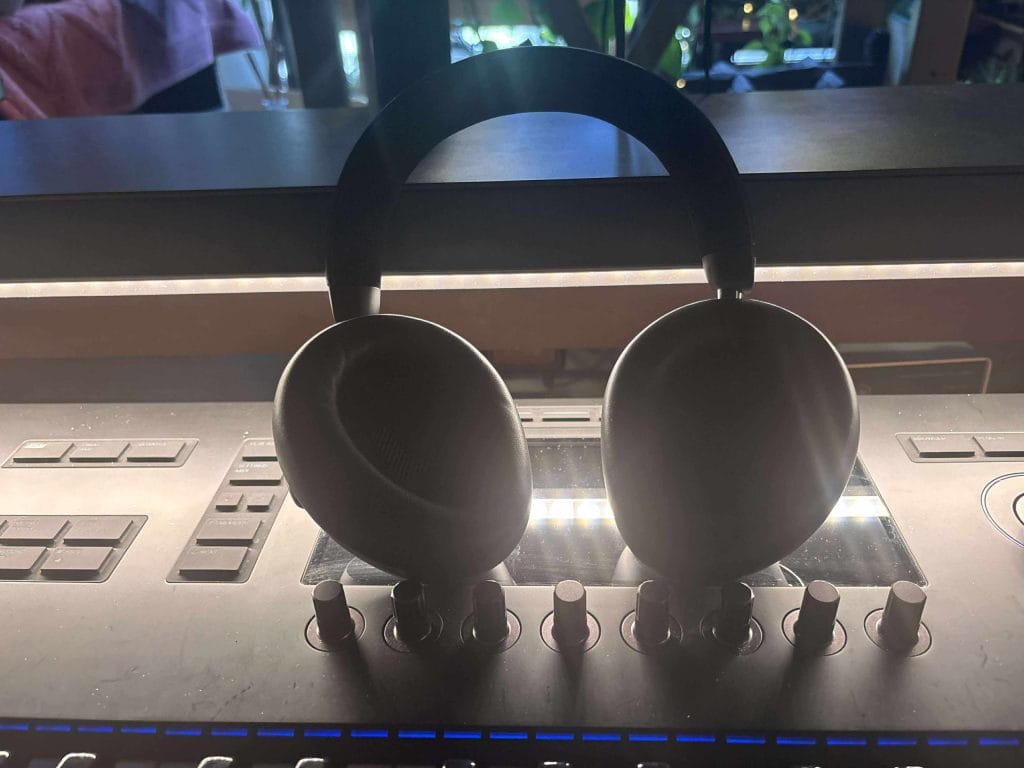
Battery life is probably the biggest shocker. With ANC on, I got just over 33 hours consistently. With ANC off, I hit 90. That’s not theoretical—it’s based on my actual usage over two full weeks. They charge via USB-C in around 2.5 hours, but you can also throw them on the included wireless charging puck, which uses magnetic alignment so the headphones lock into place. It’s a smart touch, and I’ve used it to charge my phone too.
The Bluetooth range hit 50 feet easily, and the dual-device connection is seamless. I kept them connected to my MacBook and iPhone phone at the same time, and switching back and forth during calls or sessions didn’t cause any lag or dropouts. It’s a feature I wish more headphones prioritized.
Inside the app, you can remap button controls, set your own EQ presets, activate “safe hearing” volume caps, and toggle between ANC and ambient modes. It’s a little clunky in some spots, but it works. And having two customizable buttons (plus full gesture control) means you can really set this thing up the way you like. Everything from volume to skip to voice assistant can be reassigned.
Final Thoughts
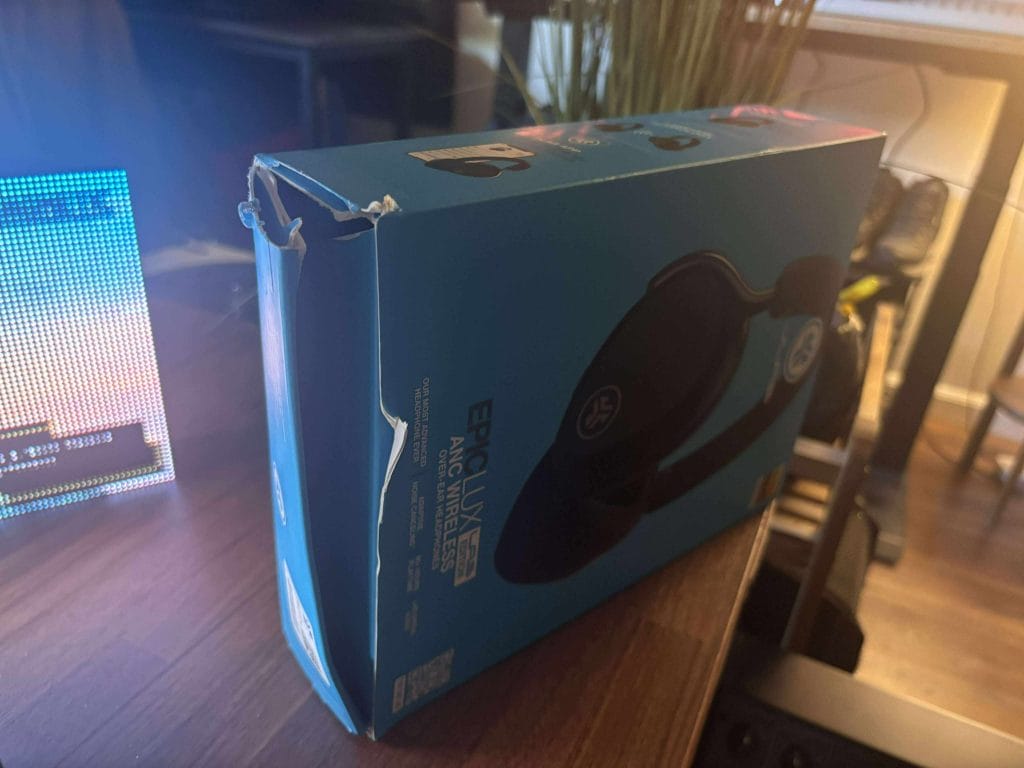
The Epic Lab Lux isn’t trying to reinvent anything. It just takes the feature set of a flagship pair and drops it into a package most people can actually afford. LDAC support, wireless charging, multipoint Bluetooth, full app control—it’s all here. Are there quirks? Sure. The custom EQ volume bug, some shipping inconsistencies on JLab’s site, and no folding hinges might turn some people off. But those are minor when you look at what it gets right.
If you’ve been looking for something that checks all the boxes without pushing past the $200 mark, this is the one to beat. It’s easy to wear, easy to use, and—most importantly—easy to enjoy.

Will Vance is a professional music producer who has been involved in the industry for the better part of a decade and has been the managing editor at Magnetic Magazine since mid-2022. In that time period, he has published thousands of articles on music production, industry think pieces and educational articles about the music industry. Over the last decade as a professional music producer, Will Vance has also ran multiple successful and highly respected record labels in the industry, including Where The Heart Is Records as well as having launched a new label with a focus on community through Magnetic Magazine. When not running these labels or producing his own music, Vance is likely writing for other top industry sites like Waves or the Hyperbits Masterclass or working on his upcoming book on mindfulness in music production. On the rare chance he's not thinking about music production, he's probably running a game of Dungeons and Dragons with his friends which he has been the dungeon master for for many years.