Few names in the world of DJ mixer design carry as much quiet reverence as Andy Rigby-Jones. A lifelong lover of analog electronics and dance music, Andy’s fingerprints are on some of the most iconic mixers in DJ history—from Allen & Heath’s legendary Xone:92 and the ultra-rare Xone:V6 to the cutting-edge MODEL 1 collaboration with Richie Hawtin. His design ethos—simplicity, precision, and uncompromising sound quality—has shaped the way DJs interact with their tools for decades.
After a storied run at Allen & Heath, Andy founded Union Audio, initially a low-key venture sparked by his collaboration with MasterSounds’ Ryan Shaw. That project gave birth to a string of boutique rotary mixers that combined audiophile-grade fidelity with DJ-focused functionality. With Shaw stepping back in 2024, Union Audio has now emerged as Andy’s sole creative outlet—one that continues to grow, evolve, and surprise, all while staying rooted in the analog traditions that made his early work so influential.
In this interview, I caught up with Andy Rigby-Jones to discuss his design process, the resurgence of rotary, why vinyl is once again relevant in DJ culture, and what keeps him inspired, decades into the game.
Q&A with Andy Rigby-Jones, founder of Union Audio

You’ve been behind some of the most beloved DJ mixers in history. When you approach designing a new mixer today, what’s the first thing you think about, and do you feel that today’s DJ is looking for something dramatically different than what you were in the past?
Andy Rigby-Jones: A new mixer design can be inspired by lots of things, a new circuit topology, an inspiring DJ set, a realisation of a gap in the market for a specific feature, or just the desire to create something new. When an idea takes hold, often the first step is a sheet of A3 paper and a collection of control knobs just to work out spacing and ergonomics. From this, we can get a rough idea of size and layout, which we can then progress into a 3D model and eventually to a working prototype.
That’s an interesting point about what today’s DJ is looking for compared to the past, because to a large extent things have gone full circle. From spinning vinyl through to CDJs and onto laptop-based DJing, a lot of DJs are now moving back to turntables, something I thought was a thing of the past 20 years ago! So, to answer your question, I don’t think today’s DJ mixer has moved on a million miles from when I started – we’ve done MIDI, USB audio, etc., in the past, but none of these features are on our current range of products, but every one of them still features RIAA phono pre-amplifiers…
Union Audio is becoming a cult favorite among audiophile DJs and boutique mixer heads. What was your original vision for the company, and how has that evolved since its founding?
Andy Rigby-Jones:I have to admit that I didn’t really have a plan when I left Allen & Heath to start Union Audio.
I’d previously told Richie Hawtin that I was leaving A&H, as we’d become good friends over the years, and he suggested we work together on a project, which of course, evolved into MODEL1. Then, just as the design work for MODEL 1 was coming to completion, quite by accident, I met Ryan Shaw from MasterSounds Audio, and a new collaboration formed, this time taking Union Audio into the boutique rotary mixer market.
In early 2024, when Ryan told me he’d decided to downsize his business to spend more time with his family, Union Audio became the sole brand for the products we design and manufacture, creating another largely unplanned step on this amazing journey.
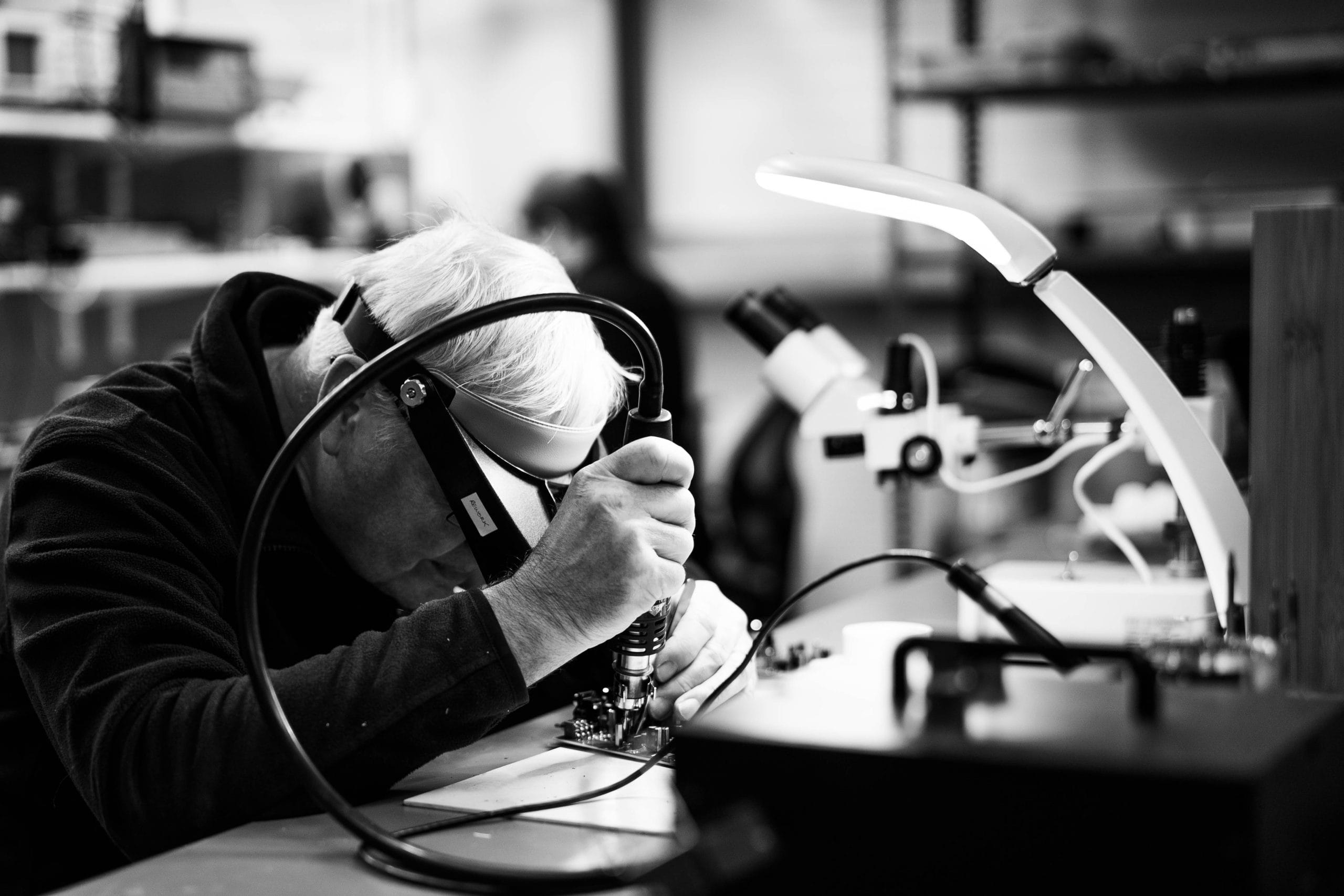
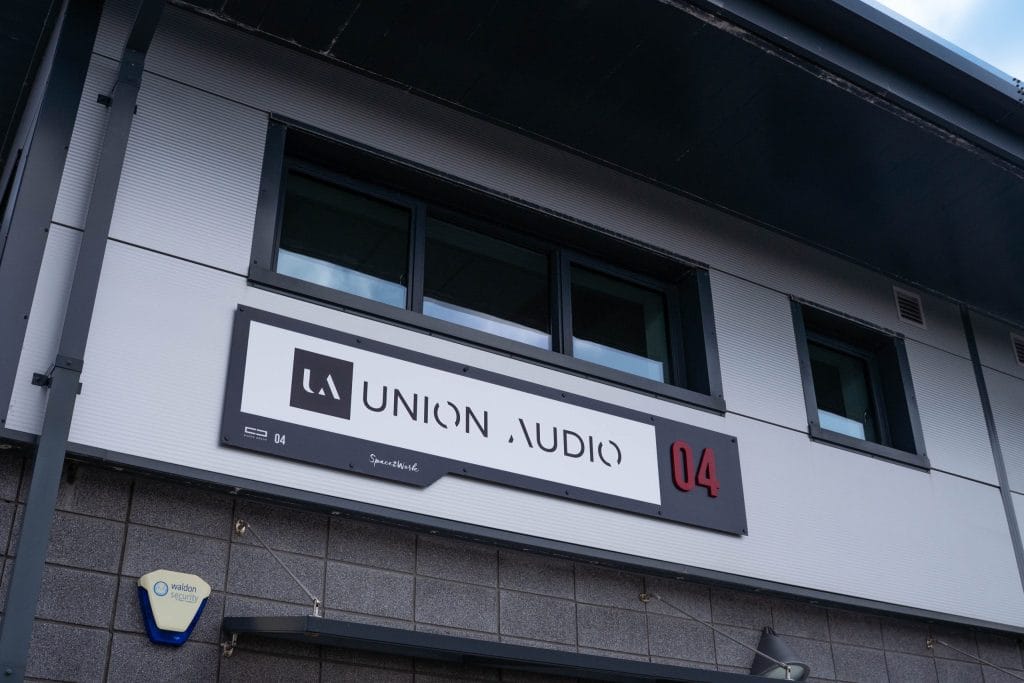
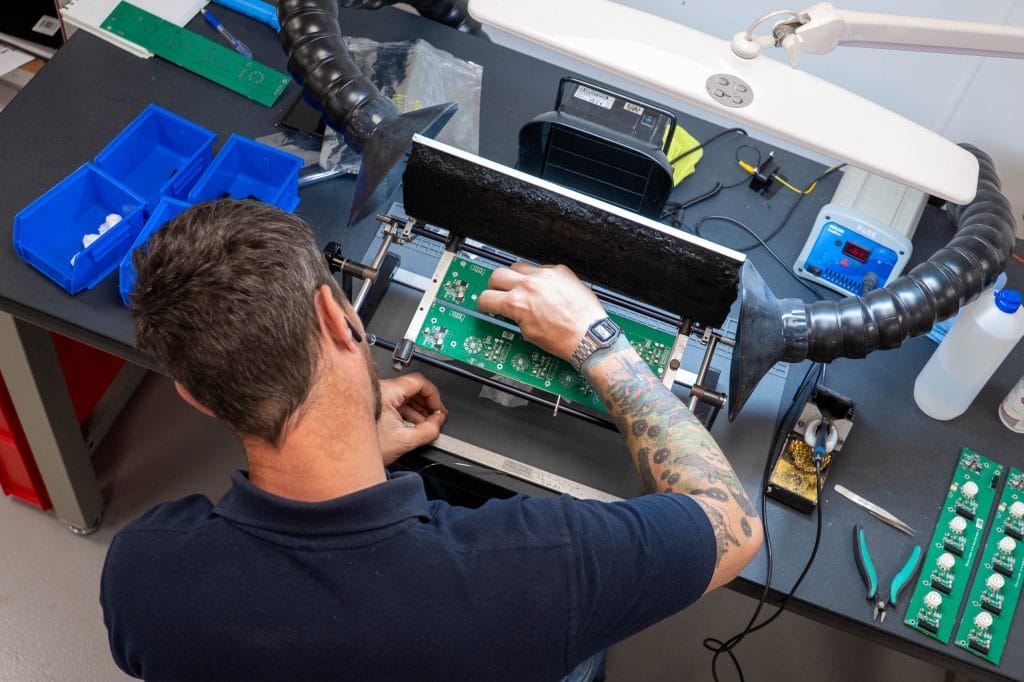
At each step of the way, the company has grown organically. We’ve had to relocate three times, and to adopt new technology to help fulfill the demand for our products. Today, we work from a modern factory unit in a smart enterprise park, employing about a dozen staff, which seems an awful long way from my garden shed where it all started!
From Allen & Heath’s legendary Xone series to your work now at Union, you’ve left fingerprints on some of the most influential tools in DJ culture. What project are you most proud of, and why?
Andy Rigby-Jones:Tricky one. Xone:V6 holds a special place in my heart, which is why I revisited the concept with the Orbit.6. Xone:3D was ahead of its time, DB4 was a technological marvel (thanks to the amazing team of digital engineers who worked on it), and Xone:92 is still an industry standard, more than 20 years after its launch.
I’d like to think the Orbit LE range has helped democratise the boutique rotary market by offering quality at an affordable price, but I think the project I am currently most proud of is the Elara .6. It is a sophisticated product, designed without compromise, and is such a pleasure to mix on. It also stands as a testament to skill of the small team who build it.
The DJ mixer market today is crowded with digital fx integrations and all-in-one solutions. Where do you see the soul of the analog mixer in 2025?
Andy Rigby-Jones:There are some amazing products on the market today that integrate digital technology in a way that makes it relatively easy for almost anyone to create a seamless set. But there is also a new generation of DJs who are rediscovering the magic of vinyl. Vinyl DJing is tactile, you physically hold the audio media in your hands, you learn a very specific set of skills to beat match, and you end up with something incredibly special in the form of a record collection!
And if you are spinning vinyl, why would you not want to keep the entire signal path in the analogue domain? Digital technology can do some incredible things that analogue cannot, but humans are analogue and I believe that analogue audio can reach into your soul in a way that digital audio can’t.

Can you talk a bit about your design philosophy? There’s a tactile intimacy to your mixers—what drives your decisions from layout to materials?
Andy Rigby-Jones: My design philosophy has always been to try and keep things as simple as possible. I hate having to add additional signal stages in a circuit if it can be avoided, so I try very hard to distil everything down to its simplest form. I also try to add features that help inspire creativity. Layout is often governed by where a control can be physically placed on a circuit board. All our designs are internally modular, with the PCBs at ninety degrees to the front panel, the same as all classical mixing desks were designed back in the day. This offers easier servicing, better signal performance, and a stronger construction, but it does limit where controls can be placed.
Material choice is driven by cost and application. Our Orbit.6 and Elara mixers all feature machined alloy front panels as I think they add a unique look and feel of quality, a sort of a cross between esoteric HiFi and DJ, but obviously this comes at a cost.
One of the hallmarks of your work is sound quality. For the uninitiated, what makes a mixer truly “sound” better?
Andy Rigby-Jones: Touching on what I said previously, I always try to keep circuitry as minimal as possible. This has nothing to do with cost – capacitors, resistors, etc. aren’t expensive after all – but more to do with signal integrity.
Every time you add a new signal stage, whether it’s an EQ, a Filter, or something else, it will influence the overall sound. When the product demands a certain feature set, Elara.6 for instance, then you need to be very careful in the circuit implementation and component choice. You accept it will influence the sound, so you need to work doubly hard to minimise this. Power supply rails, grounding, and overall layout all have a significant effect on sound quality are.
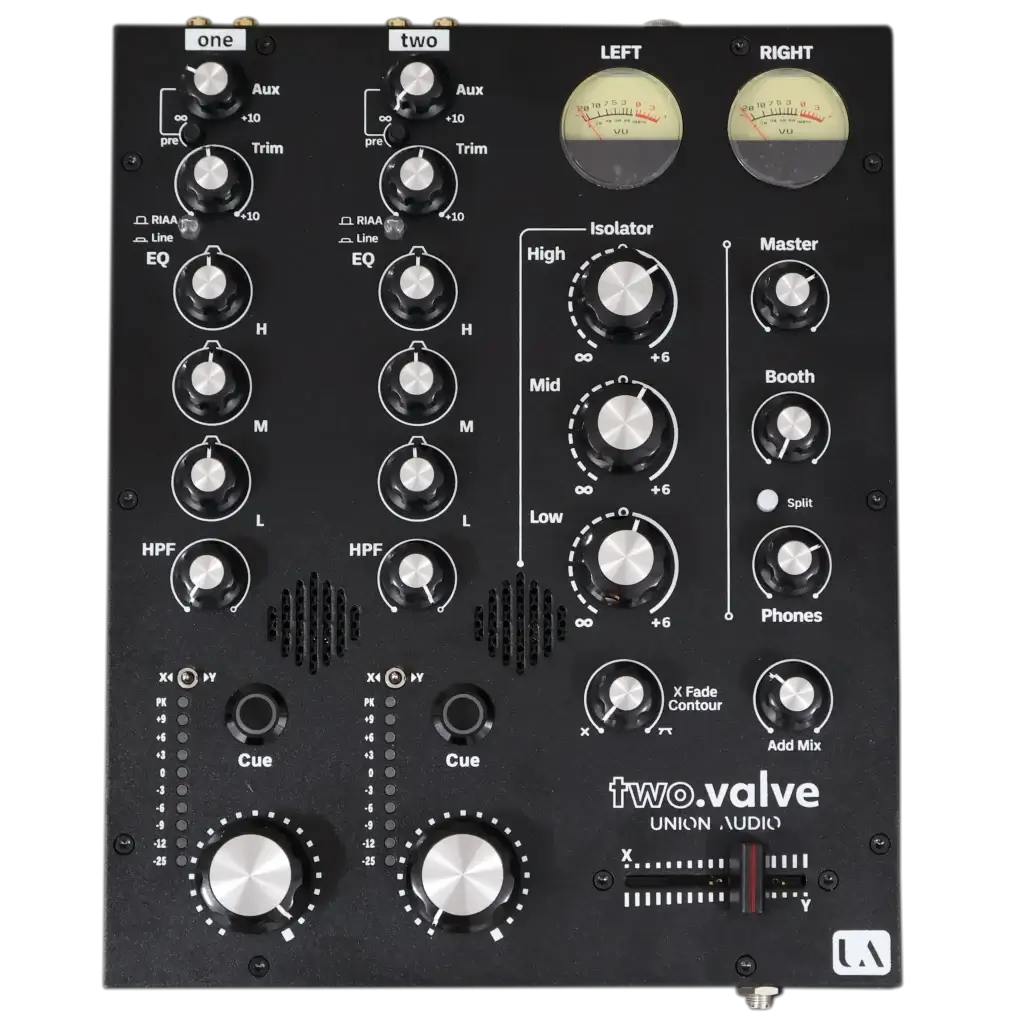
What’s your take on the resurgence of rotary mixers in both club and home listening environments? Are we in the golden age of rotary, or just nostalgic?
Andy Rigby-Jones: The resurgence of rotary mixers has, to an extent, gone hand in hand with the resurgence of vinyl. We’ve also seen the emergence of home DJing as a lifestyle choice, driven by all those youngsters raving away in the 80s and 90s, who are now mature successful adults, but who retain a love for the music they grew up with.
Mixing on a rotary mixer is also more precise than mixing on a fader mixer, so if seamless blends are your thing, then a rotary will suite you better.
Whether we’ve reached “peak rotary” or not, only time will tell, but currently there is still strong demand.
Many people consider mixers to be utilitarian, but your products are clearly crafted with artistry and intent. Do you see yourself more as an engineer, designer, or artist?
Andy Rigby-Jones: First and foremost, I see myself as an engineer with a deep fascination for analogue electronics, something that developed from a very early age of taking old radios apart. I’ve also had a lifelong love of dance music, from funk to disco, to house and techno, which led me to becoming a DJ in the late 70s and I gigged two or three times a week up until I played my last event on January 1st 2000, which seemed like a good date to end on. This experience has also given me the ability to design products from a DJ’s perspective.
As for any artistic flair, the raw machined aluminium front panels for the Orbit.6 are to my eyes an absolute work of art!
How much input do you seek—or avoid—from working DJs when developing a new product?
Andy Rigby-Jones: It’s really nice have feedback from DJs, but it can also lead to a “designed by committee” scenario where you get different feedback from everyone you ask. It can also massively hamper development if feedback forces a late change of design direction.
If you could build a dream rig for any DJ, past or present, who would it be and what would it look like?
Andy Rigby-Jones: That’s a tough question to answer as there are so many great DJs, and just seeing them use my designs, both past and present, is deeply satisfying.
If I had a time machine, I would love to visit some of the famous New York clubs in the 70s and early 80s and learn from the early pioneers of dance music sound systems.
I think the best sounding gig I’ve ever attended was at the Opium Gardens Miami 2004 where Louie Vega was playing vinyl through a Xone:V6 and four stacks of Opus Audio, one in each corner of the dance floor. Bliss!
What’s one design feature or detail on a Union Audio product that you think most people overlook—but that you’re especially proud of?
Andy Rigby-Jones: Probably the Stereo Width control on the Elara.6. MS processing has been around for a long time, but the application on the Elara.6 is new. Used in conjunction with the filters, and especially sending the signal through the Aux buss into a reverb, via the AP strip Aux, can create a very dramatic bass drop.
You’ve been doing this for decades. What still gets you excited when you walk into the workshop each day?
Andy Rigby-Jones: I love designing products, especially working with 3D CAD (I use Autodesk Inventor). Then seeing the design move from the screen and into a physical product is incredibly satisfying. Sadly after that all the hard work starts, such as documentation, Bill of Materials, stock procurement, etc, etc. But it’s great to see the end product finally being packed and on its way to a new customer.
DJ culture has shifted dramatically—from vinyl to CDJs to laptops and now streaming. Has that evolution changed how you design mixers?
Andy Rigby-Jones: Yes, for sure, but as mentioned earlier, I think we’ve now gone full circle with the resurgence in vinyl. But I’m always on the lookout for an opportunity to develop a product to fit an emerging technology.
What do you think is missing in today’s DJ mixers? Is there something that nobody’s doing yet that you’d love to see (or build) next?
Andy Rigby-Jones: Seeing so many DJs mixing on ubiquitous plastic and steel boxes full of digital electronics can be a bit depressing, but it works well and makes life easy and convenient, so I can understand why.
However, if you’re mixing vinyl then there is a wealth of small independent companies, run by people passionate about their art, making unique products with real soul. But the DJ mixer market is pretty crowded so it’s hard to come up with something that’s new, but I do have a few ideas for the next product…
Finally, if you could go back and give a younger Andy Rigby-Jones one piece of advice at the beginning of your journey into mixer design, what would it be?
Andy Rigby-Jones: Be pushier, demand more, and ignore the setbacks. Learn to put your trust in fate and understand that adversity can lead you on to a better path.
Talking to Andy Rigby-Jones is a reminder that in a world obsessed with digital shortcuts and streamlined convenience, there’s still a place for craftsmanship, intention, and analog soul. Whether he’s working on a new minimalist signal path or refining the perfect rotary blend, Andy brings an uncommon level of care and authenticity to everything he builds. His work isn’t just functional—it’s emotional. For DJs who see the mixer as more than just a utility, but as an extension of their own creativity, Union Audio offers something rare: gear built by someone who’s stood behind the decks and understands exactly what makes a mix sing.
From the shed to the studio, from Xone to Elara, Andy’s journey is still unfolding—and if his excitement about the next product is any clue, the best may be yet to come.
More info at www.unionaudio.co.uk

David Ireland is a professional strategist, creative, and marketer. He began his career in 1995 as creator and publisher of BPM Magazine. In August 2000, BPM Magazine merged with djmixed.com LLC, an online media company based in Los Angeles, which later evolved into the Overamerica Media Group [OMG] in 2003. In 2009, Ireland left Overamerica Media Group to serve as the VP of Marketing at Diesel. In 2011, he returned to his roots in media and cofounded the online electronic music publication Magnetic Magazine and created The Magnetic Agency Group. In June 2018, Ireland joined Winter Music Conference (now owned by Ultra Music Festival) as the Director to lead the reboot for 2019 and usher in a new era for the iconic brand. He served as Chief Marketing Officer at Victrola for three years, guiding product innovation and brand growth. He currently serves on the advisory board of Audiopool, a new music tech startup focused on AI-generated music licensing and artist revenue models.