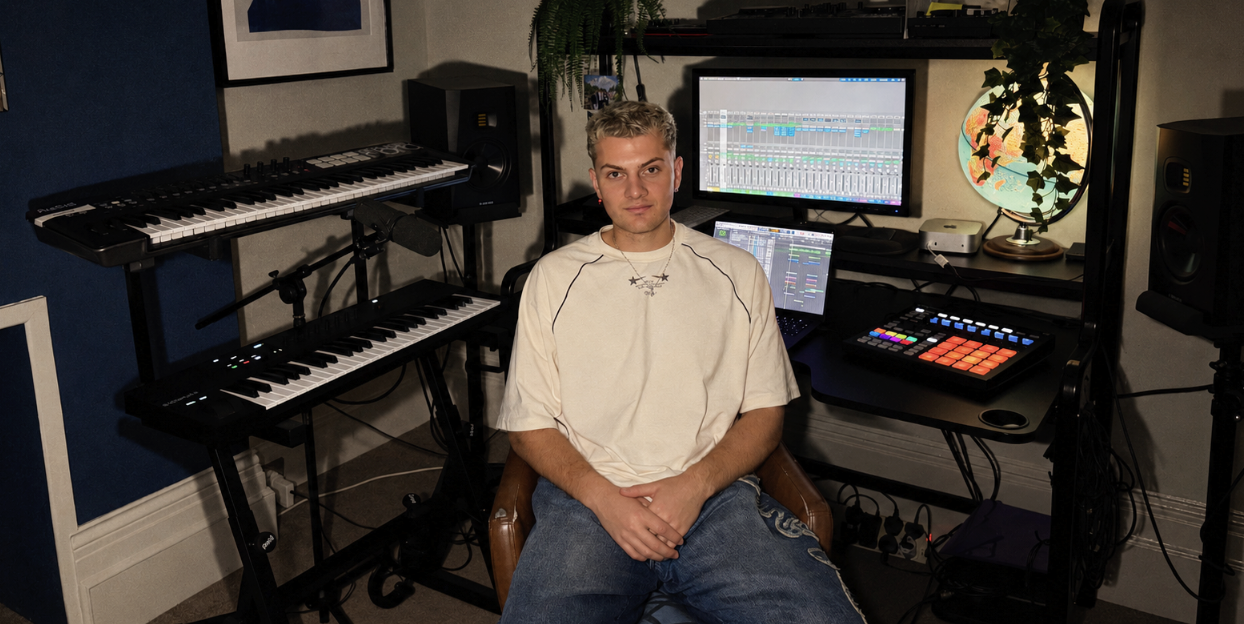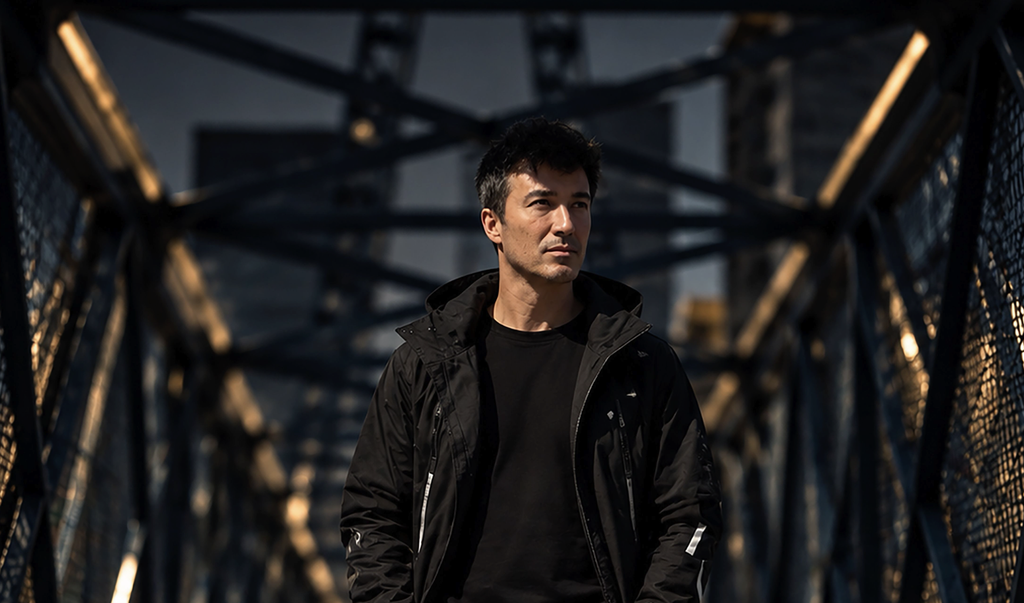
Australian-born producer and songwriter DARBY has crafted a unique fusion of electronic and pop, creating club-ready tracks that blend the energy of the US, UK, and Australian music scenes. Drawing inspiration from Y2K nostalgia, the 24-year-old artist brings a fresh perspective to the glittering digital aesthetic of the era, balancing nostalgia with a modern edge.
Since his 2019 debut, DARBY’s dynamic sound has caught the attention of electronic heavyweights like Skrillex, Disclosure, and ODESZA. His catalog includes impressive releases on renowned labels like Ninja Tune, Nightmode, Monstercat, and Bitbird, showcasing his versatility and innovation.
In this feature, DARBY takes us behind the scenes of his recent single “FLOW,” released on NIGHTMODE, breaking down the creative process that brought it to life. He offers unique insights into perhaps lesser-known plugins and production techniques that helped shape the track’s distinctive sound. Let’s dive deeper into the details in the latest edition of How It Was Made: DARBY – “FLOW.”
Ramzoid 808 Cooker

808 cooker is a sampler with built-in sample library, ADSR, EQ, distortion and saturation.
Ramzoid’s a soundcloud OG who made these crazy trap and future bass flips back in the day during the genre’s prime. A lot of my inspirations from the genre have carried over to my club music production, so this has remained my number 1 go to bass plugin.
I am super specific on tone, so for FLOW I have 3 different bass variations. There’s a low end call and response: the ‘drake’ preset with a harmonic boost at 250Hz in the EQ for that low-mid end drive. Plus a ‘sustained saw’ preset with an intense amount of FL Studio’s Waveshaper for some harsh distortion contrast. I also use the ‘dog’ preset with a short delay layered underneath to emphasize the bounce on my chord stabs.
UK Garage is built on similar fundamental sine and square wave basses to trap music, so this plugin just provides a subtle sample variety in that journey. I’d recommend using 808s in a variety of genres, why limit ourselves to just basic synths? EDM basses are about bounce and rhythm, instead of making extremely over processed synth messes, I’d focus on clear tones that punch through in a mix, whether that’s boosting a certain couple of frequencies or picking a particular sound from this library that emphasizes your bassline.
Minimeters

Minimeters by Direct is by far my favorite visualiser/ waveform analyser plugin I have ever used, now being extremely synonymous with my content. Direct is a producer himself and it shows with how decked out this plugin is, with a built in spectrogram, stereometer, waveform, peak/lufs analyser, spectrum analyser and oscilloscope. You can use it for displaying your music but it’s also extremely useful for analyzing your mixdowns.
I produce whole songs with Minimeters sitting at the top of my screen. You can easily switch between your DAWs input and your computer’s audio, so I am referencing spotify and soundcloud for other songs constantly. The first 4 hrs of production for FLOW was live streamed and you can see me analyzing EQ and stereo spreads of other tracks compared to my own the entire time.
Minimeters is a constant reference for me to make sure I am on the right track. I recommend this to producers who easily get stuck in their mixdowns to see how your sounds match up to your idol’s songs. I teach music production lessons where I’m constantly using this plugin to explain “your sound lacks stereo here” “your low end tones are not as clear as these examples” “you’re not reaching enough LUFs”. It’s also a super satisfying display of your work, my song FLOW was no exception when creating content.

Kilohearts Dynamics
This plugin had been sitting in my kilohearts bundle for years before I even touched it. I am obsessed with layering, but one day I was so frustrated with all my percussion being way too busy to comprehend until my producer friend Lizdek put me onto this simple gate plugin. A dynamic gate will cut sound below a certain volume or emphasize audio above a certain threshold. You can control how aggressively this cut is, as well as the threshold’s parameter points.
For ‘FLOW’ I have my basic kick, snare, clap layers as well as ~4 drum loops: a shaker, 2 hat loops and a mid percussion layer. This would typically be extremely busy and disrupt any sort of groove, but Khs Dynamics can easily tighten all these transient points. A hard cut gate below a certain volume allows all these long percussion tails to become neat tight points I can utilize to create very specific rhythms. For this track specifically I also have a plugin on the vocal effect chain to remove any subtle white noise in between vocal phrases.
This plugin should be used to simply clean up busyness in a track. You should constantly ask yourself with layering “is this necessary?” and most of the time the answer is no. Khs Dynamics allows you to pinpoint particular tones and key transients from a certain loop/sound/layer and create a much more digestible addition to busy tracks. UK Garage specifically is very particular about drum placements and swing, so defining that rhythm is super important to the overall groove.
4-5 quick tips for making UK Garage
Tip #1: Sampling:
Garage is a 20+ yr old genre and DJs are still playing out those same timeless tracks, do not be afraid to sample the OG loops, 909 drum machines, old-school synth/vocal samples etc. They’re used often for a reason.

Tip #2: Repetition
House/garage music is consistent, it has short motifs that can be repeated 8/16+ times in a drop and still be memorable. The beauty of variations is always subtle, a listener should be able to easily pick up patterns (or changes to that pattern) in your busy compositions.

Tip #3: Atmosphere
In order to keep up with other modern productions, the current UK Garage compositions are full of life and character. I am a big advocate for exploring your layering to create unique soundscapes, we don’t need to stick to the basic synth sounds anymore, you can keep it super interesting.

Tip #4: Think about the DJ
Do not keep all your sounds at 100%, a DJ is likely wanting music with tension and release, with obvious down moments and obvious moments of high energy. Make it obvious for a listener what journey you are trying to take them on. This can be accomplished similar to how a DJ does on a dancefloor: filtering, reverb, spin backs, even random MC phrases on the mic, give the track some character.