Table of Contents
At Magnetic Mag, we have been focusing heavily on our “How It Was Made” series. In this series, producers reveal personal secrets and music-production tips they’ve picked up while creating music at a high level. Through seemingly countless interviews, we’ve discovered some fantastic tricks about both popular and lesser-known synths out on the market today.
Chances are you’re already using it in your toolkit, so let’s chat about how professional producers use U-He Diva so that you can start replicating their sounds in your own music.
Buy Diva Here 🔥 🔥 🔥
So, we decided to do some heavy lifting and compile all the excellent tips and tricks producers share in their HIWM features into a single article. We will continue to update this article as more artists share their techniques on all things Diva-related.
If you want to explore how artists use Diva in their music, click on the artist and track title to read the “How It Was Made” feature. At the end of each section, listen to the music to hear the synth and the production tricks in action.
Kidnap – Fortified (PIAS)
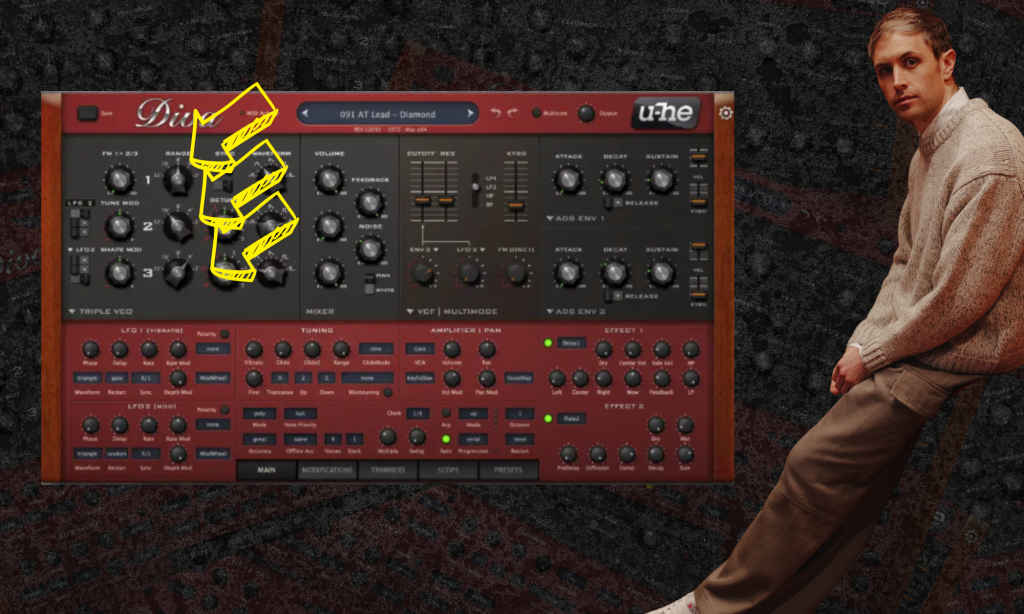
Kidnap used Diva in his track “Fortified,” which was a banging melodic house track that really caught my attention when it dropped about a month ago.
The track’s main synth parts are created using the synth, which Kidnap loves so much for its convincing ability to emulate and match the sonic textures and quality of his real analog synths in his studio. Although he admits not fully understanding every feature, as the synth is easy to understand but deceptively complex and hard to master, this encourages him to explore and discover new sounds and parameters in every track.
For “Fortified,” he created six different Diva instruments, all loaded with the same patch (Diamond by Audiotent). He then varied them slightly by adjusting parameters like the oscillator octave, filter cutoff, and FX depth.
This technique allowed him to layer different versions of the same musical passage and fade between them, keeping the synth part evolving throughout the track. Typically, two or three layers play at any moment, but this constantly changes. Kidnap often generates MIDI through an external arpeggiator, such as Reason’s stock arpeggiator, for unpredictability. Subtle changes to each arpeggio loop, such as pattern length or note variation, help keep the music interesting.
Robby East – Overwater (This Never Happened)
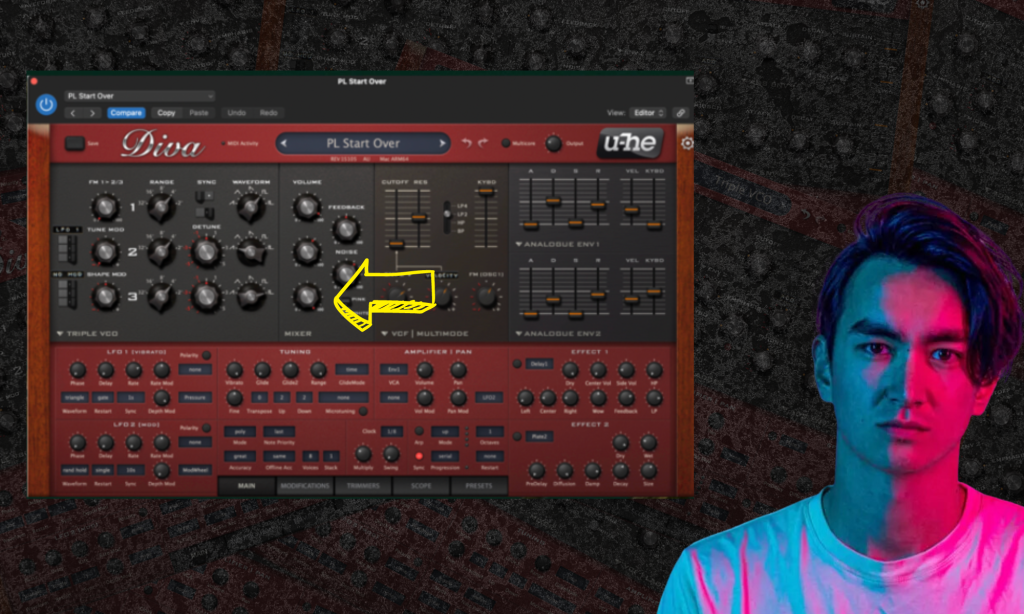
Robby East considers Diva his go-to synth for many elements in his productions, which are released on top labels like Colorize and Lane 8’s This Never Happened.
In “Overwater,” he used Diva for the main plucks, pads, keys, and atmospheric sounds. Despite being somewhat limited compared to other synths like Serum and Vital, East admits that Diva’s warm analog sound and customizable modules from famous synthesizers make it indispensable.
The main pluck patch in “Overwater” combines square, saw, and pulse waves with some noise, processed alongside a Serum layer with a wide sine wave pluck. The white noise helps the pluck not only cut through the mix with a bit more bite but also brings a little touch of analog-style distortion to the sound, which makes it sound even more “real” than other softsynths.
Diva’s flexibility and rich sound make it an essential tool in Robby East’s production process. For airy pads, he starts with presets like “Cryogenic Freeze” in Omnisphere and layers additional sounds like gentle drones, sustained vocal pads, and single cello notes to enhance the texture. Adding long delay and reverb creates a sense of space and depth.
L.GU – Lost (Colorize)
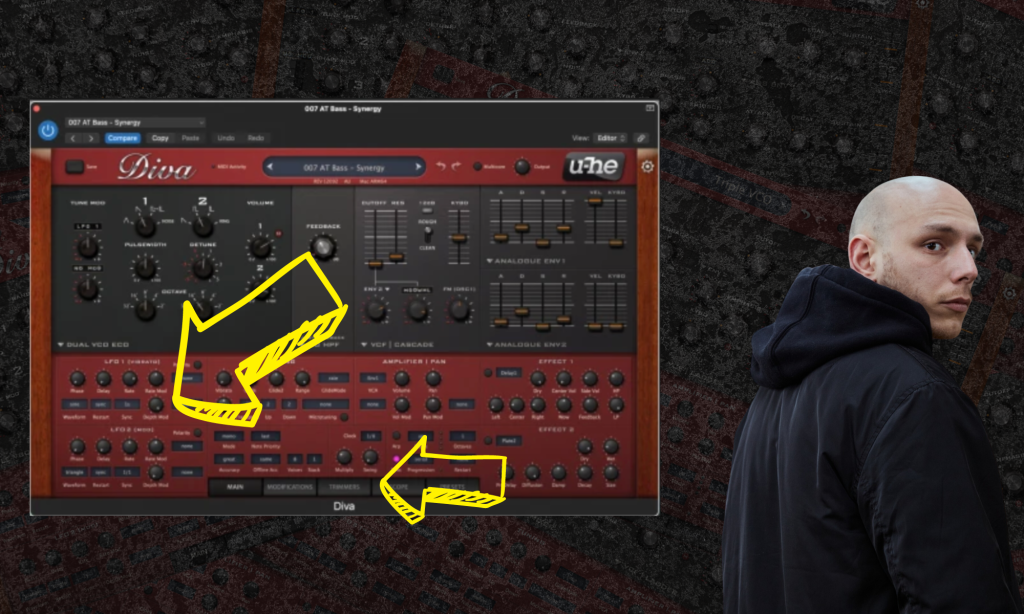
For his track “Lost,” L.GU used Diva in almost every sound, including bass, leads, and pads. L.GU often selects presets from Audiotent and Mojulate, with specific presets like “Synergy” for bass and “Ubersquare” for leads. These presets are amazing right out of the box but can also be dialed in quickly and easily to fit into the track he’s working on.
The track’s buildup features a sound from one of LAR’s preset packs. In his How It Was Made feature, L.GU emphasizes Diva’s incredible sound quality in various contexts, noting the effectiveness of its LFOs and the unique touch added by the Trimmers section to add a ton of extra movement to both leads and basses and also FX to create energy and tension during critical moments of the song. Ramp up the amount and the rate simultaneously, and it can create some incredibly impactful moments and breathtaking moments of tension that are released on the drops.
Hannes Bieger – Rising (Elektrons)
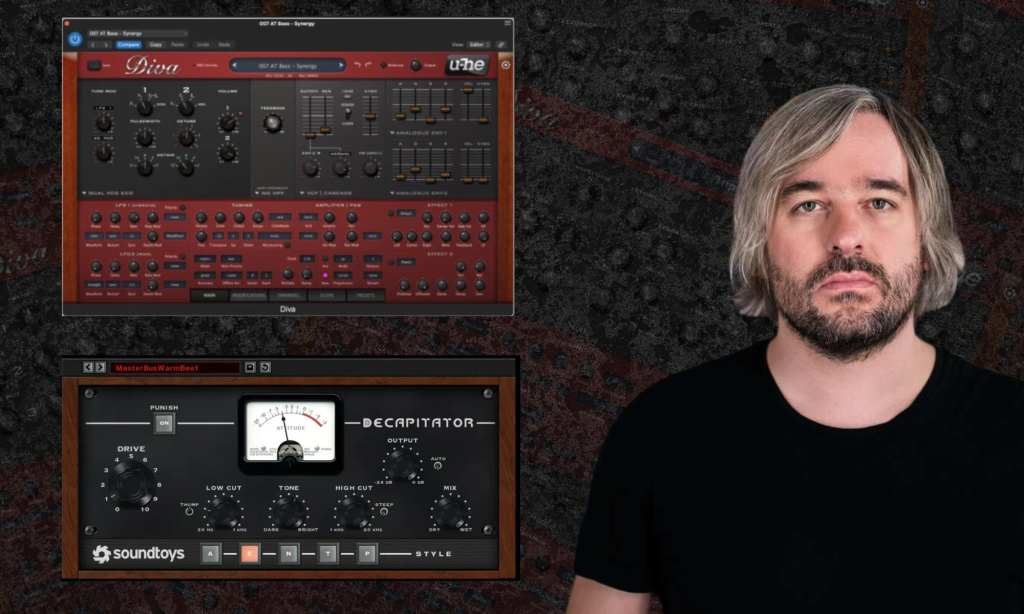
Hannes Bieger uses Diva as a primary softsynth in his melodic techno tracks, and despite being a MASSIVE hardware geek, he admits that Diva still has some of the best texture and customization through its ability to patch different modules from different iconic hardware synths throughout history.
In “Rising,” Diva was used for the bassline, trombone-like lead, and acid synth after the breakdown. He loves Diva for its versatility and ability to sound organic and have a bit of an unpredictable nature, which is why it’s hailed as one of the best analog emulation synths of all time (at least right now).Hannes recommends starting with presets but encourages tweaking to personalize the sound.
Automating parameters via control surfaces or channel automation adds life to the track and is really where producers can start to get the most out of this synth. As easy as it is to click in modulation points with your mouse, you can get so much more of a human feel if you mess with a MIDI controller or something more “human. For “Rising,” the bassline is a simple yet effective syncopated line that plays an octave.
He used Soundtoys Decapitator to add an extra edge, further enhancing Diva’s capabilities.
MOLØ – Balo (Vivrant)
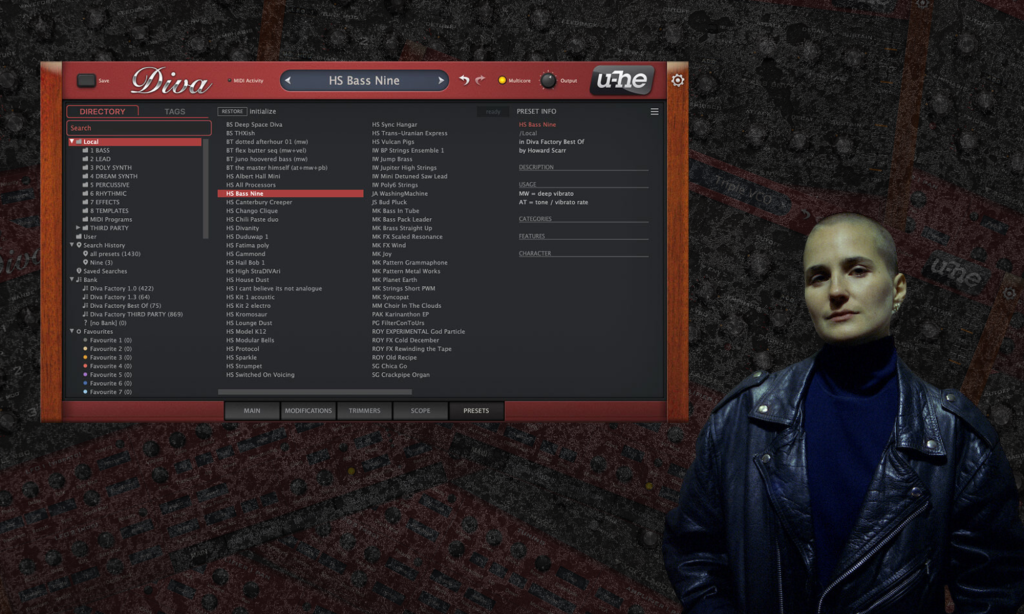
In “Balo,” MOLØ used Diva for pads, leads, and bass. One of her favorite presets is LD Pisces, which she manipulates with the cutoff filter to enhance its warmth. MOLØ blends sine and sawtooth waves for pads, processing them with EQ, compression, Soothe2, ValhallaSupermassive, and other effects. This is a great way to get a really dialed-in mixdown while still having it be rich, warm, and overall quite analog-sounding.
The secret sauce, MOLØ describes, to Diva is in its presets and you can access a TON of different presets from a variety of different makers and get some incredibly inspiring and overall very USEFUL sounds to further tweak to sound exactly like you need depending on the production or track. Diva’s ability to then further categorize and organize tracks that you like and presets that you’ve tweaked means that the synth adapts itself to you over time.
Helang – Lovers Of The Unknown (Dauntless Records)
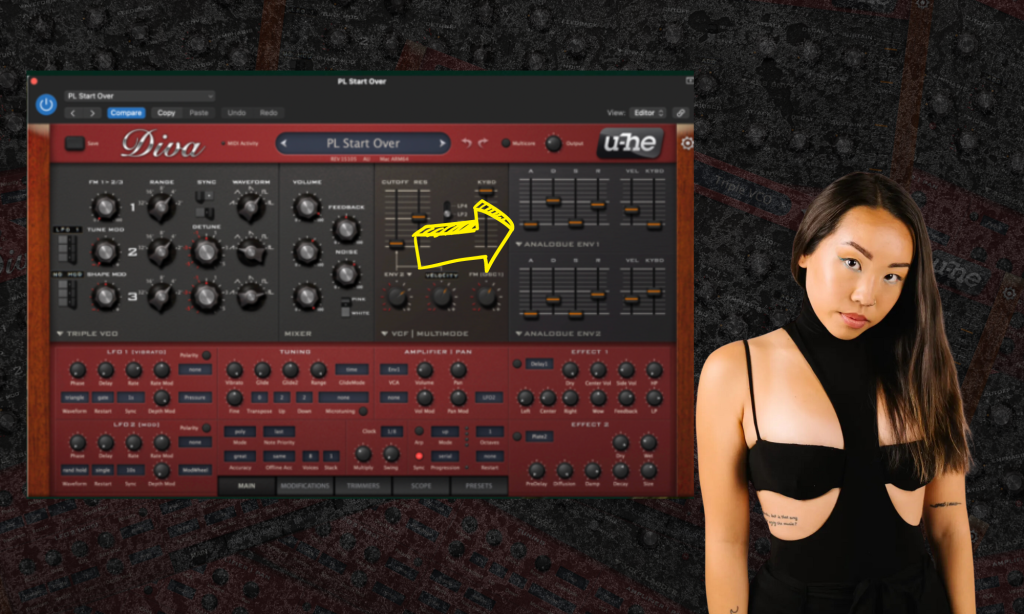
Helang uses Diva by combining oscillators from classic synthesizers to create retro-modern patches that simply sound great every single time. In “Black Angel,” she used the MK Bass Digi Square preset to create a dope synth stab/lead with heavy resonances that made for some very interesting movement and bite in the lead lines.
In her How It Was Made feature, she emphasizes the importance of tweaking filters and using automation to keep tracks engaging over time a handful of times.
Helang encourages producers to experiment with Diva’s ADSR functions and record different takes, highlighting its potential for creating distinctive and dynamic sounds. Mixing oscillators from different synthesizers allows her to craft unique and tailored sounds. You would be shocked at how much energy and momentum can be added to a track when you dial in the ADSR envelopes just right; if they’re too long and too short, the groove of the track can feel loose and out of place. ADSR envelopes are incredibly important so spend the extra time getting them right.
Pro Tip: You can hold down Shift while adjusting any parameter on Diva, which allows for much more minute modulations and changes, which is perfect for locking in their timings!
Alex Kislov – Daydream (Progressive House)
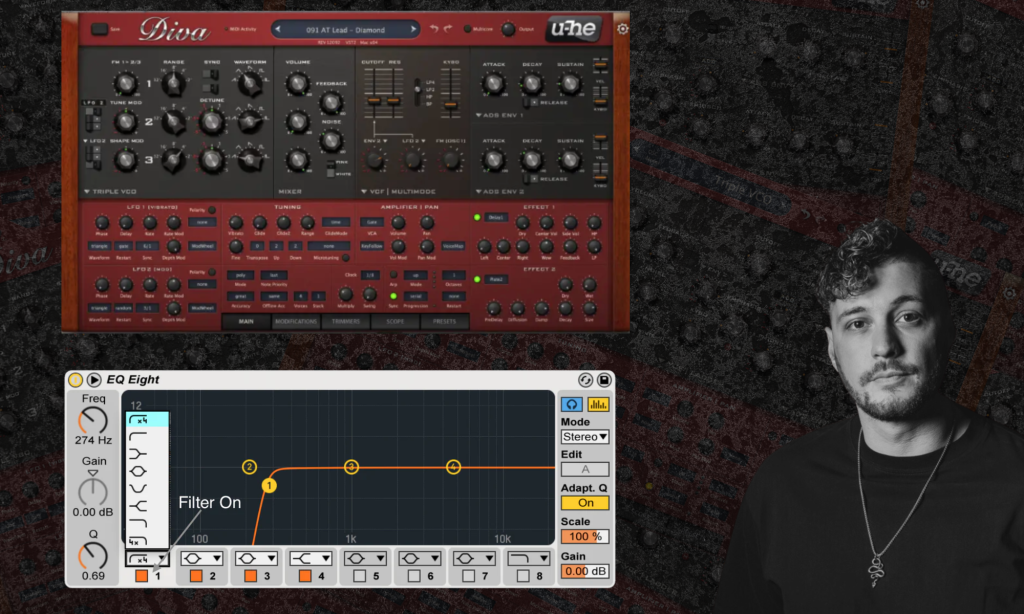
In “Daydream,” Alex Kislov created two bass layers using Diva, starting with Adriatique’s Ray Is On You preset and tweaking parameters for the desired sound. He uses Kickstart 2 for sidechain compression and Wider for stereo widening, along with EQ8 for frequency control. This mix of analog-style spontaneity and digital precision through the tightness of sidechaining that Kickstart can offer and the surgical precision that digital EQs allow offers the best of both worlds between analog and digital mixing and processing.
Because Diva is such a great analog emulation synth, it also likely has a wider frequency spectrum right out of the gate, so get in the habit of adding an EQ to remove the lows and even the highs. Just because a synth is “warm” doesn’t mean you need to have access to low-end frequencies in it, and those often inaudible amounts of bass in a synth can slowly eat away your headroom and ruin a good mixdown!
Diva’s range and quality of sounds make it indispensable for dance music production, adding depth and character to Alex’s tracks. He notes that Diva is not just a tool but a way to bring life to music and resonate with listeners on a deeper level.

Will Vance is a professional music producer who has been involved in the industry for the better part of a decade and has been the managing editor at Magnetic Magazine since mid-2022. In that time period, he has published thousands of articles on music production, industry think pieces and educational articles about the music industry. Over the last decade as a professional music producer, Will Vance has also ran multiple successful and highly respected record labels in the industry, including Where The Heart Is Records as well as having launched a new label with a focus on community through Magnetic Magazine. When not running these labels or producing his own music, Vance is likely writing for other top industry sites like Waves or the Hyperbits Masterclass or working on his upcoming book on mindfulness in music production. On the rare chance he's not thinking about music production, he's probably running a game of Dungeons and Dragons with his friends which he has been the dungeon master for for many years.