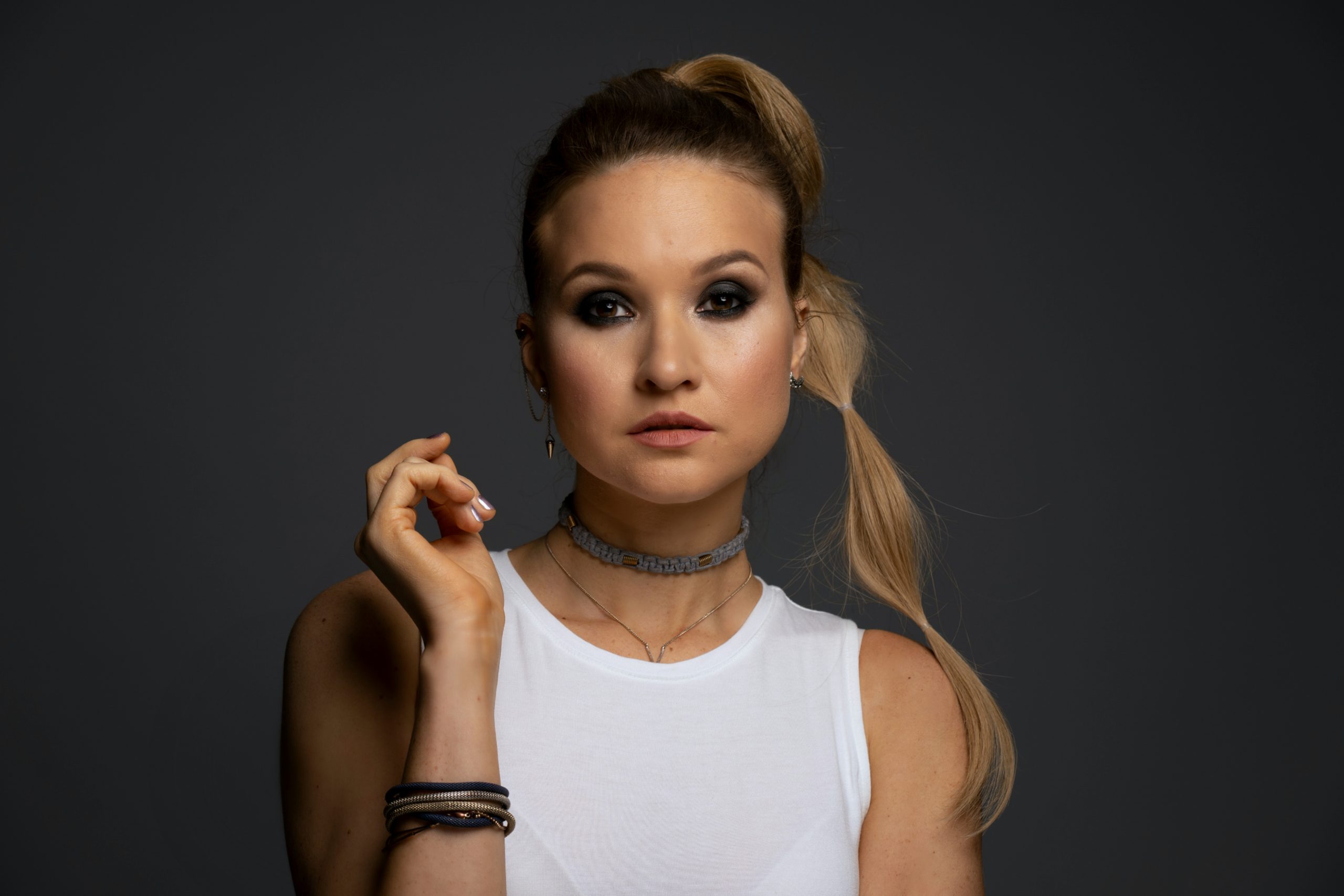
From a background as a Classical violinist, Alfiya Glow has emerged on the Electronic Music scene with a deep understanding of music, an impressive skill set, and a diverse range of talents. As she continues to make a name for herself, having taken to the stage at top festivals like Electric Forest and performing as an electric violinist and DJ at Insomniac events, Alfiya Glow is fast gaining a reputation, surely on a trajectory to reach exciting heights within the realm of Electronic Music. So today we’re looking forward to sitting down with her to talk about her music production approach; having been building her discography with powerful tracks like ‘Peaceful Chaos’ and ‘Leaving Origin’, we’re excited to learn more about her journey into Electronic Music, the influences that continue to drive her sound and her process when it comes to constructing her productions.
Hello Alfiya Glow! How’s it going?
Hello, I am doing great, thanks for having me!
Can you walk us through your journey into Electronic Music production? What initially inspired you to start pursuing a career in the genre and how did you make the transition from Classical?
After completing my master’s in violin performance, I found myself at a crossroads. While I had a deep appreciation for Classical Music and had performed on prestigious stages like Walt Disney Hall and Lincoln Center, I felt a yearning for something more. The traditional path of auditioning for orchestras didn’t resonate with me as strongly as it once had. I felt confused and confined. I craved a new creative outlet, one that would allow me to express myself freely and push the boundaries of music. Though I had always loved Dance Music, I never thought it would become my pursuit. The vibrant energy, innovative sounds, and limitless creative possibilities of EDM drew me in like a magnet. It felt like the perfect avenue to express myself in a way that Classical Music alone couldn’t. It was so scary to pivot 180 degrees, but I took a leap of faith.
How did you make your first steps into the world of Electronic Music production? How did you learn to produce?
The transition was very challenging. Electronic Music production required a whole new set of skills and tools that I hadn’t been exposed to in my classical training at all. Despite already excelling in music itself, with a strong foundation in music theory and proficiency in playing keys and violin, I found myself facing unfamiliar territory. I remember finding out what equipment I needed from a few people that I kind of knew outside Classical Music, digging on eBay for those pieces, and once I had my studio all setup, I was frozen. I was so overwhelmed and scared to start in this whole new world of electronic production. But one day, I had to take matters into my own hands and sat with YouTube tutorials (there weren’t many back then), determined to learn and grow. I started experimenting with different genres, exploring everything from Big Room House, which was big then, to Dubstep. My first tracks were so bad, haha. But each track I produced was a learning experience, helping me refine my sound and find my voice as an Electronic Music artist.
Which DAW do you use?
I produce my tracks in Ableton, but I love recording violin parts in Logic Pro as I find it is excellent for live recording.
Has your production process changed at all since you first embarked on your journey within Electronic Music?
It has definitely changed and evolved since I first started. I don’t even remember how I used to do things back then. I now have a better structure and understanding of production as a whole, so I know ahead of time which settings to record in, or which samples will sound best at the mixing stage.
Can you tell us about your workflow when it comes to creating a new track? Do you start with a particular element?
I always start with chords and melody on keys. I believe a strong melody and chord progression are what help me build on top of it. Then, I search for synths that could be a good fit for the mood I am going for. This often happens in the breakdown section, and from there, I work to create a drop. That’s where I start exploring drum and percussion sounds, bass, and pads, as well as adding ear candy, etc.
Where do you draw influence from? Are there any specific Artists that come to mind or particular substyles you find most inspirational?
I am often inspired by my personal emotional experiences, as well as the musical elements I hear in movies. Of course, I draw inspiration from other artists in the Melodic House and Ambient electronic genres. Nora En Pure, for example, always knows how to infuse powerful emotion into her dynamic tracks. Above & Beyond’s ‘Flow State’ album served as a sonic ‘permission’ for my most recent release, ‘Leaving Origin.’ I wanted to ‘document’ a very difficult personal experience through music but didn’t think a House beat would fit, so listening to their unique album was powerful for me. Additionally, underground artists like Joshua Moreno serve as sources of inspiration for me.
In your opinion, what elements of a track help it perform well in front of an audience?
In my opinion, one of the most crucial elements of a track that resonates with an audience is emotion. When a track evokes strong emotions in listeners, whether it’s joy, nostalgia, melancholy, or excitement, it creates a powerful connection that can captivate and move the audience. Emotion adds depth and authenticity to the music, making it more memorable and impactful. Beyond technical proficiency and catchy melodies, it’s the emotional content of a track that truly allows it to perform well in front of an audience.
Which plugins and effects are your favorites?
I still love Serum for sound design. Valhalla Supermassive is another favorite of mine; it’s a free preset that can create weird and interesting reverb delay designs, adding depth and texture. Additionally, VUMT Deluxe is a great tool in the pre-mixing stage; it allows me to isolate and identify specific elements in the mix, such as side and mid information and helps me address any extra noise for a cleaner overall sound. I also want to mention that I’m a big fan of Splice for any sounds I need in the moment. By the way, if you use Splice, be sure to check out my pack with Luna Maye on there called ‘Feminine Frequency.’ It offers a unique collection of sounds that we’re really proud of.
Finally, how would you describe your signature sound?
My signature sound can be best described as emotional and instrumental, with the violin playing a prominent role. I strive to evoke deep emotions through my music, blending elements of melody, harmony, and rhythm to create immersive sonic experiences. The violin adds a distinct, expressive quality to my tracks, infusing them with warmth and soul. Whether it’s through haunting melodies or uplifting harmonies, my goal is to connect with listeners on a profound level and leave a lasting impression.
As we wrap up our interview with Alfiya Glow, we thank her for taking the time to delve further into her production workflow and the story behind her beginnings within Electronic Music. Continuing to find creative encouragement in her passion for the genre, supported by her expansive musical knowledge and skills, Alfiya Glow remains a talent to take note of. So, be sure to keep her on your radar by following Alfiya Glow across social media.
Alfiya Glow Online