
Table of Contents
I have a soft, albeit a bit biased, spot in my heart for Modera, mostly because the duo is Seattle-based, and I, living only about three hours south of them in Portland, always love hearing music and art made by those who are so clearly inspired by the rain-soaked greenery of the Pacific Northwest. Modera’s music has the delicate, melancholic-yet-blissful quality that is truly captivating if, for any other reason than for how easy it is to get lost in the millions of tiny details; these guys sneak and work into every bar of every tune.
Their latest release, a collaboration with JT Roach recently released on Colorize, continues this reputation of quality. I had to jump at the opportunity to invite the guys on to talk about how the track was made and hear about their favorite plugins that they use to make such amazing melodic house music.
So give a listen, as always, to the track below (I always recommend giving it a couple of listens to acclimate your ears to the knowledge they’re about to drop) before grabbing a notepad because these guys didn’t hold anything back. So let’s dive in…
Arturia Pigments
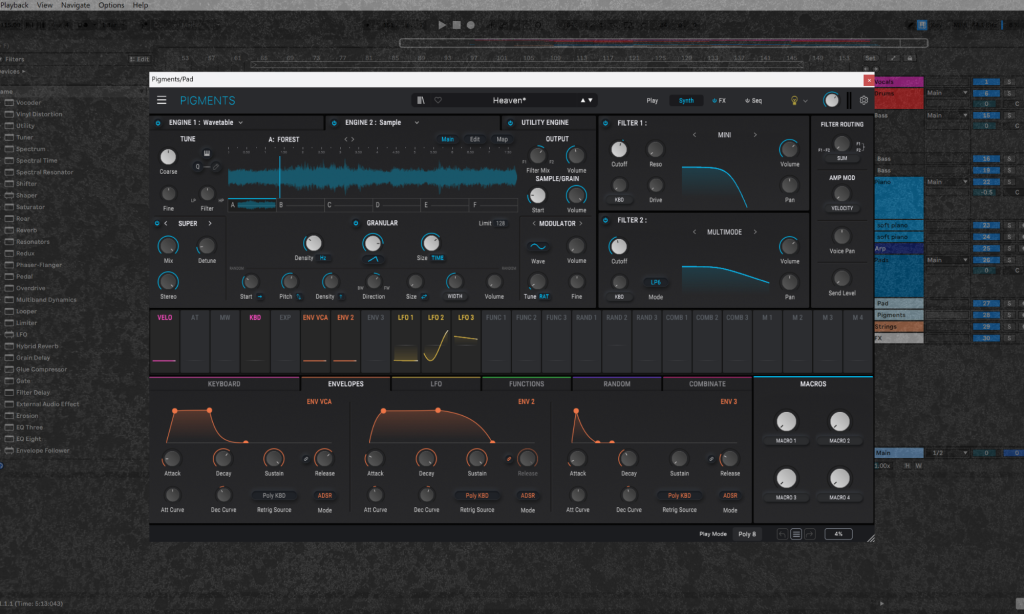
Our workhorse synth plugin is Pigments by Arturia. There are 4 different engines for sound generation including wavetable, utility, harmonic, and sampler. What sets it apart is its unique ability to seamlessly blend these synthesis methods, allowing for hybrid landscapes that push the boundaries of traditional synthesis that we have not found in other plugins.
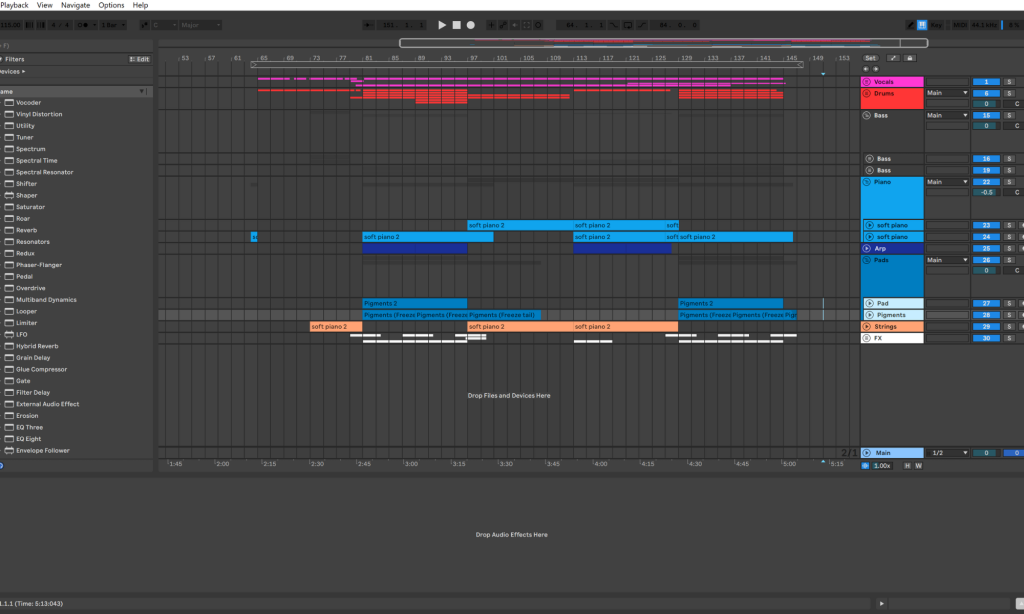
We used Pigments for all of the synth chords and pads on this record. We tend to have dedicated sound design sessions where we will build out about 40-100 presets in a given instrument group and save the ableton rack with all the creative out of synth plugins included in the preset. In doing so all of the automation is pre-built to macro knobs allowing us to write one lane of automation that changes 5-10 parameters in one go.
If we were starting over making this genre we would have started with Pigments a lot earlier on. Unison detune is really important to our sound and the voice count and stereo spread of the voices in Pigments is better and more customizable than it is in Serum, giving more control to the overall stereo spread but still allowing up to 8 unison voices in the standard settings.
It really became the main workhorse for us on this project specifically. It combines some of the best features from popular synths such as Diva and Serum, but does it in a unique way that doesn’t sound like everyone else.
Learn More About This Plugin Here
Fabfilter Saturn 2
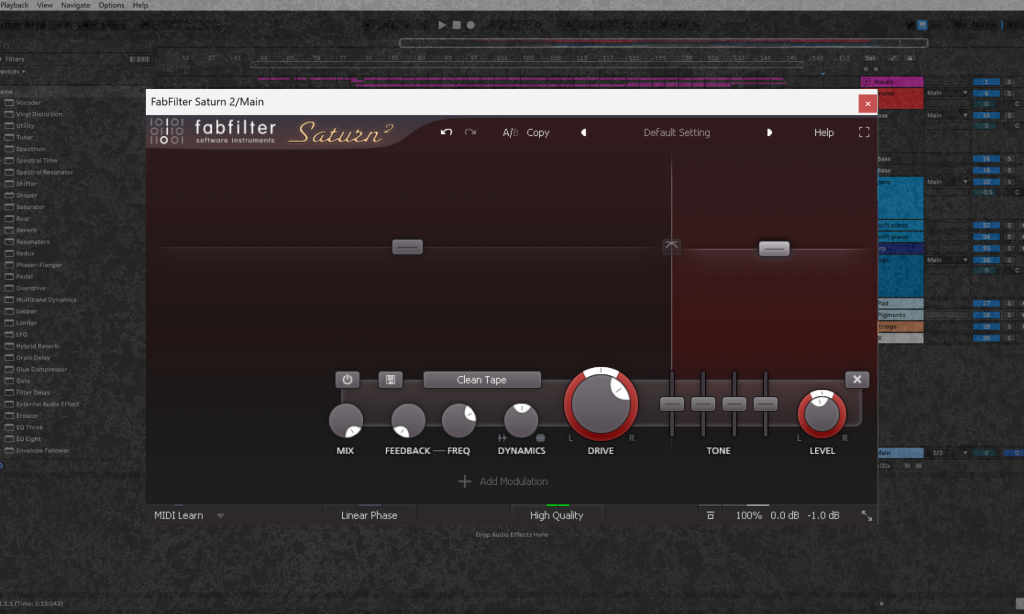
We absolutely love Saturn 2 by Fabfilter. Saturn 2 is a multiband saturation plugin. What sets it apart is its array of distortion types, ranging from subtle tape saturation to aggressive amp distortions. It also has the ability to be used in a Mid/Side mode which is awesome when adding wide high end.
We’ve integrated Saturn 2 into our workflow for all saturation needs, whether enhancing the warmth of synths, adding character to drums, or needing a slight boost in the presence band of whatever you put it on. We love the preset “Warm Tube Base – 4 Bands SM”. Can be an awesome way to warm something up, but at the same time adding a bit of grit and dirt to the sound.
In hindsight, Saturn 2 has been an essential component of this project. Most of the sounds in this style are relatively clean, and Saturn 2 is great at being able to isolate a band of frequencies and only applying a very clean saturation to that band while turning off the other one. We use this split band preset really often, with the band split set to around 3k and the top band turned to clean tape. We also learned a lot about how saturation and compression are very similar, and by saturating a signal you are inherently compressing it which can be really helpful on tracks that have a lot of sharp transients like the guitar in this record.
Learn More About This Plugin Here
Oeksound Soothe2
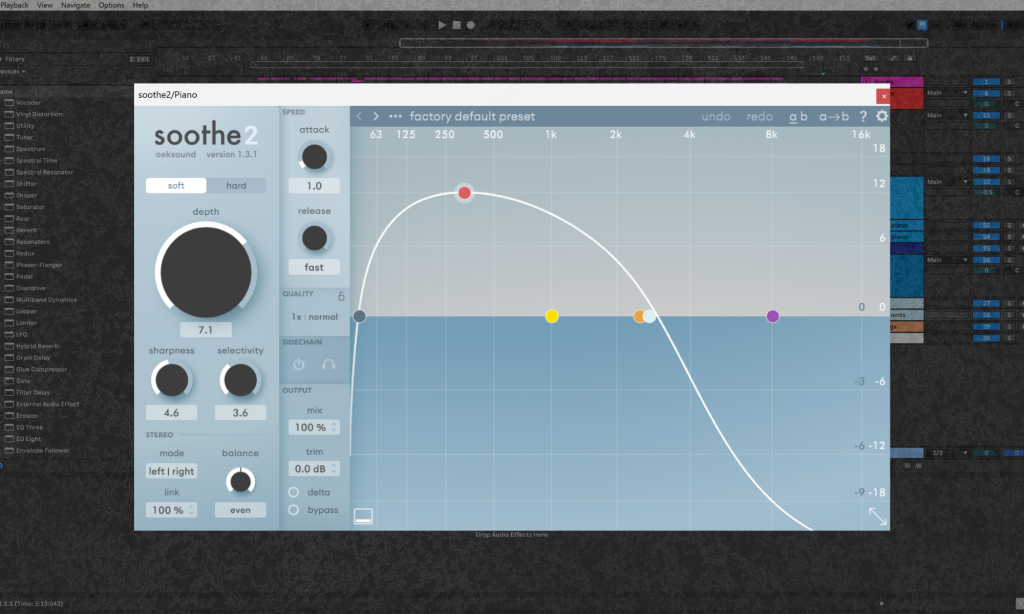
Soothe2 is a great plugin for so many different applications in our mix. It’s a dynamic resonance eq that removes frequency resonance in a given band. It also is a great tool for identifying multiple layers that are clashing in the mix by removing a specific frequency in one to make room for the other.
You will find Soothe2 on most of our group channels as a way to eliminate frequency stacking. We tend to use a top down mixing approach, starting with a master bus eq fixing large problems in the mix after setting levels, and then moving onto the group buses before getting to individual channels. If we have 3 pad layers that sound different but are playing the same notes, we have found that the fundamental frequency of those pads will clash and the low end will rise on the overall group and Soothe2 helps us with that problem. Our favorite preset to help with that is “Hard Piano”.
There are very few must-have plugins in our minds. That being said, Soothe2 is one of them. When dealing with real recorded instruments like the acoustic guitar in this track or vocals, it’s a way to help clean up the record without having to do a ton of work. The interface is really user-friendly and all you have to do is select the range and how much reduction you want.
Learn More About This Plugin Here
Quick Tips For Making Melodic House
10th voicings:
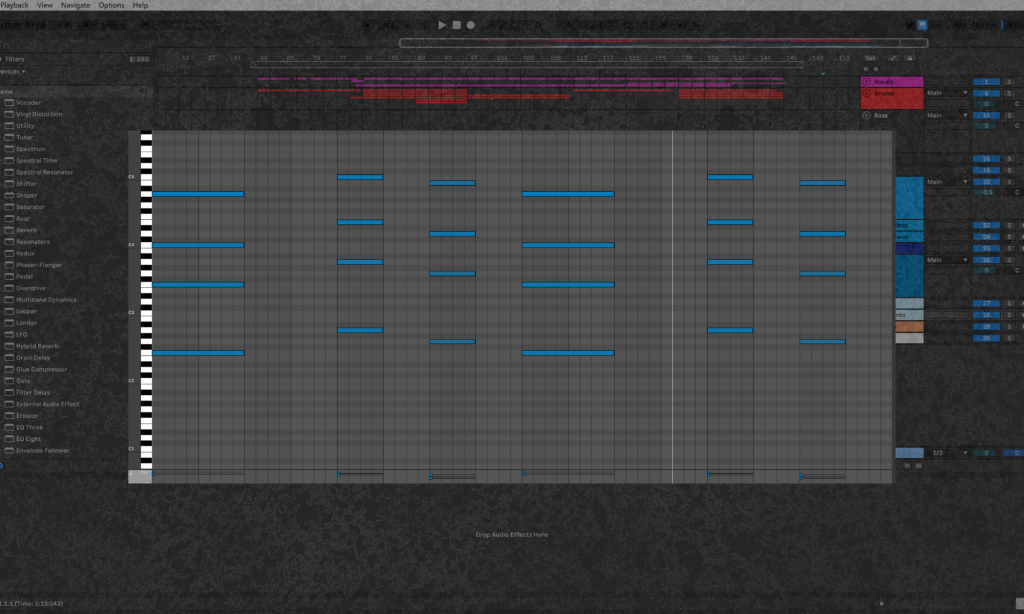
Instead of using closed voicings for chords try using an open voicing by bringing the third of the chord up an octave. This allows the chord to have more space between notes and then you can orchestrate the chord in a lower and warmer octave.
Songwriting first:
Sound design, fancy plugins, and mixing tips are great, but if you don’t have a good song then nothing matters. We typically spend 4-8 hours writing a song only to finish that track in another 4 hours.
Be Unique:
There are a lot of artists in this genre making incredible music. Just remember that they already exist and the world needs to hear your sound. Try finding a sound before you start writing tracks.
Break All The Rules:
We have found that many of the rules and standards that melodic house and pop music have in place can and should be broken from time to time. Make sure there is intention behind those decisions and it will lead to a great result.
Gain Stage:
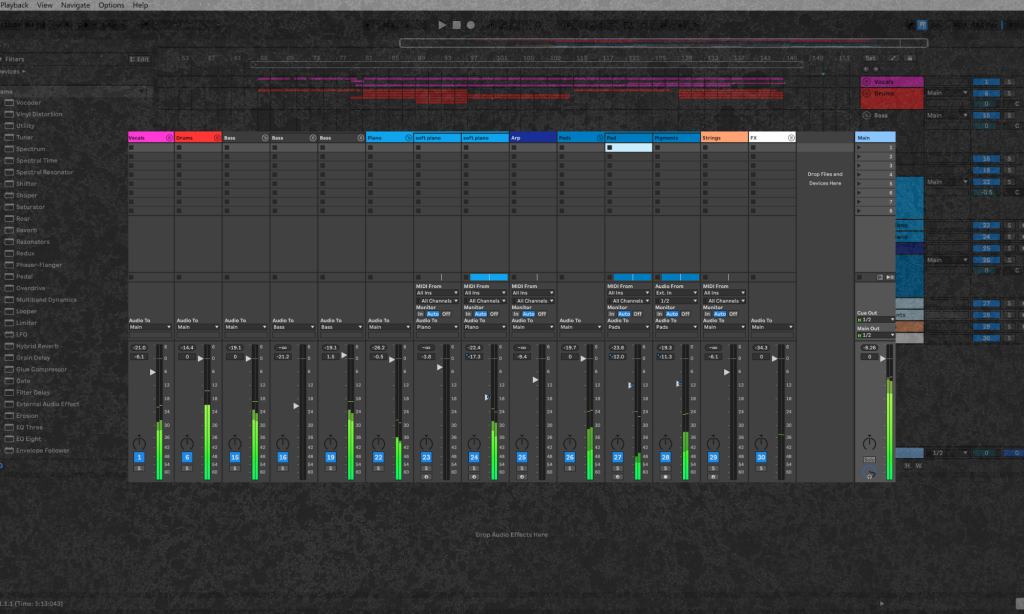
Spend the extra 30-40 minutes giving yourself some headroom in the project and turn down the source material if you are clipping or close to it. It makes fader moves that much easier. Our master bus is hitting roughly -5 to -10 or so on our projects.
Follow Modera:
Follow JT Roach:
open.spotify.com/jtroach
Follow Colorize:

Will Vance is a professional music producer who has been involved in the industry for the better part of a decade and has been the managing editor at Magnetic Magazine since mid-2022. In that time period, he has published thousands of articles on music production, industry think pieces and educational articles about the music industry. Over the last decade as a professional music producer, Will Vance has also ran multiple successful and highly respected record labels in the industry, including Where The Heart Is Records as well as having launched a new label with a focus on community through Magnetic Magazine. When not running these labels or producing his own music, Vance is likely writing for other top industry sites like Waves or the Hyperbits Masterclass or working on his upcoming book on mindfulness in music production. On the rare chance he's not thinking about music production, he's probably running a game of Dungeons and Dragons with his friends which he has been the dungeon master for for many years.