With music production and the world of audio engineering becoming more accessible than ever, and as more producers get into the craft, art, and lifestyle, countless new and upstart companies are making flashy new synths, feature-laden VSTs, and more.
But what of the legacy brands crushing it for decades and whose reputation has been slowly built over decades of innovation? Can they still move fast enough and adapt quickly enough to keep up with whichever flavor-of-the-month hardware has dropped recently?
Well, there’s no better time or opportunity to test these questions than by taking the latest drop from Apogee. This company has long been considered the industry standard for hardware interfaces and other essential studio gear, and I was sent their latest drop to take on a little test drive. Apogee recently crossed a major milestone with its 40th anniversary, and it celebrated in style by releasing a new and improved iteration of its iconic Groove headphone amp.
So let’s see how it’s improved on the original iteration, what exactly it does, my favorite aspects, and how it could have been improved, all in hopes of figuring out if these old dogs still got it…
Learn More About The Groove AE On Apogee’s Website Here
What Is The Apogee Groove Anniversary Edition?

The Apogee Groove Anniversary Edition is a reference-grade headphone amplifier and DAC (Digital-to-Analog Converter) that promises to enhance your audio experience. Crafted for precision, this device allows users to experience lossless audio up to 192kHz with its 32-bit conversion. The heart of the Groove lies in its ESS Sabre DAC, famed for delivering a high dynamic range and minimal distortion, ensuring a clean, authentic sound. This powerhouse is further enhanced by the ‘Constant Current Drive’ technology, which adapts the output to suit the connected headphones, delivering a uniform frequency response across various impedance levels.
The design focuses on delivering quality sound while maintaining a compact and durable form factor. The Groove Anniversary Edition boasts a premium aluminum build and is compatible with various devices, including USB-C iPhones, Macs, and PCs. It has multi-color LEDs for status and level indication and top panel buttons for volume adjustments. This level of quality and simplicity positions the Groove as a critical tool for audio professionals and enthusiasts who demand superior sound on the go.
In addition to its impressive internal specs, the Groove Anniversary Edition has practical accessories to facilitate mobile use. It includes a USB-A and USB-C cable, each one meter in length, and a carrying pouch for protection during travel. This attention to convenience underscores Apogee’s understanding of the needs of touring musicians and producers, ensuring that high-quality audio production can continue uninterrupted anywhere the music takes them.
Now, with the more vanilla tech specs out of the way, let’s dive into what makes this anniversary edition better than its original iteration; then, we can chat about the fun hot takes and areas of improvement in the Groove Anniversary Edition.
Apogee Groove Vs. The Anniversary Edition
The Apogee Groove Anniversary Edition marks a big step up from the original, packing a powerful punch in audio quality and design. The Anniversary Edition’s transition from a 24-bit to a 32-bit DAC showcases an enhanced dynamic range, moving from 117dB to 119 dB. This increment might seem subtle, but it translates to a clearer, more expansive audio experience.
The relative Total Harmonic Distortion plus Noise (REL THD+N) also sees a reduction, indicating cleaner, more accurate sound reproduction at high levels. Such meticulous attention to detail underlines Apogee’s commitment to delivering professional-quality audio in a consumer-friendly device.
Under the hood, the Anniversary Edition retains the original’s solid 560mW power output into 30 Ohms, ensuring it can drive a wide range of headphones without breaking a sweat. However, the frequency response gets a finer touch with a +/- 0.1dB, allowing for a more precise audio response across the spectrum. These technical improvements help the Groove’s goal of offering studio-quality sound in a portable format. The unchanged “Constant Current Drive” technology provides a stable and quality power supply, ensuring that audio quality remains uncompromised regardless of the headphones you plug in.
While maintaining the core features that made the original a staple for audio professionals, the Anniversary Edition doesn’t shy away from subtle yet impactful improvements. The reduction in noise floor and the upgraded DAC affirm Apogee’s position in balancing professional specifications with user accessibility. Whether you’re a seasoned producer or an entry-level bedroom artist, the Anniversary Edition promises to elevate your listening and mixing experience, reaffirming that it’s not just an audio device but an investment in your audio journey.
Learn More About The Groove AE On Apogee’s Website Here
What I Loved Most About The Apogee Groove
It Stays Put

The Apogee Groove Anniversary Edition (AE) is weighty and sticky (and I mean this in the best way possible). The headphones I use for my professional audio work have long cables that sometimes get in the way, even on the best days. But the Groove AE’s solid-for-its-size design and grippy material keep it in place on the table or desk you’re working on.
I’ve always found that when a cable gets bumped or jostled, it starts an avalanche of bigger problems; it pulls my laptop around or damages the audio jack. However, the Groove AE’s design prevented unnecessary movement and was a simple but fantastic quality-of-life feature not seen in every “portable” headphone amp.
There’s Almost ZERO Noise Floor
The Quad Sum DACTM system is the heart of all the best things about this device. It’s really something to drool over, as the four stages of analog-to-digital conversation mean there is next to zero noise floor, which is good because this puts out some serious heat if needed.
No noise floor and zero distortion mean you get a clean, loud signal no matter your headphones, which is what you’re looking for when you buy something like this. I wish I could write more about this feature, but it’s really just something you have to hear for yourself!
To say that Apogee delivered it in spades is an understatement.
It’s Consumer-Friendly But Pro Quality

A LOT is going on under the hood of this small little device, but you wouldn’t know it just by looking at it. While some might turn up their noses at the lack of inputs, which I’ll talk about in a second, Apogee focused on making a device as powerful as it is accessible, making this an easy recommendation to producers and professionals of all levels.
While we’ll undoubtedly get to these use cases in a minute, let’s highlight that the simple interface belies the noticeable difference in sound quality you get from this amp. If you’re used to just using your laptop’s headphone jack to mix audio or listen to music while on the go, you will be shocked at how much better sound quality the Apogee AE offers.
I recently made an upgrade in my own studio from the Volt interface to the Arturia AudioFuse 16rig, and I was shocked at how much more detail and fidelity I was getting out of my studio monitors to the point where I was almost a bit ashamed to how much I didn’t hear in my previous mixes. That’s the same jump in quality you get when moving from a laptop jack to this, which is why I think it’s a sound investment for even entry-level bedroom producers. But I’ll save that for its dedicated section.
Let’s continue exploring some of the Groove AE’s cooler features…

It’s As Much An Investment As It Is A Tool
Your headphones are only as good as the juice you’re giving them, at least to an extent. Just because you buy a pair of thousand-dollar Audeze headphones doesn’t mean you’ll get thousand-dollar sound if you power the headphones out of your basic old headphone jack.
But the Apogee AE guarantees the maximum audio quality for the headphones you’re using currently and any headphones you buy in the future. The jump from 24-bit to 32-bit on the DACs seeks to ensure you’ll get top-level, better-than-industry-standard quality out of your headphones.
Not to continue burying the lead for the section about who the Groove AE is for, but for almost every entry-level set of cans most bedroom producers would be using, the Groove AE is overkill in the best sense of the word, as it only gets better the more you upgrade your studio equipment over time.
What I Wasn’t Stoked About
The Anniversary Edition Still Uses The Micro USB
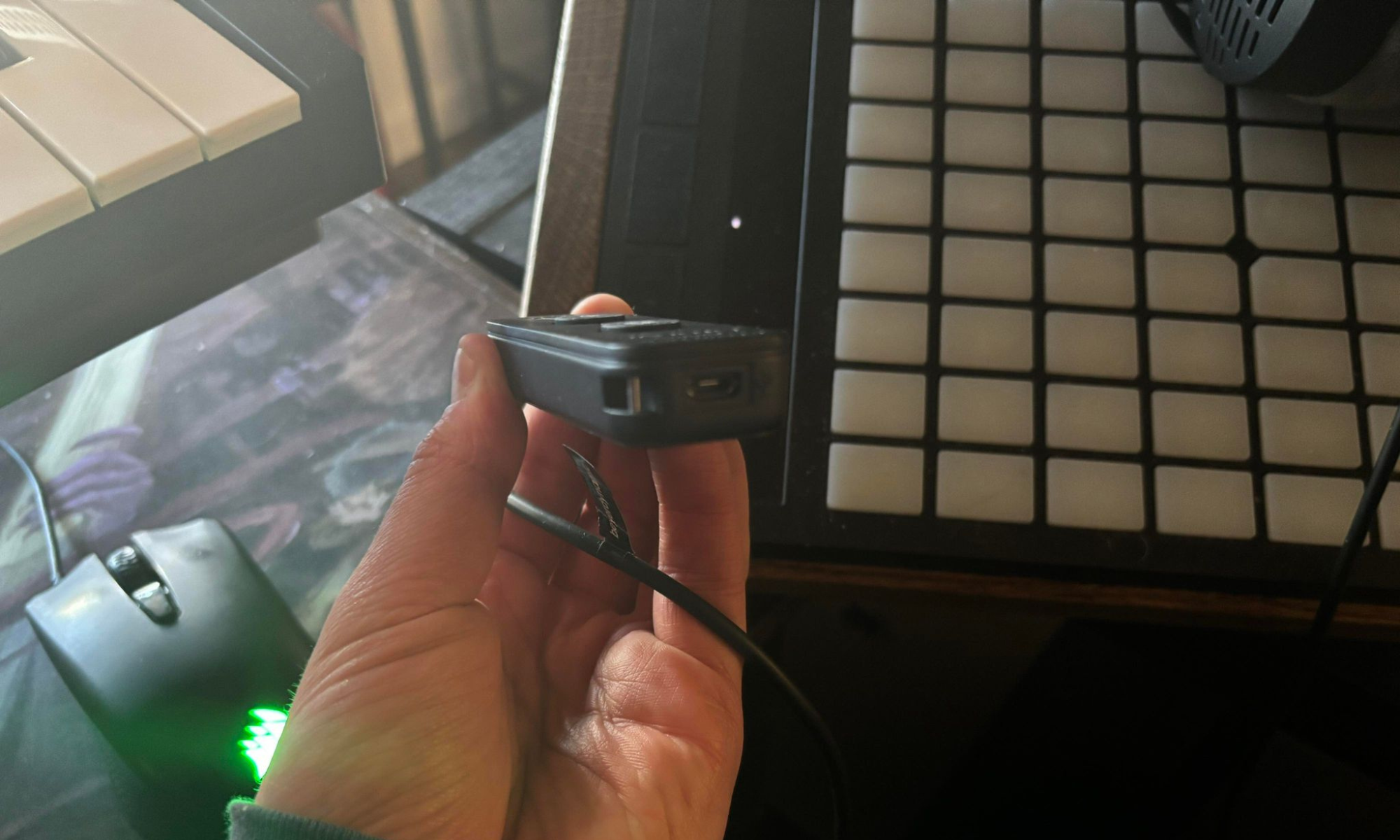
One of the bigger gripes seen in the original Groove is that it had a micro USB connection instead of a more modern USB-C alternative, and I was a little sad to see this choice continue on the Groove AE. Granted, you can still plugin the Groove AE into USB-C ports such as tablets, iPhones, etc, but the plug on the Groove AE side remains micro USB.
It should also be noted here that this amp takes a fair amount of juice and does run a little hot, so using it with your phone or tablet probably isn’t the ideal use case; sticking to your laptop listening is the move with this one.
There’s No Balanced Input
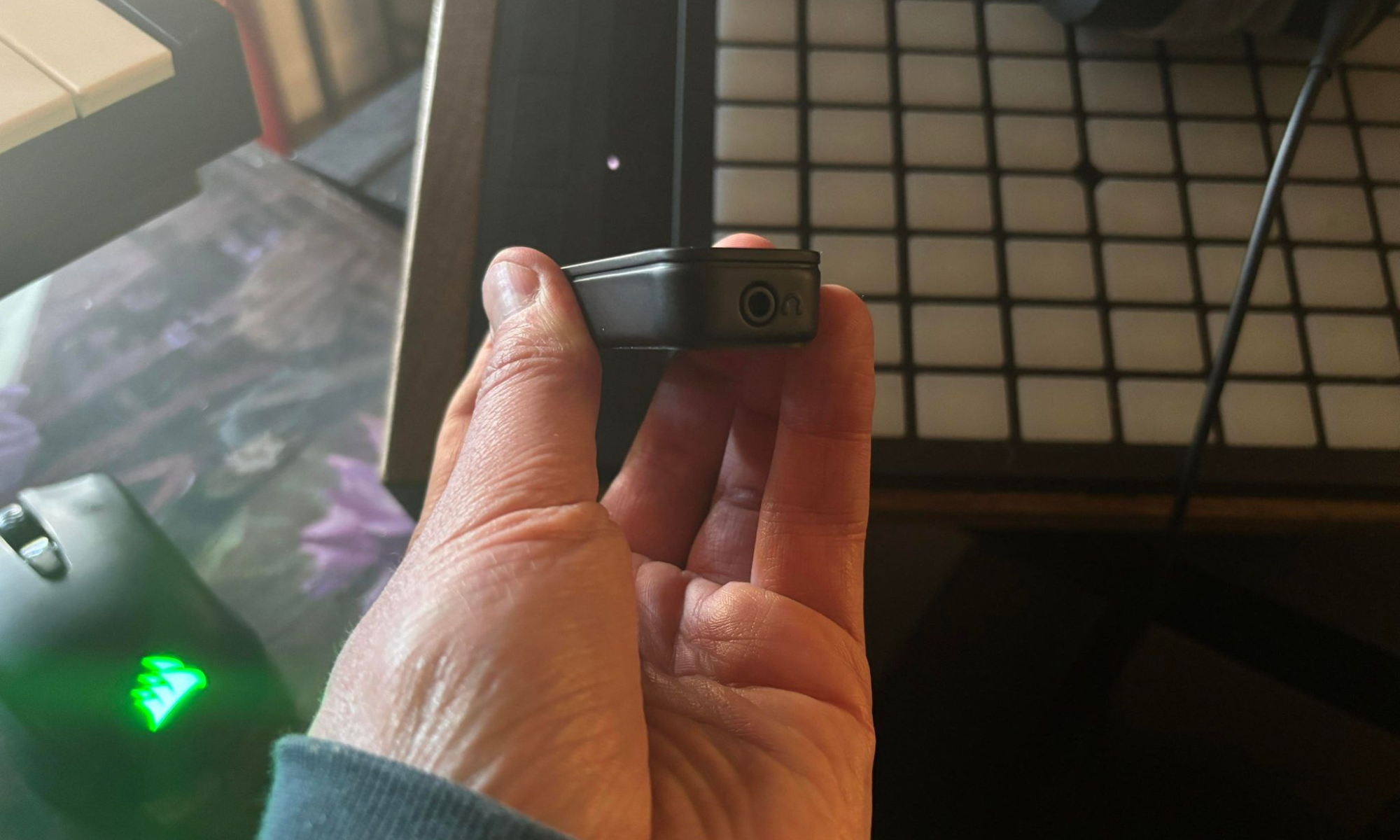
Apogee traded in some of the potential bells and whistles this could have had for the aforementioned extreme levels of accessibility. It’s designed to be plug-and-play at the cost of other pro features like on-board EQs or different types of inputs.
Most noticeable here is the lack of the 1/4″ jack, which is common in many studio-grade headphones. And while most headphones, at least my Beyerdynamic 900 Pro X’s, have a removable 1/4″ that opens up 3.5mm jack functionality, others, like my old trusty pair of Yamaha headphones, which were my first pair of studio headphones, did not have this option and thus would have been unusable with the Groove AE.
Who Is The Apogee Groove Anniversary Edition For?
Touring Artists
This is an obvious one, as the most challenging part about producing music while on the road is that you can’t trust the space you’re in. Mixing on headphones can work for many, but as I’ve stated a handful of times throughout this article, the audio quality suffers if you only rely on your laptop to amp your headphones.
But as I also stated in this review, the jump from using your laptop port to this Groove AE is the same increase in relative quality, at least it was to me, as was going from a $500 Volt interface to a $1500 pro-grade interface for my monitors in my studio.
The quality is impressive, so I highly recommend this small device for touring artists.
Audiophiles In Training
As snooty as the whole world of audiophiles can seem, with each self-proclaimed audiophile saying that their way of listening to audio is the best and right way, the truth is that the whole space is subjective by definition. You can train your ears to hear different quality levels in the frequencies, but at the end of the day, it all comes down to personal taste and confidence in the gear you love.
These two features make the Groove AE an excellent investment for audiophiles. Not only will it drastically improve the sound right off the gate, but it will also ensure you get the maximum quality from all the headphones you buy in the future.
So while there undoubtedly are better high-end hi-fi options out there that cost many thousand dollars, if you’re not at that audiophile end-game just yet, there’s no reason why this Apogee AE shouldn’t be one of the first things you snag on your road to getting there.
Bedroom Producers
This one might come out of left field, especially since the majority of entry-level music producers and those making beats in their bedrooms will likely have done their research and found out, as we all did at some point, that the KRK RKT 5s or the Yamaha NS10s are the best studio monitors for their stage of journey.
But let’s flip the script by saying that maybe monitors aren’t the best move for those starting in the first place, and here’s my argument:
- Studio monitors can’t be moved, so collaborating with your friends in their spaces is harder.
- The size and shape of the room color the signal of studio monitors, but headphones give the same sound regardless of where you’re producing.
- Jumping in monitor quality is way more expensive than headphone quality.
But investing in a nice set of headphones and coupling it with the Apogee’s Groove AE alleviates these three biggest hurdles. You can produce headphones with hi-fi audio wherever you need. You can use it with an entry-level set of cans but upgrade to midtier headphones for $300-500 dollars (whereas midtier monitors will be close to $1k for a set), and they give a predictable sound uncolored by the room and space you’re in.
Sure, this is far from a definitive recommendation, but these are all points that you could and should consider if you’re a new producer thinking about where to invest the small amount of funds you have in the early stages of your career.
Final Thoughts
The Apogee Groove Anniversary Edition is an upgraded version designed for sound professionals who prioritize audio quality. With a beefier 32-bit DAC, the sound produced by this compact device is cleaner and more defined than ever. This update represents a significant step towards achieving greater clarity and precision in audio work, whether you’re making quick mix adjustments or delving deep into sound design.
The Groove Anniversary Edition is tailored for individuals on the go who refuse to compromise on quality. It offers studio-grade sound without confining you to a studio space. It has a user-friendly interface and sturdy construction and is positioned to become a staple in your equipment collection.
In essence, if you seek an amplifier that can truly enhance the performance of your high-end headphones and satisfy your discerning ear, the Apogee Groove Anniversary Edition deserves your attention—and a listen.
Learn More About The Groove AE On Apogee’s Website Here

Will Vance is a professional music producer who has been involved in the industry for the better part of a decade and has been the managing editor at Magnetic Magazine since mid-2022. In that time period, he has published thousands of articles on music production, industry think pieces and educational articles about the music industry. Over the last decade as a professional music producer, Will Vance has also ran multiple successful and highly respected record labels in the industry, including Where The Heart Is Records as well as having launched a new label with a focus on community through Magnetic Magazine. When not running these labels or producing his own music, Vance is likely writing for other top industry sites like Waves or the Hyperbits Masterclass or working on his upcoming book on mindfulness in music production. On the rare chance he's not thinking about music production, he's probably running a game of Dungeons and Dragons with his friends which he has been the dungeon master for for many years.