Nintendo certainly had its way of blowing away its audiences when it transitioned its most popular IP’s from 2d to 3d. Mario 64, Zelda: Ocarina of Time, and Metroid Prime are all timeless masterpieces. It still boggles the mind that each franchise could seamlessly take what made the games so special and translate it in a 3d space on the first try. However, as time went on Metroid slowly became the middle child of Nintendo’s family, still there… but Mario and Zelda were the favorites.
The Resurgence of the Metroid Franchise
As 2021’s Metroid Dread proved, fans had been ready and patiently waiting. The return to Metroid’s roots in a 2d landscape was the perfect stepping stone to relaunch the franchise and the new Switch OLED hardware. This was even more important considering the situation of Metroid Prime 4, which had restarted development as Nintendo brought back Retro Studios to take the helm.
With very little information regarding Metroid Prime 4’s status, many wondered when we’d finally see Samus in 3d again, that was until last week’s Nintendo Direct.
Shadow dropping a game is potentially dangerous business in the games industry and we’ve seen it not once but twice in the last month. Like Hi-Fi Rush just weeks before it, Metroid Prime Remastered was announced and released in the same breath. It’s not just the surprise either, single player FPS games seem to be a dying breed as tech giants chase the next live service trend or battle royal craze. Seeing both converge is quite the treat.
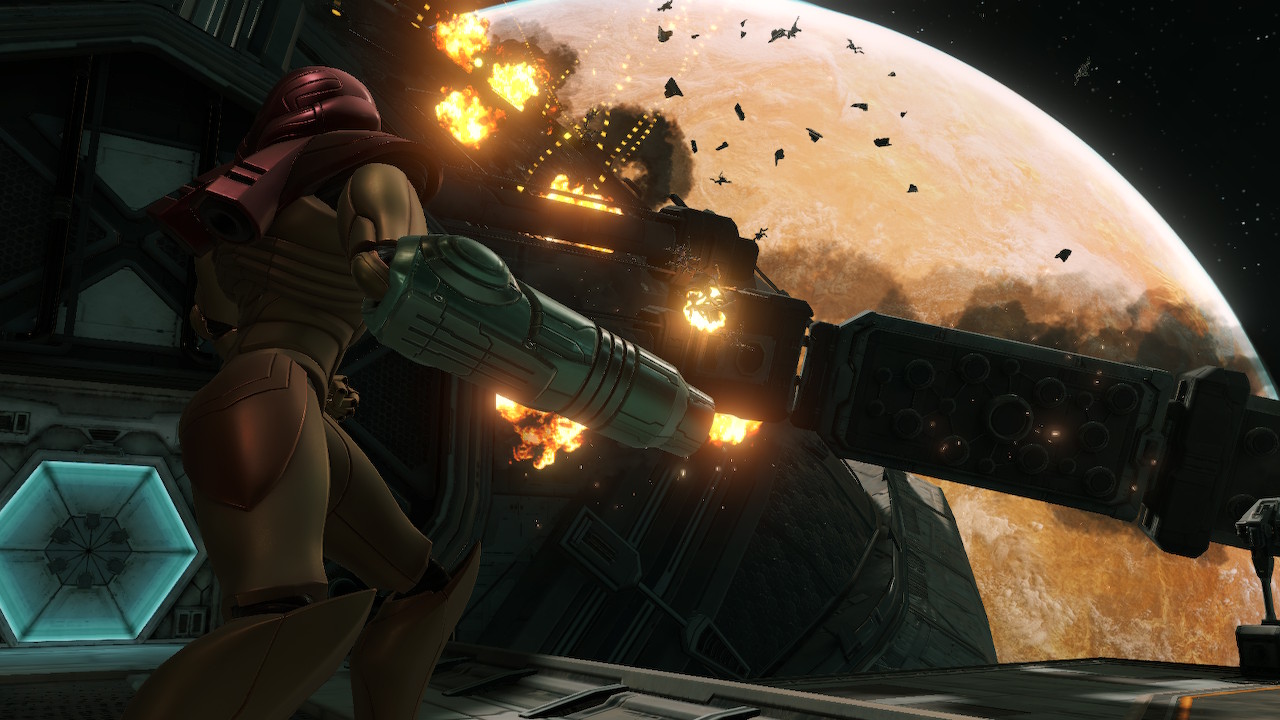
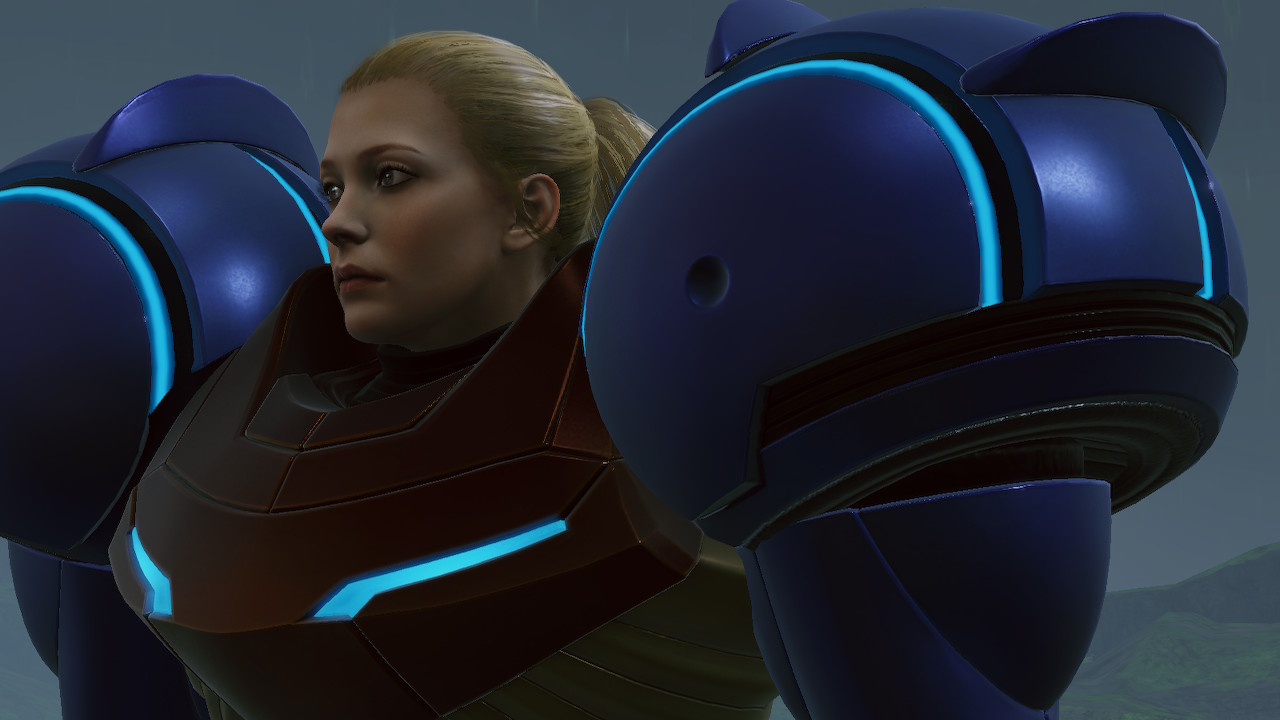
Rose tinted glasses aside, pure shock and awe subsiding, Metroid Prime Remastered is still a masterpiece, and arguably the best looking game on the Nintendo Switch altogether.
There’s something dark, foreign, and ominous about Metroid games. Each environment is vaguely familiar but organically different from anything you’ve ever seen before. Absurdly strange beeps and boops enter and exit earshot from machinery. Screeches or howls from nearby fauna keep you on edge as you get out your scanner to see what the hell that thing is and if it’s dangerous or not. You’re always alone. Samus doesn’t speak. Rarely does anyone or anything speak. It’s up to you to endure these hostile alien home worlds without a helping hand in the biggest metaphorical corn maze you can imagine. You feel… desperately beside yourself.
These feelings that were presented to players over 20 years ago somehow, faithfully, lie intact in Metroid Prime Remastered. I played the original game when I was 12 years old and I can without a doubt say that the vision of the original developers has not been forgotten, just their names at the end credits.
A Beautifully Faithful Remaster
I honestly can’t tell if they built the game from scratch or if it’s a heavily modified version of the original game, but holy smokes, does it look good. Nostalgia can be incredibly potent, but when you play this game it will be exactly as you remembered it. Retro Studios, like other Nintendo first party studios before them, seem to have tapped into some serious developing wizardry to make things look as good as they do.
Lighting systems in place are massive improvements over the original, while most importantly, leaving a very dark and unsuspecting feel to environments. Too many times in the past have we seen remasters of games implement new lighting only to entirely lose the atmospheric intent of the original’s art design. One of my favorite implementations that was preserved from way back on the Gamecube is Samus’ face being reflected inside of her helmet. When her blaster is fired in lowlight environments it is especially obvious. *Chef’s kiss* I love this so much. Small attention to detail like this is not only preserved, but improved upon.


Textures and models have also been entirely redone, leaving those who do side-by-side comparisons with a plethora of scenes to sift through. Most importantly, the heart of the artwork is expanded upon and that’s the most one could ask for with technological advancements that are replacing the original’s assets.
When Demon Souls Remake came out in 2020, many diehard fans criticized the art direction saying that it strayed too far away from the original’s vision. While in some outlying cases this may have been true, the herculean task of expanding upon someone else’s art that has technical limitations cannot be understated. It takes quite a visionary to go back in time and guesstimate what the artist intentions were versus what was possible back in 2002, and I certainly wouldn’t want that level of responsibility.
Sound design is exactly what you’d expect from a Metroid game. Weird (but very cool) techno tracks, blaster fire, creature sounds, you name it, have all been remastered perfectly. There’s a score for every situation, be it snowy landscape or underwater, fighting aliens or wandering in the dark. The incredibly satisfying pop or crunch when dealing the final blow to various enemy types, it’s all so well remastered that it gives you goosebumps.
Metroid Prime’s Timeless Game Design
Very little has changed mechanically since Metroid Prime debuted. There still isn’t a fast travel system, yes, there will be a ton of backtracking, and if you get stuck on what to do next your best friend is a cup of coffee for brain storming. While I do enjoy the lack of handholding in a period where most games practically play themselves, it would have been nice to have toggleable options for tips and fast travel. At the end of the day, I always try and respect the developers design ethos for a game over any particular person’s wants and needs, even if this turns off or excludes groups of gamers.
That’s not to say there isn’t any nice additions. When picking a controller layout you can choose from the Gamecube, Wii, or Remastered layouts. Being able to look around in the traditional manner with the right stick is such a game changer and makes the entire game so much more enjoyable. Not that this is an addition per say, but Metroid Prime Remastered thankfully still runs at 60fps just like the original which is a major contributor to the visual presentation.
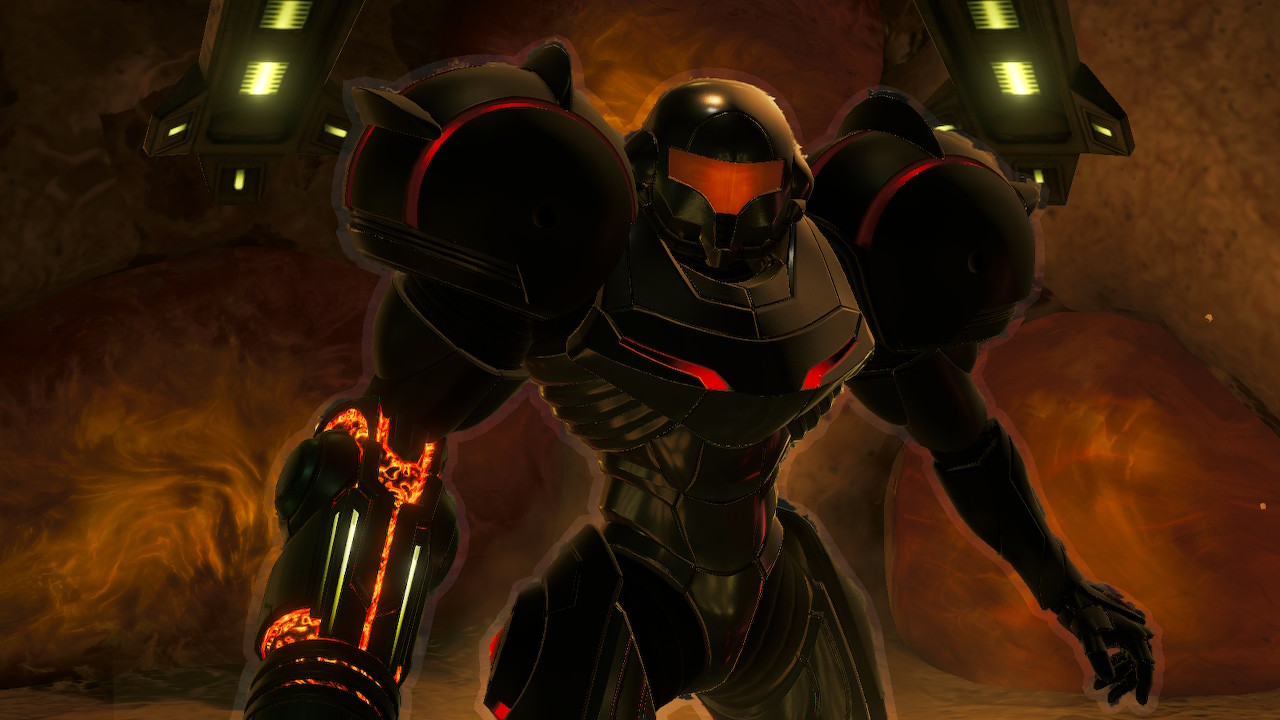
One thing that I wished would have changed was Samus’ morph ball mode, which is still a partially fixed camera that you shuffle around weirdly with the L button. It’s not the worst by any means, and is something you can get used to (again), but I wish this change would have been made.
It’s difficult to shed new light to a 20 year old cult classic like Metroid Prime. What is there to enlighten others with that hasn’t already been said? Likely not much to be frank. It’s a game that really makes you think. It has level design that likely inspired FromSoft at some point, with its labyrinth filled areas that eventually pop you right back to where you started. It’s a game that makes you feel like a fish out of water. A game that encourages thorough exploration at all times. A game with a 20-minute-long final boss fight that will leave you in shambles if you don’t do what? Observe, think, and act.
Where one could call Metroid Prime an FPS, I’d call it a puzzle game. Samus goes on one hell of an adventure, sure, but it’s really an escape experience. Freeing oneself of the bindings that are keeping you in place, one piece, at a time. Being a little bit better than you were before, until you finally achieve your goal- in the most epic way possible, of course.
Metroid Prime Remastered is an absolute must, no exceptions, for all Switch owners.