Behringer has made it their priority over the past few years to release hardware clones of some of the most popular synths in history (at a far more affordable price point). They’ve released a clone of Moog’s Model D, which sounds damn close to the original at a fraction of the price, and even the RD-9 Drum Machine, which is a faithful recreation of one of the most iconic drum machines in history.
But none of these clones is more perplexing to look at and fun to use than the Behringer 2600. Behringer’s 2600 emulates the iconic synth from the 70s and 80s, which prioritizes patching and signal flow over almost any other feature in hopes of guiding users in sonic explorations that yield unique and irreplaceable results each time.
We were sent a Behringer 2600, a Grey Meanie, to be exact, so we can better understand what it’s all about and help you decide whether Behringer’s hardware synth is the perfect emulation of the iconic synth or if it’s just a space-invading nuisance. So, let’s dive in…
Learn More About This Synth While Supporting Our Team Of Writers Through Our Partnership With Sweetwater Here
What Is The Behringer 2600?

The Behringer 2600 is the company’s attempt to emulate and recreate the magic faithfully and the genre-defining sounds of the original 2600, popularized throughout the 70s and 80s.
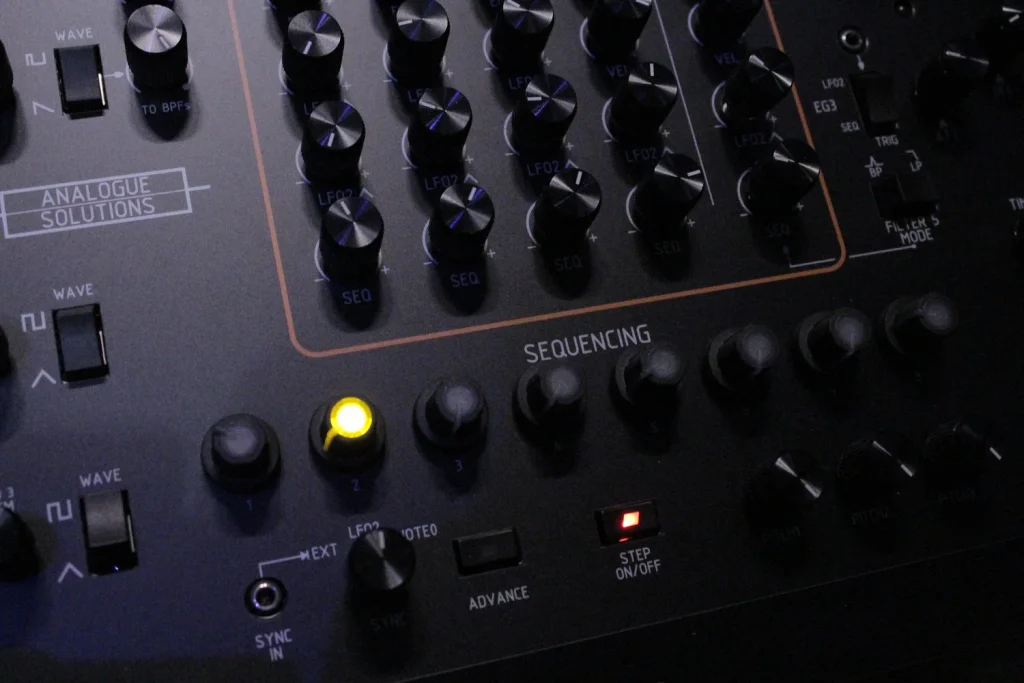
The Behringer 2600 has almost every single one of the features of the original model, just in a more affordable 8U rack-mountable unit. Just as the original Arp 2600 did all those decades ago, the Behringer 2600’s unique layout and design prioritize signal path and patching over the conventional layout of a synth. Its 78 faders and 93 patch points help you shape and build sounds from the ground up with almost unlimited creative potential (at least once you’re familiar with the workflow and signal pathing overall).
Couple this with its Eurorack compatibility, and you’ve found an ultra-versatile hardware synth whose inexhaustible wealth of sounds will keep you busy creating for years to come.
And with that in mind, let’s dive a bit deeper into the pros and cons of this hardware synth.
Learn More About This Synth While Supporting Our Team Of Writers Through Out Partnership With Sweetwater Here
What I Love About The Behringer 2600
I’ve had the Behringer 2600 in the studio for about a month now, and we were pleasantly surprised about the many features on this synth. The unboxing process certainly felt like a bit of a blind date, as I had only researched this synth, and my initial findings made me assume this synth would be too complex to ever fit into my workflow.
But we had a blast discovering a ton of excellent benefits of this synth that we were not expecting and found that a couple of my initial impressions of the synth when I first laid my eyes on it needed to be corrected.
So, let’s get to it…
It’s Easier To Use That It Looks

One of my favorite benefits, which we will be discussing in detail here shortly, was the layout of this synth is unlike anything I’ve seen before in the world of hardware synths. It resembles an intergalactic space station’s command deck more than a musical instrument. As such, I assumed I was in for a ride learning how to use this synth.
But I got some highly usable and inspiring sounds within the first evening using the Behringer 2600.
There are a couple of good series on YouTube that break down the signal pathing, basic modules, and other essential functions of the synth that help you hit the ground running, and that’s all you need to learn the basics. From there, the faders and patch cables reward the curious producers and experiment with patching options, and fader modulation turns a standard pulse-wave patch into a multi-timbral monster.
Its Timeless Sound
The original Arp 2600 defined an entire generation of music, and some of the biggest electronic acts of the 70s and 80s relied heavily on the sounds from this synth. Even the voice of R2D2 was made using the original semi-modular synth (mess around with the Sample and Hold module, and you’ll instantly see the foundations of Ben Burtt’s sound design for the small droid).
Behringer has done the impossible with this synth and created a faithful recreation of the original synth’s iconic sound that you can access without breaking the bank! The waveforms are warm, punchy, and everything else you’d want in an analog piece of gear.
And that’s just when I ran the basic waveforms through the conventional filters! Things started getting crazy when I started exploring the patching options and FM functionalities on the synth, which kept me up late in the studio, tinkering more nights than I had planned to do.
It’s A Different Workflow

The Behringer 2600 has a layout unlike any other gear I’ve ever played around with. Where most synths have rotary knobs and pots to dial in the settings, the 2600 has faders. It’s a slight difference but makes all the difference from a workflow perfective.
Couple that with the fact that the Behringer 2600 feels more like you’re manipulating a console or control deck than an actual instrument, and messing around with this synth puts you in a completely different headspace and creative space than all other synths I’ve used. And that difference is just enough to open new ideas, ways of approaching composition, and much more.
It’s invaluable to have a couple of different-thinking toys in the studio for your music creation, and this is precisely what the 2600 by Behringer brings to the table.
Need An Alternative? Here are Five Synths That Sound Just Like The Original Arp 2600
What I Wasn’t Crazy About

Having had a chance to get familiar with this synth, some things are far from perfect about it. I guess that is expected with any piece of creative gear, but here are the two things worth mentioning that gave me some slight hesitations when using the Behringer 2600.
It’s Got A Learning Curve
Even though the synth, as described earlier, is easier to pick up than expected, that’s coming from a guy who is already familiar with semi-modular synthesis and has a solid understanding of signal path and routing.
If you are entirely new to hardware and patching, this synth could seem like a completely different monster. And while it certainly has the potential to teach you all you need to know about signal path (and you’d likely come out of the other side with the confidence to use any semi-modular synth), there are better synths, in my opinion, to learn patching and signal path on than this one.
But for anyone who has used semi-modular synths before or has a basic understanding of how they work after using VST emulations by companies like Arturia, expect to hit the ground running and get usable and inspiring sounds in less time than you think.
It’s Wide

There isn’t any way to sugarcoat this; the Behringer 2600 is a large and spacious synth. And because it lies on its back, unless you get designated racks that make it stand on its front, it takes up a lot of space on our studio desk.
That’s no issue for me, as I am a working musician and music producer whose desk is set up to accommodate a wide range of studio tools, all within arm’s reach. But that’s not the case for all producers, and I could see those producing in a bedroom or side nook feeling a little cluttered with this thing dominating your desk space.
Purchasing additional add-ons, like the rack mounts from CodaHandMade, pictured above, can alleviate this issue overnight and keep your studio space organized and spacious.
Is The Behringer 2600 Right For You?
This is always a tricky question with the 2600 because this hardware from Behringer is so unique. But I will do my best…
This synthesizer is the ideal tool for anyone with a solid understanding of synthesis and looking for a different way to design their sounds. The tactile feel of the faders feels far different from rotary dials, and the large bulk of the synth makes it feel like you’re playing an other instrument entirely.
So, if you want to elevate your sound and are looking for an unconventional sound that will produce sounds you want to hear, this is a fantastic synth.
But if you are a beginner with hardware or have limited space in your studio, you will likely get far more use out of a different one of Behringer’s clones. The Model D, for example, is the ideal desktop synth for those looking to start using hardware synths in their studio.
Overall, I have been pleasantly surprised and exceedingly impressed by the functionality, sound, and utility this synth brings to my workflow and sound as an artist.
Learn More About This Synth While Supporting Our Team Of Writers Through Our Partnership With Sweetwater Here
Specs On The Behringer 2600
- Type: Semi-modular Desktop/Rackmount Synthesizer
- Analog/Digital: Analog
- Polyphony: Monophonic/Duophonic Mode
- Oscillators: 3 x VCO
- Waveforms: Sawtooth, Pulse, Triangle, Sine, Pulse Width Modulation, Frequency Modulation
- Noise Generator: White Noise, Pink Noise, Low-Frequency Noise
- Envelope Generator: 2 x EG (attack, release / attack, decay, sustain, release)
- LFO: 1 x LFO (triangle, square, sine)
- VCA: Yes
- Filter: 2-mode 4-pole Resonant Filter: 4012 circuitry (16kHz cutoff), 4072 circuitry (11kHz cutoff)
- Sample and Hold: Yes
- Effects Types: Digital Spring Reverb
- Analog Outputs: 2 x 1/4″ TS (L/R), 2 x 1/8″ TS (L/R)
- Headphones: 1 x 1/8″ TRS
- MIDI I/O: In/Thru/USB
- Other I/O: 93 x Patch Points
- Pedal Inputs: 2 x 1/4″ TRS (interval latch, portamento)
- USB: 1 x Type B
- Software: Synthtribe
- OS Requirements – Mac: OS X 10.6.8 or later
- OS Requirements – PC: Windows 7 SP1 or later
- Power Supply: 2V DC power supply (included)
- Height: 4.3″
- Width: 19″
- Depth: 14″
- Weight: 11.22 lbs.
Best Video Tutorials For The 2600
There aren’t as many YouTube creators making content around the Arp 2600 these days, but luckily, a couple is helping out the community by showing you the ropes of this seemingly complex hardware synth. The best tutorials for any beginner on this device will be the series from Ralph Baumgartl. I have linked the most informative ones directly below (along with some of my other favorites.

Will Vance is a professional music producer who has been involved in the industry for the better part of a decade and has been the managing editor at Magnetic Magazine since mid-2022. In that time period, he has published thousands of articles on music production, industry think pieces and educational articles about the music industry. Over the last decade as a professional music producer, Will Vance has also ran multiple successful and highly respected record labels in the industry, including Where The Heart Is Records as well as having launched a new label with a focus on community through Magnetic Magazine. When not running these labels or producing his own music, Vance is likely writing for other top industry sites like Waves or the Hyperbits Masterclass or working on his upcoming book on mindfulness in music production. On the rare chance he's not thinking about music production, he's probably running a game of Dungeons and Dragons with his friends which he has been the dungeon master for for many years.





![How It Was Made: Lang Father i(Junkyard Dog) [Welofi]](https://magneticmag.com/wp-content/uploads/2026/10/Press-Pic_2-1024x576.jpg)