The main Champagne Poetry sample comes from Masego’s “Navajo.” That record uses The Singers Unlimited’s version of “Michelle,” which is why John Lennon and Paul McCartney appear in the writing credits. Drake’s track also uses “Until I Found the Lord (My Soul Couldn’t Rest)” by The Gabriel Hardeman Delegation.
That is the short answer, although the production lesson is bigger than sample spotting. “Champagne Poetry” works because the source material is treated as a compositional starting point, then filtered, pitched, layered, and arranged around Drake’s delivery.
If you are trying to learn from it in 2026, the point is not to rip the same audio. The point is to understand the chain, the clearance issue, and the production decisions that make the sample feel central without crowding the vocal.
What Is The Champagne Poetry Sample?
“Champagne Poetry” uses two main sample sources.
| Layer | Source | Role In The Track | What Producers Can Learn |
|---|---|---|---|
| Main vocal phrase | “Navajo” by Masego | The familiar pitched vocal intro | A short vocal idea can carry the identity of a full intro |
| Source behind “Navajo” | The Singers Unlimited’s version of “Michelle,” written by Lennon-McCartney | The melodic and lyrical origin | Credits can reach past the song being sampled |
| Gospel layer | “Until I Found the Lord (My Soul Couldn’t Rest)” by The Gabriel Hardeman Delegation | The softer harmonic bed behind the main section | A second source can add movement without pulling focus |
| New production | 40, J.L.L., Masego, and Maneesh | The arrangement around the sampled material | Sampling still needs structure, space, and contrast |
That credit chain is the part many listeners miss. Drake is not sampling the original “Michelle” master recording directly in the most obvious sense. The path runs through Masego’s “Navajo,” which itself connects back to The Singers Unlimited’s version of “Michelle.” The writing credit then reaches Lennon-McCartney because the underlying composition comes from “Michelle.”
What Changed For 2026?
The older version of this article worked as a quick sample ID. This version needs to do a little more because most people landing here are asking one of three things: what sample was used, whether they can use the same sample, or how to learn from the technique.
The answer depends on the goal. If you are just curious, the sources above give you the chain. If you are making music for a private exercise, you can study the pitch, filtering, phrasing, and arrangement choices. If you plan to release music, you need clearance for the recording and the composition. That can involve multiple rights holders, especially when a sampled song already contains a sample or interpolation.
Sampling is a creative tool, although it is also a rights issue. That is where a lot of newer producers get tripped up.
The Champagne Poetry Sample(s)
“Navajo” By Masego
This track starts with the iconic vocal sample that Drake pulled to use as a sample in his single. The repetitive chants ‘I love you, I love you” are instantly recognizable and act as a leading intro section of the single.
While Masego’s track flew under the radar for quite some time, Drake’s use of the sample helped pour fuel on the fire and skyrocketed this song to popularity.
But note that Drake doesn’t consider Masego to be the original singer of these lyrics (…but we’ll cover that later in this article)
“Until I Found The Lord” By The Gabriel Hardeman Delegation
While the beat on “Champagne Poetry” is pretty minimal, there is a soft and delicately filtered vocal sample acting as the harmonic bedrock of the beat. This sample is pulled from a Gabriel Hardeman Delegation, looped softly in the backdrop of the “Champagne Poetry.”
Drake’s sample usage aside, this track is well worth a full listen in its entirety as it’s quite a deep and reflective track in its own right.
https://www.youtube.com/watch?v=Q7vn-jG86l4
How Can You Make Your Own Version Without Copying Drake?
Start with your own phrase. It can be a vocal note, a choir line, a sax phrase, a guitar recording, a one-shot from a cleared pack, or a short chord recording you make yourself.
Then ask four questions:
- Does the phrase have a clear hook?
- Can it repeat without becoming annoying?
- Does it leave enough room for the lead vocal?
- Can I change it enough that it feels like my production choice?
A good sample loop should carry identity without eating the rest of the track. That is why “Champagne Poetry” is a good case study. The sample is memorable right away, yet it still leaves room for Drake’s vocals to take the lead.
Our Twinsleep studio interview gets at this same point from a gear angle. Maxy talked about using a Yamaha VSS-30 and said, “There’s a built-in looper and a function called U-Turn, which plays the sample forward and then backward again.” That kind of simple reversal move can take a familiar phrase and make it feel new fast, especially when you record it back into the DAW and treat it as fresh audio.
How Do You Handle The Champagne Poetry Sample Without Creating Legal Problems?
Start with the safest rule: do not pull audio from Drake’s recording, Masego’s recording, The Singers Unlimited’s recording, or The Gabriel Hardeman Delegation’s recording and release it without clearance.
That applies even if you chop it, pitch it, reverse it, filter it, or bury it under new parts. Changing a sample does not automatically clear the rights. If the source is recognizable or built from protected audio, assume you need permission.
If you want to learn from “Champagne Poetry,” build a new version of the method instead of copying the same audio. Record your own vocal phrase, use a royalty-cleared vocal from a sample platform, or write a short melodic idea with a vocalist. Then process it in the same general lane: pitch it, filter it, cut it into a short phrase, and build the track around it.
I think this is where the lesson gets more helpful than a simple sample ID. In our VIZANO interview, he said, “Sampling is one of the most fun ways to create a track.” That is true, although the release side needs to be handled cleanly. Fun in the studio and permission for distribution are separate problems.
Fun Facts About The Champagne Poetry Sample
Every song has hundreds of small anecdotes and misconceptions surrounding it that mostly go unnoticed by the general public. But we found the best fun facts attached to Drake’s iconic release.
Drake Doesn’t Consider Masego The Writer Of The Sample.
While most people accredited Masego as the artist behind the sample used in the intro, Drake sees the Beatles as having first penned the lines. As such, Drake credits the Lennon-McCartney duo in the track’s credits.
The lyrics were pulled, according to Drake, from The Beatles’ song ‘Michelle.’
There Is A Through Line Here
“Champagne Poetry” shares many similarities with the open track of Drake’s Nothing Was The Same, ‘ Tuscan Leather.’
Some fans have gone on to speculate that the continuity of the sound and vibe means a shared narrative is told throughout the artist’s albums.
Art Speaks For Itself
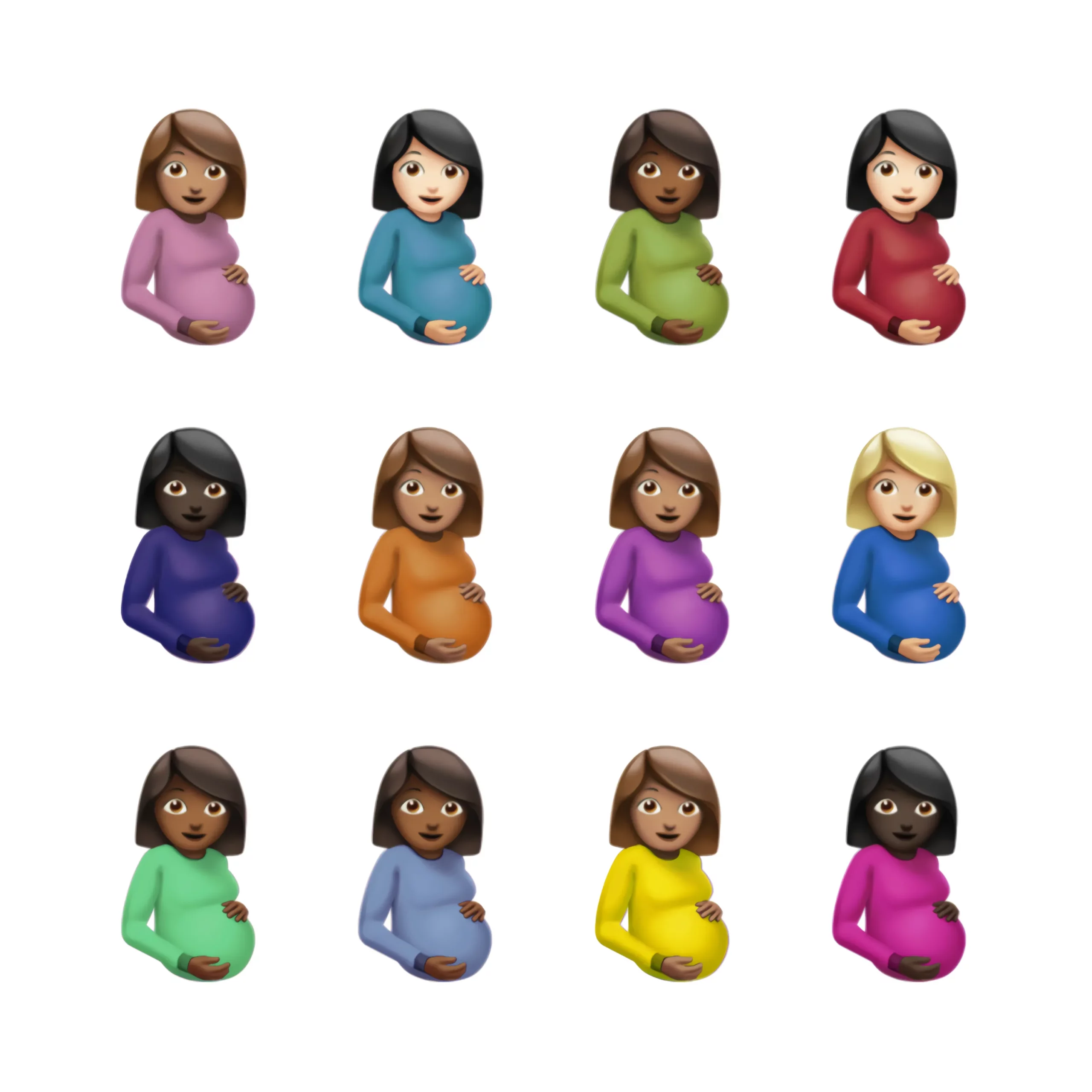
The album artwork of Certified Lover Boy comprises pregnancy women emojis designed by Damien Hirst, a UK-based digital artist.
I think this is where the lesson gets more helpful than a simple sample ID. In our VIZANO interview, he said, “Sampling is one of the most fun ways to create a track.” That is true, although the release side needs to be handled cleanly. Fun in the studio and permission for distribution are separate problems.
Final Takeaway
The Champagne Poetry sample is not just one source. It is a chain: Masego’s “Navajo,” The Singers Unlimited’s version of “Michelle,” the Lennon-McCartney writing credit, and The Gabriel Hardeman Delegation’s “Until I Found the Lord (My Soul Couldn’t Rest).”
For listeners, that explains why the intro feels familiar even if they cannot place the source right away. For producers, the bigger lesson is clear. A short phrase can define a track when it is chosen carefully, processed with restraint, and given enough space around the vocal.
Use “Champagne Poetry” as a study case. Do not use it as a shortcut. Find a source you can legally use, make the phrase your own, and treat the sample as part of the writing process rather than a decoration placed on top at the end.

Will Vance is a professional music producer who has been involved in the industry for the better part of a decade and has been the managing editor at Magnetic Magazine since mid-2022. In that time period, he has published thousands of articles on music production, industry think pieces and educational articles about the music industry. Over the last decade as a professional music producer, Will Vance has also ran multiple successful and highly respected record labels in the industry, including Where The Heart Is Records as well as having launched a new label with a focus on community through Magnetic Magazine. When not running these labels or producing his own music, Vance is likely writing for other top industry sites like Waves or the Hyperbits Masterclass or working on his upcoming book on mindfulness in music production. On the rare chance he's not thinking about music production, he's probably running a game of Dungeons and Dragons with his friends which he has been the dungeon master for for many years.