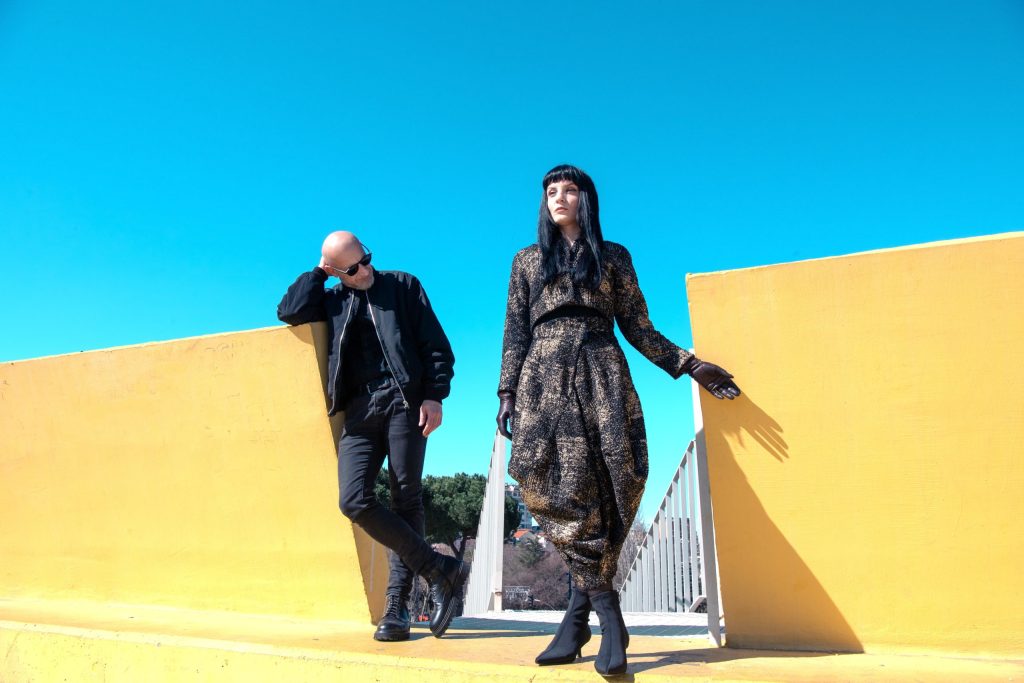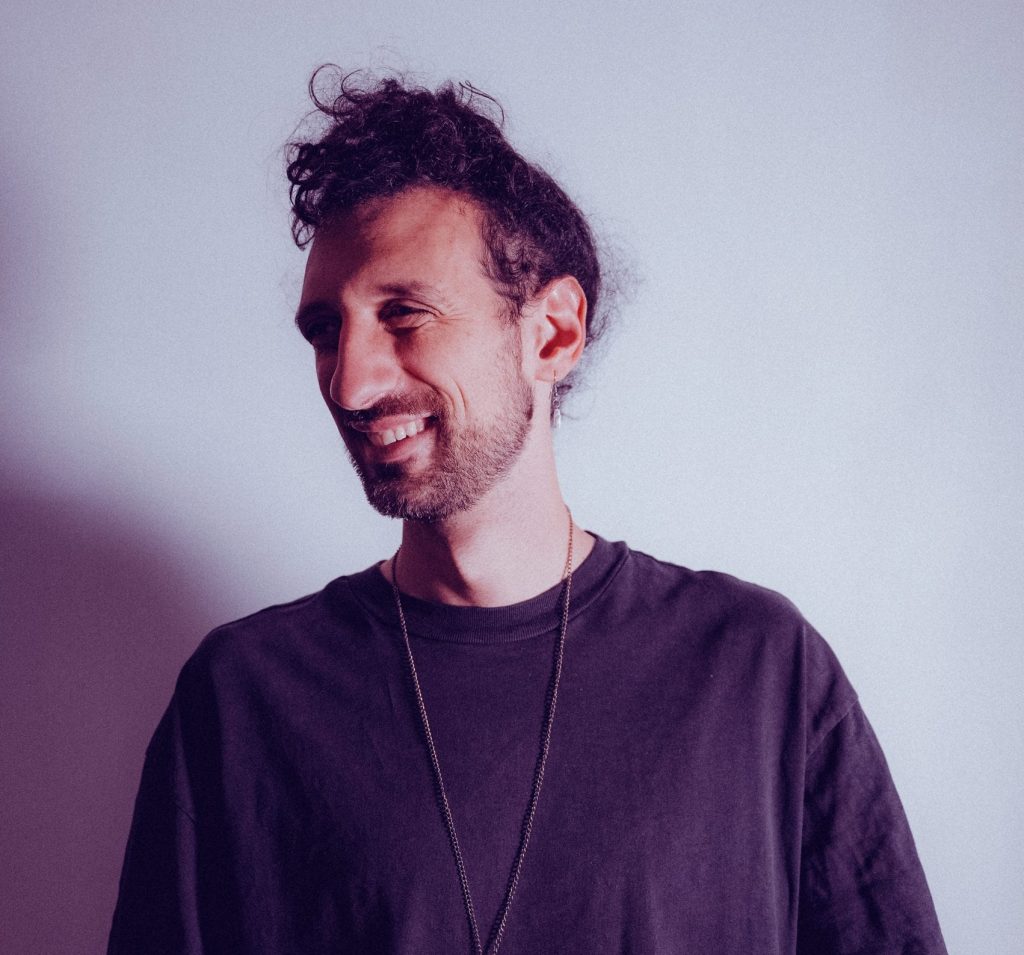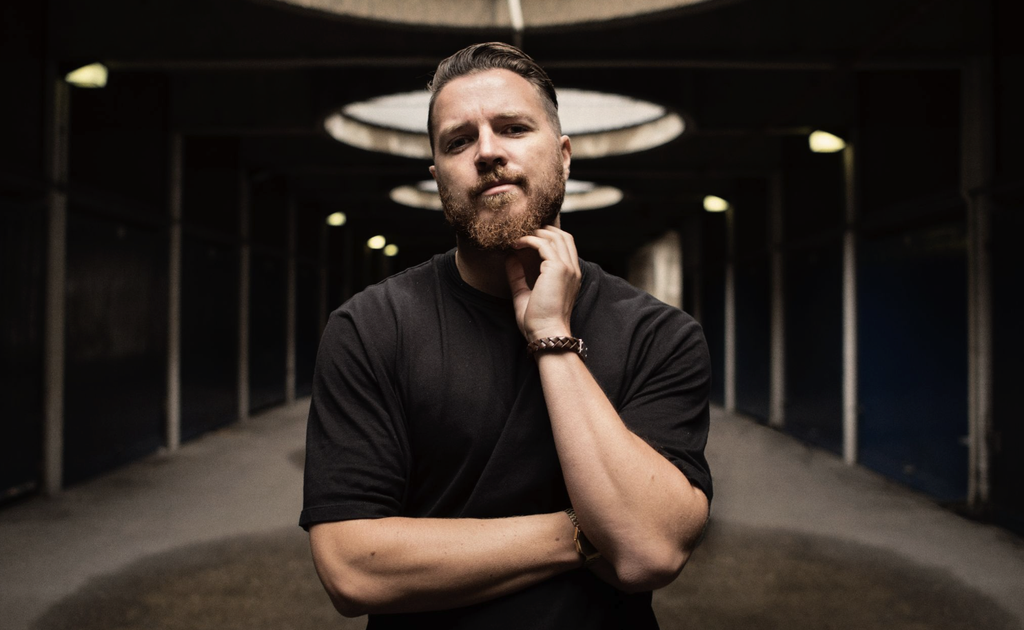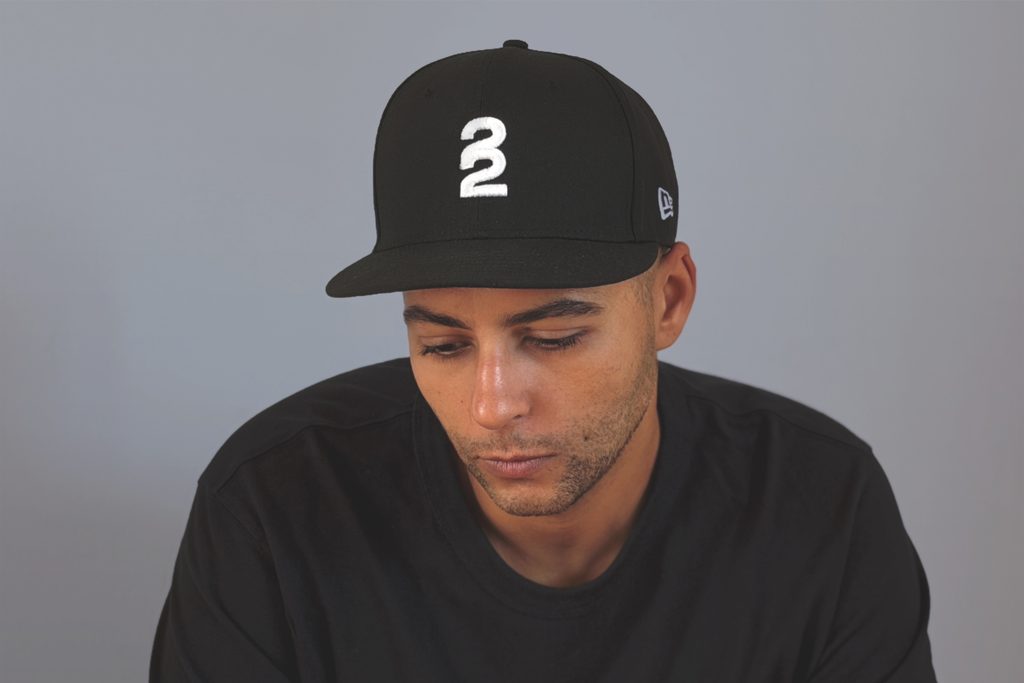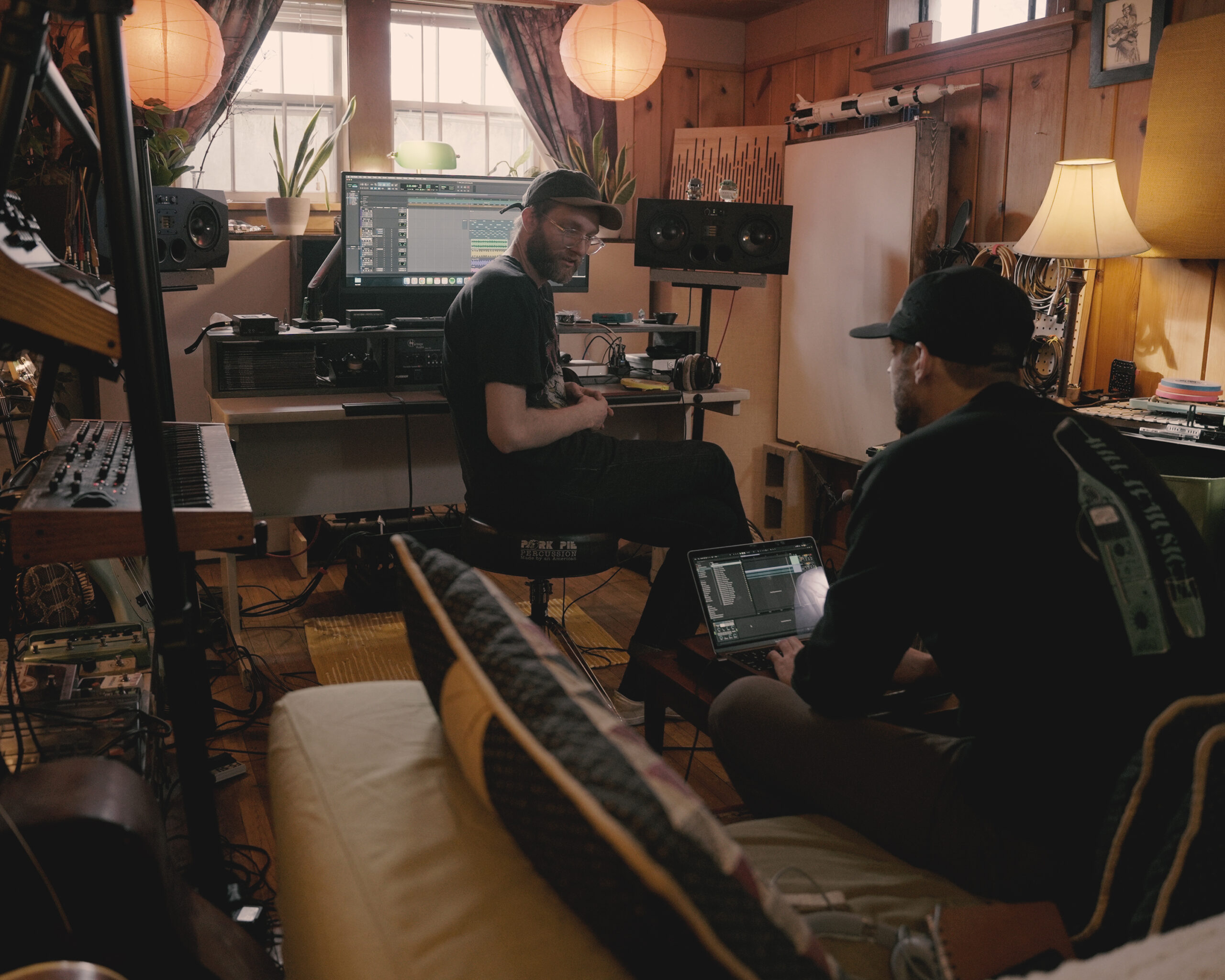
Diving deep into the production process of their latest album, John and Maxy, the creative duo behind Twinsleep, have revealed the inside workings of their studio setup, favorite gear, and the challenges of producing an album. Twinsleep’s unique sound is created from multiple genres, and the sonic craftsmanship shines through on the new record. This interview gives us a window into their creative world, illustrating the importance of studio tools, the process of writing narratives, the constant chase for the perfect sound, and the valuable lessons they’ve learned.
John and Maxy discuss their favorite hardware and software, including the classic Juno-60, the MS-20, and PaulXStretch. From old-school synths to state-of-the-art digital workstations, the Twinsleep studio boasts many tools that allow the duo to experiment and play with sound. They give us a sense of how these tools are used, often in unconventional ways, to create unique and enveloping soundscapes in their music. It’s clear that these tools are not merely instruments, but an extension of their creative selves, shaping the very identity of their music.
What are your three favorite studio tools (hardware or software) and why? Do you think you use these plugins/hardware in unconventional ways?
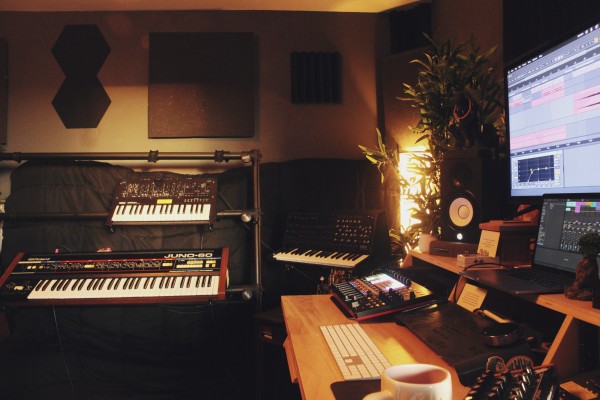
John– My top three would have to be my Juno-60, MS-20, and as of late PaulXStretch. The Juno is a classic. It sounds fantastic, but the real draw for me is its simplicity. Its limitations force you to focus your creativity on it. There aren’t hundreds of mod capabilities or anything like that, which I quite like. It helps me focus on finishing music and not going down rabbit holes, menu diving etc. There is a time and place for exploration with it, of course, but I like to think of it as the Cadillac of the studio; I know what it does, and it does it very well.
The MS-20 was the first synth I ever got. Since there’s no patch recall or storage, I like to keep things relatively simple with it. I typically turn to it when needing a big boomy bass, or a plucky lead line, which can get pretty aggressive when you open up the filters on it. Just by playing with the envelopes a bit I can also use it for some really great sustained, ambient pad sounds. It wasn’t used too much on the Twinsleep album, but Maxy and I’s “Dream Walker” track from our album ‘Borealis’ has the MS-20 all over it.
PaulXStretch is something I have been using a ton as of late—such a fantastic tool for creating drones. I’ll often throw full instrumentals into PaulXStretch to see how it will sound. Using the freeze function to find the sweet spot of a drone is great. Once I’ve found a sweet spot I’ll often take one of Ableton’s LFO’s and do some mapping to some parameters to create some other movement within the drone.
Maxy – My top three would be my Yamaha VSS-30, Prophet Rev2, and my DAWs (Ableton Live and Pro Tools.) The VSS-30 is a very quirky and creative little 8-bit sampler from the 1980’s. It only works about half of the time, and I never really know what it will sound like. One of the best features is its effects section. There’s a built-in looper and a function called U-Turn, which plays the sample forward and then backward again. I’ll often solo out sections of a track or even play the full track through my monitors and sample right into the keyboard.
I’ll take a piece of gaffer’s tape and tape down the root notes so the thing sits there playing a uniquely degraded version of the original. Then I’ll record it back into the daw to mix under the existing elements for some characterful textures.
The Rev2 was my first analog polysynth; initially, it wasn’t very intuitive for me to learn. But the longer I’ve had it, the more I’ve learned to use it for creative sound design. The modulation section is vast, and it’s pretty easy to have parameters affect one another in exciting ways. I enjoy randomly selecting various sources/destinations in the modulation section and seeing what happens. Often these happy accidents make the most usable patches.
I’d been using Pro Tools for years and still do for various applications. I put off learning Ableton Live for a long time, but I finally tore off the bandaid and couldn’t be more thrilled with the transition. Ableton is its complex instrument. The boundless creative potential is the most thrilling to me. It’s essentially the perfect playground for sketching ideas and trying unique things with sounds. Especially in regards to warping and stretching audio. It’s easy to manufacture happy accidents in Ableton.
Would you mind sharing something new you learned about production and your gear while working on the album?
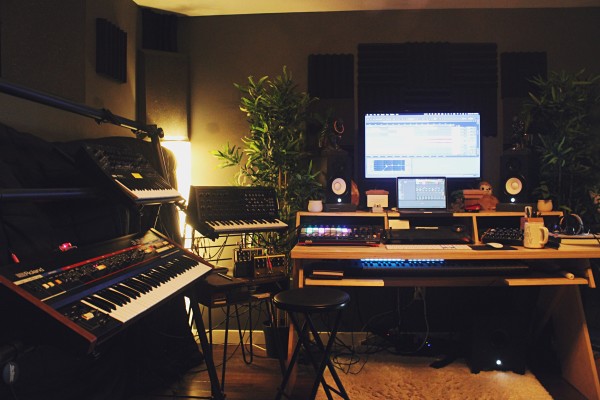
John – I think it was a lot about learning to let go in the studio. Letting go of expectations or endless fiddling to make things sound ‘right’. Most of the tracks on the album started as old stems hanging around on my hard drive or Maxy’s. Some were improvs on my piano which Maxy then slowed and pitched down, odd synth riffs that didn’t have a home anywhere else.
I also restored an old harmonium shortly before the pandemic, which I recorded some improvs on. I remember enjoying them but not having any place for them due to how noisy the harmonium was. Learning to embrace that noise and happy accidents is something I’ve begun to lean into after writing this album with Maxy.
Maxy – As John mentioned above, we weren’t as fixated on things sounding too polished on the record. I think we placed more of a premium on the feeling of the sounds over the particulars of mixing and production.
Of course, we want things to sound good, but this was a refreshing take on music creation for me. When fleshing out more structured arrangements, I easily find myself in the weeds of analysis. Twinsleep was kind of the opposite of that. If it felt good, we moved on and didn’t fuss too much with the details. It’s a stream-of-consciousness approach that I value greatly and try to inject into my other projects since this album.
When do you know a song or production is finished or at a point where you don’t think you can push it any further?

John – That’s tricky, especially with the tools available now; you can endlessly tweak sounds and songs. Once a track has had a rough mixdown, I like to let it sit for a week or two before revisiting it. I call this the ‘Wine and Dine’ phase (coined by my friend Chris Bartels aka Elskavon.)
Once I’ve let it sit, I like to bounce the track, upload it to SoundCloud, and listen to it outside the studio on a walk or something. If the track still resonates with me at this point, I usually know it’s finished, and it’s time to move on to something new. In my mind, songs are never really ‘finished’ per se; they arrive at a point where they are ready to be let go and have their own life outside the studio’s confines. I’ve tried to make a conscious effort to become more and more comfortable letting songs go and silence the inner perfectionist.
Maxy – There are different phases when working on a project, which helps classify each with separate objectives. The first phase is an active/experimental phase. Trying to turn off the objective/critical side of the brain for this one is key. Throw down what comes to you without trying to make things perfect. Improvise, and try to have fun. I know there will be phases later when I can scrutinize details. But I try not to waste too much time with those details upfront.
For me, this is about 80% of the process. The tricky part is when it stops being fun. -After a track is mostly arranged and mainly mixed. When I’ve heard it 100 + times, this is an excellent opportunity to step away from the track for a while. Sending it to friends that I trust with constructive feedback is extremely helpful. They might give me ideas or problems I couldn’t hear because I was too close to the project.
The truth is that it’s really hard for me to finish things, but it’s one of the main reasons I enjoy collaboration so much. The accountability keeps me motivated, and It’s easier to get hyped on a project when someone else’s ideas are in the mix. (literally!)
What is the best piece of production advice a mentor or colleague has ever told you about production?
John – I have a deck of cards from Dan Wilson sitting in my studio, similar to Brian Eno’s “Oblique Strategies.” One of my favorites on my studio desk, is this: “Teach yourself to finish. A pretty good finished song is worth about 50 great unfinished ones.” It’s so easy to scrap it and move to a new idea when you run into a roadblock on a track. But, so often, just that little extra push to finish a track can result in great things for a track and even uncover new possibilities that you wouldn’t have thought of if you didn’t give it that extra time.
Maxy – For me, it’s more about something I’ve observed in my friends and artists that I admire. The throughline in their approach is consistency. The more times you go up to bat, the more chances of hitting the ball. The same is valid for music production and writing. I know that most of what I work on won’t see the light of day, but it’s still essential to follow the ideas and to do the work. All the while, I’m improving my craft, and eventually, I’ll stumble on something great.
How do you continue to push your boundaries in the studio as a music producer?
John – For me, it’s just been about making the music I want to hear. I’m influenced by all sorts of genres of music, from classical, ambient to techno and different kinds of electronic music. Combining these different influences is what I’m trying to achieve with my music and discography and not worrying too much about “what genre will this fit in” etc. Having that openness to explore helps me find sounds and make music that pushes my boundaries. I don’t tend to think I am doing anything all that unique, but I’m making music that I enjoy, and I’m really glad that it’s resonating with some people and they’re into it.
Maxy – Collaboration is really important for me. I’ve learned something new and broadened my skill set with every artist I’ve worked with. I think it’s extremely important to work with people who are better than me and who inspire me to improve. Complacency is the death of creativity for me, so I’m always trying to learn and grow as an artist. Experimentation is also crucial to pushing boundaries. Keeping a playful attitude keeps me curious in the studio. This is when the most exciting ideas happen, often leading to the best tracks.

Will Vance is a professional music producer who has been involved in the industry for the better part of a decade and has been the managing editor at Magnetic Magazine since mid-2022. In that time period, he has published thousands of articles on music production, industry think pieces and educational articles about the music industry. Over the last decade as a professional music producer, Will Vance has also ran multiple successful and highly respected record labels in the industry, including Where The Heart Is Records as well as having launched a new label with a focus on community through Magnetic Magazine. When not running these labels or producing his own music, Vance is likely writing for other top industry sites like Waves or the Hyperbits Masterclass or working on his upcoming book on mindfulness in music production. On the rare chance he's not thinking about music production, he's probably running a game of Dungeons and Dragons with his friends which he has been the dungeon master for for many years.